

The Red Cape: A Timeless Elegance Of Mid-Century Glamour
מבוא ליצירות האמנות
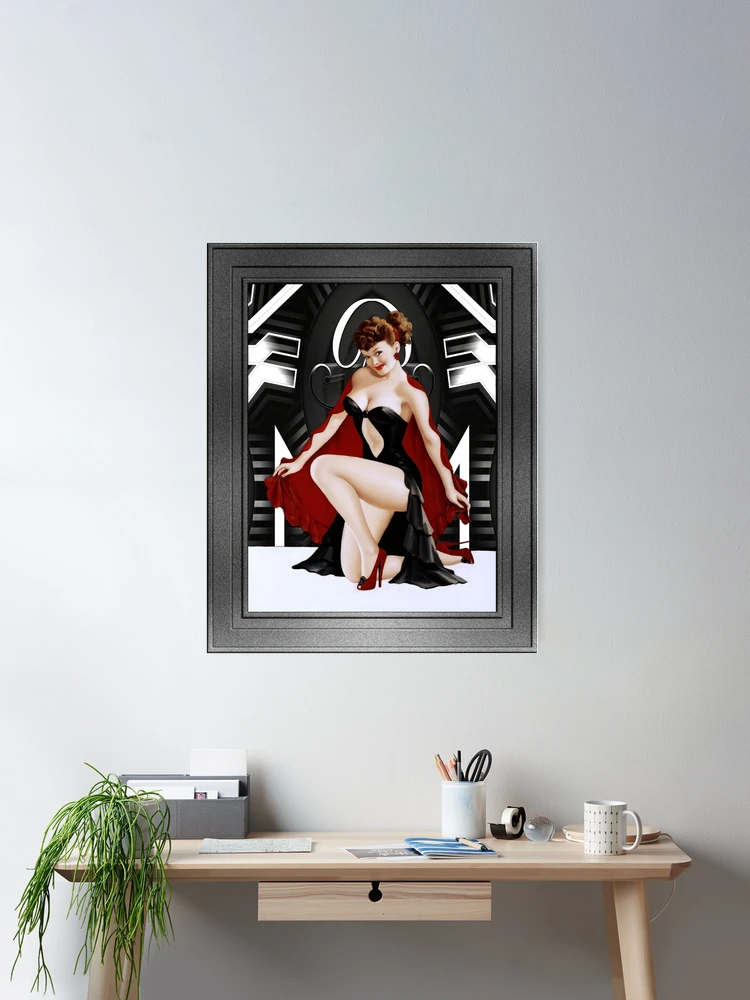
“The Red Cape” is a quintessential work by the American artist Peter Driben, a celebrated figure known for his pin-up art in the mid-20th century. Driben’s mastery in creating seductive and lively compositions is well represented in this piece. The artwork captures the essence of glamour, allure, and sophisticated femininity, themes that resonate throughout his body of work. “The Red Cape” is a vivid portrayal of a woman embodying confidence and charm, set against a striking, almost cinematic backdrop.
תוכן העניינים
הנושא המרכזי: A Seductive Femme Fatale
הדמות המרכזית ב “The Red Cape” is a young woman in an arresting pose, exuding an irresistible charm. Her posture is confident, sitting on the ground with one knee raised, גופה הסתובב מעט הצידה. She gazes directly at the viewer with a playful yet enticing expression, her lips slightly parted in a smile. Her hairstyle is carefully styled into soft curls that frame her face, adding to the sophistication of her appearance. The woman’s strikingly seductive look is enhanced by the rich color contrasts in her attire and surroundings.
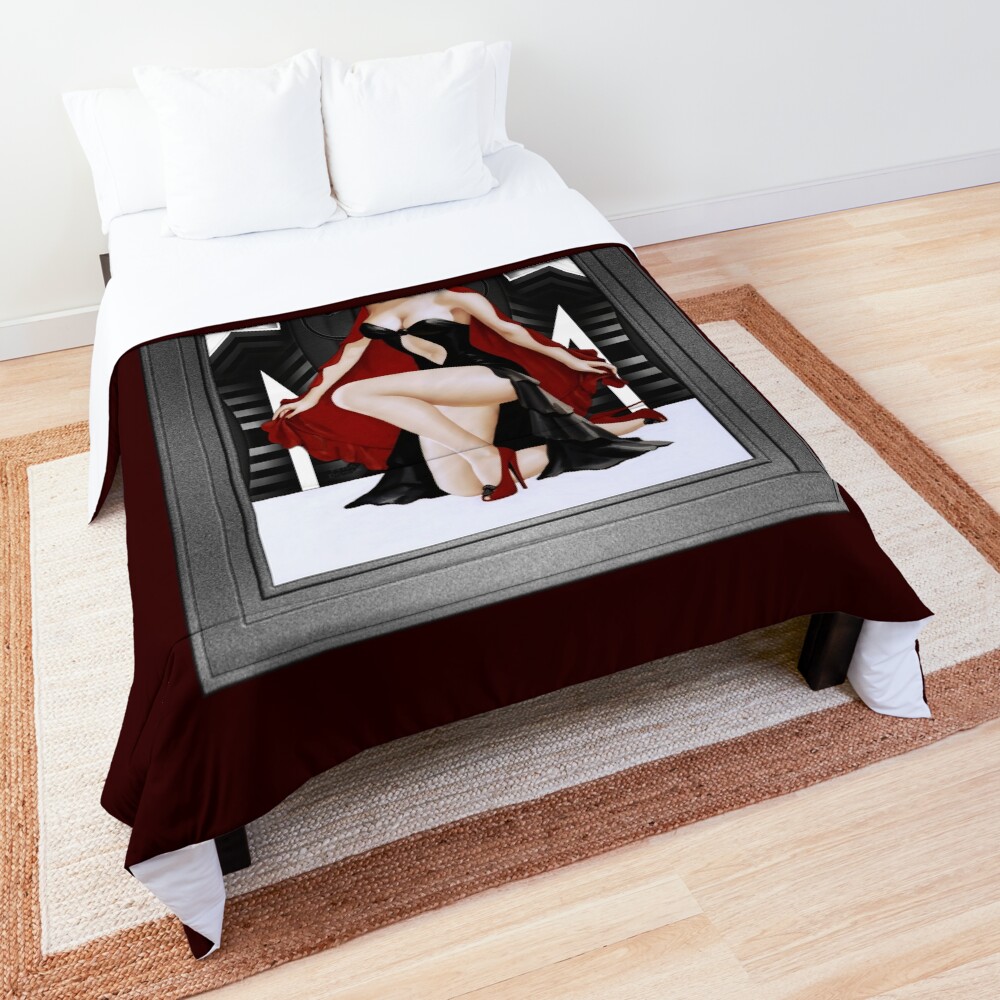
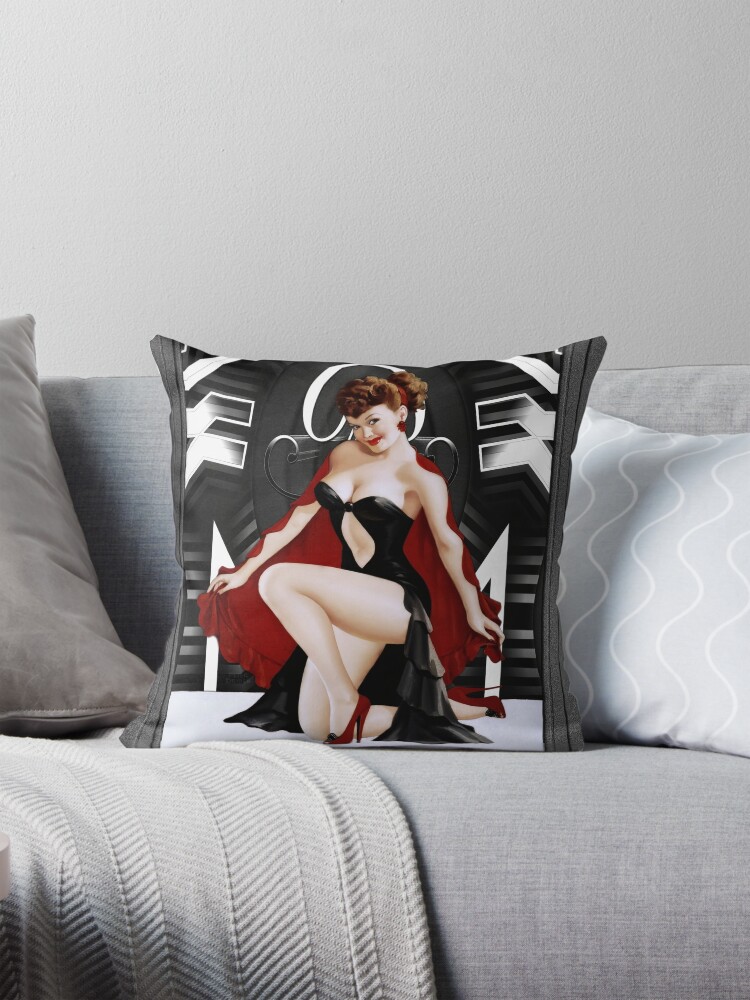
She wears a fitted black dress with a daring plunging neckline, the silhouette of which accentuates her curves. The black dress, a classic emblem of elegance, is complemented by a flowing red cape that drapes behind her, extending across her shoulders and fluttering like a vivid extension of her powerful femininity. The red cape contrasts dramatically against the dark tones of the background and the black dress, drawing the eye directly to the central figure. Her bold red lipstick and matching earrings mirror the deep hue of the cape, underscoring her glamorous allure.
הרקע ומצב הרוח
הרקע של “The Red Cape” further enhances the sense of grandeur and stylized sophistication. The background is composed of striking geometric elements, with sharp, angular lines creating a dynamic contrast with the soft, curvaceous lines of the model’s figure. The black and white tones in the background, along with the radial design, evoke a sense of art deco elegance and modernity. These elements work in tandem with the central figure, accentuating the timeless quality of the image while also grounding it in the mid-century aesthetic that Driben is known for.
The overall mood of the artwork is one of glamour and power. The woman in the piece is not merely a passive subject but an active, confident figure, fully aware of her beauty and the impact it has on those around her. The red cape, בִּפְרָט, acts as a symbol of strength and boldness, much like the heroic personas in the stories of classic cinema. The color red, both sensual and commanding, highlights her dominance in the composition, turning her into an almost mythical figure—a heroine wrapped in the elegance of vintage Hollywood.
Symbolism and Thematic Elements
“The Red Cape” is a portrayal of more than just a fashionable woman; it conveys a deeper narrative of empowerment, allure, and independence. The woman is portrayed as a figure of control, unapologetically seductive yet regal. The flowing red cape could symbolize both a cloak of protection and a dramatic visual extension of her persona. The cape, in its voluminous fluidity, brings a sense of movement to an otherwise static scene, suggesting that the woman is not only a passive subject in the image but also an active force in her environment.
The composition itself echoes the optimism and post-war exuberance of the 1940s and 1950s. This period in American history saw a cultural explosion of confidence and self-expression, much of which was embodied in the burgeoning pin-up culture. Driben’s work encapsulates the sense of freedom and charm that characterized this era, an era where art and fashion collided to elevate everyday femininity to the level of art. The subject’s confident posture and seductive smile reflect the desire for attention and admiration that was often captured in pin-up art of the time.
The Medium and Artistic Style
Peter Driben’s work is rooted in the commercial and illustration art tradition, which is evident in “The Red Cape.” His style, influenced by the pin-up art movement and commercial illustration of the 1940s and 1950s, is both vivid and approachable. While it is clear that Driben’s work was intended for mass consumption—often for advertisements, עמוד הבית של Xzendor7, and magazine covers—he elevated the genre through his attention to detail, צֶבַע, והרכב.
ב “The Red Cape,” Driben’s use of sharp contrasts between light and dark enhances the focal point of the image. The model’s face and body are brightly illuminated against the deep shadows of the background, creating a three-dimensional quality that draws the viewer’s eye. The smooth lines of the dress and cape contrast with the geometric lines in the background, suggesting a balance between softness and strength.
The vivid use of color in the artwork is key to its overall appeal. The combination of deep reds, שחורים, and whites adds to the visual drama of the scene, while the bold lines in the background contribute a sense of modernist movement. The painting’s glossy finish and clean contours reflect the aesthetic preferences of the time, showcasing a blend of realism with the stylized and idealized beauty characteristic of pin-up art.
מַסְקָנָה: A Timeless Icon of Mid-Century Beauty
“The Red Cape” by Peter Driben stands as a classic example of mid-century pin-up art that continues to captivate audiences with its timeless blend of glamour, allure, and sophisticated femininity. The figure of the woman, with her powerful gaze and poised posture, represents the confidence and independence that was becoming more prevalent in American culture during the post-war years. Driben’s use of color, הֶרכֵּב, and dramatic mood creates a piece that transcends its commercial origins, elevating it to the status of fine art.
This artwork is not merely a visual representation of a beautiful woman but a statement of power, אֵמוּן, ואלגנטיות נצחית, rendered in the perfect balance of style and substance. Through “The Red Cape,” Driben’s ability to capture the essence of his era—its optimism, יוֹפִי, and emerging social dynamics—remains as relevant and arresting as ever.
על יצירות האמנות
The Red Cape by American Painter פיטר דרייבן (1903 – 1968); צייר, מאייר ואחד מאמני הפין-אפ הפוריים ביותר של שנות הארבעים והחמישים.
A hot and sexy beautiful young brunette with a red ribbon in her hair and red earrings that is a wearing a large red cape over a black revealing evening dress and red high heel shoes with high a black polka-dot ribbons on top.
I decided to replace the black background with a digital art background to create a more dynamic look.
זהו רפרודוקציה של אמנות דיגיטלית מחודשת של אמן ישן של תמונה ברשות הרבים הזמינה בתור א הדפסת קנבס באינטרנט.
על האמן
מידע למטה מ Wikipedia.org
פיטר דרייבן נולד בבוסטון, והוא למד בבית הספר לאמנות וספר ג'ורג' לפני שעבר לפריז ב 1925. תוך כדי שיעורים בסורבון ב 1925, הוא התחיל סדרה של רישומי עט ודיו פופולריים מאוד של נערות התצוגה של העיר.
במרץ של 1934 דרייבן יצר את הפין-אפ הידוע הראשון שלו שהיה השער לסיפורי לה פארי; ועל ידי 1935, הוא הפיק קאברים לסנאפי, זְרִיזוּת, לילות ניו יורק, חיי לילה צרפתיים וקפריס.
כשהפופולריות של דריבן המשיכה לעלות בסוף שנות השלושים, הוא יצר עטיפות נוספות לכתבי עת אחרים כולל סיפורי גרב משי, סרט עליזות וכיף מסך אמיתי.
הקריירה של דריבן התרחבה לפרסום כאשר עבר לניו יורק מאוחר 1936. כאן הוא יצר תצוגות חלון מקושטות בתלת מימד לחיתוך לרדיו פילקו, מגבות אמבטיה לתותח, וחברת אפיית וובר.
אולי יצירתו המפורסמת ביותר היא הכרזות המקוריות ויצירות הפרסום של הבז המלטזי. פיטר דריבן היה גם חבר קרוב של המוציא לאור רוברט הריסון, ובתוך 1941 הוא קיבל חוזה לייצר שערים למגזין החדש של הריסון ביוטי מצעד.
משם פיטר המשיך לצייר מאות עטיפות לאותו פרסום ולשבעת הכותרות הנוספות שהריסון היה אמור להשיק – לְפַלרְטֵט, לַחַשׁ, מציץ, קְרִיצָה, רואי עיניים, צחקוקים, וג'וקר.
לדריבן היו יוצאים לאור עד שישה או שבעה שערים שלו מדי חודש. עבודתו של דריבן עבור האריסון ביססה אותו כאחד מאמני הפין-אפ והזוהר המוכרים והמצליחים ביותר באמריקה. רגע לפני שהחל לעבוד אצל הריסון, דריבן התחתן עם האמן, שחקנית ומשוררת, לואיז קירבי.
ב 1944 הוצעה לו ההזדמנות הבלתי רגילה, לאמן פין-אפ; זה היה אמור להיות המנהל האמנותי של הניו יורק סאן, תפקיד שהוא שמר עליו עד 1946. במהלך המלחמה, הציור הפופולרי שלו של חיילים אמריקאים מרימים את הדגל באיוו ג'ימה עורר כמות ניכרת של תשומת לב תקשורתית.
ב 1956, דריבן ולואיז עברו למיאמי ביץ', שם בילה את שנות פרישתו בציור פורטרטים (כולל אחד מ-Dwight D. אייזנהאואר) ויצירות אמנות נוספות, שאורגנו לתערוכות מצליחות על ידי אשתו. דרייבן מת ב 1968, לואיז פנימה 1984.