

Красный плащ: A Timeless Elegance Of Mid-Century Glamour
Знакомство с произведением искусства
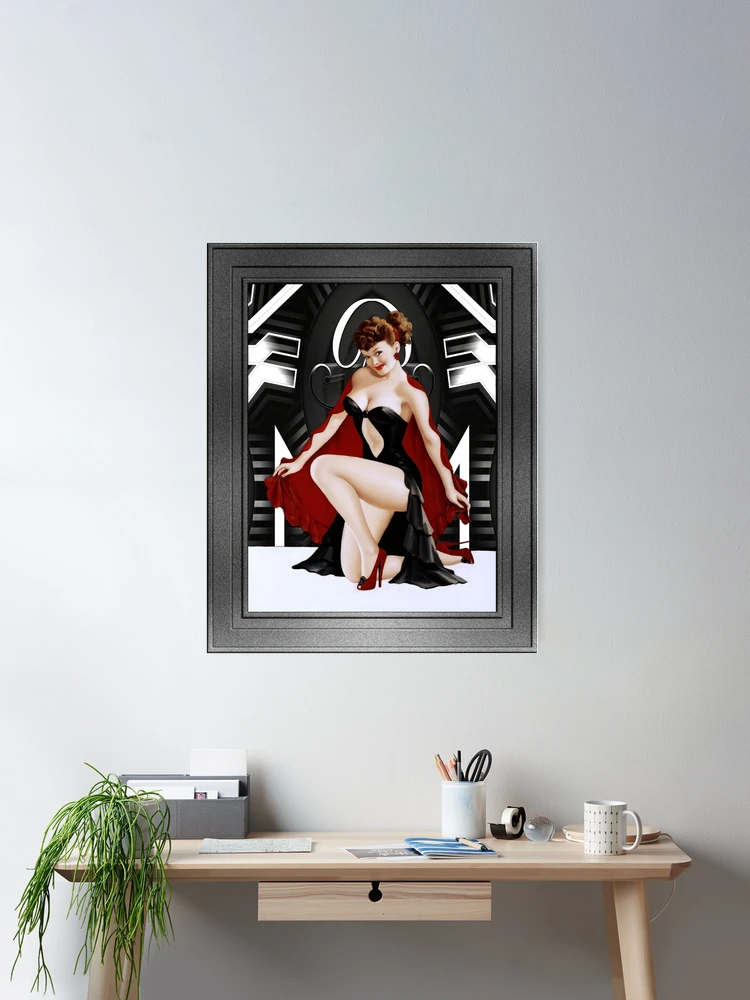
“Красный плащ” is a quintessential work by the American artist Peter Driben, a celebrated figure known for his pin-up art in the mid-20th century. Driben’s mastery in creating seductive and lively compositions is well represented in this piece. The artwork captures the essence of glamour, очарование, and sophisticated femininity, themes that resonate throughout his body of work. “Красный плащ” is a vivid portrayal of a woman embodying confidence and charm, set against a striking, almost cinematic backdrop.
Оглавление
Основная тема: A Seductive Femme Fatale
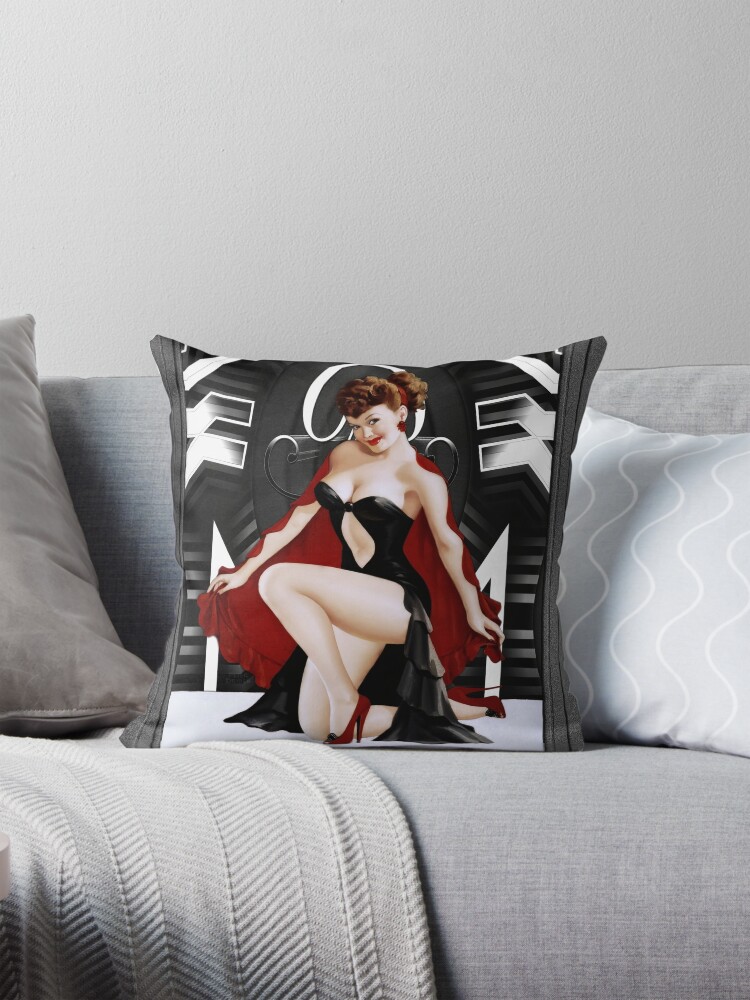
Центральная фигура в “Красный плащ” is a young woman in an arresting pose, exuding an irresistible charm. Her posture is confident, sitting on the ground with one knee raised, ее тело слегка повернуто в сторону. She gazes directly at the viewer with a playful yet enticing expression, her lips slightly parted in a smile. Her hairstyle is carefully styled into soft curls that frame her face, adding to the sophistication of her appearance. The woman’s strikingly seductive look is enhanced by the rich color contrasts in her attire and surroundings.
She wears a fitted black dress with a daring plunging neckline, the silhouette of which accentuates her curves. Черное платье, a classic emblem of elegance, is complemented by a flowing red cape that drapes behind her, extending across her shoulders and fluttering like a vivid extension of her powerful femininity. The red cape contrasts dramatically against the dark tones of the background and the black dress, обращая взгляд прямо на центральную фигуру. Her bold red lipstick and matching earrings mirror the deep hue of the cape, underscoring her glamorous allure.
Фон и настроение
На фоне “Красный плащ” further enhances the sense of grandeur and stylized sophistication. The background is composed of striking geometric elements, with sharp, angular lines creating a dynamic contrast with the soft, curvaceous lines of the model’s figure. The black and white tones in the background, along with the radial design, evoke a sense of art deco elegance and modernity. These elements work in tandem with the central figure, accentuating the timeless quality of the image while also grounding it in the mid-century aesthetic that Driben is known for.
The overall mood of the artwork is one of glamour and power. The woman in the piece is not merely a passive subject but an active, confident figure, fully aware of her beauty and the impact it has on those around her. The red cape, в частности, acts as a symbol of strength and boldness, much like the heroic personas in the stories of classic cinema. The color red, both sensual and commanding, highlights her dominance in the composition, turning her into an almost mythical figure—a heroine wrapped in the elegance of vintage Hollywood.
Symbolism and Thematic Elements
“Красный плащ” is a portrayal of more than just a fashionable woman; it conveys a deeper narrative of empowerment, очарование, и независимость. The woman is portrayed as a figure of control, unapologetically seductive yet regal. The flowing red cape could symbolize both a cloak of protection and a dramatic visual extension of her persona. The cape, in its voluminous fluidity, brings a sense of movement to an otherwise static scene, suggesting that the woman is not only a passive subject in the image but also an active force in her environment.
The composition itself echoes the optimism and post-war exuberance of the 1940s and 1950s. This period in American history saw a cultural explosion of confidence and self-expression, much of which was embodied in the burgeoning pin-up culture. Driben’s work encapsulates the sense of freedom and charm that characterized this era, an era where art and fashion collided to elevate everyday femininity to the level of art. The subject’s confident posture and seductive smile reflect the desire for attention and admiration that was often captured in pin-up art of the time.

The Medium and Artistic Style
Peter Driben’s work is rooted in the commercial and illustration art tradition, which is evident in “The Red Cape.” His style, influenced by the pin-up art movement and commercial illustration of the 1940s and 1950s, is both vivid and approachable. While it is clear that Driben’s work was intended for mass consumption—often for advertisements, плакаты, and magazine covers—he elevated the genre through his attention to detail, цвет, и состав.
В “Красный плащ,” Driben’s use of sharp contrasts between light and dark enhances the focal point of the image. The model’s face and body are brightly illuminated against the deep shadows of the background, creating a three-dimensional quality that draws the viewer’s eye. The smooth lines of the dress and cape contrast with the geometric lines in the background, suggesting a balance between softness and strength.
The vivid use of color in the artwork is key to its overall appeal. The combination of deep reds, негры, and whites adds to the visual drama of the scene, while the bold lines in the background contribute a sense of modernist movement. The painting’s glossy finish and clean contours reflect the aesthetic preferences of the time, showcasing a blend of realism with the stylized and idealized beauty characteristic of pin-up art.
Заключение: A Timeless Icon of Mid-Century Beauty
“Красный плащ” by Peter Driben stands as a classic example of mid-century pin-up art that continues to captivate audiences with its timeless blend of glamour, очарование, and sophisticated femininity. Фигура женщины, with her powerful gaze and poised posture, represents the confidence and independence that was becoming more prevalent in American culture during the post-war years. Driben’s use of color, композиция, and dramatic mood creates a piece that transcends its commercial origins, elevating it to the status of fine art.
This artwork is not merely a visual representation of a beautiful woman but a statement of power, уверенность, и вневременная элегантность, rendered in the perfect balance of style and substance. Through “Красный плащ,” Driben’s ability to capture the essence of his era—its optimism, Красота, and emerging social dynamics—remains as relevant and arresting as ever.
О произведении искусства
Красный плащ американского художника Питер Дрибен (1903 – 1968); художник, иллюстратор и один из самых плодовитых художников пин-ап 1940-х и 1950-х годов.
Горячая и сексуальная красивая молодая брюнетка с красной лентой в волосах и красными серьгами, которая носит большую красную накидку поверх черного откровенного вечернего платья и красные туфли на высоком каблуке с высокими черными лентами в горошек сверху.
Я решил заменить черный фон фоном цифрового искусства, чтобы создать более динамичный вид..
Это обновленная цифровая репродукция старых мастеров изображения, являющегося общественным достоянием, которое доступно в качестве Все эти ремастерированные изображения старых мастеров цифрового искусства, являющиеся общественным достоянием, доступны как.
О художнике
Информация ниже от Wikipedia.org
Питер Дрибен родился в Бостоне., и он учился в Художественной школе Веспер Джордж, прежде чем переехать в Париж. 1925. Во время занятий в Сорбонне в 1925, он начал серию очень популярных рисунков пером и тушью городских танцовщиц..
В марте 1934 Дрибен создал свой первый известный фильм в стиле пин-ап, который стал обложкой La Paree Stories.; и по 1935, он продюсировал каверы для Snappy, Пеп, Нью-йоркские ночи, Французская ночная жизнь и каприз.
По мере того, как популярность Дрибена продолжала расти в конце тридцатых, он создал больше обложек для других периодических изданий, включая Silk Stocking Stories., Карусель из фильмов и веселье на реальном экране.
Карьера Дрибена расширилась до рекламы, когда он в конце концов переехал в Нью-Йорк. 1936. Здесь он создал оригинальные трехмерные вырубные витрины для Philco Radios., Банные полотенца Cannon, и хлебопекарная компания Вебер.
Возможно, его самая известная работа - это оригинальные плакаты и рекламные изображения для The Maltese Falcon.. Питер Дрибен также был близким другом издателя Роберта Харрисона., И в 1941 с ним был заключен контракт на создание обложек для нового журнала Харрисона Beauty Parade..
После этого Питер нарисовал сотни обложек для этого издания и для других семи изданий, которые должен был запустить Харрисон. – Флиртовать, Шепот, Подглядывание, Подмигивание, Глазастый, хихикает, и Джокер.
Дрибен часто публиковал до шести или семи своих каверов каждый месяц.. Работа Дрибена для Харрисона сделала его одним из самых признанных и успешных художников в стиле пин-ап и гламур в Америке.. Незадолго до того, как он начал работать на Харрисона, Дрибен вышла замуж за художника, актриса и поэт, Луиза Кирби.
В 1944 ему была предложена необычная возможность, для пин-ап художника; который должен был стать арт-директором New York Sun, должность, которую он оставил до 1946. Во время войны, его популярная картина, изображающая американских солдат, поднимающих флаг на Иводзиме, вызвала значительное внимание средств массовой информации..
В 1956, Дрибен и Луиза переехали в Майами-Бич, где он провел пенсионные годы за рисованием портретов (в том числе один из Дуайта Д.. Эйзенхауэр) и другие произведения изобразительного искусства, которые были организованы в успешные выставки его женой. Дрибен умер в 1968, Луиза в 1984.