

The Red Cape: A Timeless Elegance Of Mid-Century Glamour
Introduktion till konstverket
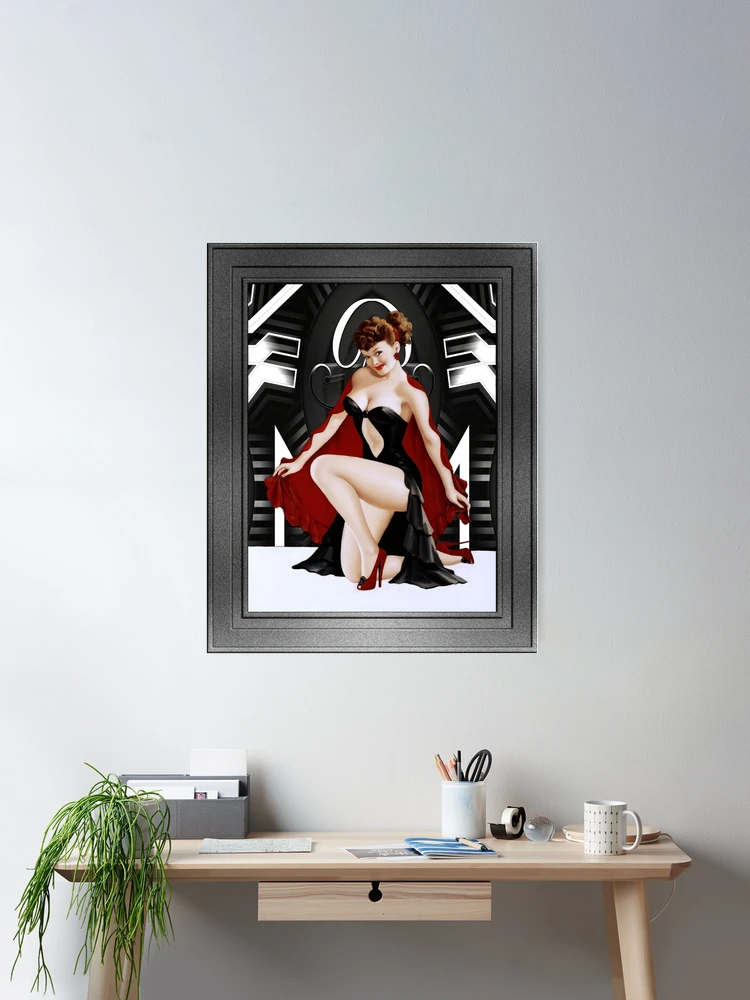
“The Red Cape” is a quintessential work by the American artist Peter Driben, a celebrated figure known for his pin-up art in the mid-20th century. Driben’s mastery in creating seductive and lively compositions is well represented in this piece. The artwork captures the essence of glamour, locka, and sophisticated femininity, themes that resonate throughout his body of work. “The Red Cape” is a vivid portrayal of a woman embodying confidence and charm, set against a striking, almost cinematic backdrop.
Innehållsförteckning
Huvudämnet: A Seductive Femme Fatale
Den centrala figuren i “The Red Cape” is a young woman in an arresting pose, exuding an irresistible charm. Hennes hållning är säker, sitting on the ground with one knee raised, her body slightly turned to the side. She gazes directly at the viewer with a playful yet enticing expression, her lips slightly parted in a smile. Her hairstyle is carefully styled into soft curls that frame her face, adding to the sophistication of her appearance. The woman’s strikingly seductive look is enhanced by the rich color contrasts in her attire and surroundings.
She wears a fitted black dress with a daring plunging neckline, the silhouette of which accentuates her curves. The black dress, a classic emblem of elegance, is complemented by a flowing red cape that drapes behind her, extending across her shoulders and fluttering like a vivid extension of her powerful femininity. The red cape contrasts dramatically against the dark tones of the background and the black dress, drawing the eye directly to the central figure. Her bold red lipstick and matching earrings mirror the deep hue of the cape, underscoring her glamorous allure.
The Background and Mood
Bakgrunden av “The Red Cape” further enhances the sense of grandeur and stylized sophistication. The background is composed of striking geometric elements, med skarp, angular lines creating a dynamic contrast with the soft, curvaceous lines of the model’s figure. The black and white tones in the background, along with the radial design, evoke a sense of art deco elegance and modernity. These elements work in tandem with the central figure, accentuating the timeless quality of the image while also grounding it in the mid-century aesthetic that Driben is known for.
The overall mood of the artwork is one of glamour and power. The woman in the piece is not merely a passive subject but an active, confident figure, fully aware of her beauty and the impact it has on those around her. The red cape, särskilt, acts as a symbol of strength and boldness, much like the heroic personas in the stories of classic cinema. The color red, both sensual and commanding, highlights her dominance in the composition, turning her into an almost mythical figure—a heroine wrapped in the elegance of vintage Hollywood.
Symbolism and Thematic Elements
“The Red Cape” is a portrayal of more than just a fashionable woman; it conveys a deeper narrative of empowerment, locka, and independence. The woman is portrayed as a figure of control, unapologetically seductive yet regal. The flowing red cape could symbolize both a cloak of protection and a dramatic visual extension of her persona. Udden, in its voluminous fluidity, brings a sense of movement to an otherwise static scene, suggesting that the woman is not only a passive subject in the image but also an active force in her environment.
The composition itself echoes the optimism and post-war exuberance of the 1940s and 1950s. This period in American history saw a cultural explosion of confidence and self-expression, much of which was embodied in the burgeoning pin-up culture. Driben’s work encapsulates the sense of freedom and charm that characterized this era, an era where art and fashion collided to elevate everyday femininity to the level of art. The subject’s confident posture and seductive smile reflect the desire for attention and admiration that was often captured in pin-up art of the time.

The Medium and Artistic Style
Peter Driben’s work is rooted in the commercial and illustration art tradition, which is evident in “The Red Cape.” His style, influenced by the pin-up art movement and commercial illustration of the 1940s and 1950s, is both vivid and approachable. While it is clear that Driben’s work was intended for mass consumption—often for advertisements, affischer, and magazine covers—he elevated the genre through his attention to detail, Färg, och komposition.
I “The Red Cape,” Driben’s use of sharp contrasts between light and dark enhances the focal point of the image. The model’s face and body are brightly illuminated against the deep shadows of the background, creating a three-dimensional quality that draws the viewer’s eye. The smooth lines of the dress and cape contrast with the geometric lines in the background, suggesting a balance between softness and strength.
The vivid use of color in the artwork is key to its overall appeal. The combination of deep reds, svarta, and whites adds to the visual drama of the scene, while the bold lines in the background contribute a sense of modernist movement. The painting’s glossy finish and clean contours reflect the aesthetic preferences of the time, showcasing a blend of realism with the stylized and idealized beauty characteristic of pin-up art.
Slutsats: A Timeless Icon of Mid-Century Beauty
“The Red Cape” by Peter Driben stands as a classic example of mid-century pin-up art that continues to captivate audiences with its timeless blend of glamour, locka, and sophisticated femininity. Kvinnans figur, with her powerful gaze and poised posture, represents the confidence and independence that was becoming more prevalent in American culture during the post-war years. Driben’s use of color, sammansättning, and dramatic mood creates a piece that transcends its commercial origins, elevating it to the status of fine art.
This artwork is not merely a visual representation of a beautiful woman but a statement of power, förtroende, och tidlös elegans, rendered in the perfect balance of style and substance. Through “The Red Cape,” Driben’s ability to capture the essence of his era—its optimism, skönhet, and emerging social dynamics—remains as relevant and arresting as ever.
Om Konstverket
The Red Cape by American Painter Peter Driben (1903 – 1968); målare, illustratör och en av de mest produktiva pin-up artisterna på 1940- och 1950-talet.
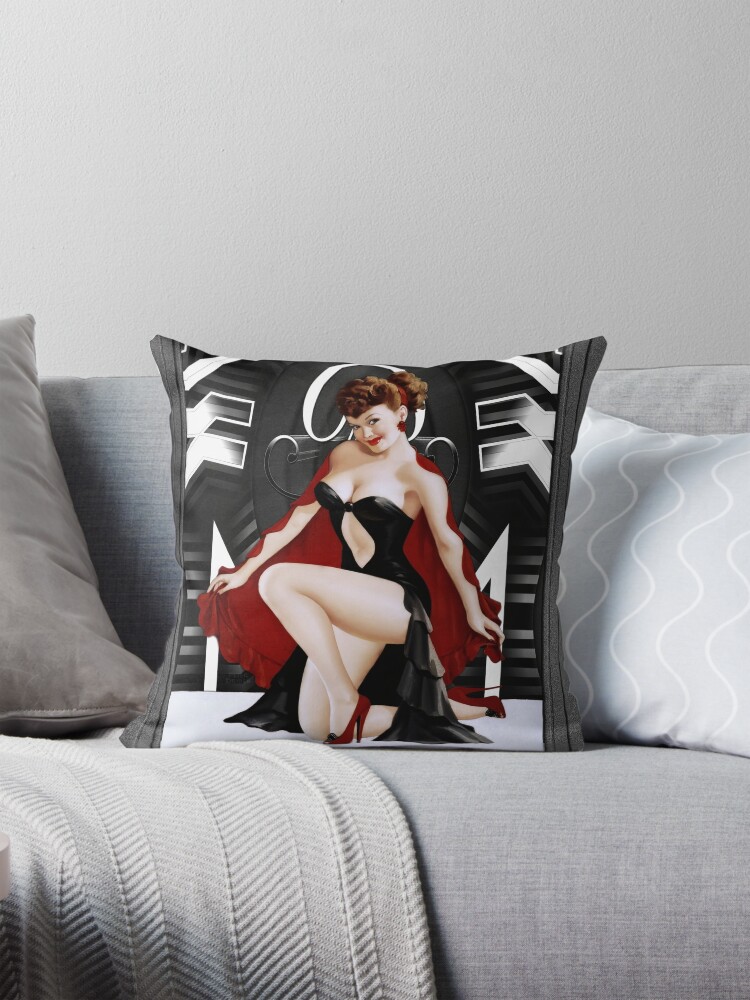
A hot and sexy beautiful young brunette with a red ribbon in her hair and red earrings that is a wearing a large red cape over a black revealing evening dress and red high heel shoes with high a black polka-dot ribbons on top.
I decided to replace the black background with a digital art background to create a more dynamic look.
Detta är en remastrad digital konst-gamla mästare-reproduktion av en offentlig egendomsbild som är tillgänglig som en canvastavla online.
Om konstnären
Info nedan från Wikipedia.org
Peter Driben föddes i Boston, och han studerade vid Vesper George Art School innan han flyttade till Paris 1925. Medan du går på Sorbonne i 1925, började han en serie mycket populära penna-och-bläck-ritningar av stadens showflickor.
I mars av 1934 Driben skapade sin första kända pin-up som var omslaget till La Paree Stories; och genom att 1935, han producerade omslag till Snappy, Pep, New York Nights, Franska nattliv och Caprice.
När Dribens popularitet fortsatte att öka i slutet av trettiotalet skapade han fler omslag för andra tidskrifter inklusive Silk Stocking Stories, Film Merry-Go-Round och Real Screen Fun.
Dribens karriär expanderade till reklam när han flyttade till New York sent 1936. Här skapade han originella tredimensionella utskurna fönsterdisplayer för Philco Radios, Kanonhanddukar, och Weber Baking Company.
Kanske är hans mest kända verk originalposterna och publicitetskonsten för The Maltese Falcon. Peter Driben var också en nära vän till förlaget Robert Harrison, och i 1941 han fick kontrakt för att producera omslag till Harrisons nya tidning Beauty Parade.
Därifrån fortsatte Peter att måla hundratals omslag för den publikationen och för de andra sju titlarna som Harrison skulle lansera – Flört, Viska, Kikar, Blinkning, Eyeful, Fnissar, och Joker.
Driben skulle ofta ha så många som sex eller sju av hans omslag publicerade varje månad. Dribens arbete för Harrison etablerade honom som en av Amerikas mest erkända och framgångsrika pin-up- och glamourartister. Strax innan han började arbeta för Harrison, Driben gifte sig med konstnären, skådespelerska och poet, Louise Kirby.
I 1944 han erbjöds den ovanliga möjligheten, för en pin-up artist; det skulle bli art director för New York Sun, en tjänst han behöll tills 1946. Under kriget, hans populära målning av amerikanska soldater som höjde flaggan vid Iwo Jima väckte stor uppmärksamhet i media.
I 1956, Driben och Louise flyttade till Miami Beach, där han tillbringade sina pensioneringsår med att måla porträtt (inklusive en av Dwight D. Eisenhower) och andra konstverk, som organiserades till framgångsrika utställningar av hans fru. Driben dog i 1968, Louise in 1984.