

The Red Hotline
The Red Hotline: A Celebration of Glamour and Playfulness
The Red Hotline di Peter Driben (1903 – 1968), an esteemed American pin-up artist of the mid-20th century, was celebrated for his ability to infuse vitality and charm into his works; and this piece is a quintessential example of his artistry, epitomizing the flirtatious yet wholesome essence of pin-up culture. Driben‘s vibrant palette, mastery of form, and knack for storytelling through visual art are on full display in this piece.
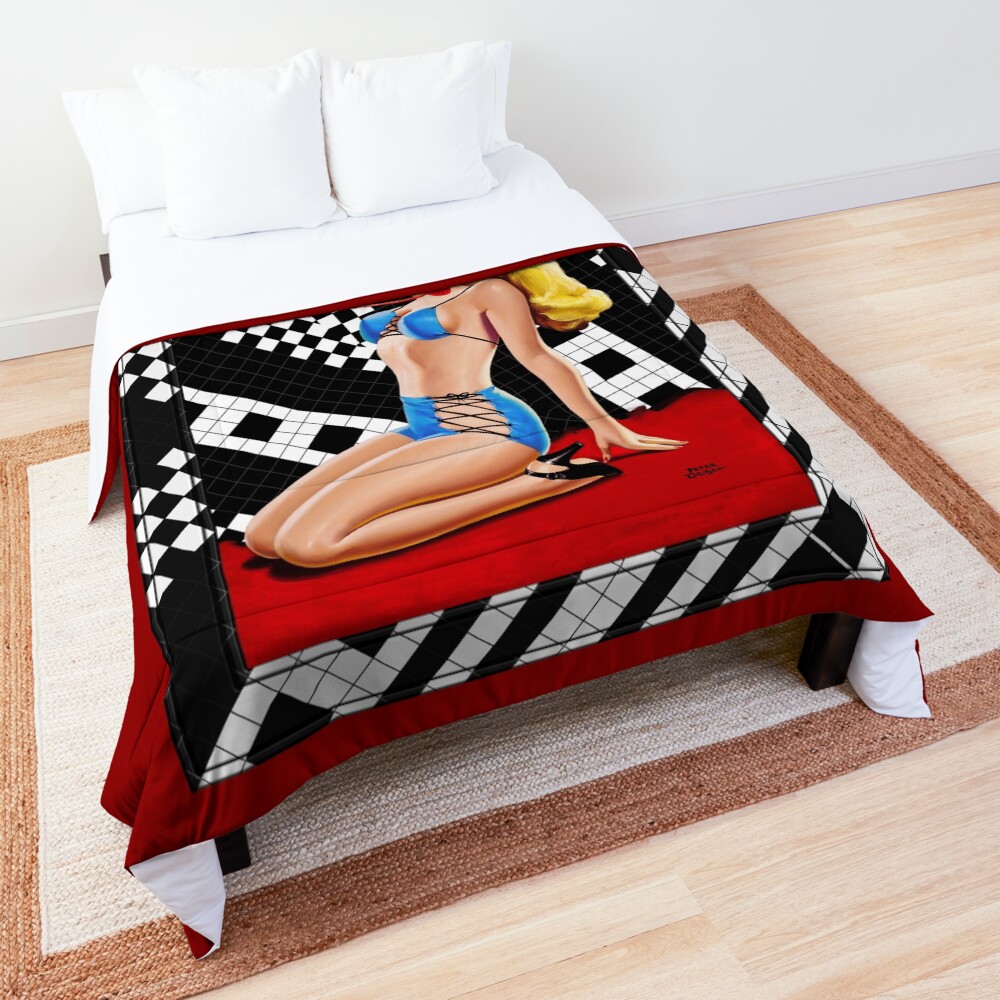
Table of Contents
Sugettu principale: The Radiant Blonde in Blue
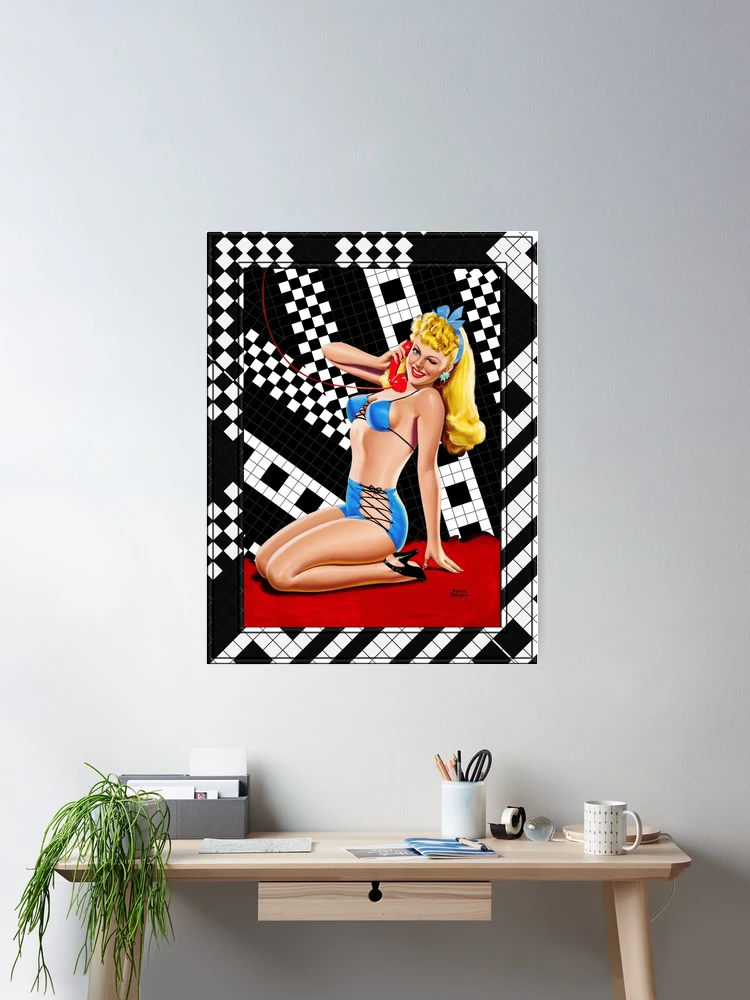
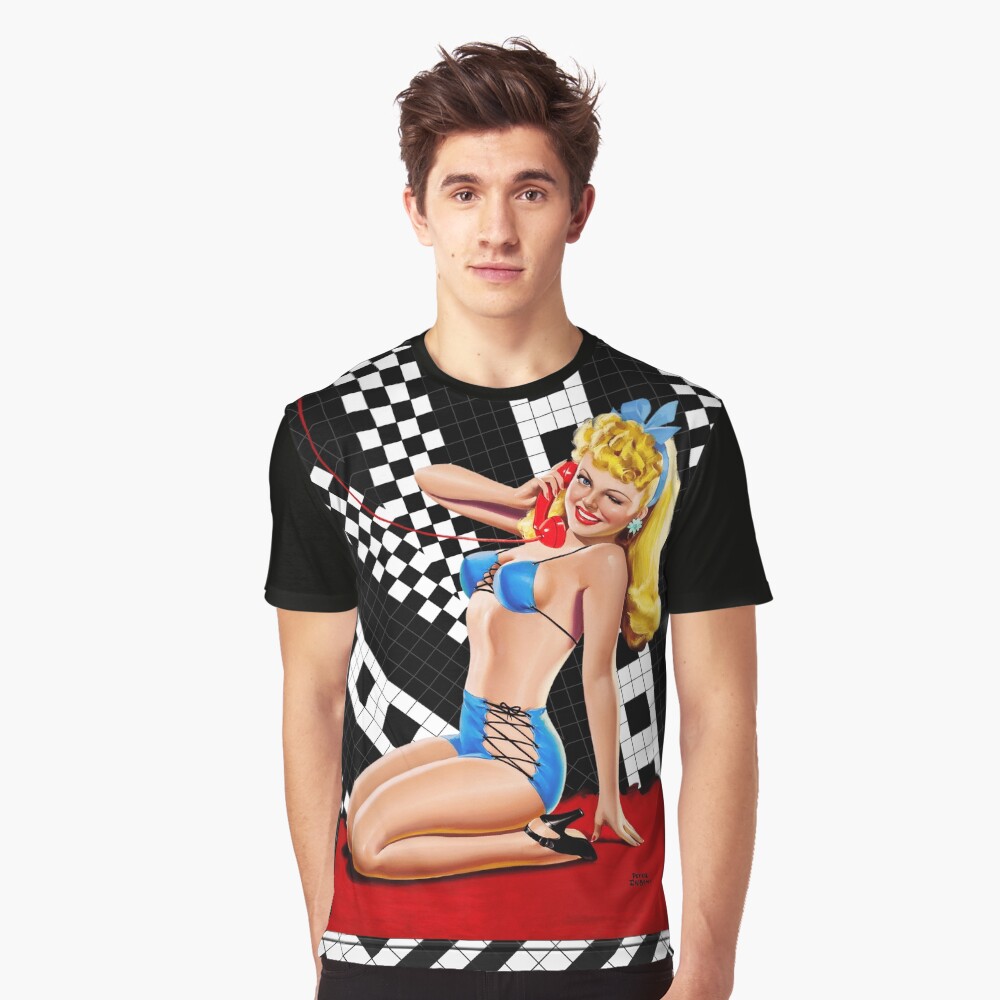
À u core di “The Red Hotline” lies a playful and coquettish depiction of a young blonde woman. Her golden hair cascades in carefully stylized waves, adorned with a large, cheerful blue bow that complements her swimsuit. The bright smile on her face, coupled with her winking eye, exudes an inviting charm, drawing viewers into the narrative. She holds a bright red telephone receiver, which lends the artwork its name and serves as a pivotal object within the composition.
The subject is dressed in a light blue bikini with black lace detailing. The high-waisted bottoms, characteristic of 1940s and 1950s fashion, are secured with crisscrossed laces, adding a touch of suggestive allure without compromising the overall playfulness of the scene. Her slender figure, accented by the pose, kneeling on a red carpet with one hand on the ground and the other holding the phone, demonstrates Driben’s skillful portrayal of anatomy and movement.
Background and Surrounding Objects
U fondu di “The Red Hotline” is a dazzling geometric checkerboard pattern, executed in stark black and white. This graphic, almost optical illusion-like design provides a modernist contrast to the soft, feminine figure in the foreground. The abstract background evokes a sense of energy and boldness, reinforcing the dynamic quality of the composition.
The red telephone cord playfully winds across the frame, connecting the subject to an unseen caller and injecting a sense of narrative intrigue. The phone itself, a vibrant red, stands out sharply against the monochrome and blue elements, acting as both a visual and thematic anchor.
The red carpet beneath the woman serves a dual purpose. It frames her pose while adding a warm, inviting tone to the composition. This patch of red balances the cooler tones of her attire and ties back to the telephone, creating a cohesive color scheme.
Stile è tecnica
Driben’s work embodies the Golden Age of pin-up art, an era when illustrators captured an idealized, often cheeky depiction of femininity. His style is defined by bold colors, linee pulite, and a high level of polish that recalls the glossy advertisements and magazine covers of his time.
In “The Red Hotline,” Driben’s use of light and shadow is subtle but effective. The glossy sheen on the telephone and the laces of the swimsuit adds a sense of texture and realism, while the soft shadows along the figure’s curves enhance her three-dimensionality. The artist’s attention to detail—such as the precise rendering of her glossy black heels or the subtle highlights in her hair—showcases his technical prowess.
Tema è umore
U tema di “The Red Hotline” is lighthearted and playful, rooted in the optimism and cheeky humor that characterized mid-century pin-up art. The telephone introduces an element of storytelling, inviting viewers to imagine the conversation taking place. Is she flirting with a suitor? Sharing a laugh with a friend? The ambiguity allows for a range of interpretations, adding depth to the seemingly simple scene.
The mood is undeniably fun and flirtatious, yet it remains within the realm of innocent escapism. Driben’s pin-ups often walked the line between suggestiveness and wholesomeness, a balance that made them widely popular and accessible during their time. “The Red Hotline” is no exception, offering a playful fantasy that never veers into vulgarity.
Materials and Medium
While the specific medium of this piece isn’t detailed here, Driben was known for his work in gouache and oil paints. These mediums allowed him to achieve the vibrant colors and smooth finishes seen in “The Red Hotline.” The level of precision in the lines and shading suggests that this artwork was originally created as an illustration, likely intended for print in a magazine, calendar, or poster.
Cultural Context and Legacy
“The Red Hotline” reflects the cultural zeitgeist of its era. Created during a time when pin-up art was at its peak, it embodies the idealized femininity and playful sensuality that appealed to audiences in the mid-20th century. Driben’s works were part of a broader movement that celebrated beauty, glamour, and the allure of the everyday woman.
As a piece of pin-up art, “The Red Hotline” carries with it the legacy of a genre that influenced fashion, advertising, and popular culture. Oghje, it stands as a nostalgic reminder of a bygone era, appreciated both for its aesthetic qualities and its historical significance.
Cunclusione
“The Red Hotline” by Peter Driben is a masterful example of mid-century pin-up art. Its captivating subject, bold design, and vibrant execution showcase the artist’s talent and creativity. Driben’s ability to combine playfulness with technical precision ensures that this artwork remains an enduring icon of its genre. It captures a moment in time when glamour and charm were celebrated, offering viewers a delightful glimpse into the world of vintage illustration.
Questa hè una ripruduzzione di l'antichi maestri d'arte digitale rimasterizzata di una maghjina di duminiu publicu chì hè dispunibule cum'è a metal print online.
À propositu di l'artista
Info sottu Da Wikipedia.org
Peter Driben hè natu in Boston, è hà studiatu à l'Ecole d'Art Vesper George prima di trasfurmà in Parigi 1925. Mentre faceva i corsi à a Sorbona in 1925, hà iniziatu una seria di disegni di penna è inchiostru assai populari di e showgirls di a cità.
In marzu di 1934 Driben hà criatu u so primu pin-up cunnisciutu chì era a copertina di La Paree Stories; è da 1935, stava producendo cover per Snappy, Pep, New York Nights, Vita notturna francese è Caprice.
Cume a popularità di Driben cuntinueghja à cresce à a fine di l'anni trenta, hà creatu più copertine per altri periodici cumpresi Silk Stocking Stories., Film Merry-Go-Round è Divertimentu Reale Screen.
A carriera di Driben hà sviluppatu in publicità quandu si trasferì in New York à a fine 1936. Quì hà creatu vetri tridimensionali originali fustellati per Philco Radios, Asciugamani da bagnu Cannon, è a Weber Baking Company.
Forsi u so travagliu più famosu essendu l'affiche originali è l'artwork publicitariu per U Falcon Maltese. Peter Driben era ancu un amicu strettu di l'editore Robert Harrison, è in 1941 hè statu cuntrattu per pruduce copertine per a nova rivista di Harrison Beauty Parade.
Da quì Petru hà continuatu à pitture centinaie di copertine per quella publicazione è per l'altri sette tituli Harrison avia da lancià. – Flirt, bisbiglià, Fighjendu, Wink, Ochju, Ridacchi, è Joker.
Driben avia spessu parechji sei o sette di e so copertine publicate ogni mese. U travagliu di Driben per Harrison l'hà stabilitu cum'è unu di l'artisti pin-up è glamour più ricunnisciuti è riesciuti d'America.. Just prima ch'ellu hà cuminciatu à travaglià per Harrison, Driben hà maritatu cù l'artista, attrice è poeta, Louise Kirby.
In 1944 on lui offrit l'occasion insolite, per un artista pin-up; chì era di diventà u direttore artisticu di u New York Sun, un postu ch'ellu hà ritenutu finu à 1946. Duranti a guerra, a so pittura populari di suldati americani chì alzanu a bandiera in Iwo Jima hà suscitatu una quantità considerableu di l'attenzione di i media.
In 1956, Driben è Louise si trasfirìu a Miami Beach, induve hà passatu i so anni di ritirata à pittura ritratti (cumpresu unu di Dwight D. Eisenhower) e altre opere d'arte, chì sò stati urganizati in mostre di successu da a so moglia. Driben hè mortu in 1968, Louise in 1984.