

The Red Hotline
The Red Hotline: A Celebration of Glamour and Playfulness
A Linha Direta Vermelha de Peter Driben (1903 – 1968), an esteemed American pin-up artist of the mid-20th century, was celebrated for his ability to infuse vitality and charm into his works; and this piece is a quintessential example of his artistry, epitomizing the flirtatious yet wholesome essence of pin-up culture. Driben‘s vibrant palette, mastery of form, and knack for storytelling through visual art are on full display in this piece.
Índice
Assunto principal: The Radiant Blonde in Blue
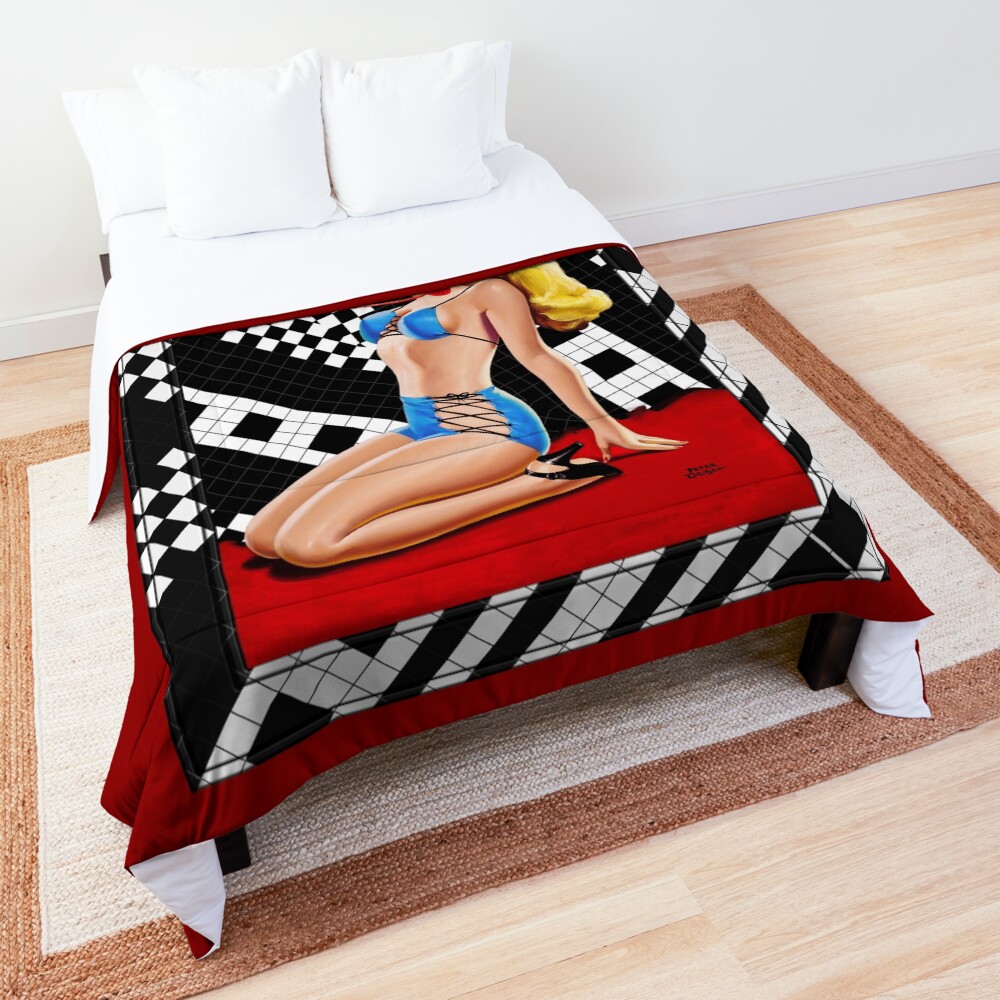
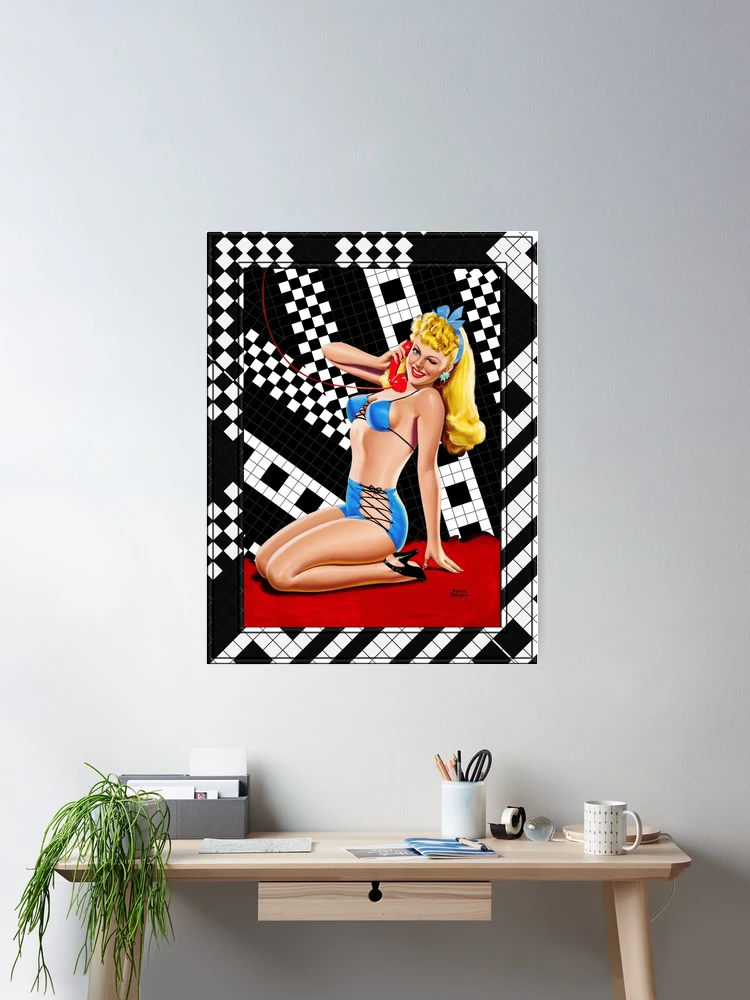
No coração de “The Red Hotline” lies a playful and coquettish depiction of a young blonde woman. Her golden hair cascades in carefully stylized waves, adorned with a large, cheerful blue bow that complements her swimsuit. The bright smile on her face, coupled with her winking eye, exudes an inviting charm, drawing viewers into the narrative. She holds a bright red telephone receiver, which lends the artwork its name and serves as a pivotal object within the composition.
The subject is dressed in a light blue bikini with black lace detailing. The high-waisted bottoms, characteristic of 1940s and 1950s fashion, are secured with crisscrossed laces, adding a touch of suggestive allure without compromising the overall playfulness of the scene. Her slender figure, accented by the pose, kneeling on a red carpet with one hand on the ground and the other holding the phone, demonstrates Driben’s skillful portrayal of anatomy and movement.
Background and Surrounding Objects
O pano de fundo de “The Red Hotline” is a dazzling geometric checkerboard pattern, executed in stark black and white. This graphic, almost optical illusion-like design provides a modernist contrast to the soft, feminine figure in the foreground. The abstract background evokes a sense of energy and boldness, reinforcing the dynamic quality of the composition.
The red telephone cord playfully winds across the frame, connecting the subject to an unseen caller and injecting a sense of narrative intrigue. The phone itself, a vibrant red, stands out sharply against the monochrome and blue elements, acting as both a visual and thematic anchor.
The red carpet beneath the woman serves a dual purpose. It frames her pose while adding a warm, inviting tone to the composition. This patch of red balances the cooler tones of her attire and ties back to the telephone, creating a cohesive color scheme.
Estilo e Técnica
Driben’s work embodies the Golden Age of pin-up art, an era when illustrators captured an idealized, often cheeky depiction of femininity. His style is defined by bold colors, clean lines, and a high level of polish that recalls the glossy advertisements and magazine covers of his time.
Em “The Red Hotline,” Driben’s use of light and shadow is subtle but effective. The glossy sheen on the telephone and the laces of the swimsuit adds a sense of texture and realism, while the soft shadows along the figure’s curves enhance her three-dimensionality. The artist’s attention to detail—such as the precise rendering of her glossy black heels or the subtle highlights in her hair—showcases his technical prowess.
Tema e humor
The theme of “The Red Hotline” is lighthearted and playful, rooted in the optimism and cheeky humor that characterized mid-century pin-up art. The telephone introduces an element of storytelling, inviting viewers to imagine the conversation taking place. Is she flirting with a suitor? Sharing a laugh with a friend? The ambiguity allows for a range of interpretations, adding depth to the seemingly simple scene.
The mood is undeniably fun and flirtatious, yet it remains within the realm of innocent escapism. Driben’s pin-ups often walked the line between suggestiveness and wholesomeness, a balance that made them widely popular and accessible during their time. “The Red Hotline” não é exceção, offering a playful fantasy that never veers into vulgarity.
Materials and Medium
While the specific medium of this piece isn’t detailed here, Driben was known for his work in gouache and oil paints. These mediums allowed him to achieve the vibrant colors and smooth finishes seen in “The Red Hotline.” The level of precision in the lines and shading suggests that this artwork was originally created as an illustration, likely intended for print in a magazine, calendar, or poster.
Cultural Context and Legacy
“The Red Hotline” reflects the cultural zeitgeist of its era. Created during a time when pin-up art was at its peak, it embodies the idealized femininity and playful sensuality that appealed to audiences in the mid-20th century. Driben’s works were part of a broader movement that celebrated beauty, glamour, and the allure of the everyday woman.
As a piece of pin-up art, “The Red Hotline” carries with it the legacy of a genre that influenced fashion, advertising, and popular culture. Hoje, it stands as a nostalgic reminder of a bygone era, appreciated both for its aesthetic qualities and its historical significance.
Conclusão
“The Red Hotline” by Peter Driben is a masterful example of mid-century pin-up art. Its captivating subject, bold design, and vibrant execution showcase the artist’s talent and creativity. Driben’s ability to combine playfulness with technical precision ensures that this artwork remains an enduring icon of its genre. It captures a moment in time when glamour and charm were celebrated, offering viewers a delightful glimpse into the world of vintage illustration.
Esta é uma reprodução remasterizada de arte digital de antigos mestres de uma imagem de domínio público que está disponível como um metal print online.

Sobre o Artista
Informações abaixo de Wikipédia.org
Peter Driben nasceu em Boston, e estudou na Vesper George Art School antes de se mudar para Paris em 1925. Enquanto estudava na Sorbonne em 1925, ele começou uma série de desenhos a bico de pena altamente populares das dançarinas da cidade.
Em março de 1934 Driben criou sua primeira pin-up conhecida, que foi capa de La Paree Stories; e por 1935, ele estava produzindo capas para Snappy, Pepino, Noites de Nova York, Vida Noturna Francesa e Capricho.
À medida que a popularidade de Driben continuava a aumentar no final dos anos 30, ele criou mais capas para outros periódicos, incluindo Silk Stocking Stories., Carrossel de filmes e diversão na tela real.
A carreira de Driben se expandiu para a publicidade quando ele se mudou para Nova York no final 1936. Aqui ele criou vitrines tridimensionais originais recortadas para rádios Philco, Toalhas de banho de canhão, e a Weber Baking Company.
Talvez seu trabalho mais famoso sejam os pôsteres originais e a arte publicitária do Falcão Maltês. Peter Driben também era amigo próximo do editor Robert Harrison, e em 1941 ele foi contratado para produzir capas para a nova revista de Harrison, Beauty Parade.
A partir daí, Peter pintou centenas de capas para aquela publicação e para os outros sete títulos que Harrison iria lançar. – Flertar, Sussurrar, Assistindo, Piscar, Olho, Risos, e Coringa.
Driben costumava ter até seis ou sete de suas capas publicadas todos os meses. O trabalho de Driben para Harrison o estabeleceu como um dos artistas de pin-up e glamour mais reconhecidos e bem-sucedidos da América.. Pouco antes de começar a trabalhar para Harrison, Driben se casou com o artista, atriz e poetisa, Louise Kirby.
Em 1944 foi-lhe oferecida a oportunidade incomum, para um artista pin-up; que se tornaria o diretor de arte do New York Sun, cargo que manteve até 1946. Durante a guerra, sua pintura popular de soldados americanos hasteando a bandeira em Iwo Jima atraiu uma atenção considerável da mídia.
Em 1956, Driben e Louise mudaram-se para Miami Beach, onde passou seus anos de aposentadoria pintando retratos (incluindo um de Dwight D. Eisenhower) e outras obras de arte, que foram organizadas em exposições de sucesso por sua esposa. Driben morreu em 1968, Luísa em 1984.