

Красная горячая линия
Красная горячая линия: A Celebration of Glamour and Playfulness
Красная горячая линия Питера Дрибена (1903 – 1968), an esteemed American pin-up artist of the mid-20th century, was celebrated for his ability to infuse vitality and charm into his works; and this piece is a quintessential example of his artistry, epitomizing the flirtatious yet wholesome essence of pin-up culture. Дрибен‘s vibrant palette, mastery of form, and knack for storytelling through visual art are on full display in this piece.
Оглавление
Основная тема: The Radiant Blonde in Blue
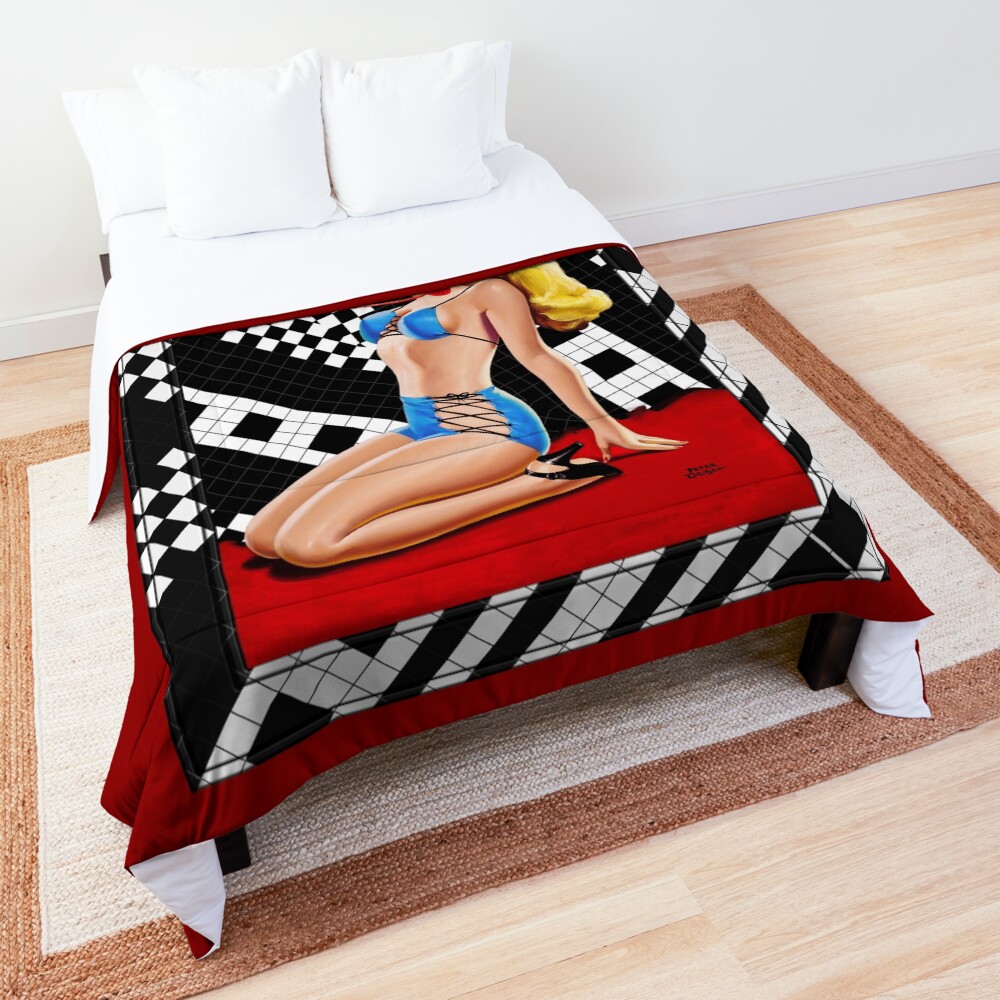
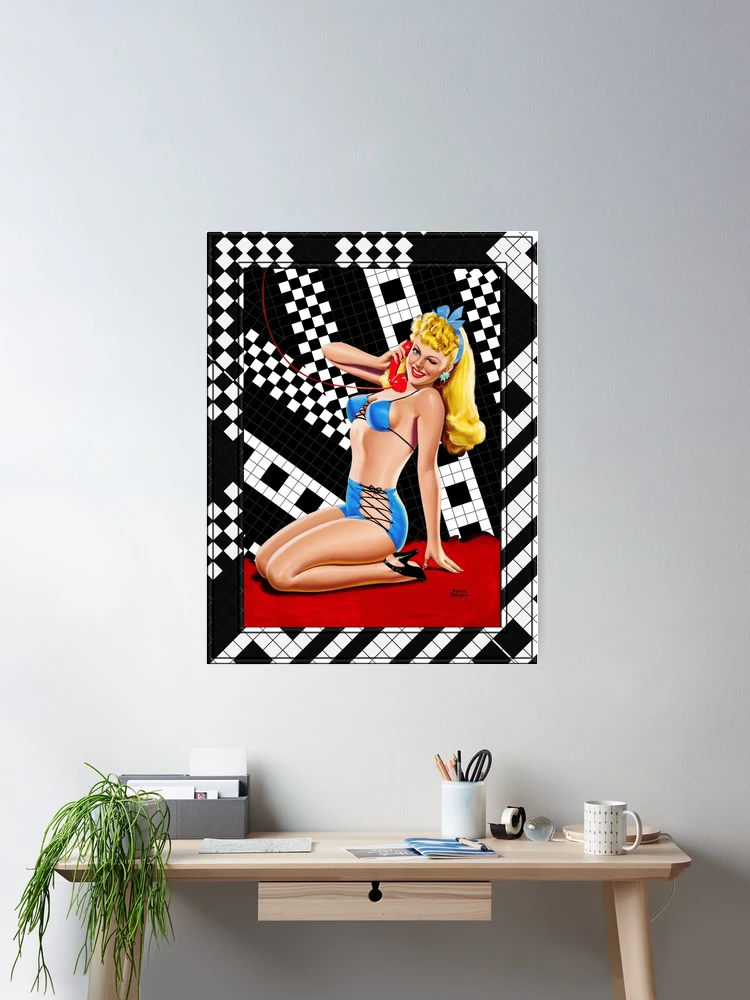
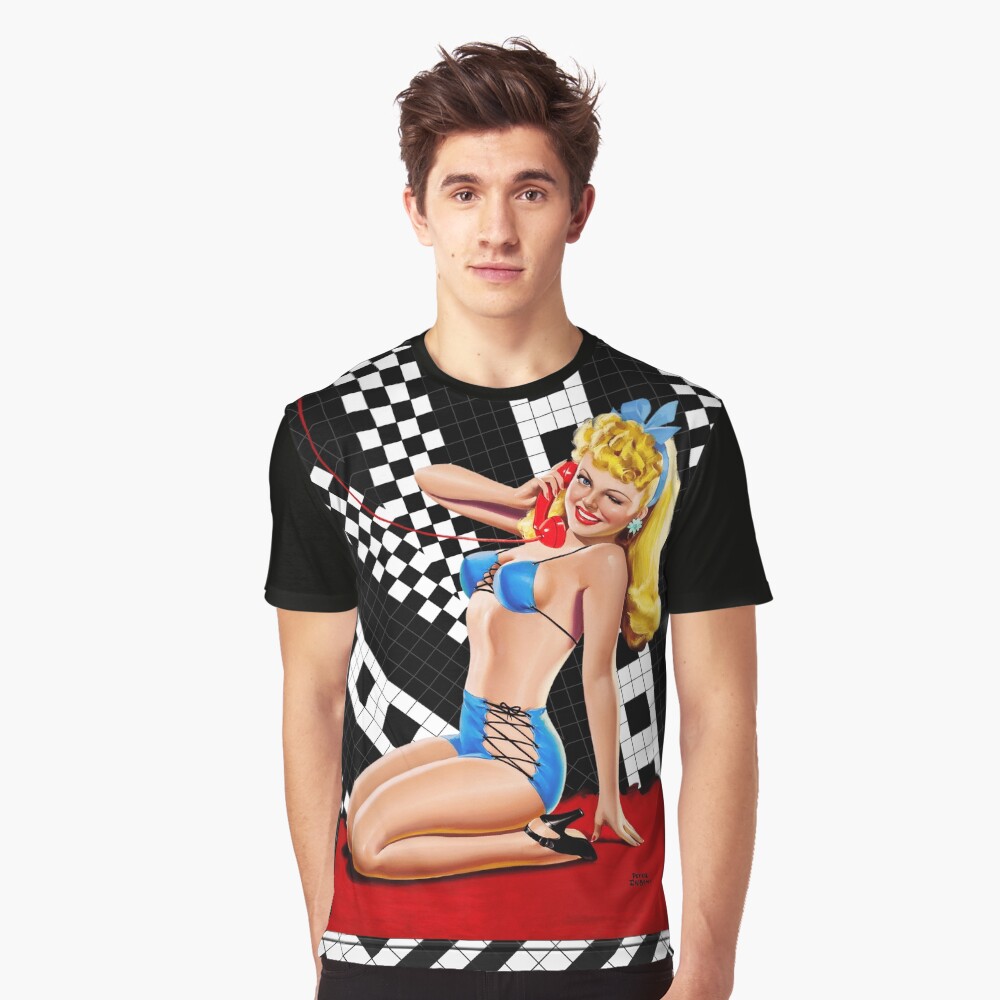
В центре “Красная горячая линия” lies a playful and coquettish depiction of a young blonde woman. Her golden hair cascades in carefully stylized waves, adorned with a large, cheerful blue bow that complements her swimsuit. The bright smile on her face, coupled with her winking eye, exudes an inviting charm, drawing viewers into the narrative. She holds a bright red telephone receiver, which lends the artwork its name and serves as a pivotal object within the composition.
The subject is dressed in a light blue bikini with black lace detailing. The high-waisted bottoms, characteristic of 1940s and 1950s fashion, are secured with crisscrossed laces, adding a touch of suggestive allure without compromising the overall playfulness of the scene. Her slender figure, accented by the pose, kneeling on a red carpet with one hand on the ground and the other holding the phone, demonstrates Driben’s skillful portrayal of anatomy and movement.
Background and Surrounding Objects
Фон “Красная горячая линия” is a dazzling geometric checkerboard pattern, executed in stark black and white. This graphic, almost optical illusion-like design provides a modernist contrast to the soft, feminine figure in the foreground. The abstract background evokes a sense of energy and boldness, reinforcing the dynamic quality of the composition.
The red telephone cord playfully winds across the frame, connecting the subject to an unseen caller and injecting a sense of narrative intrigue. The phone itself, a vibrant red, stands out sharply against the monochrome and blue elements, acting as both a visual and thematic anchor.
The red carpet beneath the woman serves a dual purpose. It frames her pose while adding a warm, inviting tone to the composition. This patch of red balances the cooler tones of her attire and ties back to the telephone, creating a cohesive color scheme.
Стиль и техника
Driben’s work embodies the Golden Age of pin-up art, an era when illustrators captured an idealized, often cheeky depiction of femininity. His style is defined by bold colors, Чистые линии, and a high level of polish that recalls the glossy advertisements and magazine covers of his time.
В “Красная горячая линия,” Driben’s use of light and shadow is subtle but effective. The glossy sheen on the telephone and the laces of the swimsuit adds a sense of texture and realism, while the soft shadows along the figure’s curves enhance her three-dimensionality. The artist’s attention to detail—such as the precise rendering of her glossy black heels or the subtle highlights in her hair—showcases his technical prowess.
Тема и настроение
Тема “Красная горячая линия” беззаботный и игривый, rooted in the optimism and cheeky humor that characterized mid-century pin-up art. The telephone introduces an element of storytelling, inviting viewers to imagine the conversation taking place. Is she flirting with a suitor? Sharing a laugh with a friend? The ambiguity allows for a range of interpretations, adding depth to the seemingly simple scene.
The mood is undeniably fun and flirtatious, yet it remains within the realm of innocent escapism. Driben’s pin-ups often walked the line between suggestiveness and wholesomeness, a balance that made them widely popular and accessible during their time. “Красная горячая линия” не исключение, offering a playful fantasy that never veers into vulgarity.
Материалы и среда
While the specific medium of this piece isn’t detailed here, Driben was known for his work in gouache and oil paints. These mediums allowed him to achieve the vibrant colors and smooth finishes seen in “The Red Hotline.” The level of precision in the lines and shading suggests that this artwork was originally created as an illustration, likely intended for print in a magazine, calendar, or poster.
Cultural Context and Legacy
“Красная горячая линия” reflects the cultural zeitgeist of its era. Created during a time when pin-up art was at its peak, it embodies the idealized femininity and playful sensuality that appealed to audiences in the mid-20th century. Driben’s works were part of a broader movement that celebrated beauty, гламур, and the allure of the everyday woman.
As a piece of pin-up art, “Красная горячая линия” carries with it the legacy of a genre that influenced fashion, реклама, and popular culture. Сегодня, it stands as a nostalgic reminder of a bygone era, appreciated both for its aesthetic qualities and its historical significance.
Заключение
“Красная горячая линия” by Peter Driben is a masterful example of mid-century pin-up art. Its captivating subject, bold design, and vibrant execution showcase the artist’s talent and creativity. Driben’s ability to combine playfulness with technical precision ensures that this artwork remains an enduring icon of its genre. It captures a moment in time when glamour and charm were celebrated, offering viewers a delightful glimpse into the world of vintage illustration.
Это обновленная цифровая репродукция старых мастеров изображения, являющегося общественным достоянием, которое доступно в качестве металлическая печать.
О художнике
Информация ниже от Wikipedia.org
Питер Дрибен родился в Бостоне., и он учился в Художественной школе Веспер Джордж, прежде чем переехать в Париж. 1925. Во время занятий в Сорбонне в 1925, он начал серию очень популярных рисунков пером и тушью городских танцовщиц..
В марте 1934 Дрибен создал свой первый известный фильм в стиле пин-ап, который стал обложкой La Paree Stories.; и по 1935, он продюсировал каверы для Snappy, Пеп, Нью-йоркские ночи, Французская ночная жизнь и каприз.
По мере того, как популярность Дрибена продолжала расти в конце тридцатых, он создал больше обложек для других периодических изданий, включая Silk Stocking Stories., Карусель из фильмов и веселье на реальном экране.
Карьера Дрибена расширилась до рекламы, когда он в конце концов переехал в Нью-Йорк. 1936. Здесь он создал оригинальные трехмерные вырубные витрины для Philco Radios., Банные полотенца Cannon, и хлебопекарная компания Вебер.
Возможно, его самая известная работа - это оригинальные плакаты и рекламные изображения для The Maltese Falcon.. Питер Дрибен также был близким другом издателя Роберта Харрисона., И в 1941 с ним был заключен контракт на создание обложек для нового журнала Харрисона Beauty Parade..
После этого Питер нарисовал сотни обложек для этого издания и для других семи изданий, которые должен был запустить Харрисон. – Флиртовать, Шепот, Подглядывание, Подмигивание, Глазастый, хихикает, и Джокер.
Дрибен часто публиковал до шести или семи своих каверов каждый месяц.. Работа Дрибена для Харрисона сделала его одним из самых признанных и успешных художников в стиле пин-ап и гламур в Америке.. Незадолго до того, как он начал работать на Харрисона, Дрибен вышла замуж за художника, актриса и поэт, Луиза Кирби.
В 1944 ему была предложена необычная возможность, для пин-ап художника; который должен был стать арт-директором New York Sun, должность, которую он оставил до 1946. Во время войны, его популярная картина, изображающая американских солдат, поднимающих флаг на Иводзиме, вызвала значительное внимание средств массовой информации..
В 1956, Дрибен и Луиза переехали в Майами-Бич, где он провел пенсионные годы за рисованием портретов (в том числе один из Дуайта Д.. Эйзенхауэр) и другие произведения изобразительного искусства, которые были организованы в успешные выставки его женой. Дрибен умер в 1968, Луиза в 1984.