

The Russian Brides Attire
The Russian Brides Attire c1889 by Russian Painter Konstantin Makovski (1839 – 1915); Errusiako pintura historikoetan espezializatua, iragan mendeetako Errusiako bizitzaren ikuspegi idealizatua erakusten dutenak.
Konstantin Makovsky’s The Russian Brides Attire (1889) presents a captivating glimpse into the ceremonial preparations of a Russian bride in a traditional 19th-century setting. The scene is set within an intimate, richly adorned room where the bride-to-be, poised in anticipation, is surrounded by her closest family and friends. This historical genre painting, rooted deeply in Russian culture, reflects both the bride’s personal moment and the social customs of the time.
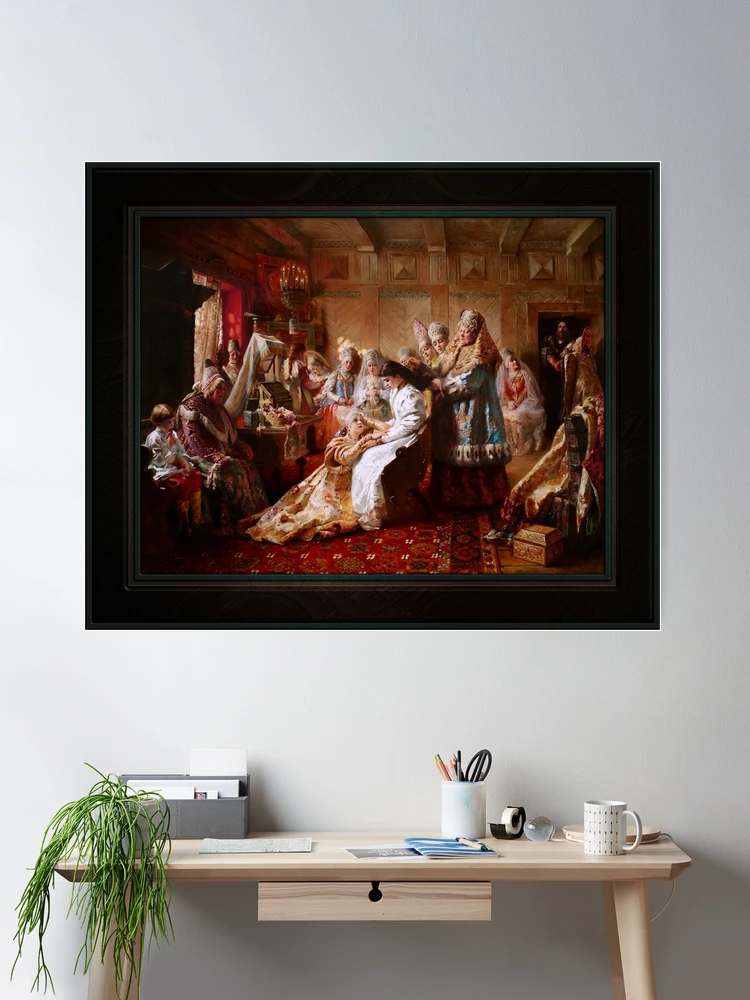
At the heart of the painting sits the young bride, dressed in an opulent, meticulously detailed gown of traditional Russian wedding attire. The intricacies of her attire are striking; every fold and embellishment in her richly embroidered dress echoes the skill and craftsmanship of the period. The gown’s texture, enhanced by the gentle play of light, emphasizes its luxurious fabric, hinting at the bride’s high social standing.
Bata, with its intricate patterns and vibrant colors, combines tradition with beauty, setting her apart as the central figure in the composition. Bere espresioa, serene yet tinged with the anticipation of the upcoming union, contributes to the painting’s overall sense of reverence for this momentous life event.
The surrounding figures enhance the emotional depth of the scene. Bridesmaids, family members, and an attentive mother are present, each contributing to the bride’s preparations. The bridal party’s clothing is also detailed, showcasing the opulence typical of the Russian aristocracy during the era.
These individuals are all engaged in the intimate tasks of finalizing the bride’s appearance, with one figure seated at the bride’s feet, holding her hands tenderly—a subtle gesture of familial connection and support. Aitzitik, a young man, possibly the groom, appears at the threshold of the room, holding a gift box. His presence is restrained, his access to the bride’s space halted by a gentle but firm barrier, as custom would dictate.
The setting further complements the mood of the painting. The room is lavishly decorated, with dark, rich tones contrasting against the soft glow of candlelight and the bride’s radiant attire. This use of light symbolizes both the bride’s purity and the solemnity of the occasion.
The opulent, antique furniture and the delicate furnishings suggest an upper-class household, indicative of the wealth and status of the bride’s family. These elements come together to transport the viewer to the Russian nobility’s private spaces, where tradition and social rituals were deeply ingrained.
Makovsky’s approach to the painting reflects his expertise in academic art and historical realism, grounded in his training and experience with the Peredvizhniki (Ibiltariak) mugimendua. Known for portraying the everyday lives of Russians, Makovsky’s work in Errusiako Emaztegaiaren Janzkera transcends mere documentation, offering an emotional portrait of a pivotal moment in a young woman’s life. His mastery of detail, kolorea, and light conveys a sense of reverence for the traditions of Russian weddings, while the gentle interactions between the figures in the scene imbue the work with a sense of warmth and familial love.
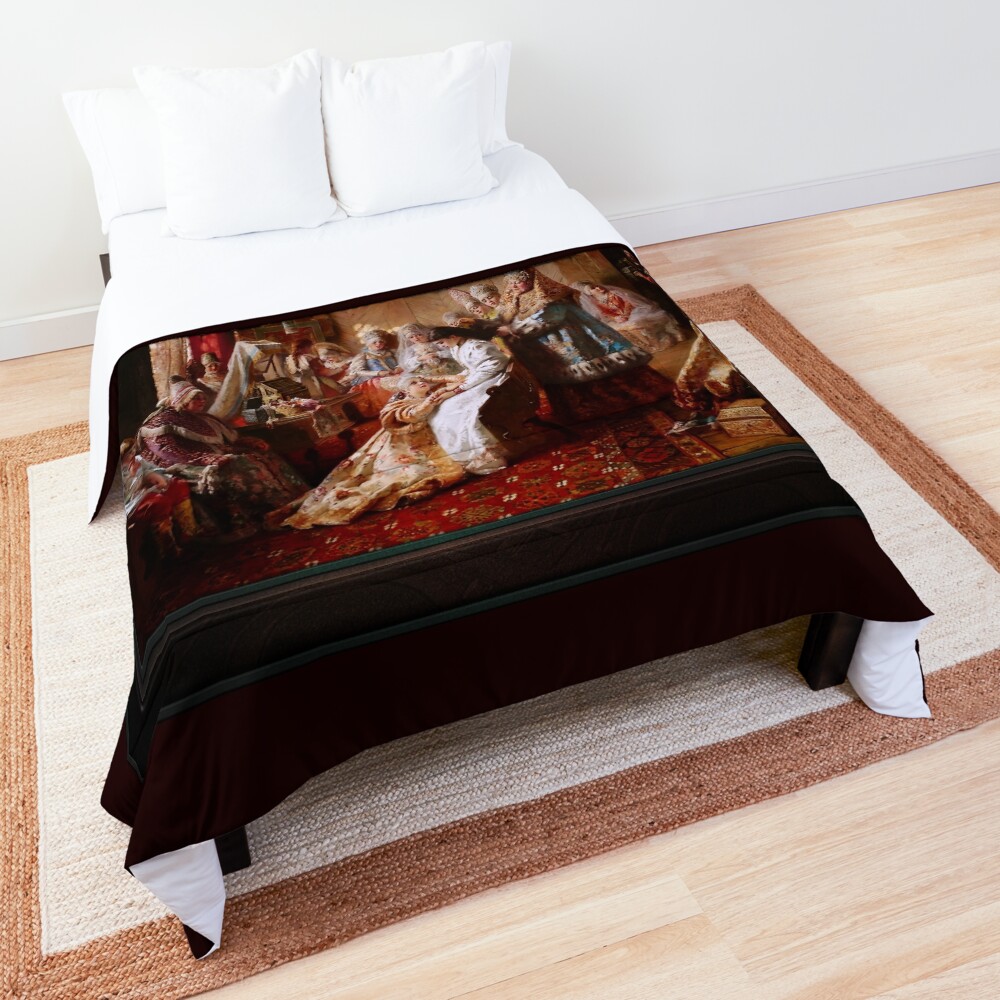
The mood of the painting is one of quiet anticipation, ceremonial dignity, and a deep respect for cultural traditions. The bride is presented not just as the central figure in a social ritual, but as a symbol of purity, continuity, and heritage.
The work conveys a mixture of joy and solemnity, emphasizing the gravity of the wedding ceremony while celebrating the familial bonds that are integral to it. The groom, awaiting his bride’s arrival, is a figure of patience and longing, and the space between the bride and groom symbolizes the sacredness and exclusivity of the pre-wedding ritual.
Estilo aldetik, Errusiako Emaztegaiaren Janzkera is a quintessential example of Russian academic realism. Makovsky’s technique, with its sharp focus on the textures of fabrics, the naturalism of facial expressions, and the subtle play of light, creates a vivid, almost tangible atmosphere.
The figures are carefully posed to convey a sense of unity and purpose, while the careful rendering of the bride’s dress and the surrounding details showcases the artist’s skill in depicting texture and material.
Gaika, the work explores the cultural importance of the Russian wedding, which was more than just a personal event—it was a public and familial milestone. Through the artist’s portrayal of the bride’s attire, the familial interaction, and the ceremonial anticipation, the viewer is invited to witness an intimate, yet highly structured moment in Russian society. The painting also highlights the role of tradition in Russian culture, where customs surrounding marriage were highly ritualized and carefully observed.
Errusiako Emaztegaiaren Janzkera is not only a visual narrative of a traditional wedding but also an insightful reflection of the values and customs of 19th-century Russian aristocracy. It stands as a testament to Konstantin Makovsky’s ability to blend historical accuracy with emotional depth, offering the viewer a vivid portrayal of Russian cultural heritage at its most beautiful and ceremonial.
Hau arte digitala ukituta dagoen domeinu publikoko irudi baten erreprodukzioa da.
Informazioa Behean Deribatua Wikipedia.org
Konstantin Makovski eragin handiko margolari errusiarra izan zen, afiliatuta “Peredvizhniki (Ibiltariak)”. Bere margolan historiko asko, hala nola, Koroaren azpian (1889) Errusiako emaztegaiaren jantzia eta ezkontza aurretik bezala ere ezaguna, mendeetako errusiar bizitzaren ikuspegi idealizatua erakutsi zuen. Arte akademikoaren ordezkaritzat hartzen da askotan.
Konstantin Makovsky Moskun jaio zen. Bere aita errusiar artearen figura eta margolari afizionatua zen, Jegor Ivanovitx Makovski. Bere ama konpositorea zen, eta espero zuen bere semeak egunen batean bere urratsak jarraitzea. Bere anaia txikiak Vladimir eta Nikolay eta bere arreba Alexandra ere margolari izatera iritsi ziren.
In 1851 Makovsky Moskuko Pintura Eskolan sartu zen, Eskultura eta Arkitektura non ikasle nagusi bihurtu zen, eskuragarri dauden sari guztiak erraz eskuratzea. Bere irakasleak Karl Bryullov eta Vasily Tropinin izan ziren. Makovskyren erromantizismorako eta dekorazio-efektuetarako joerak Bryulloven eraginez azal daitezke..
Artea bere pasioa izan arren, amak nahi zuena ere kontuan hartu zuen. Aipatu zezakeen konpositoreen bila abiatu zen, eta lehenik Frantziara joan zen. Aurretik, musika klasikoaren zalea izan zen beti, eta pieza asko entzun zituen. Askotan nahi zuen doinua aldatzea, edo horietako batzuen estiloa, atseginagoak izan daitezen. Geroago bere bizitzan egia bihurtu zen.
In 1858 Makovski San Petersburgoko Arte Akademia Inperialean sartu zen. Bertatik 1860 Akademiaren erakusketetan parte hartu zuen Itsuen sendatzea bezalako margolanekin (1860) eta Dmitry faltsuaren agenteek Boris Godunov-en semea hiltzen dute (1862). In 1863 Makovskyk eta beste hamahiru ikaslek Akademiak Eskandinaviako mitologiako gaien ezarpenaren aurka protesta egin zuten Akademiaren Urrezko Domina Handiaren lehiaketan.; denak akademiatik diploma ofizialik gabe utzi zuten.
Makovsky kooperatiba bateko kide bihurtu zen (artel) Ivan Kramskoik zuzendutako artistena, normalean Wanderers eguneroko bizitzari buruzko margolanak ekoizten ditu (Alarguna 1865, Sardinzar saltzailea 1867, etab.). Bertatik 1870 Society for Travelling Art Exhibitions-eko kide sortzailea izan zen eta eguneroko bizitzari eskainitako koadroetan lanean jarraitu zuen.. Akademiako erakusketetan zein Wanderersen Arte Erakusketa Ibiltarietan erakutsi zituen bere lanak.
Bere estiloan aldaketa nabarmena gertatu zen 1870eko hamarkadaren erdialdean Egiptora eta Serbiara bidaiatu ondoren. Bere interesak arazo sozial eta psikologikoetatik koloreen eta formaren arazo artistikoetara aldatu ziren.
1880ko hamarkadan modako erretratuen eta margo historikoen egile bihurtu zen. Munduko Azokan 1889 Parisen Urrezko Domina Handia jaso zuen Ivan Izugarriaren heriotza koadroengatik, Parisko epaia, eta Demon eta Tamara. Garai hartako errusiar artistarik estimatuenetariko eta ordainsaririk handienetako bat izan zen. Kritika demokratiko askok Wanderersen errenegatutzat hartu zuten’ idealak, ekoizten (Henryk Siemiradzki bezala) obra deigarriak baina sakonak,[2] beste batzuek, berriz, errusiar inpresionismoaren aitzindari gisa ikusten dute.
Makovsky bertan hil zuten 1915 bere zaldizko karroa tranbia elektriko batek San Petersburgon harrapatu zuenean.