

The Russian Brides Attire
The Russian Brides Attire c1889 by Russian Painter Konstantin Makovsky (1839 – 1915); specializzato in dipinti storici russi che mostrano una visione idealizzata della vita russa nei secoli passati.
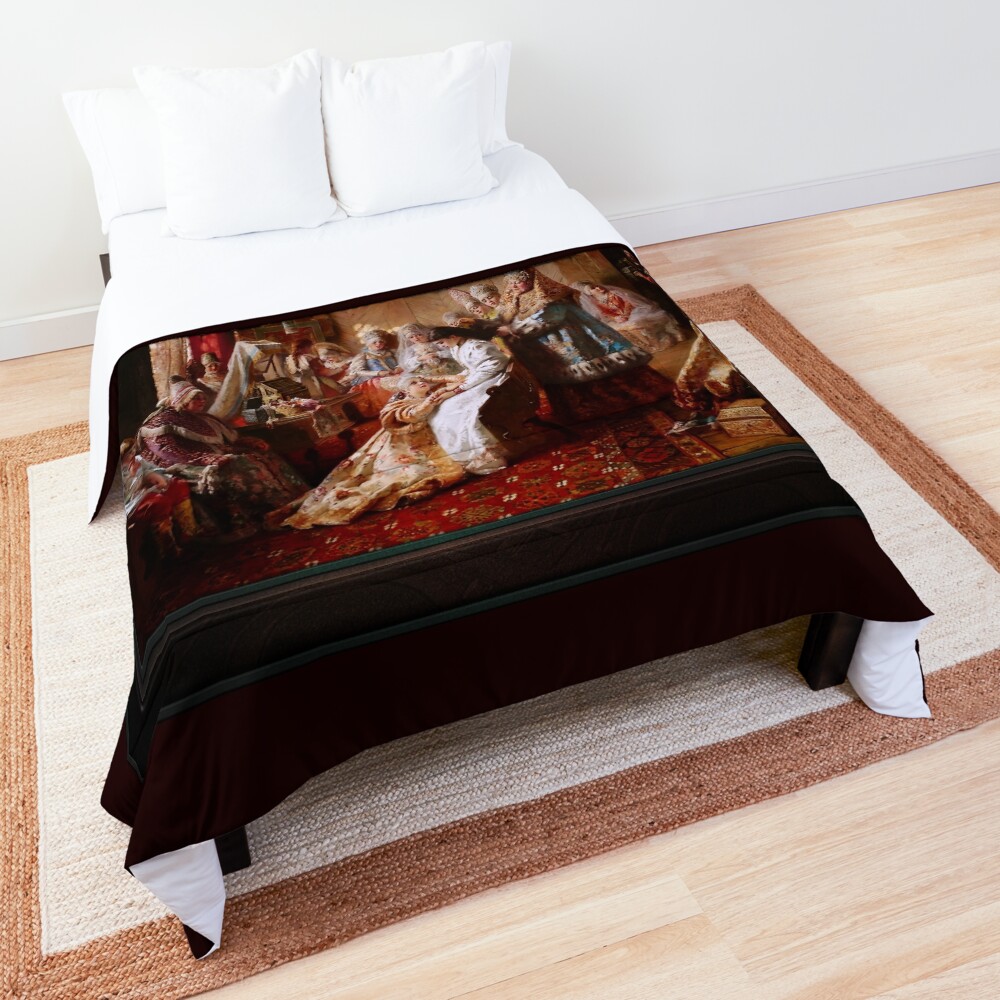
Konstantin Makovsky’s The Russian Brides Attire (1889) presents a captivating glimpse into the ceremonial preparations of a Russian bride in a traditional 19th-century setting. The scene is set within an intimate, richly adorned room where the bride-to-be, poised in anticipation, is surrounded by her closest family and friends. This historical genre painting, rooted deeply in Russian culture, reflects both the bride’s personal moment and the social customs of the time.
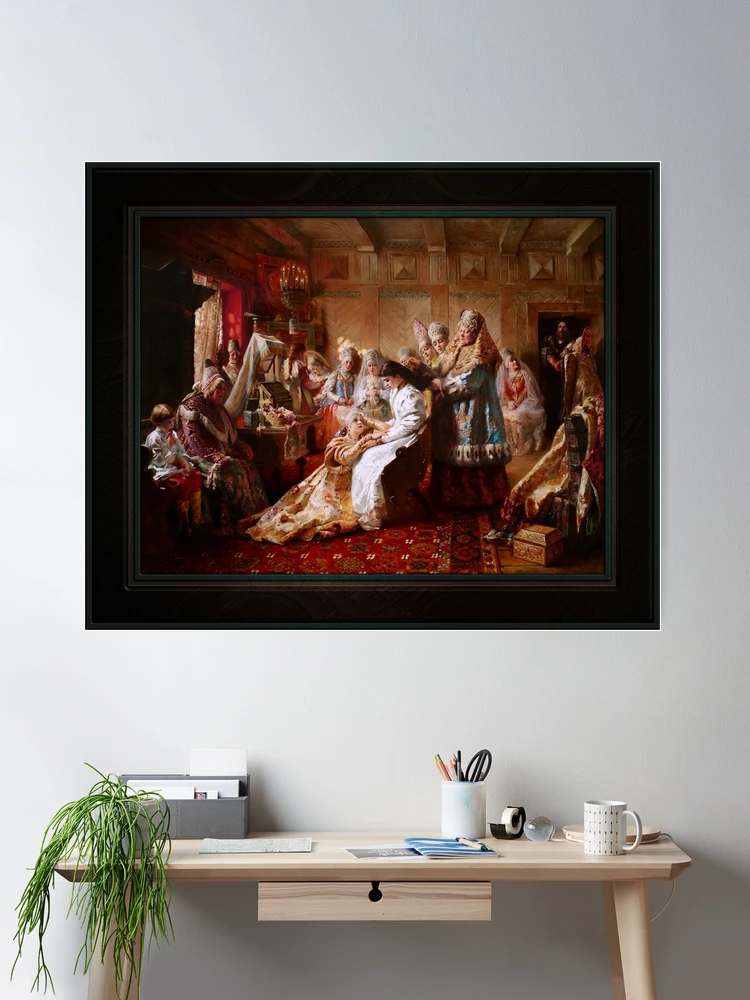
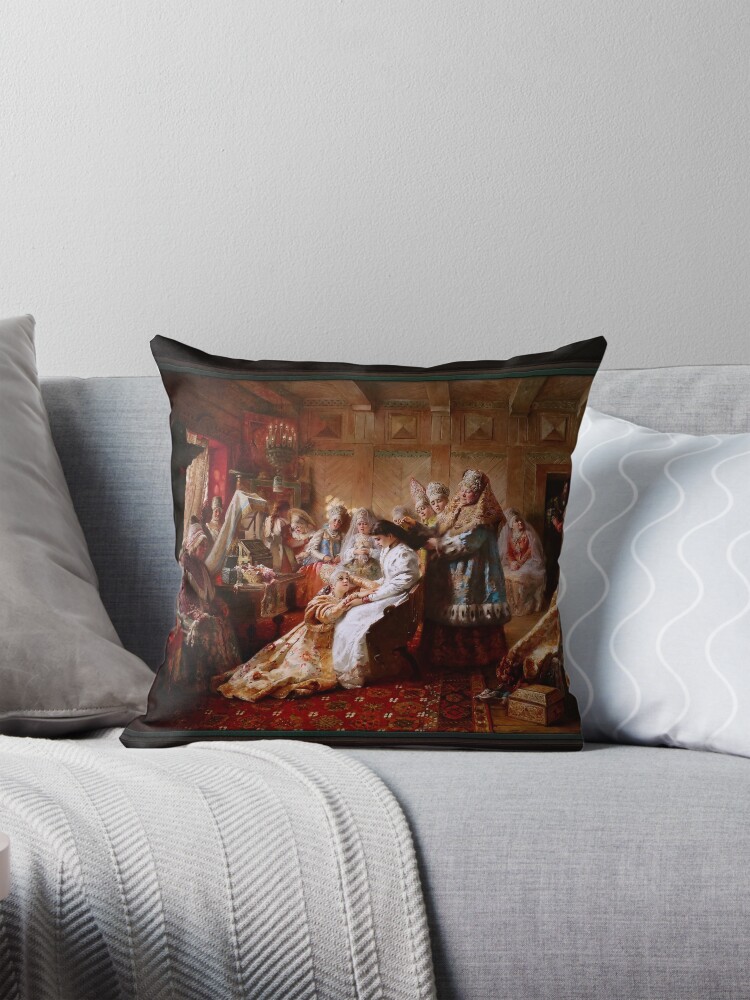
At the heart of the painting sits the young bride, dressed in an opulent, meticulously detailed gown of traditional Russian wedding attire. The intricacies of her attire are striking; every fold and embellishment in her richly embroidered dress echoes the skill and craftsmanship of the period. The gown’s texture, enhanced by the gentle play of light, emphasizes its luxurious fabric, hinting at the bride’s high social standing.
L'abito, with its intricate patterns and vibrant colors, combines tradition with beauty, setting her apart as the central figure in the composition. La sua espressione, serene yet tinged with the anticipation of the upcoming union, contributes to the painting’s overall sense of reverence for this momentous life event.
The surrounding figures enhance the emotional depth of the scene. Bridesmaids, family members, and an attentive mother are present, each contributing to the bride’s preparations. The bridal party’s clothing is also detailed, showcasing the opulence typical of the Russian aristocracy during the era.
These individuals are all engaged in the intimate tasks of finalizing the bride’s appearance, with one figure seated at the bride’s feet, holding her hands tenderly—a subtle gesture of familial connection and support. Al contrario, a young man, possibly the groom, appears at the threshold of the room, holding a gift box. His presence is restrained, his access to the bride’s space halted by a gentle but firm barrier, as custom would dictate.
The setting further complements the mood of the painting. The room is lavishly decorated, with dark, rich tones contrasting against the soft glow of candlelight and the bride’s radiant attire. This use of light symbolizes both the bride’s purity and the solemnity of the occasion.
The opulent, antique furniture and the delicate furnishings suggest an upper-class household, indicative of the wealth and status of the bride’s family. These elements come together to transport the viewer to the Russian nobility’s private spaces, where tradition and social rituals were deeply ingrained.
Makovsky’s approach to the painting reflects his expertise in academic art and historical realism, grounded in his training and experience with the Peredvizhniki (vagabondi) movimento. Known for portraying the everyday lives of Russians, Makovsky’s work in The Russian Bride’s Attire transcends mere documentation, offering an emotional portrait of a pivotal moment in a young woman’s life. His mastery of detail, colore, and light conveys a sense of reverence for the traditions of Russian weddings, while the gentle interactions between the figures in the scene imbue the work with a sense of warmth and familial love.
The mood of the painting is one of quiet anticipation, ceremonial dignity, and a deep respect for cultural traditions. The bride is presented not just as the central figure in a social ritual, but as a symbol of purity, continuità, and heritage.
The work conveys a mixture of joy and solemnity, emphasizing the gravity of the wedding ceremony while celebrating the familial bonds that are integral to it. The groom, awaiting his bride’s arrival, is a figure of patience and longing, and the space between the bride and groom symbolizes the sacredness and exclusivity of the pre-wedding ritual.
In termini di stile, The Russian Bride’s Attire is a quintessential example of Russian academic realism. Makovsky’s technique, with its sharp focus on the textures of fabrics, the naturalism of facial expressions, and the subtle play of light, creates a vivid, almost tangible atmosphere.
The figures are carefully posed to convey a sense of unity and purpose, while the careful rendering of the bride’s dress and the surrounding details showcases the artist’s skill in depicting texture and material.
Thematically, the work explores the cultural importance of the Russian wedding, which was more than just a personal event—it was a public and familial milestone. Through the artist’s portrayal of the bride’s attire, the familial interaction, and the ceremonial anticipation, the viewer is invited to witness an intimate, yet highly structured moment in Russian society. The painting also highlights the role of tradition in Russian culture, where customs surrounding marriage were highly ritualized and carefully observed.
The Russian Bride’s Attire is not only a visual narrative of a traditional wedding but also an insightful reflection of the values and customs of 19th-century Russian aristocracy. It stands as a testament to Konstantin Makovsky’s ability to blend historical accuracy with emotional depth, offering the viewer a vivid portrayal of Russian cultural heritage at its most beautiful and ceremonial.
Questa è una riproduzione ritoccata di arte digitale dei vecchi maestri di un'immagine di pubblico dominio.
Informazioni di seguito derivate da Wikipedia.org
Konstantin Makovsky è stato un influente pittore russo, affiliato al “Peredvizhniki (vagabondi)”. Molti dei suoi dipinti storici, come Sotto la corona (1889) noto anche come L'abbigliamento della sposa russa e Prima del matrimonio, ha mostrato una visione idealizzata della vita russa dei secoli precedenti. È spesso considerato un rappresentante dell'arte accademica.
Konstantin Makovsky è nato a Mosca. Suo padre era la figura artistica russa e pittore dilettante, Yegor Ivanovich Makovsky. Sua madre era una compositrice, e sperava che suo figlio un giorno avrebbe seguito le sue orme. Anche i suoi fratelli minori Vladimir e Nikolay e sua sorella Alexandra diventarono pittori.
Nel 1851 Makovsky è entrato alla Scuola di Pittura di Mosca, Scultura e Architettura dove è diventato il miglior studente, ottenendo facilmente tutti i premi disponibili. I suoi insegnanti erano Karl Bryullov e Vasily Tropinin. Le inclinazioni di Makovsky al Romanticismo e agli effetti decorativi possono essere spiegate dall'influenza di Bryullov.
Anche se l'arte era la sua passione, pensò anche a ciò che sua madre aveva voluto che facesse. Partì alla ricerca di compositori a cui potesse fare riferimento, e prima è andato in Francia. Prima di, era sempre stato un amante della musica classica, e ascoltato tanti pezzi. Spesso desiderava poter cambiare la melodia, o lo stile di alcuni di essi per renderli più divertenti. Più tardi nella sua vita si è avverato.
Nel 1858 Makovsky è entrato all'Accademia Imperiale delle Arti di San Pietroburgo. A partire dal 1860 partecipò alle mostre dell'Accademia con dipinti come La cura dei ciechi (1860) e Agenti del falso Dmitry uccidono il figlio di Boris Godunov (1862). Nel 1863 Makovsky e altri tredici studenti hanno tenuto una protesta contro l'impostazione dell'Accademia di argomenti della mitologia scandinava nel concorso per la Grande Medaglia d'Oro dell'Accademia; tutti hanno lasciato l'accademia senza un diploma formale.
Makovsky è diventato un membro di una cooperativa (artel) di artisti guidati da Ivan Kramskoi, tipicamente producendo dipinti di Wanderers sulla vita di tutti i giorni (Vedova 1865, Venditore di aringhe 1867, eccetera.). A partire dal 1870 è stato un membro fondatore della Society for Traveling Art Exhibitions e ha continuato a lavorare su dipinti dedicati alla vita quotidiana. Ha esposto le sue opere sia alle mostre accademiche che alle mostre d'arte itinerante dei Wanderers.
Un cambiamento significativo nel suo stile si è verificato dopo aver viaggiato in Egitto e Serbia a metà del 1870. I suoi interessi sono cambiati dai problemi sociali e psicologici ai problemi artistici dei colori e della forma.
Negli anni 1880 divenne un autore alla moda di ritratti e dipinti storici. Alla fiera mondiale di 1889 A Parigi ricevette la grande medaglia d'oro per i suoi dipinti la morte di Ivan la terribile, Il giudizio di Paride, e Demon e Tamara. Fu uno degli artisti russi più apprezzati e pagati dell'epoca. Molti critici democratici lo consideravano un rinnegato dei Vagabondi’ ideali, produrre (come Henryk Siemiradzki) opere sorprendenti ma poco profonde,[2] mentre altri lo vedono come un precursore dell'impressionismo russo.
Makovsky è stato ucciso in 1915 quando la sua carrozza trainata da cavalli è stata investita da un tram elettrico a San Pietroburgo.