

The Russian Brides Attire
The Russian Brides Attire c1889 by Russian Painter コンスタンチン・マコフスキー (1839 – 1915); 過去数世紀のロシアの生活の理想的な見方を示すロシアの歴史絵画を専門としています.
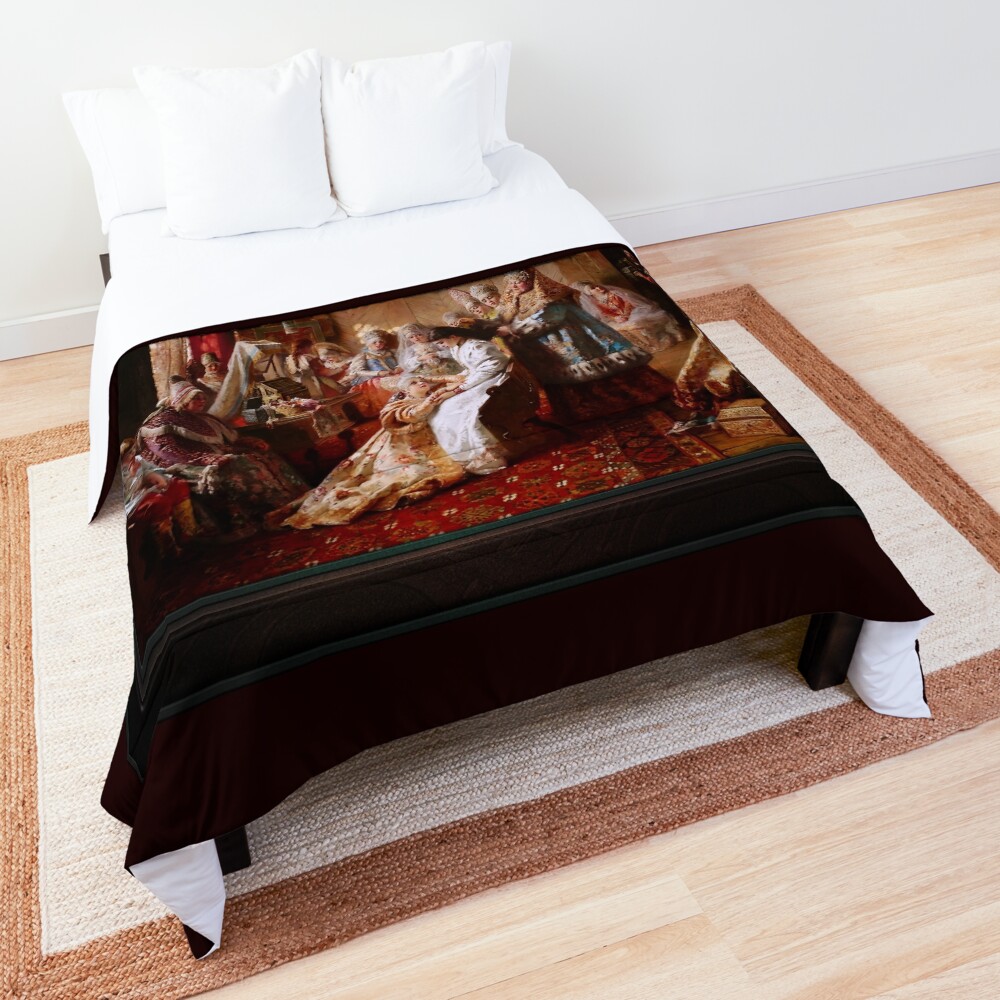
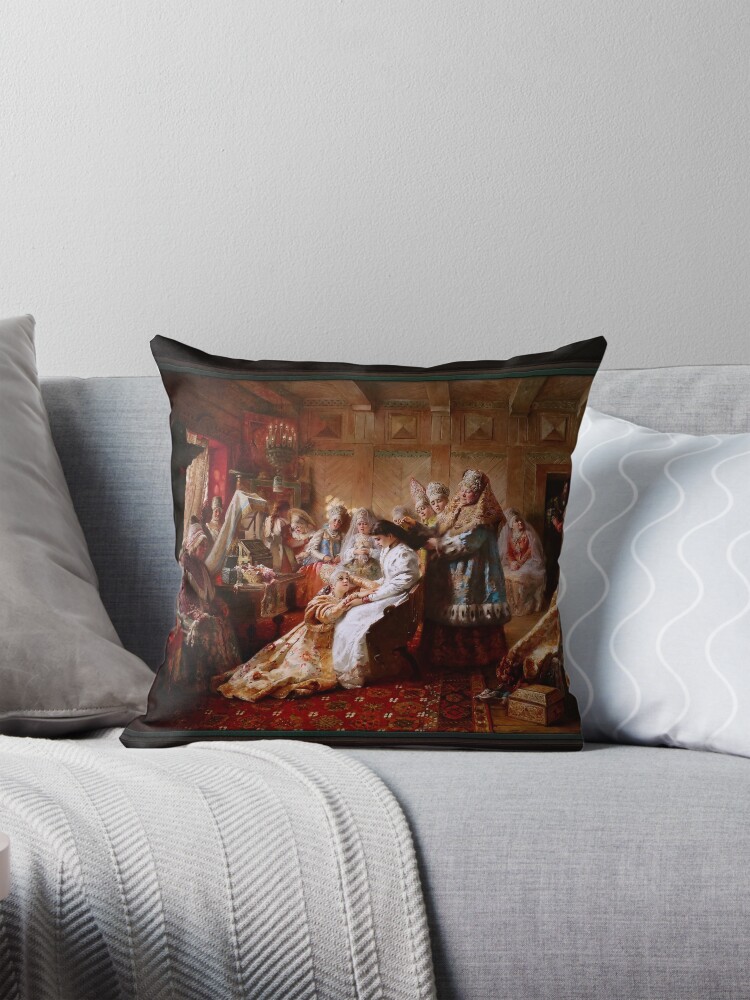
Konstantin Makovsky’s The Russian Brides Attire (1889) presents a captivating glimpse into the ceremonial preparations of a Russian bride in a traditional 19th-century setting. The scene is set within an intimate, richly adorned room where the bride-to-be, poised in anticipation, is surrounded by her closest family and friends. This historical genre painting, rooted deeply in Russian culture, reflects both the bride’s personal moment and the social customs of the time.
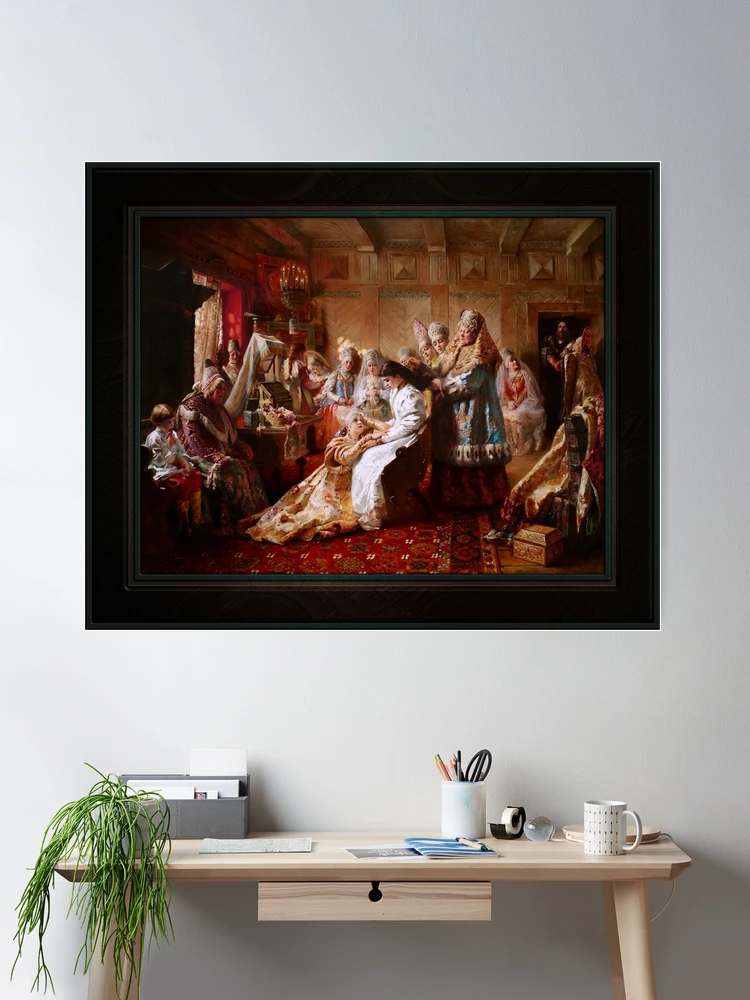
At the heart of the painting sits the young bride, dressed in an opulent, meticulously detailed gown of traditional Russian wedding attire. The intricacies of her attire are striking; every fold and embellishment in her richly embroidered dress echoes the skill and craftsmanship of the period. The gown’s texture, enhanced by the gentle play of light, emphasizes its luxurious fabric, hinting at the bride’s high social standing.
ガウン, with its intricate patterns and vibrant colors, combines tradition with beauty, setting her apart as the central figure in the composition. 彼女の表情, serene yet tinged with the anticipation of the upcoming union, contributes to the painting’s overall sense of reverence for this momentous life event.
The surrounding figures enhance the emotional depth of the scene. Bridesmaids, family members, and an attentive mother are present, each contributing to the bride’s preparations. The bridal party’s clothing is also detailed, showcasing the opulence typical of the Russian aristocracy during the era.
These individuals are all engaged in the intimate tasks of finalizing the bride’s appearance, with one figure seated at the bride’s feet, holding her hands tenderly—a subtle gesture of familial connection and support. 対照的に, a young man, possibly the groom, appears at the threshold of the room, holding a gift box. His presence is restrained, his access to the bride’s space halted by a gentle but firm barrier, as custom would dictate.
The setting further complements the mood of the painting. The room is lavishly decorated, with dark, rich tones contrasting against the soft glow of candlelight and the bride’s radiant attire. This use of light symbolizes both the bride’s purity and the solemnity of the occasion.
The opulent, antique furniture and the delicate furnishings suggest an upper-class household, indicative of the wealth and status of the bride’s family. These elements come together to transport the viewer to the Russian nobility’s private spaces, where tradition and social rituals were deeply ingrained.
Makovsky’s approach to the painting reflects his expertise in academic art and historical realism, grounded in his training and experience with the ペレドヴィジニキ (放浪者) 動き. Known for portraying the everyday lives of Russians, Makovsky’s work in ロシアの花嫁の服装 transcends mere documentation, offering an emotional portrait of a pivotal moment in a young woman’s life. His mastery of detail, 色, and light conveys a sense of reverence for the traditions of Russian weddings, while the gentle interactions between the figures in the scene imbue the work with a sense of warmth and familial love.
The mood of the painting is one of quiet anticipation, ceremonial dignity, and a deep respect for cultural traditions. The bride is presented not just as the central figure in a social ritual, but as a symbol of purity, continuity, and heritage.
The work conveys a mixture of joy and solemnity, emphasizing the gravity of the wedding ceremony while celebrating the familial bonds that are integral to it. The groom, awaiting his bride’s arrival, is a figure of patience and longing, and the space between the bride and groom symbolizes the sacredness and exclusivity of the pre-wedding ritual.
スタイル的には, ロシアの花嫁の服装 is a quintessential example of Russian academic realism. Makovsky’s technique, with its sharp focus on the textures of fabrics, the naturalism of facial expressions, and the subtle play of light, creates a vivid, almost tangible atmosphere.
The figures are carefully posed to convey a sense of unity and purpose, while the careful rendering of the bride’s dress and the surrounding details showcases the artist’s skill in depicting texture and material.
テーマ的に, the work explores the cultural importance of the Russian wedding, which was more than just a personal event—it was a public and familial milestone. Through the artist’s portrayal of the bride’s attire, the familial interaction, and the ceremonial anticipation, the viewer is invited to witness an intimate, yet highly structured moment in Russian society. The painting also highlights the role of tradition in Russian culture, where customs surrounding marriage were highly ritualized and carefully observed.
ロシアの花嫁の服装 is not only a visual narrative of a traditional wedding but also an insightful reflection of the values and customs of 19th-century Russian aristocracy. It stands as a testament to Konstantin Makovsky’s ability to blend historical accuracy with emotional depth, offering the viewer a vivid portrayal of Russian cultural heritage at its most beautiful and ceremonial.
これは、パブリックドメインの画像のレタッチされたデジタルアートオールドマスターの複製です.
以下の情報から派生 Wikipedia.org
コンスタンチン・マコフスキーは影響力のあるロシアの画家でした, と提携している “ペレドヴィジニキ (放浪者)”. 彼の歴史画の多くは, 王冠の下など (1889) ロシアの花嫁の服装および結婚式前としても知られています, 前世紀のロシアの生活の理想的な見方を示した. 彼はしばしばアカデミックアートの代表と見なされます.
コンスタンチン・マコフスキーはモスクワで生まれました. 彼の父はロシアの芸術家であり、アマチュアの画家でした, エゴール・イワノビッチ・マコフスキー. 彼の母親は作曲家でした, そして彼女は息子がいつか彼女の足跡をたどることを望んでいた. 彼の弟のウラジミールとニコライ、そして彼の妹のアレクサンドラも画家になりました.
に 1851 マコフスキーはモスクワ絵画学校に入学しました, 彼がトップの学生になった彫刻と建築, 利用可能なすべての賞を簡単に取得. 彼の教師はカール・ブリューロフとヴァシーリー・トロピニンでした. マコフスキーのロマン主義と装飾的効果への傾向は、ブリュロフの影響によって説明できます。.
芸術は彼の情熱でしたが、, 彼はまた、母親が彼に何をしてほしかったのかを考えました. 彼は参考にできる作曲家を探し始めた, そして初めてフランスへ行きました. 前に, 彼はいつもクラシック音楽の愛好家だった, そしてたくさんの作品を聴きました. 彼は曲調を変えられたらいいのにとよく思った, または、それらをより楽しくするためにそれらのいくつかのスタイルを変更する. 後年、それは現実となった.
に 1858 マコフスキーはサンクトペテルブルクの帝国芸術アカデミーに入学した. から 1860 彼はアカデミーの展覧会に『Curing of the Blind』などの絵画で参加した。 (1860) そして偽ドミトリーの工作員がボリス・ゴドゥノフの息子を殺害 (1862). に 1863 マコフスキーと他の13人の学生は、アカデミーが学術界の大きな金メダルを争うコンテストでスカンジナビア神話を題材に設定したことに対して抗議活動を行った。; 全員が正式な卒業証書を持たずにアカデミーを去った.
マコフスキーは協同組合の会員になった (アルテル) イヴァン・クラムスコイ率いるアーティストたちの, 通常、日常生活を題材としたワンダラーズの絵画を制作しています (未亡人 1865, ニシン売り 1867, 等). から 1870 彼は巡回美術展協会の創設メンバーであり、日常生活に特化した絵画に取り組み続けました。. 彼はアカデミア展と放浪者の巡回美術展の両方で作品を展示しました。.
彼のスタイルに大きな変化が生じたのは、1870 年代半ばにエジプトとセルビアを旅行した後です。. 彼の興味は社会的および心理的問題から色と形の芸術的問題に変わりました.
1880 年代に、彼は肖像画や歴史絵画の流行の作家になりました。. の万国博覧会で 1889 パリでは、イワン雷帝の死を描いた作品で大きな金メダルを受賞しました。, パリスの審判, そしてデーモンとタマラ. 彼は当時最も高く評価され、高収入を得ていたロシアの芸術家の一人でした。. 多くの民主主義批評家は彼をワンダラーズの反逆者とみなしていた’ 理想, 生産する (ヘンリク・シェミラツキのように) 印象的だが浅い作品,[2] 彼をロシア印象派の先駆者と見る人もいる.
マコフスキーが殺害されたのは、 1915 サンクトペテルブルクで彼の馬車が路面電車にはねられたとき.