

The Russian Brides Attire
The Russian Brides Attire c1889 by Russian Painter Konstantin Makowski (1839 – 1915); specjalizująca się w rosyjskich obrazach historycznych, przedstawiających wyidealizowany obraz rosyjskiego życia w minionych stuleciach.
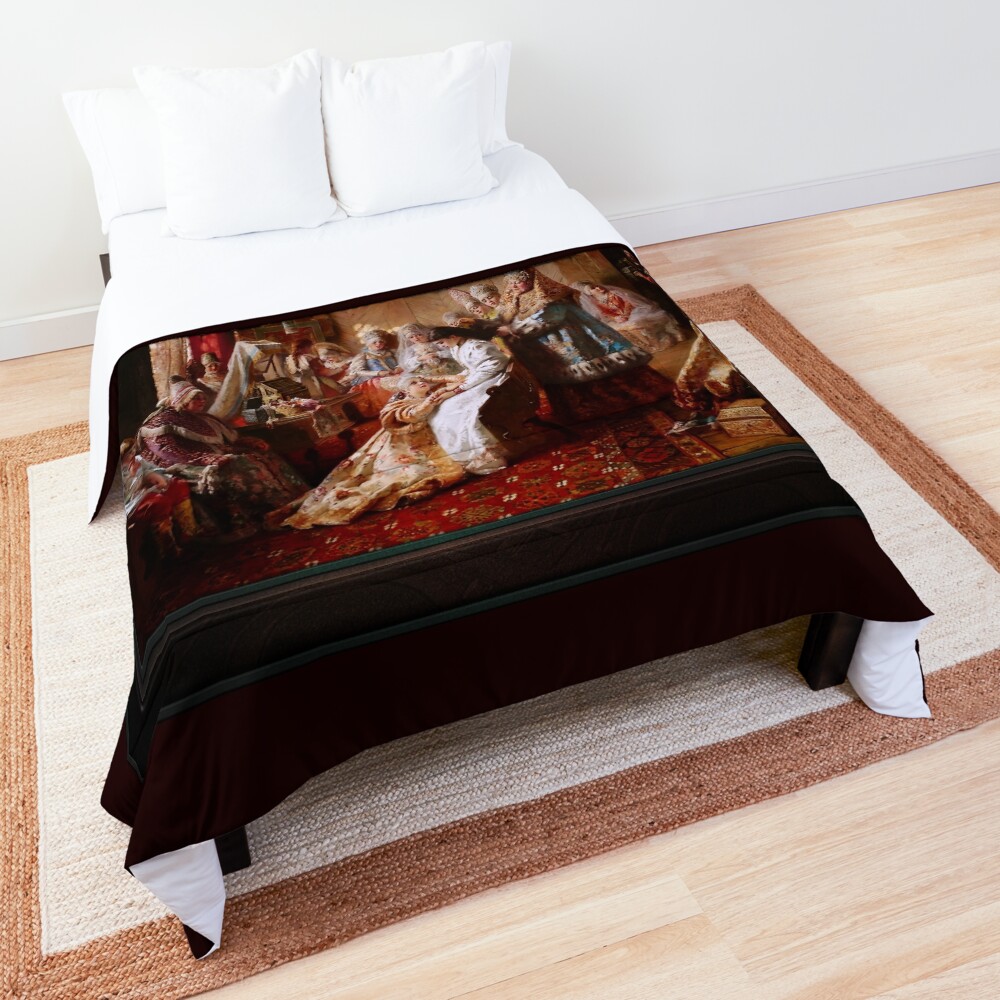
Konstantin Makovsky’s The Russian Brides Attire (1889) presents a captivating glimpse into the ceremonial preparations of a Russian bride in a traditional 19th-century setting. The scene is set within an intimate, richly adorned room where the bride-to-be, poised in anticipation, is surrounded by her closest family and friends. This historical genre painting, rooted deeply in Russian culture, reflects both the bride’s personal moment and the social customs of the time.
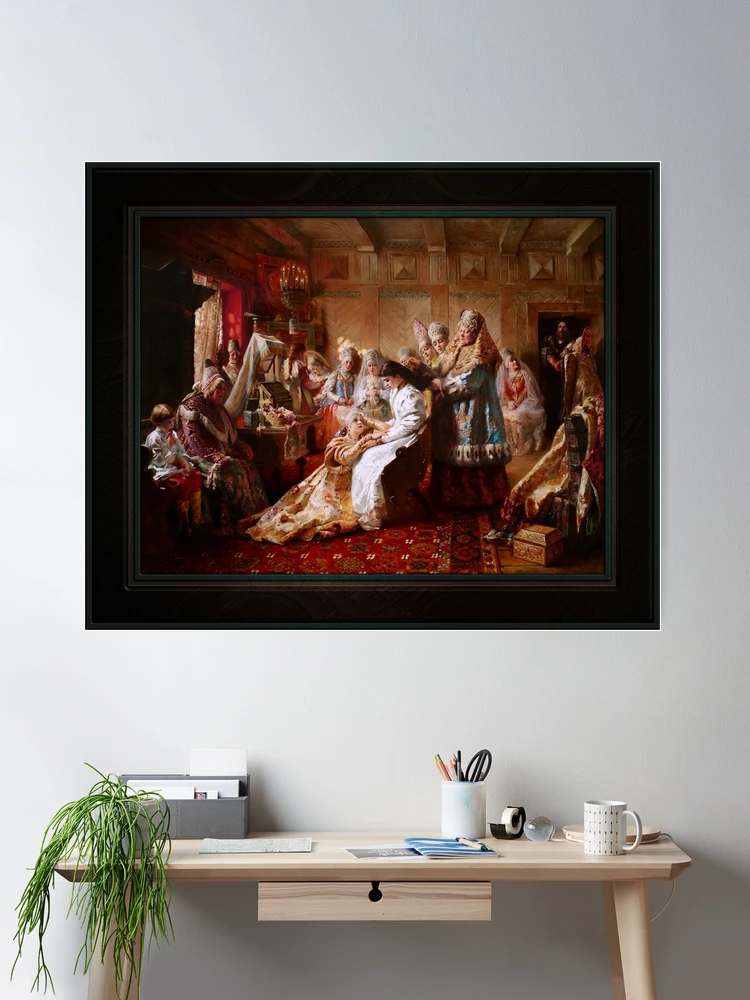
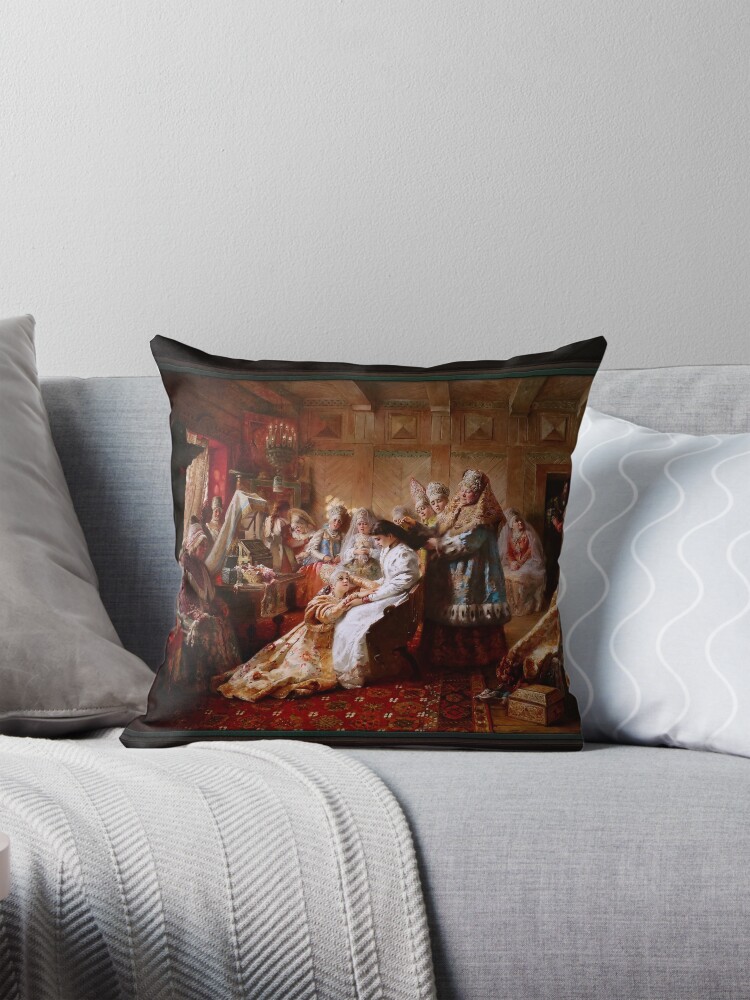
At the heart of the painting sits the young bride, dressed in an opulent, meticulously detailed gown of traditional Russian wedding attire. The intricacies of her attire are striking; every fold and embellishment in her richly embroidered dress echoes the skill and craftsmanship of the period. The gown’s texture, enhanced by the gentle play of light, emphasizes its luxurious fabric, hinting at the bride’s high social standing.
Suknia, with its intricate patterns and vibrant colors, combines tradition with beauty, setting her apart as the central figure in the composition. Jej wyraz, serene yet tinged with the anticipation of the upcoming union, contributes to the painting’s overall sense of reverence for this momentous life event.
The surrounding figures enhance the emotional depth of the scene. Bridesmaids, family members, and an attentive mother are present, each contributing to the bride’s preparations. The bridal party’s clothing is also detailed, showcasing the opulence typical of the Russian aristocracy during the era.
These individuals are all engaged in the intimate tasks of finalizing the bride’s appearance, with one figure seated at the bride’s feet, holding her hands tenderly—a subtle gesture of familial connection and support. W przeciwieństwie, a young man, possibly the groom, appears at the threshold of the room, holding a gift box. His presence is restrained, his access to the bride’s space halted by a gentle but firm barrier, as custom would dictate.
The setting further complements the mood of the painting. The room is lavishly decorated, z ciemnością, rich tones contrasting against the soft glow of candlelight and the bride’s radiant attire. This use of light symbolizes both the bride’s purity and the solemnity of the occasion.
The opulent, antique furniture and the delicate furnishings suggest an upper-class household, indicative of the wealth and status of the bride’s family. These elements come together to transport the viewer to the Russian nobility’s private spaces, where tradition and social rituals were deeply ingrained.
Makovsky’s approach to the painting reflects his expertise in academic art and historical realism, grounded in his training and experience with the Pieredwiżniki (Wędrowcy) ruch. Known for portraying the everyday lives of Russians, Makovsky’s work in Strój rosyjskiej panny młodej transcends mere documentation, offering an emotional portrait of a pivotal moment in a young woman’s life. His mastery of detail, kolor, and light conveys a sense of reverence for the traditions of Russian weddings, while the gentle interactions between the figures in the scene imbue the work with a sense of warmth and familial love.
The mood of the painting is one of quiet anticipation, ceremonial dignity, and a deep respect for cultural traditions. The bride is presented not just as the central figure in a social ritual, but as a symbol of purity, ciągłość, and heritage.
The work conveys a mixture of joy and solemnity, emphasizing the gravity of the wedding ceremony while celebrating the familial bonds that are integral to it. The groom, awaiting his bride’s arrival, is a figure of patience and longing, and the space between the bride and groom symbolizes the sacredness and exclusivity of the pre-wedding ritual.
Pod względem stylu, Strój rosyjskiej panny młodej is a quintessential example of Russian academic realism. Makovsky’s technique, with its sharp focus on the textures of fabrics, the naturalism of facial expressions, and the subtle play of light, creates a vivid, almost tangible atmosphere.
The figures are carefully posed to convey a sense of unity and purpose, while the careful rendering of the bride’s dress and the surrounding details showcases the artist’s skill in depicting texture and material.
Tematycznie, the work explores the cultural importance of the Russian wedding, which was more than just a personal event—it was a public and familial milestone. Through the artist’s portrayal of the bride’s attire, the familial interaction, and the ceremonial anticipation, the viewer is invited to witness an intimate, yet highly structured moment in Russian society. The painting also highlights the role of tradition in Russian culture, where customs surrounding marriage were highly ritualized and carefully observed.
Strój rosyjskiej panny młodej is not only a visual narrative of a traditional wedding but also an insightful reflection of the values and customs of 19th-century Russian aristocracy. It stands as a testament to Konstantin Makovsky’s ability to blend historical accuracy with emotional depth, offering the viewer a vivid portrayal of Russian cultural heritage at its most beautiful and ceremonial.
Jest to retuszowana reprodukcja starych mistrzów sztuki cyfrowej będąca własnością publiczną.
Informacje poniżej pochodzą z Wikipedia.org
Konstantin Makowski był wpływowym malarzem rosyjskim, związany z “Pieredwiżniki (Wędrowcy)”. Wiele jego historycznych obrazów, takich jak Pod Koroną (1889) znany również jako Strój Rosyjskiej Panny Młodej i Przed Ślubem, pokazał wyidealizowany pogląd na rosyjskie życie z poprzednich stuleci. Jest często uważany za przedstawiciela sztuki akademickiej.
Konstantin Makowski urodził się w Moskwie. Jego ojciec był rosyjskim artystą i malarzem-amatorem, Jegor Iwanowicz Makowski. Jego matka była kompozytorką, i miała nadzieję, że jej syn pewnego dnia pójdzie w jej ślady. Jego młodsi bracia Władimir i Nikołaj oraz jego siostra Aleksandra również zostali malarzami.
W 1851 Makowski wstąpił do Moskiewskiej Szkoły Malarstwa, Rzeźba i Architektura, gdzie został prymusem, łatwe zdobywanie wszystkich dostępnych nagród. Jego nauczycielami byli Karl Bryullov i Wasilij Tropinin. Skłonności Makowskiego do romantyzmu i efektów dekoracyjnych można wytłumaczyć wpływem Bryulłowa.
Chociaż jego pasją była sztuka, zastanawiał się także, czego chciała od niego matka. Wyruszył w poszukiwaniu kompozytorów, do których mógłby się odnieść, i najpierw udał się do Francji. Zanim, zawsze był miłośnikiem muzyki klasycznej, i wysłuchałem wielu kawałków. Często żałował, że nie może zmienić melodii, lub styl niektórych z nich, aby uczynić je przyjemniejszymi. Później w jego życiu to się spełniło.
W 1858 Makovsky wstąpił do Imperial Academy of Arts w Sankt Petersburgu. Od 1860 brał udział w wystawach Akademii z obrazami m.in. Uleczenie niewidomych (1860) i Agenci Fałszywego Dmitrija zabijają syna Borysa Godunowa (1862). W 1863 Makovsky wraz z trzynastoma innymi studentami protestował przeciwko podejmowaniu przez Akademię tematów z mitologii skandynawskiej w konkursie o Wielki Złoty Medal Akademii; wszyscy opuścili akademię bez formalnego dyplomu.
Makovsky został członkiem spółdzielni (artel) artystów pod przewodnictwem Iwana Kramskoja, zazwyczaj produkując obrazy Wędrowców na temat życia codziennego (Wdowa 1865, Sprzedawca śledzi 1867, itp.). Od 1870 był członkiem-założycielem Towarzystwa Objazdowych Wystaw Artystycznych i kontynuował pracę nad obrazami poświęconymi życiu codziennemu. Swoje prace wystawiał zarówno na wystawach Akademii, jak i Wędrujących Wystawach Sztuki Wędrowców.
Znacząca zmiana w jego stylu nastąpiła po podróży do Egiptu i Serbii w połowie lat siedemdziesiątych XIX wieku. Jego zainteresowania zmieniły się od problemów społecznych i psychologicznych do artystycznych problemów koloru i kształtu.
W latach 80. XIX wieku stał się modnym autorem portretów i obrazów historycznych. Na Światowych Targach im 1889 w Paryżu otrzymał Wielki Złoty Medal za obrazy Śmierć Iwana Groźnego, Wyrok Parysa, oraz Demon i Tamara. Był jednym z najbardziej cenionych i najlepiej opłacanych artystów rosyjskich tamtych czasów. Wielu demokratycznych krytyków uważało go za renegata Wędrowców’ ideały, produkcja (like Henryk Siemiradzki) uderzające, ale płytkie prace,[2] podczas gdy inni postrzegają go jako prekursora rosyjskiego impresjonizmu.
Makowski zginął w r 1915 kiedy jego powóz konny został potrącony przez tramwaj elektryczny w Sankt Petersburgu.