

O banheiro de Vênus
The Enchanting Ritual: Examining François Boucher’s “The Toilet of Venus”
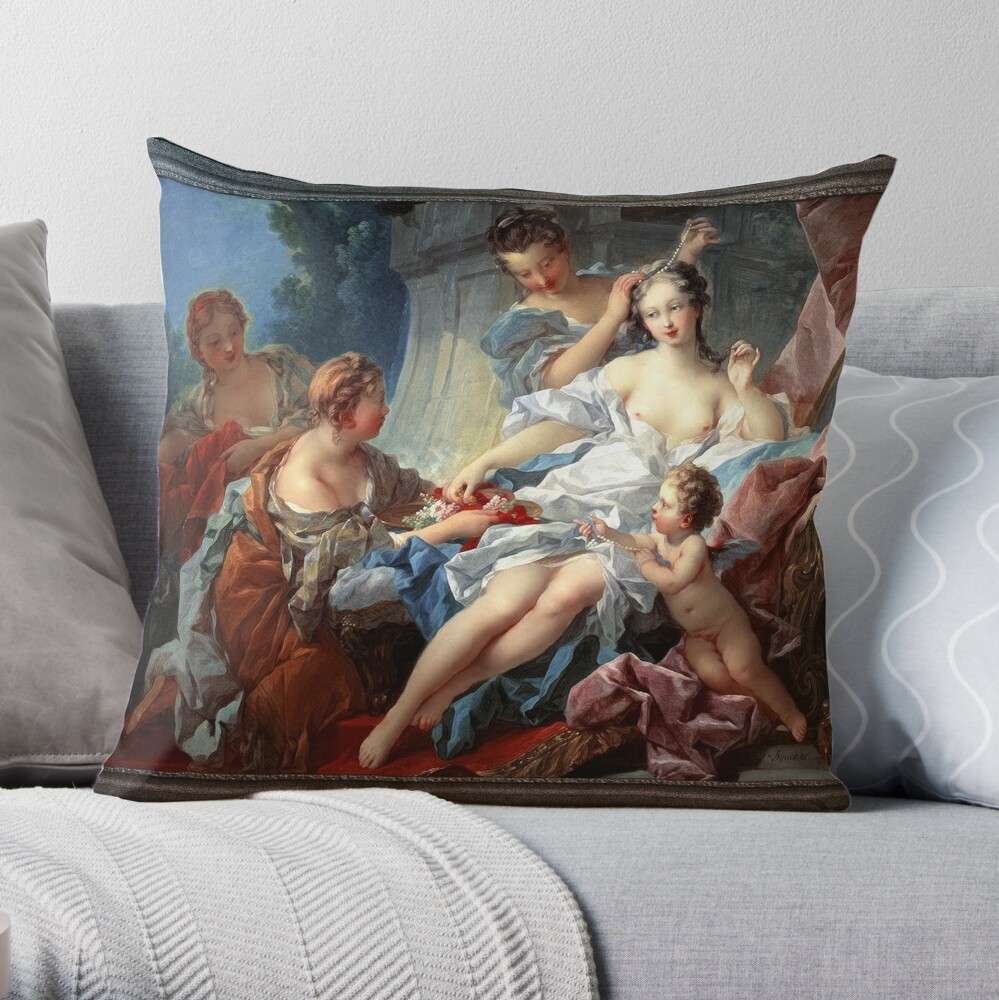
O banheiro de Vênus, painted by François Boucher’s (1703 – 1770) em volta 1746, stands as a quintessential example of Rococo art, embodying its characteristic lightness, sensualidade, and decorative elegance. Esta tela em grande escala, currently housed in the Louvre Museum, transports viewers to an idyllic, dreamlike realm where the goddess Venus is attended by nymphs during her morning toilette. The painting isn’t merely a depiction of bathing; it’s a carefully orchestrated scene designed to evoke pleasure, beleza, and a sense of refined leisure.
Índice
Compositional Harmony & Setting
The composition unfolds within a shallow, theatrical space defined by classical architectural elements – columns, pilasters, and an arched niche – that frame the central action. These structures are rendered with a soft focus, appearing more as decorative backdrops than structurally significant components. The setting itself is deliberately ambiguous; it’s neither explicitly earthly nor entirely divine, contributing to the painting’s ethereal quality. Lush foliage spills in from the left side of the canvas, further blurring the boundaries between reality and fantasy. A rich red curtain drapes behind Venus, adding a touch of opulent warmth to the scene. The overall effect is one of secluded intimacy within a timeless paradise.
Venus: A figura central
Venus, the goddess of love and beauty, occupies the focal point of the painting. She reclines languidly on an ornate chaise lounge, her body partially draped in flowing blue fabric that reveals much more than it conceals. Her pose is relaxed and graceful, conveying a sense of effortless allure. Boucher masterfully captures the softness of her flesh through delicate brushstrokes and subtle gradations of light and shadow. Sua expressão é serena, almost detached, as she engages with the attendants surrounding her. She isn’t actively participating in the toilette; em vez de, she seems to be enjoying the attention and the beauty of the moment.
The Attendants: Nymphs & Cupid
Surrounding Venus are several female figures – nymphs – each engaged in a specific task related to her morning ritual. One nymph carefully arranges flowers into a bouquet, while another offers Venus a mirror for inspection. A third gently tends to her hair with a comb and brush. These attendants aren’t portrayed as servants; they appear more like companions or handmaidens, sharing in the goddess’s pleasure and contributing to the overall atmosphere of indulgence. In the lower right corner, Cupid playfully observes the scene, his presence reinforcing the theme of love and desire that permeates the painting. He is depicted with a mischievous grin, adding a touch of lightheartedness to the composition.
Paleta de cores & Luz
Boucher’s use of color is integral to the painting’s aesthetic appeal. The palette is dominated by soft pastels – pinks, blues, verdes, and creams – creating a harmonious and visually pleasing effect. These colors are applied with a delicate touch, resulting in a luminous quality that enhances the sense of dreamlike beauty. Light plays a crucial role in shaping the forms and defining the mood. It emanates from an unseen source, softly illuminating Venus and her attendants while leaving portions of the background shrouded in shadow. This chiaroscuro effect accentuates the figures’ sensuality and creates a sense of depth within the shallow space.
Rococo Style & Boucher’s Influence
“O banheiro de Vênus” is a prime example of Rococo style, which emerged in France during the 18th century as a reaction against the more formal and grandiose Baroque aesthetic. Rococo art emphasized grace, elegância, and playful sensuality. Boucher was one of the leading exponents of this style, and his paintings were highly sought after by members of the French aristocracy. His work helped to define the Rococo aesthetic, influencing countless artists and shaping the taste of the era. The painting’s focus on pleasure, beleza, and refined leisure reflects the values and aspirations of the French court during the reign of Louis XV.
Domínio Técnico & Legado
Boucher’s technical skill is evident in every detail of “The Toilet of Venus.” His ability to render flesh tones with such subtlety and realism was remarkable for his time. The painting’s composition, paleta de cores, and lighting all contribute to its overall effect of beauty and enchantment. “O banheiro de Vênus” remains a celebrated masterpiece of Rococo art, admired for its exquisite beauty, sensual allure, and masterful execution. It continues to inspire artists and captivate viewers with its timeless depiction of feminine grace and idyllic pleasure.
Biografia do artista de Wikipedia.org
Um nativo de Paris, Boucher era filho de um pintor menos conhecido Nicolas Boucher, que lhe deu sua primeira formação artística. Na idade de dezessete, uma pintura de Boucher foi admirada pelo pintor François Lemoyne. Lemoyne posteriormente nomeou Boucher como seu aprendiz, mas depois de apenas três meses, ele foi trabalhar para o gravador Jean-François Cars.
Dentro 1720, ele ganhou o Grande Prêmio de Roma de elite de pintura, mas não aproveitou a oportunidade conseqüente de estudar na Itália até cinco anos depois, devido a problemas financeiros na Royal Academy of Painting and Sculpture.[1] Ao retornar dos estudos na Itália, ele foi admitido na refundada Académie de peinture et de sculpture em 24 novembro 1731. A peça de recepção dele (peça de recepção) eram seus Rinaldo e Armida de 1734.
Boucher casou-se com Marie-Jeanne Buzeau em 1733. O casal teve três filhos juntos. Boucher tornou-se membro do corpo docente em 1734 e sua carreira acelerou a partir deste ponto quando ele foi promovido a Professor e então Reitor da Academia, tornando-se inspetor na Royal Gobelins Manufactory e, finalmente, Premier Peintre du Roi (Primeiro pintor do rei) no 1765. Retrato de Marie-Louise O’Murphy c. 1752
Boucher morreu em 30 Poderia 1770 em sua Paris natal. O nome dele, junto com a de sua patrona Madame de Pompadour, tornou-se sinônimo do estilo rococó francês, levando os irmãos Goncourt a escrever: “Boucher é um daqueles homens que representam o sabor de um século, quem expressa, personificá-lo e incorporá-lo.”
Boucher é famoso por dizer que a natureza é “muito verde e mal iluminado” (muito verde e mal iluminado).
Boucher foi associado ao gravador de pedras preciosas Jacques Guay, a quem ele ensinou a desenhar. Ele também foi mentor do pintor austríaco-morávio Martin Ferdinand Quadal, bem como do pintor neoclássico Jacques-Louis David em 1767.[4] Mais tarde, Boucher fez uma série de desenhos de obras de Guay que Madame de Pompadour então gravou e distribuiu como um volume lindamente encadernado para cortesãos favoritos
The Toilet of Venus é uma reprodução de arte digital retocada de uma imagem de domínio público que você pode comprar como impressão em tela enrolada.