

The Toilet of Venus: The Allure of Leisure
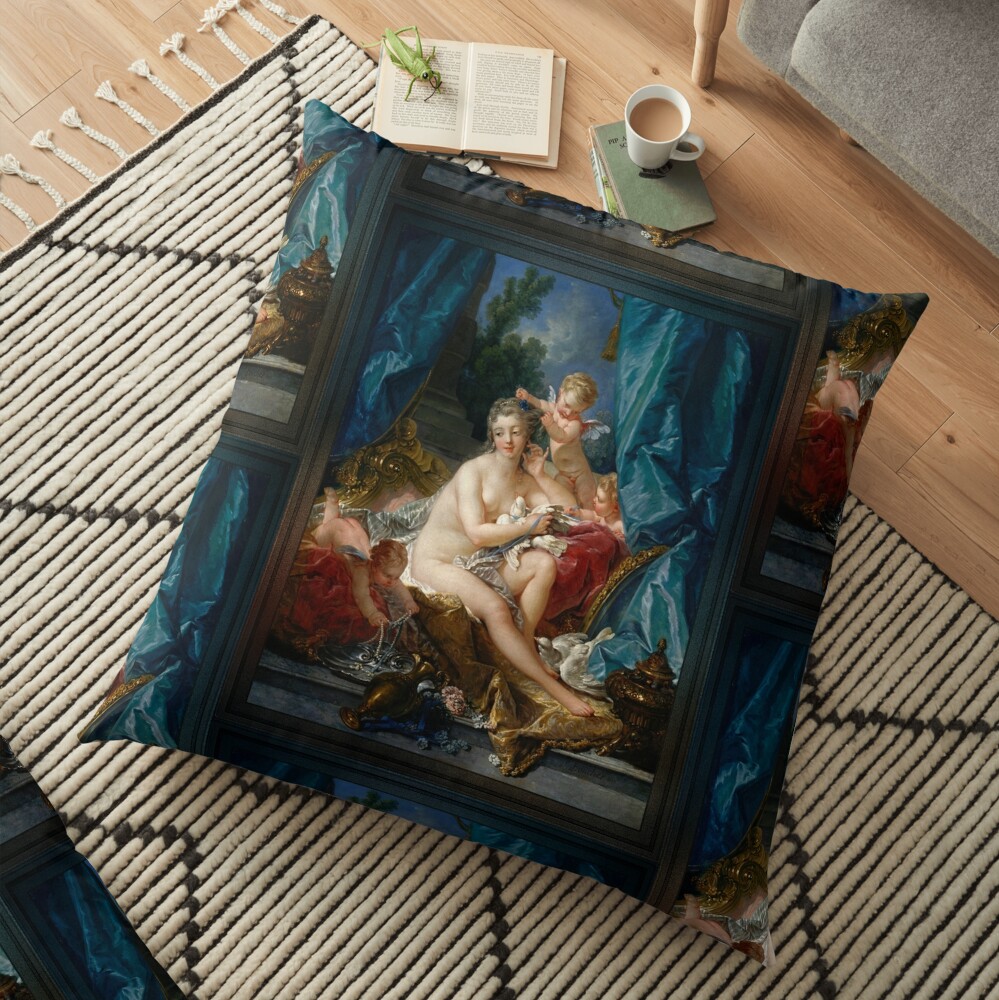
The Toilet of Venus, this version was painted by François Boucher (1703 – 1770) around 1751; and stands as a quintessential example of Rococo art, embodying its characteristic sensuality, elegância, and playful depiction of mythological themes. This large-scale canvas, currently residing in the Louvre Museum, transports viewers to a realm of idyllic beauty and leisurely indulgence, showcasing Boucher’s mastery of color, luz, e composição. The painting is not merely a representation of the goddess Venus; it’s an exploration of feminine grace within a carefully constructed fantasy landscape.
Índice
A Scene of Delicate Rituals
A figura central, undeniably Venus (Aphrodite in Greek mythology), reclines upon a lavishly adorned chaise lounge. She is depicted mid-action, engaged in the intimate act of dressing her hair. Her posture is relaxed and graceful, conveying an air of serene contentment rather than any sense of formality or grandeur. The artist’s focus isn’t on portraying Venus as a powerful deity but rather as a beautiful woman enjoying a moment of personal care.
She holds a small mirror to one side, seemingly admiring her reflection while a handmaid gently arranges ribbons in her hair. This intimate scene is far removed from the heroic narratives often associated with classical mythology; em vez de, it emphasizes domesticity and private pleasure.
Cherubic Companions & Decorative Details
Surrounding Venus are several cherubs, characteristic figures within Rococo art. These playful spirits flit about, attending to the goddess’s needs. One cherub playfully blows bubbles, while another offers a bouquet of flowers. Their presence adds an element of lightness and whimsy to the scene, reinforcing the overall atmosphere of carefree enjoyment.
The chaise lounge itself is a masterpiece of decorative detail, featuring intricate carvings and luxurious fabrics in rich reds and golds. Scattered around Venus are various objects associated with beauty and adornment: perfume bottles, scattered roses, joia, and a small white rabbit – all contributing to the painting’s opulent aesthetic.
A Stage Setting of Opulence & Nature
The setting for this idyllic scene is equally important. Heavy blue draperies frame the composition on either side, creating a sense of theatricality and enclosure. Além dessas cortinas, há um vislumbre de um exuberante jardim com árvores verdejantes e arquitetura clássica à distância.. Este cenário cuidadosamente construído sugere um paraíso isolado, aumentando ainda mais a sensação de privacidade e indulgência. O uso da luz é particularmente notável; Boucher emprega magistralmente, iluminação difusa para iluminar a figura de Vênus, realçando a luminosidade da sua pele e criando uma sensação de calor e intimidade.
Paleta de cores & Técnica Artística
A paleta de cores de Boucher em “The Toilet of Venus” é dominada por tons pastel – rosa, blues, verdes, e dourados – que são marcas do estilo rococó. Essas cores suaves contribuem para a sensação geral de leveza e delicadeza da pintura.. Sua pincelada é solta e fluida, criando uma sensação de movimento e espontaneidade. The artist’s technique prioritizes capturing the essence of beauty and pleasure over strict realism. He uses subtle gradations of color to model Venus’s form, emphasizing her curves and contours while maintaining an ethereal quality.

Contexto & Legado
“The Toilet of Venus” was created during a period when Rococo art flourished in France, particularly under the patronage of Madame de Pompadour, Louis XV’s influential mistress. Boucher became the leading artist of this style, known for his decorative paintings that catered to the tastes of the aristocracy. The painting reflects the prevailing cultural values of the time – an emphasis on pleasure, beleza, and refined leisure.
É uma prova da capacidade de Boucher de criar obras visualmente deslumbrantes que capturaram o espírito da era Rococó e continuam a cativar o público com seu charme e elegância.. A influência da obra pode ser vista nas tendências artísticas subsequentes, particularmente em representações de figuras femininas idealizadas e no uso de elementos decorativos para aumentar o apelo visual.
Biografia do artista de Wikipédia.org
Natural de Paris, Boucher era filho de um pintor menos conhecido Nicolas Boucher, que lhe deu a sua primeira formação artística. Aos dezessete anos, uma pintura de Boucher foi admirada pelo pintor François Lemoyne. Lemoyne mais tarde nomeou Boucher como seu aprendiz, mas depois de apenas três meses, foi trabalhar para o gravador Jean-François Cars.
Em 1720, ele ganhou o Grande Prêmio de Roma de elite de pintura, mas só aproveitou a consequente oportunidade de estudar na Itália cinco anos depois, devido a problemas financeiros na Royal Academy of Painting and Sculpture.[1] Ao retornar dos estudos na Itália, foi admitido na refundada Académie de peinture et de escultura em 24 novembro 1731. Sua peça de recepção (peça de recepção) foi seu Rinaldo e Armida de 1734.
Boucher casou-se com Marie-Jeanne Buzeau em 1733. O casal teve três filhos juntos. Boucher tornou-se membro do corpo docente em 1734 e a sua carreira acelerou a partir deste ponto quando foi promovido Professor e depois Reitor da Academia, tornando-se inspetor da Royal Gobelins Manufactory e finalmente Premier Peintre du Roi (Primeiro Pintor do Rei) em 1765. Retrato de Marie-Louise O'Murphy c. 1752
Boucher morreu em 30 Poderia 1770 em sua cidade natal, Paris. Seu nome, junto com o de sua patrona Madame de Pompadour, tornou-se sinônimo do estilo rococó francês, levando os irmãos Goncourt a escrever: “Boucher é um daqueles homens que representam o gosto de um século, quem expressa, personificá-lo e incorporá-lo.”
Boucher é famoso por dizer que a natureza é “muito verde e mal iluminado” (muito verde e mal iluminado).
Boucher foi associado ao gravador de pedras preciosas Jacques Guay, quem ele ensinou a desenhar. Ele também foi mentor do pintor morávio-austríaco Martin Ferdinand Quadal, bem como do pintor neoclássico Jacques-Louis David em 1767.[4] Mais tarde, Boucher fez uma série de desenhos de obras de Guay que Madame de Pompadour então gravou e distribuiu como um volume lindamente encadernado para cortesãos favorecidos.
O Banheiro de Vênus é uma reprodução artística retocada de uma imagem de domínio público, que pode ser adquirido como impressão em tela on-line.