

Bua Frederik Hendrik, Prionsa na Oráiste
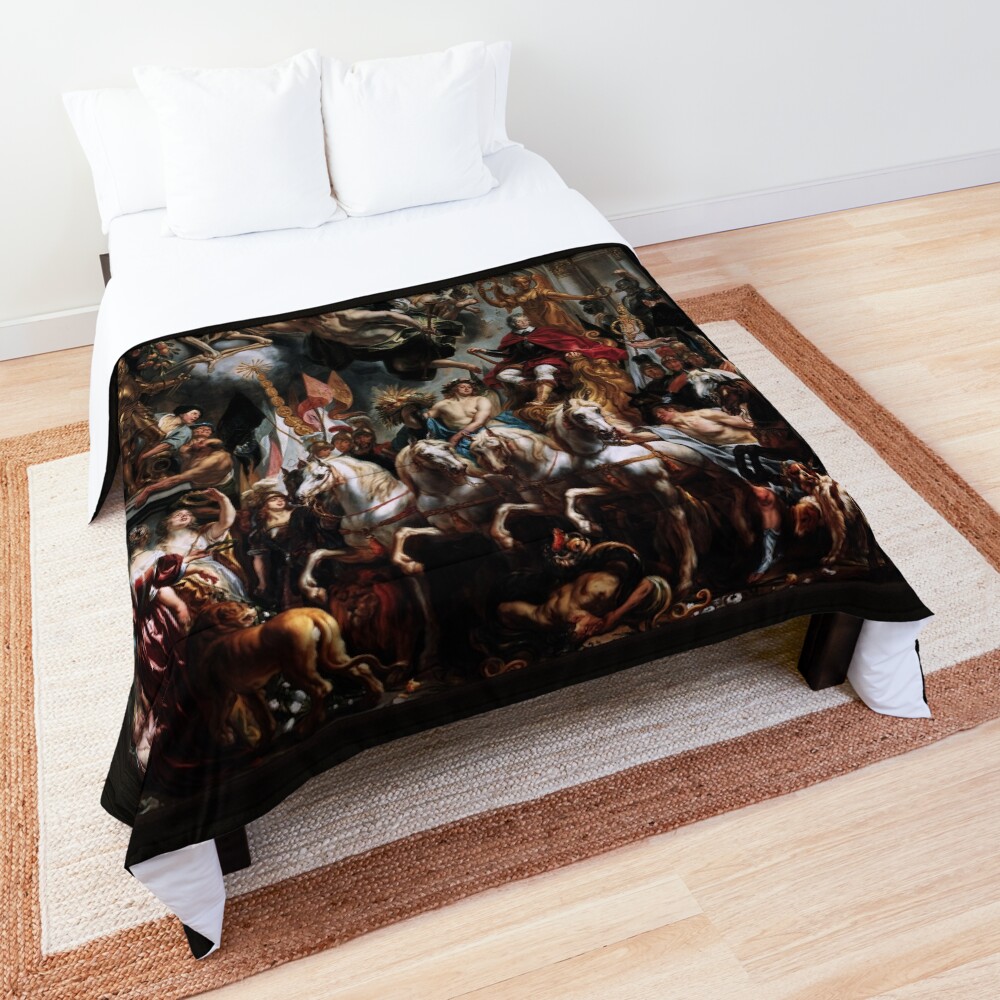
Bua Frederik Hendrik, Prionsa na Oráiste c1652 le Jacob Jordaens I (1593–1678), ar cheann de na péintéirí Bharócach Pléimeannach is suntasaí, dréachtóir agus dearthóir taipéise; clú ar a chuid cumadóireachta bríomhar agus dinimiciúil. “Seo sampla de Jordaens’ máistreacht ar théamaí alegorical agus a chumas chun móráltacht agus castacht araon a chur in iúl i saothair chuimhneacháin ealaíne. An phéintéireacht seo, coimisiúnaithe chun éachtaí míleata agus polaitiúla an Phrionsa Frederik Hendrik as Oráiste a chomóradh, is físshiansach de bhua daonna agus diaga araon. Leathnaíonn an scéal ar scála mór, an breathnóir a chlúdach i ndomhan ina bhfuil rath na cruinne agus faomhadh diaga fite fuaite ina chéile.
Clár na nÁbhar
Príomh-Ábhar agus Comhdhéanamh
Ag croílár an chomhdhéanamh tá Frederik Hendrik, Prionsa na Oráiste, a central figure in Dutch history who played a significant role in the Eighty Years’ Cogaidh, which led to the independence of the Netherlands from Spain. Jordaens places the prince in a commanding position, mounted on a horse, crowned with a golden laurel wreath. His face, marked with determination, gazes toward a future of power and glory. He is draped in imperial red robes, a visual marker of his rank and stature.
The prince is surrounded by a multitude of allegorical figures that reflect his virtues and victories. To his left, a muscular and imposing figure of a soldier, holding a flag, symbolizes military strength. Taobh thiar dó, the figure of Fame, portrayed as a winged woman blowing a trumpet, heralds the prince’s achievements across the world. The surrounding figures are diverse, ag léiriú raon buanna lena n-áirítear ceartas, valor, agus síocháin. Ina measc, figiúr an Cheartais, a léirítear mar bhean le claíomh agus scálaí, seasamh go daingean ar thaobh an phrionsa, ag cur béime ar cheartas a fheachtais mhíleata agus a hainlithe polaitiúla.
Gné thar a bheith buailte den chomhdhéanamh is ea láithreacht neacha miotaseolaíochta agus siombalach. Os cionn an Prionsa agus a Entourage, aingil, cerubs, agus créatúir ethereal eile swirls sna Spéartha, ag cuimsiú ceadú diaga gníomhais thalmhaíochta an phrionsa. Is minic a léirítear na figiúirí neamhaí seo le gothaí bríomhar agus róbaí ag sileadh, a gcuid nathanna ag cuimsiú mórgacht agus sollúntas na bua. Cruthaíonn an meascán d’fhíoracha agus d’fhíoracha miotaseolaíocha domhan ina múnlaíonn fórsaí diaga cinniúint an duine go gníomhach, feabhas a chur ar ton grandiose an phíosa.
Tír-raon agus Eilimintí Cúlra
Tá an radharc suite i gcoinne drámatúil, spéir scamallach. Na flaithis, swirling le haingil agus biotáillí, cruthaigh cúlra dinimiciúil atá i gcodarsnacht leis na figiúirí domhanda thíos. Úsáideann an t-ealaíontóir dathanna saibhre óir agus dearganna domhain chun braistint de láithreacht diaga a spreagadh, le solas ag sruthú síos i gathanna, ag snámh na príomhfhigiúirí i glow neamhaí. Ar an leibhéal domhanda, tá an tír-raon gan stad, fós suntasach go siombalach - ag léiriú dúshláin agus buanna na cogaíochta. Sa tulra, leon - siombail de neart agus uaisle - le feiceáil, ag treisiú téamaí na cumhachta agus na ríchíosa a bhaineann leis an bprionsa.
Cuid shuntasach den chomhdhéanamh is ea an tagairt do bhuanna san am a chuaigh thart agus dóchas don tsíocháin sa todhchaí. Ar an taobh clé den Prionsa, figiúr alegorical a léiríonn “Síocháin” is shown, with a laurel wreath and an olive branch, underscoring the final goal of Frederik Hendrik’s military campaigns: the establishment of peace through victory. The physical setting is grand, not only to convey the importance of the subject but also to elevate the viewer’s perception of the prince’s power, suggesting that the triumph is both earthly and divine.
Stíl agus Meon
Jordaens’ style is rooted in the Baroque tradition, characterized by dynamic compositions, intense emotional expression, and a dramatic use of light and shadow. I “Bua Frederik Hendrik,” Jordaens employs these techniques to accentuate the overwhelming scale of the event depicted. The composition is grand and energetic, with swirling figures that seem to leap out of the canvas. The use of bold, dathanna sáithithe, from the deep reds of the prince’s attire to the shimmering golds of the angels’ sciatháin, gives the painting a vibrant and energetic quality, while the turbulent sky above creates a sense of unease, balanced by the stoic presence of the central figure.
The mood of the painting is both celebratory and solemn. The prince’s triumph is celebrated through the vivid depictions of mythological and allegorical figures, yet there is an underlying tone of seriousness and reflection. The presence of death, symbolized by the skeletal figure in the clouds, hints at the costs of war, with its inevitable toll on human life. This balance between victory and mortality speaks to the complexities of Frederik Hendrik’s legacy and the reality of his victories.
Ábhair agus Teicníc
The medium used for “Bua Frederik Hendrik” is oil on canvas, which was typical for Baroque painters seeking to create works of monumental scale and dramatic impact. Oil paint allowed for rich texture, deep shadows, agus dath bríomhar, all of which Jordaens expertly manipulates in this piece. The brushwork is fluid, with smooth transitions between light and dark, creating an almost ethereal quality in the depiction of the figures hovering above the prince. The detailed rendering of fabrics, aghaidheanna, and mythological elements further demonstrates the artist’s technical mastery, giving each figure a sense of movement and life.
The use of light is particularly striking, with intense rays illuminating the central figures and casting dramatic shadows on the figures below. This manipulation of light adds depth to the work and serves to emphasize the divine nature of the prince’s triumph. The figures in the lower part of the painting are cast in shadow, grounding them in the earthly realm, while the celestial beings glow in the upper reaches of the canvas, signaling their otherworldly origin and the divine nature of the triumph.
Conclúid
Jacob Jordaens I’s “Bua Frederik Hendrik, Prionsa na Oráiste” is a masterful blend of history, myth, and artistic technique. Through his use of allegorical figures, rich symbolism, and a dynamic composition, Jordaens elevates the achievements of the prince to a level of divine grandeur. The painting not only celebrates the military victories of Frederik Hendrik but also reflects on the eternal cycle of life and death, victory and loss. The work’s dramatic energy, combined with its historical depth, makes it a powerful testament to both the prince’s legacy and Jordaens’ skill as a painter.
Seo atáirgeadh seanmháistrí ealaíne digiteach athshuite d’íomhá fearainn phoiblí atá ar fáil le ceannach mar a chanbhás, miotail, aicrileach, adhmad agus cló rollta.
Cruthú ealaíne digiteach seo, mar atá an saothar ealaíne go léir atá le fáil ar shuíomh Gréasáin Xzendor7 ar fáil le ceannach ar líne i bhformáidí éagsúla ábhar lena n-áirítear priontaí canbháis, priontaí aicrileach, priontaí miotail, priontaí adhmaid, priontaí frámaithe, póstaeir, agus mar priontaí chanbhás rollta i méideanna éagsúla ó 12 orlach go 72 orlach ag brath ar mhéid an tsaothair ealaíne iarbhír agus ar an siopa priontála ar éileamh a roghnaíonn tú an ealaín a cheannach uaidh.
Tá an saothar ealaíne ar fáil freisin ar raon leathan éadaí fear agus ban, mugaí, totes, scaifeanna, leabhair nótaí agus irisleabhair agus go leor táirgí maisiúcháin tí.