

Sigur Frederiks Hendriks, Prinsinn af Appelsínu
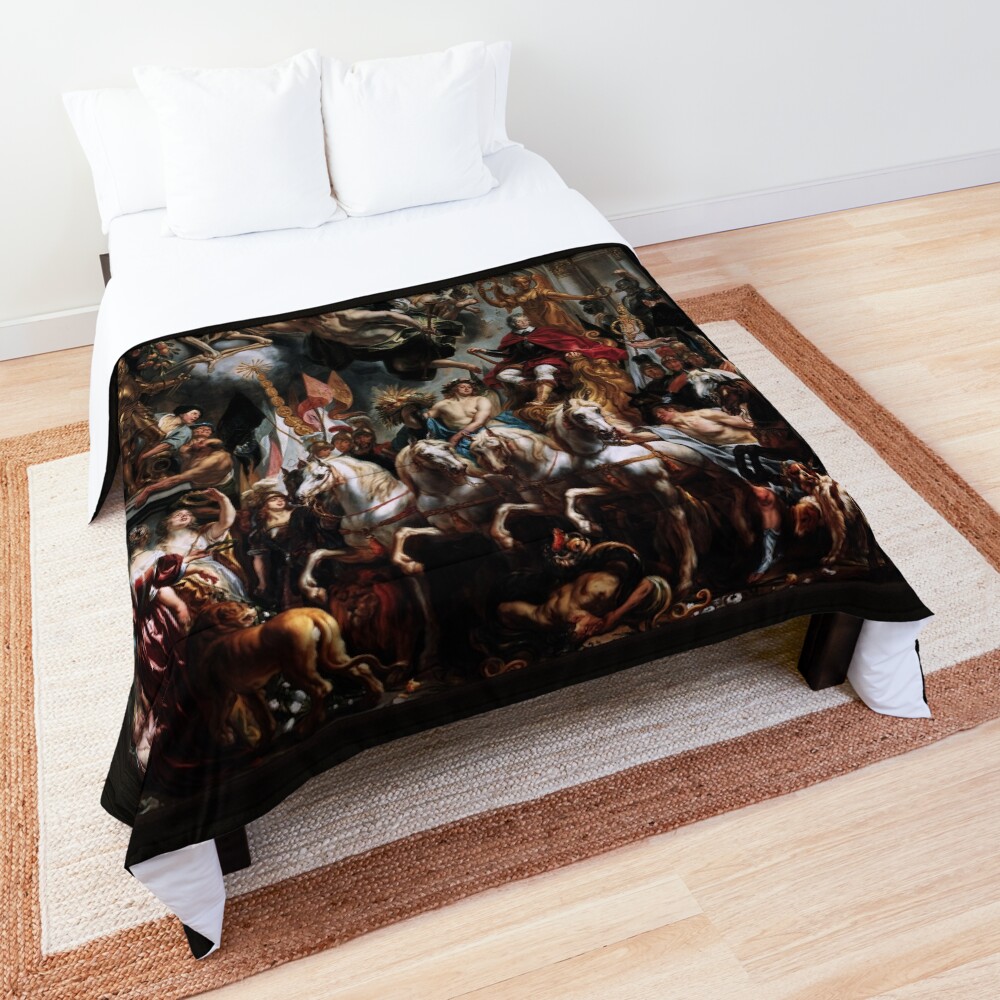
Sigur Frederiks Hendriks, Prince of Orange c1652 eftir Jacob Jordaens I (1593–1678), einn merkasti barokkmálari Flæmingja, teiknari og veggteppahönnuður; frægur fyrir lifandi og kraftmikil tónverk. “Þetta verk er dæmi um Jordaens’ vald á allegórískum þemum og hæfni hans til að miðla bæði glæsileika og margbreytileika í stórkostlegum listaverkum. Þetta málverk, falið að minnast hernaðar og stjórnmálaafreks Friðriks Hendriks prins af Orange, er sjónræn sinfónía bæði mannlegs og guðlegs sigurs. Frásögnin þróast í stórum stíl, umvefja áhorfandann í heimi þar sem jarðneskur árangur og guðlegt velþóknun fléttast saman.
Efnisyfirlit
Aðalefni og samsetning
Í hjarta tónverksins stendur Frederik Hendrik, Prinsinn af Appelsínu, a central figure in Dutch history who played a significant role in the Eighty Years’ Stríð, which led to the independence of the Netherlands from Spain. Jordaens places the prince in a commanding position, mounted on a horse, crowned with a golden laurel wreath. His face, marked with determination, gazes toward a future of power and glory. He is draped in imperial red robes, a visual marker of his rank and stature.
The prince is surrounded by a multitude of allegorical figures that reflect his virtues and victories. To his left, a muscular and imposing figure of a soldier, holding a flag, symbolizes military strength. Behind him, the figure of Fame, portrayed as a winged woman blowing a trumpet, heralds the prince’s achievements across the world. The surrounding figures are diverse, representing a range of virtues including justice, valor, and peace. Meðal þeirra, the figure of Justice, depicted as a woman with a sword and scales, stands firmly at the prince’s side, emphasizing the righteousness of his military campaigns and political maneuverings.
A particularly striking element of the composition is the presence of mythological and symbolic beings. Above the prince and his entourage, angels, kerúbar, and other ethereal creatures swirl in the heavens, embodying the divine approval of the prince’s earthly deeds. These celestial figures are often depicted with vibrant gestures and flowing robes, their expressions embodying the grandeur and solemnity of the triumph. The combination of real and mythological figures creates a world where divine forces actively shape human destiny, enhancing the grandiose tone of the piece.
Landslag og bakgrunnsþættir
The scene is set against a dramatic, cloudy sky. The heavens, swirling with angels and spirits, create a dynamic backdrop that contrasts with the earthly figures below. The artist employs rich hues of gold and deep reds to evoke a sense of divine presence, with light streaming down in rays, bathing the principal figures in a celestial glow. On the earthly level, the terrain is barren, yet symbolically significant—representing the challenges and victories of warfare. Í forgrunni, a lion—a symbol of strength and nobility—can be seen, reinforcing the themes of power and royalty associated with the prince.
A notable part of the composition is the reference to the past triumphs and future hopes for peace. To the left of the prince, an allegorical figure representing “Friður” is shown, with a laurel wreath and an olive branch, underscoring the final goal of Frederik Hendrik’s military campaigns: the establishment of peace through victory. The physical setting is grand, not only to convey the importance of the subject but also to elevate the viewer’s perception of the prince’s power, suggesting that the triumph is both earthly and divine.
Stíll og stemning
Jordaens’ style is rooted in the Baroque tradition, characterized by dynamic compositions, intense emotional expression, and a dramatic use of light and shadow. Í “Sigur Frederiks Hendriks,” Jordaens employs these techniques to accentuate the overwhelming scale of the event depicted. The composition is grand and energetic, with swirling figures that seem to leap out of the canvas. The use of bold, saturated colors, from the deep reds of the prince’s attire to the shimmering golds of the angels’ wings, gives the painting a vibrant and energetic quality, while the turbulent sky above creates a sense of unease, balanced by the stoic presence of the central figure.
The mood of the painting is both celebratory and solemn. The prince’s triumph is celebrated through the vivid depictions of mythological and allegorical figures, yet there is an underlying tone of seriousness and reflection. The presence of death, symbolized by the skeletal figure in the clouds, hints at the costs of war, with its inevitable toll on human life. This balance between victory and mortality speaks to the complexities of Frederik Hendrik’s legacy and the reality of his victories.
Efni og tækni
The medium used for “Sigur Frederiks Hendriks” is oil on canvas, which was typical for Baroque painters seeking to create works of monumental scale and dramatic impact. Oil paint allowed for rich texture, deep shadows, and vibrant color, all of which Jordaens expertly manipulates in this piece. The brushwork is fluid, with smooth transitions between light and dark, creating an almost ethereal quality in the depiction of the figures hovering above the prince. The detailed rendering of fabrics, faces, and mythological elements further demonstrates the artist’s technical mastery, giving each figure a sense of movement and life.
The use of light is particularly striking, with intense rays illuminating the central figures and casting dramatic shadows on the figures below. Þessi meðhöndlun ljóssins eykur dýpt í verkið og er til þess fallin að undirstrika hið guðlega eðli sigurs prinsins.. Fígúrurnar í neðri hluta málverksins eru varpaðar í skugga, jarðtengja þá á jarðneska sviðinu, meðan himnesku verurnar glóa í efri hluta strigans, gefa til kynna annarsheims uppruna þeirra og guðlega eðli sigursins.
Niðurstaða
Jacob Jordaens I “Sigur Frederiks Hendriks, Prinsinn af Appelsínu” er meistaraleg blanda af sögu, goðsögn, og listrænni tækni. Með notkun hans á allegórískum fígúrum, ríkt táknmál, og kraftmikla samsetningu, Jordaens lyftir afrekum prinsins upp á guðlegan glæsileika. Málverkið fagnar ekki aðeins hernaðarsigrum Frederik Hendriks heldur endurspeglar einnig eilífa hringrás lífs og dauða, sigur og tap. Stórkostleg orka verksins, combined with its historical depth, makes it a powerful testament to both the prince’s legacy and Jordaens’ skill as a painter.
Þetta er lagfærð stafræn list af gömlum meistara eftirgerð af mynd sem er í almenningseign sem hægt er að kaupa sem striga, Málmur, akrýl, wood and rolled print.
Þessi stafræna listsköpun, eins og með öll listaverkin sem finna má á Xzendor7 vefsíðunni er hægt að kaupa á netinu í ýmsum efnissniðum þar á meðal strigaprentun, akrýl prentun, málmprentun, viðarprentanir, innrömmuð prentun, veggspjöld, og sem upprúlluð strigaprentun í ýmsum stærðum frá 12 tommur til 72 tommur eftir stærð raunverulegu listaverksins og prentunarversluninni sem þú velur að kaupa listina frá.
Listaverkin eru einnig fáanleg á breitt úrval af herra- og kvenfatnaði, krúsar, töskur, trefla, minnisbækur og dagbækur og margar heimilisskreytingarvörur.