

שבת המכשפות
The Witch’s Sabbath: Exploring The Allure of Night
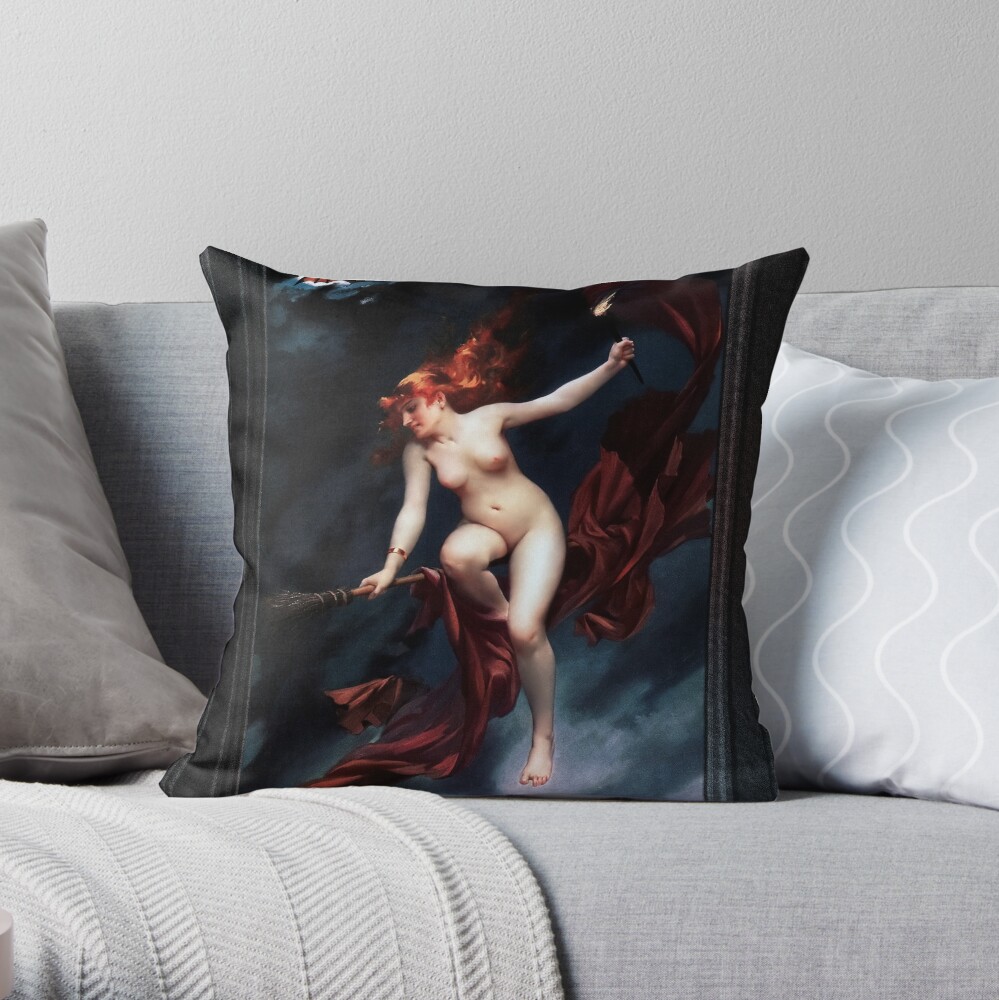
The Witches Sabbath by לואיס ריקרדו פאלרו (1851-1896) was a Spanish painter known for his evocative depictions of mythological and fantastical subjects, לעתים קרובות חדור רגישות רומנטית. His work frequently explored themes of the supernatural and the allure of the night, drawing inspiration from folklore and literary sources. “The Witch’s Sabbath,"צבוע סביב 1880, stands as one of Falero’s most celebrated pieces, capturing a moment of ethereal flight and nocturnal mystery. The painting is an example of academic art with elements of symbolism and romanticism that were popular during the late nineteenth century.
תוכן העניינים
אלמנטים קומפוזיציוניים & הצעה נרטיבית
The composition immediately draws the viewer’s eye upward towards a central figure suspended in mid-air amidst a swirling, tempestuous sky. הנתון הזה, a nude woman with fiery red hair, is the focal point of the artwork. She appears to be engaged in an act of flight, propelled by a broomstick held firmly beneath her. The dramatic diagonal line created by the broom and her outstretched arm contributes significantly to the dynamism of the scene, suggesting movement and upward momentum.
The background is dominated by a dark, brooding sky filled with swirling clouds illuminated by a crescent moon. This celestial backdrop reinforces the nocturnal setting and lends an air of mystery and foreboding to the overall atmosphere. A single bat flies across the moon, adding another layer of symbolism associated with the supernatural. The artist’s skillful use of chiaroscuro – the contrast between light and dark – further enhances the drama and emphasizes the figure’s form against the shadowy background.
דְמוּת & טכניקה אומנותית
Falero’s rendering of the female figure is notable for its anatomical accuracy, a hallmark of academic training. Her pose is graceful yet powerful, conveying a sense of both vulnerability and control. The artist meticulously details her skin tone, highlighting the subtle curves and contours of her body. The flowing red fabric that drapes around her adds to the visual interest, creating a dynamic interplay of light and shadow as it billows in the wind.
Falero’s brushwork is evident throughout the painting, particularly in the rendering of the clouds and the woman’s hair. The artist employs loose, expressive strokes to capture the movement and texture of these elements, while maintaining a level of detail in the figure itself. לוח הצבעים נשלט על ידי צלילים מגניבים - בלוז, אפורים, and blacks – which contribute to the overall sense of mystery and melancholy. למרות זאת, the warm hues of the woman’s hair and the red fabric provide a striking contrast, drawing the viewer’s attention to these key elements.
סִמלִיוּת & פֵּשֶׁר
“The Witch’s Sabbath” draws heavily on European folklore and traditions surrounding witchcraft. The image of a witch flying through the night sky on a broomstick is a recurring motif in such narratives, often associated with gatherings of witches performing rituals under the light of the full moon. Falero’s painting taps into this rich cultural heritage, evoking a sense of both fascination and apprehension.
The crescent moon itself carries symbolic weight, representing cycles, לְשַׁנוֹת, and the feminine principle. The bat, traditionally linked to darkness and the supernatural, further reinforces the painting’s association with the occult. While the artwork doesn’t explicitly depict any ritualistic actions, it suggests a moment of transformation or transcendence – a departure from the mundane world into a realm of magic and mystery.
השפעות אמנותיות & מוֹרֶשֶׁת
Falero’s work reflects the influence of several artistic movements prevalent during his time. The academic training evident in his meticulous rendering of the human form aligns with the traditions of classical art. למרות זאת, the painting’s emphasis on emotion, atmosphere, and the supernatural also reveals a connection to Romanticism, which celebrated imagination, אינדיבידואליזם, and the power of nature.
“The Witch’s Sabbath” remains a compelling example of Falero’s artistic skill and his ability to capture the allure of the fantastical. The painting has been widely reproduced and admired for its dramatic composition, אווירה מעוררת, וערעור מתמשך. It stands as a testament to the artist’s talent and his contribution to the rich tapestry of nineteenth-century Spanish art.
פרטים טכניים & מקור
The artwork is executed in oil on canvas. It measures approximately 105 איקס 74 ס"מ (41.3 איקס 29.1 אינץ). The painting’s provenance, or history of ownership, has been documented through various collections and exhibitions over the years. It currently resides within a private collection. The signature “Falero – 1880” is visible in the lower right corner of the canvas.
נגזר אמן ביו Wikipedia.org
פאלרו נולד בגרנדה ובמקור עסק בקריירה בחיל הים הספרדי, אך ויתר על כך לאכזבת הוריו; כשהוא החליט לנסוע לפריז, שם למד אמנות, כימיה והנדסת מכונות.
במהלך הלימודים בכימיה והנדסת מכונות; הוא חשב שהניסויים שעליו לערוך היו מסוכנים מדי, ובכך הוביל אותו למקד את תשומת ליבו בציור בלבד.
כתוצאה מכך הוא הפך לתלמידו של צייר הפורטרטים הצרפתי והמזרחן גבריאל-ג'וזף-מארי-אוגוסטין פרייר (1847 – 1914). אחרי פריז, הוא עבר ללונדון, שם המשיך בלימודיו, ובסופו של דבר התיישב.
לפאלרו היה עניין מיוחד באסטרונומיה ושילב קבוצות כוכבים שמימיות ברבות מיצירותיו, כמו “נישואי שביט” ו “כוכבים תאומים”. העניין והידע שלו באסטרונומיה הביאו אותו גם להמחיש את עבודותיו של קמיל פלמריון.
ב 1896, שנת מותו, מוד הארווי תבע את פאלרו בגין אבהות. בתביעה נטען כי פאלרו פיתה את הארווי כשהיתה 17, שימש לראשונה כעוזרת ביתו, ואז המודל שלו. כשהוא גילה שהיא בהריון, הוא פיטר אותה.
היא זכתה בתיק וזכתה לחמישה שילינג בשבוע לתמיכה בילדם. פאלרו נפטר בבית החולים של אוניברסיטת קולג ', לונדון, בגיל 45
שבת המכשפות היא רפרודוקציה של אמנות דיגיטלית עתיקה של דימוי ברשות הרבים; וכמו בכל יצירות האמנות שניתן למצוא באתר Xzendor7 זמינות לרכישה אונליין במגוון פורמטים חומריים כולל הדפסי קנבס, הדפסי אקריליק, הדפסי מתכת, הדפסי עץ, הדפסים ממוסגרים, עמוד הבית של Xzendor7, וכמו הדפסי קנבס מגולגלים במגוון גדלים מ 12 אינצ'ים ל 72 אינצ'ים בהתאם לגודל הגרפיקה בפועל ולחנות ההדפסה לפי דרישה ממנה תבחר לקנות את האמנות..