

Mistr psaní c1882
Mistr psaní, c1882 od amerického malíře Thomase Eakinse (1844 – 1916)
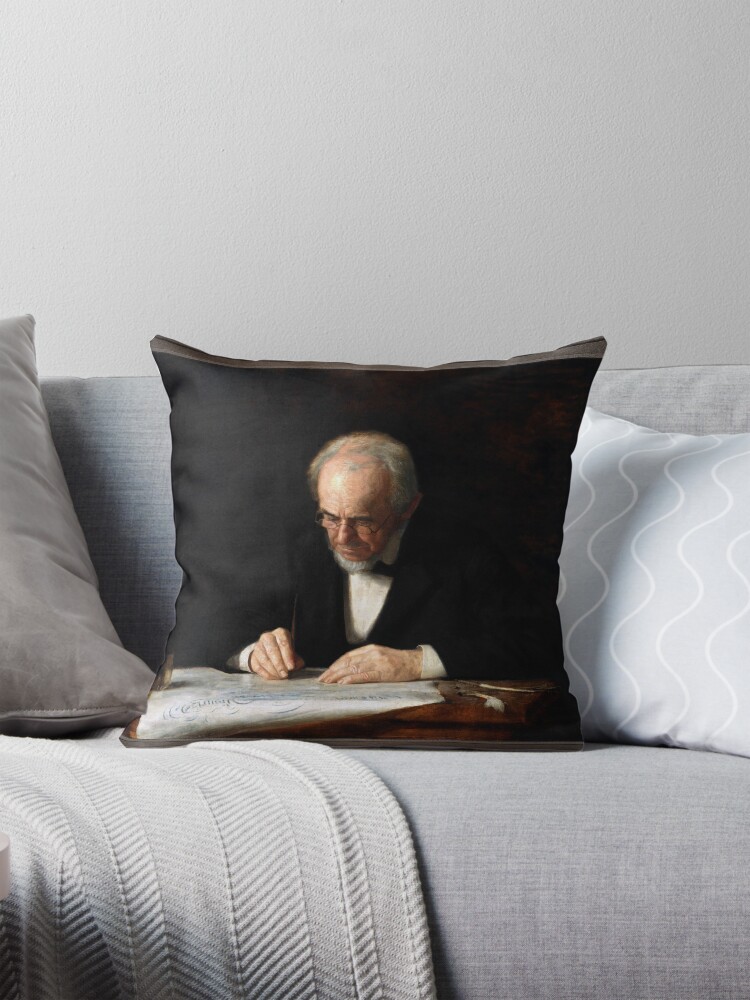
V uměleckém díle s názvem Mistr psaní, vytvořeno v 1882, Americký umělec Thomas Eakins (1844 – 1916) představuje působivou scénu, která zachycuje okamžik intenzivního soustředění a disciplíny. Námětem obrazu je starší muž, pravděpodobně instruktor psaní, který je vidět pilně při práci, zabraný do svého úkolu. Eakins’ zobrazení postavy podtrhuje jeho charakteristickou dovednost ve vykreslování lidské anatomie a psychologické hloubky, zdůrazňující nejen mužské držení těla, ale také tichou intenzitu jeho soustředění. Umělec zachycuje interakci muže s předměty kolem něj, a to, papír a náčiní jeho obchodu, odrážející disciplinovaný, profesionální atmosféru.
Obsah
Předmět a kompozice
The central figure in Mistr psaní is a man of advanced age, dressed in formal attire, with a neatly tied white cravat, dark vest, and a black coat. His bald head and the wisps of white hair at the temples suggest the passage of years. His posture is composed but slightly hunched as he bends over the desk, focused intently on his work.
Muž, who appears to be an educator or a skilled craftsman, holds a quill in his right hand, poised above a sheet of parchment. The quill, likely an extension of the man’s work, reflects his mastery over his craft, while the careful lines of writing on the paper demonstrate his expertise. The stark contrast between the man’s age and the delicacy with which he handles the quill underscores a lifetime of experience.
Behind the figure, the composition is dark and simple, with no overt distractions from the subject matter. The background serves as a silent, unobtrusive setting for the man’s intellectual endeavor, evoking a timeless atmosphere of quiet focus.
Eakins uses shadow and light effectively to direct the viewer’s attention, accentuating the subject’s face and hands while leaving the surroundings in shadow. This technique emphasizes the man’s isolation in this moment of concentration, allowing the viewer to reflect on his role and the significance of his task.
Předměty a materiály
On the table in front of the man, několik klíčových objektů pomáhá vytvořit prostředí a posílit téma intelektuální práce. Kus pergamenu leží otevřený, s pečlivě nakreslenými liniemi, které odrážejí tradiční umění psaní, které muž praktikuje. Papír je vysoce kvalitní, a úhlednost linií ukazuje oddanost přesnosti a řemeslnému zpracování.
Brk v mužské ruce je klasickým nástrojem psaní, je elegantní, zakřivený tvar naznačuje, že je to pro spisovatele ceněný nástroj, a možná symbol jeho odbornosti. Vedle pergamenu je lahvička s inkoustem, opatrně umístěn na stranu. Tmavé sklo lahvičky s inkoustem je osvětleno tak, že jemně odráží světlo, upozornit na proces psaní, do kterého je muž ponořen.
The overall simplicity of the materials reinforces the central theme: the mastery of an art form through sustained effort and discipline. There is an absence of embellishments or distractions, allowing the viewer to focus solely on the act of writing and the man’s engagement with it. Eakins’ attention to the textures of these objects further elevates their importance, highlighting the connection between the craftsman and his tools.
Téma a nálada
Mistr psaní captures a theme that resonates deeply with the notion of mastery and discipline in the arts. Předmět malby, focused on the delicate art of writing, evokes a sense of intellectual rigor and devotion. This theme is underscored by the man’s posture and the serene, contemplative mood of the scene.
The quiet environment of the painting, with its dark background and the dim lighting, creates a sense of solitude and introspection. The viewer is invited to reflect on the precision and patience required to master such an intricate skill.
The mood of the painting, although quiet and restrained, is not one of melancholy or isolation. Místo toho, it conveys a sense of respect for the practice of writing as a discipline. The subdued light that falls on the figure’s hands and face is almost reverential, highlighting the significance of the task at hand.
There is a quiet dignity in the man’s concentrated effort, and the viewer is left with a sense of admiration for his devotion to his craft. Through this, Eakins suggests the fulfillment that comes from the pursuit of mastery and the satisfaction of engaging in meaningful, thoughtful work.
Umělecký styl
Thomas Eakins byl známý svou oddaností realismu, a Mistr psaní není výjimkou. Jeho smysl pro detail je patrný v naturalistickém ztvárnění postavy, textury objektů na stole, a hra světla a stínu v celé scéně.
Umělcova zručnost při zobrazování lidské podoby je zřejmá ve způsobu zobrazení věku a charakteru subjektu prostřednictvím jemných linií jeho tváře a pečlivě sledovaných detailů jeho rukou.. Postava je vyobrazena s anatomickou přesností, odrážející Eakinsovo pozadí ve studiu lidské anatomie, zaměření, které je patrné v jeho zobrazení rukou spisovatele, které s grácií, ale sebevědomě zacházejí s brkem.
Použití šerosvitu, nebo kontrast mezi světlem a tmou, je také určujícím znakem díla. Eakins employs this technique to emphasize the subject’s face and hands, directing the viewer’s attention to the most important elements of the composition. Hluboká, dark tones of the background contrast with the lighter areas of the figure and the desk, creating a sense of depth and focus that draws the viewer into the scene.
The overall composition is restrained, with the simplicity of the setting and the subtle use of light creating a powerful sense of intimacy and focus. The figure’s detailed rendering and the attention to texture make this work a striking example of Eakins’ commitment to capturing the human experience with honesty and skill.
Závěr
v Mistr psaní, Thomas Eakins creates a vivid and intimate portrayal of a man devoted to his craft. Svým pečlivým ztvárněním postavy a pečlivým smyslem pro detail, Eakins vyzývá diváka, aby se zamyslel nad povahou mistrovství a disciplínou potřebnou k jeho dosažení. Obraz má tlumenou náladu, v kombinaci s naturalistickým stylem a tichou důstojností námětu, zanechává v divákovi trvalý dojem. Je to svědectví o umění Eakins, který dokázal zachytit jak fyzickou, tak emocionální podstatu svého námětu s pozoruhodnou přesností a grácií.
Příběh uměleckého díla
Toto je a portrét co Thomas Cowperthwait Eakins udělal o svém otci, mistr spisovatel a kaligraf, který ho ukazuje jako stárnoucího řemeslníka sedícího u svého pracovního stolu s brýlemi, zabývající se kopírováním dokumentu ve staromódním mědirytinovém písmu.
Toto je retušovaná reprodukce starého umění digitálního umění obrazu veřejného díla.
Životopis umělce je odvozen od Wikipedia.org
Thomas was born to Benjamin Eakins (1818 – 1899) a writing master and calligraphy teacher and Caroline Cowperthwait Eakins, in the American state of Philadelphia on July 25, 1844.
He was the eldest child of the couple and his full name was Thomas Cowperthwait Eakins, and by the age of 12 demonstrated skills in prices line drawing, perspective and the use of grid layout; most like from observing his father at work.
v 1861 Thomas attended the Pennsylvania Academy of the Fine Arts and later attended the Jefferson Medical College for two years, where he took classes on anatomy and dissection.
Later he would follow in his fathers footsteps as a writing teacher; but his scientific interest in the human body would lead him into becoming a surgeon.
Then from 1866 na 1870 Thomas would move to France, kde studoval u francouzského realistického malíře Jeana-Léona Gérôma (1824 – 1904) mistr orientalismu, Francouzský realistický malíř Léon Bonnat (1833 -1922), který kladl důraz na anatomickou přesnost; čí metody by přijal ve svých vlastních obrazech.
Od tohoto okamžiku, a pro další 40 let Thomas zasvětil svou kariéru vytváření náročných uměleckých děl ze života; malování několika stovek portrétů přátel, rodina, a lidé význační v umění, vědy, lékařství a duchovenstvo.