

The Writing Master c1882
An Máistir Scríbhneoireachta, c1882 by American Painter Thomas Eakins (1844 – 1916)
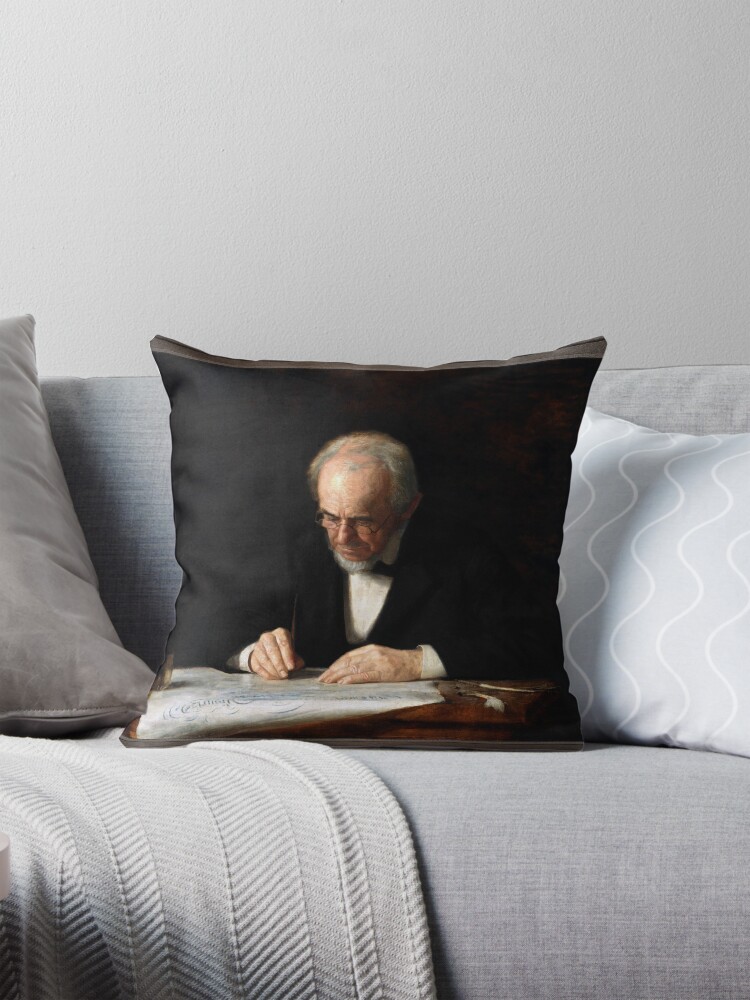
In the artwork titled An Máistir Scríbhneoireachta, a cruthaíodh i 1882, American artist Thomas Eakins (1844 – 1916) presents a compelling scene that captures a moment of intense focus and discipline. The subject of the painting is an older man, presumably a writing instructor, who is seen diligently at work, engrossed in his task. Eakins’ portrayal of the figure highlights his signature skill in rendering human anatomy and psychological depth, emphasizing not just the man’s posture but also the quiet intensity of his concentration. The artist captures the man’s interaction with the objects around him, namely, the paper and the implements of his trade, reflecting a disciplined, professional atmosphere.
Clár na nÁbhar
Ábhar agus Comhdhéanamh
The central figure in An Máistir Scríbhneoireachta is a man of advanced age, dressed in formal attire, with a neatly tied white cravat, dark vest, and a black coat. His bald head and the wisps of white hair at the temples suggest the passage of years. His posture is composed but slightly hunched as he bends over the desk, focused intently on his work.
The man, who appears to be an educator or a skilled craftsman, holds a quill in his right hand, poised above a sheet of parchment. The quill, likely an extension of the man’s work, reflects his mastery over his craft, while the careful lines of writing on the paper demonstrate his expertise. The stark contrast between the man’s age and the delicacy with which he handles the quill underscores a lifetime of experience.
Behind the figure, the composition is dark and simple, with no overt distractions from the subject matter. The background serves as a silent, unobtrusive setting for the man’s intellectual endeavor, evoking a timeless atmosphere of quiet focus.
Eakins uses shadow and light effectively to direct the viewer’s attention, accentuating the subject’s face and hands while leaving the surroundings in shadow. This technique emphasizes the man’s isolation in this moment of concentration, allowing the viewer to reflect on his role and the significance of his task.
Cuspóirí agus Ábhair
On the table in front of the man, several key objects help to establish the setting and reinforce the theme of intellectual labor. A piece of parchment lies open, with carefully drawn lines that reflect the traditional art of writing that the man is practicing. The paper is of high quality, and the neatness of the lines shows a dedication to precision and craftsmanship.
The quill in the man’s hand is a classic tool of writing, its elegant, curved shape suggesting it is a cherished implement for the writer, and perhaps a symbol of his expertise. Next to the parchment is an ink bottle, carefully placed to the side. The dark glass of the ink bottle is illuminated in such a way that it reflects light softly, drawing attention to the writing process that the man is immersed in.
The overall simplicity of the materials reinforces the central theme: the mastery of an art form through sustained effort and discipline. There is an absence of embellishments or distractions, allowing the viewer to focus solely on the act of writing and the man’s engagement with it. Eakins’ attention to the textures of these objects further elevates their importance, highlighting the connection between the craftsman and his tools.
Téama agus giúmar
An Máistir Scríbhneoireachta captures a theme that resonates deeply with the notion of mastery and discipline in the arts. The subject of the painting, focused on the delicate art of writing, evokes a sense of intellectual rigor and devotion. This theme is underscored by the man’s posture and the serene, contemplative mood of the scene.
The quiet environment of the painting, with its dark background and the dim lighting, creates a sense of solitude and introspection. The viewer is invited to reflect on the precision and patience required to master such an intricate skill.
The mood of the painting, although quiet and restrained, is not one of melancholy or isolation. Ina áit sin, it conveys a sense of respect for the practice of writing as a discipline. The subdued light that falls on the figure’s hands and face is almost reverential, highlighting the significance of the task at hand.
There is a quiet dignity in the man’s concentrated effort, and the viewer is left with a sense of admiration for his devotion to his craft. Through this, Eakins suggests the fulfillment that comes from the pursuit of mastery and the satisfaction of engaging in meaningful, thoughtful work.
Stíl Ealaíne
Thomas Eakins was known for his dedication to realism, agus An Máistir Scríbhneoireachta ní haon eisceacht é. His attention to detail is evident in the naturalistic rendering of the figure, the textures of the objects on the desk, and the play of light and shadow throughout the scene.
The artist’s skill in depicting the human form is apparent in the way the subject’s age and character are portrayed through the fine lines of his face and the carefully observed details of his hands. The figure is depicted with anatomical precision, reflecting Eakins’ background in studying human anatomy, a focus that is evident in his portrayal of the writing master’s hands, which are gracefully but confidently handling the quill.
Úsáid chiaroscuro, or the contrast between light and dark, is also a defining feature of the work. Eakins employs this technique to emphasize the subject’s face and hands, directing the viewer’s attention to the most important elements of the composition. The deep, dark tones of the background contrast with the lighter areas of the figure and the desk, creating a sense of depth and focus that draws the viewer into the scene.
The overall composition is restrained, with the simplicity of the setting and the subtle use of light creating a powerful sense of intimacy and focus. The figure’s detailed rendering and the attention to texture make this work a striking example of Eakins’ commitment to capturing the human experience with honesty and skill.
Conclúid
I An Máistir Scríbhneoireachta, Thomas Eakins creates a vivid and intimate portrayal of a man devoted to his craft. Through his careful rendering of the figure and his meticulous attention to detail, Eakins invites the viewer to contemplate the nature of mastery and the discipline required to achieve it. The painting’s subdued mood, combined with its naturalistic style and the quiet dignity of the subject, leaves a lasting impression on the viewer. It is a testament to the artistry of Eakins, who was able to capture both the physical and emotional essence of his subject with remarkable precision and grace.
Cúlscéal Saothar Ealaíne
Seo é portráid do rinne Tomás Cowperthwait Eakins ar a athair, máistirscríbhneoir agus peannaire ag taispeáint dó mar cheardaí atá ag dul in aois ina shuí ag bord a shaothair ag caitheamh péire spéaclaí, ag gabháil do chóipeáil doiciméad i Script Copperplate sean-aimseartha.
Is é atá i gceist leis seo ná sean-mháistrí ealaíne digití atáirgeadh ar íomhá fearainn phoiblí.
Artist Bio Is Derived From Wikipedia.org
Rugadh Thomas do Benjamin Eakins (1818 – 1899) máistir scríbhneoireachta agus múinteoir peannaireachta agus Caroline Cowperthwait Eakins, i stát Meiriceánach Philadelphia ar Iúil 25, 1844.
Ba é an leanbh ba shine den lánúin é agus Thomas Cowperthwait Eakins an t-ainm iomlán a bhí air, agus le haois 12 scileanna léirithe i líníocht líne praghsanna, peirspictíocht agus úsáid leagan amach na greille; is mó a thaitin le breathnú ar a athair ag an obair.
I 1861 D'fhreastail Thomas ar Acadamh na Mínealaíne Pennsylvania agus ina dhiaidh sin d'fhreastail sé ar Choláiste Leighis Jefferson ar feadh dhá bhliain, áit ar thug sé ranganna ar anatamaíocht agus dissection.
Níos déanaí leanfadh sé céimeanna a athar mar mhúinteoir scríbhneoireachta; ach dá spéis eolaíoch i gcorp an duine bheadh sé ina mháinlia.
Ansin ó 1866 chun 1870 Bhogfadh Tomás go dtí an Fhrainc, áit a ndearna sé staidéar leis an bPéintéir Réadúil Francach Jean-Léon Gérôme (1824 – 1904) ina mháistir Orientalism, Péintéir Réalaíoch Francach Léon Bonnat (1833 -1922), a chuir béim ar chruinneas anatamaíoch; cé na modhanna a ghlacfadh sé ina phictiúir féin.
Ón bpointe seo ar aghaidh, agus don chéad cheann eile 40 blianta a chaith Thomas a ghairm bheatha ag cruthú saothair chruinne ealaíne ón saol; ag péinteáil na céadta portráid de chairde, teaghlach, agus daoine mór le rá sna healaíona, eolaíochtaí, leighis agus an chléir.