

The Writing Master c1882
Мастер письма, c1882 by American Painter Thomas Eakins (1844 – 1916)
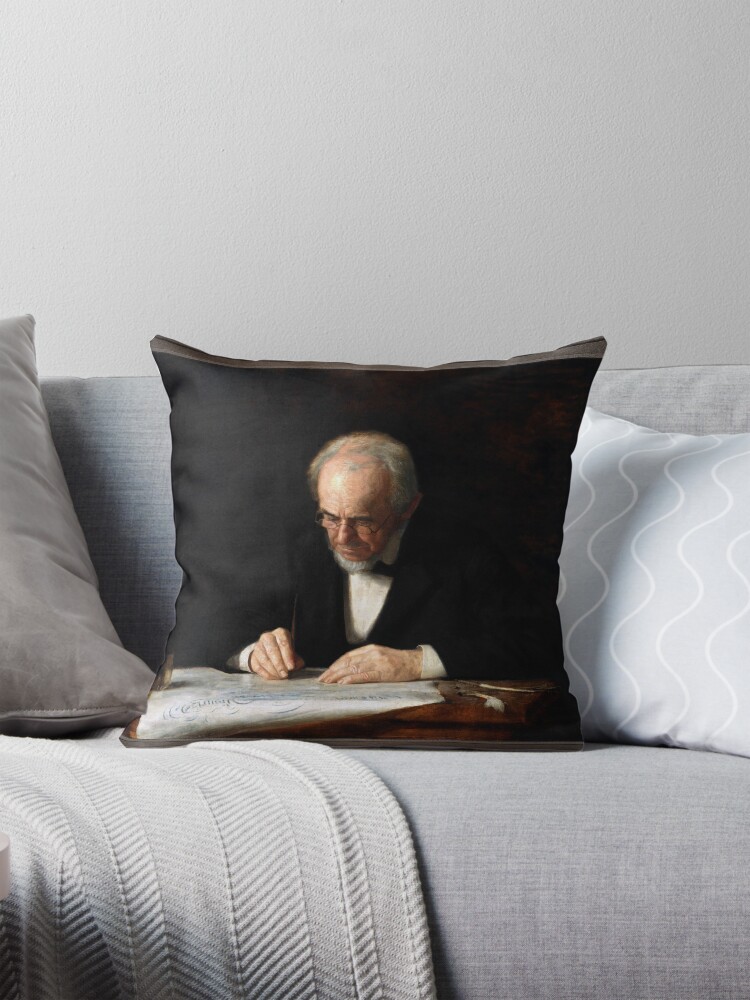
В произведении под названием Мастер письма, создано в 1882, American artist Thomas Eakins (1844 – 1916) presents a compelling scene that captures a moment of intense focus and discipline. The subject of the painting is an older man, presumably a writing instructor, who is seen diligently at work, engrossed in his task. Eakins’ portrayal of the figure highlights his signature skill in rendering human anatomy and psychological depth, emphasizing not just the man’s posture but also the quiet intensity of his concentration. The artist captures the man’s interaction with the objects around him, namely, the paper and the implements of his trade, reflecting a disciplined, professional atmosphere.
Оглавление
Тема и состав
Центральная фигура в Мастер письма is a man of advanced age, dressed in formal attire, with a neatly tied white cravat, dark vest, and a black coat. His bald head and the wisps of white hair at the temples suggest the passage of years. His posture is composed but slightly hunched as he bends over the desk, focused intently on his work.
Тот человек, who appears to be an educator or a skilled craftsman, holds a quill in his right hand, poised above a sheet of parchment. The quill, likely an extension of the man’s work, reflects his mastery over his craft, while the careful lines of writing on the paper demonstrate his expertise. The stark contrast between the man’s age and the delicacy with which he handles the quill underscores a lifetime of experience.
За фигурой, the composition is dark and simple, with no overt distractions from the subject matter. The background serves as a silent, unobtrusive setting for the man’s intellectual endeavor, evoking a timeless atmosphere of quiet focus.
Eakins uses shadow and light effectively to direct the viewer’s attention, accentuating the subject’s face and hands while leaving the surroundings in shadow. This technique emphasizes the man’s isolation in this moment of concentration, allowing the viewer to reflect on his role and the significance of his task.
Объекты и материалы
On the table in front of the man, several key objects help to establish the setting and reinforce the theme of intellectual labor. A piece of parchment lies open, with carefully drawn lines that reflect the traditional art of writing that the man is practicing. The paper is of high quality, and the neatness of the lines shows a dedication to precision and craftsmanship.
The quill in the man’s hand is a classic tool of writing, its elegant, curved shape suggesting it is a cherished implement for the writer, and perhaps a symbol of his expertise. Next to the parchment is an ink bottle, carefully placed to the side. The dark glass of the ink bottle is illuminated in such a way that it reflects light softly, drawing attention to the writing process that the man is immersed in.
The overall simplicity of the materials reinforces the central theme: the mastery of an art form through sustained effort and discipline. There is an absence of embellishments or distractions, allowing the viewer to focus solely on the act of writing and the man’s engagement with it. Eakins’ attention to the textures of these objects further elevates their importance, highlighting the connection between the craftsman and his tools.
Тема и настроение
Мастер письма captures a theme that resonates deeply with the notion of mastery and discipline in the arts. Сюжет картины, focused on the delicate art of writing, evokes a sense of intellectual rigor and devotion. This theme is underscored by the man’s posture and the serene, contemplative mood of the scene.
The quiet environment of the painting, with its dark background and the dim lighting, creates a sense of solitude and introspection. The viewer is invited to reflect on the precision and patience required to master such an intricate skill.
Настроение картины, although quiet and restrained, is not one of melancholy or isolation. Вместо, it conveys a sense of respect for the practice of writing as a discipline. The subdued light that falls on the figure’s hands and face is almost reverential, highlighting the significance of the task at hand.
There is a quiet dignity in the man’s concentrated effort, and the viewer is left with a sense of admiration for his devotion to his craft. Через это, Eakins suggests the fulfillment that comes from the pursuit of mastery and the satisfaction of engaging in meaningful, thoughtful work.
Художественный стиль
Thomas Eakins was known for his dedication to realism, и Мастер письма не исключение. His attention to detail is evident in the naturalistic rendering of the figure, the textures of the objects on the desk, and the play of light and shadow throughout the scene.
The artist’s skill in depicting the human form is apparent in the way the subject’s age and character are portrayed through the fine lines of his face and the carefully observed details of his hands. The figure is depicted with anatomical precision, reflecting Eakins’ background in studying human anatomy, a focus that is evident in his portrayal of the writing master’s hands, which are gracefully but confidently handling the quill.
Использование Chiaroscuro, или контраст между светом и темным, is also a defining feature of the work. Eakins employs this technique to emphasize the subject’s face and hands, directing the viewer’s attention to the most important elements of the composition. Глубокий, dark tones of the background contrast with the lighter areas of the figure and the desk, creating a sense of depth and focus that draws the viewer into the scene.
The overall composition is restrained, with the simplicity of the setting and the subtle use of light creating a powerful sense of intimacy and focus. The figure’s detailed rendering and the attention to texture make this work a striking example of Eakins’ commitment to capturing the human experience with honesty and skill.
Заключение
В Мастер письма, Thomas Eakins creates a vivid and intimate portrayal of a man devoted to his craft. Through his careful rendering of the figure and his meticulous attention to detail, Eakins invites the viewer to contemplate the nature of mastery and the discipline required to achieve it. The painting’s subdued mood, combined with its naturalistic style and the quiet dignity of the subject, leaves a lasting impression on the viewer. It is a testament to the artistry of Eakins, who was able to capture both the physical and emotional essence of his subject with remarkable precision and grace.
Предыстория произведения искусства
Это портрет что Томас Каупертуэйт Икинс сделал со своим отцом, мастер-писатель и каллиграф, изображающий его стареющим мастером, сидящим за рабочим столом в очках., занят копированием документа старомодным медным шрифтом.
Это ретушированная цифровая художественная репродукция старых мастеров изображения из общественного достояния..
Био -артист получена из Wikipedia.org
Томас родился у Бенджамина Икинса. (1818 – 1899) мастер письма и учитель каллиграфии и Кэролайн Каупертуэйт Икинс, в американском штате Филадельфия в июле 25, 1844.
Он был старшим ребенком в семье, и его полное имя было Томас Каупертуэйт Икинс., и к возрасту 12 демонстрация навыков рисования ценовых линий, перспектива и использование макета сетки; больше всего похоже на наблюдение за отцом за работой.
В 1861 Томас учился в Пенсильванской академии изящных искусств, а затем в течение двух лет учился в Медицинском колледже Джефферсона., где он брал уроки анатомии и вскрытия.
Позже он пошел по стопам отца и стал учителем письма.; но его научный интерес к человеческому телу привел его к тому, что он стал хирургом..
Затем из 1866 к 1870 Томас переедет во Францию, где он учился у французского художника-реалиста Жана-Леона Жерома. (1824 – 1904) мастер востоковедения, Французский художник-реалист Леон Бонна (1833 -1922), который подчеркивал анатомическую точность; чьи методы он перенял бы в своих картинах.
С этого момента, и на следующий 40 лет Томас посвятил бы свою карьеру созданию требовательных произведений искусства из жизни; нарисовал несколько сотен портретов друзей, семья, и видные деятели искусства, науки, медицина и духовенство.