

The Yellow Dress by Peruvian
Created in the mid-20th century, “The Yellow Dress” is an exquisite piece by Peruvian-born artist Íomhá áitritheora Alberto Vargas, who was known for his celebrated pin-up art that captured the glamour and elegance of women in the post-war era. Rugadh i 1896 agus bás i 1982, Vargas was a master of sensuality and grace, blending meticulous technique with a modern approach to portraiture. The painting stands as a tribute to the beauty and allure of the female form, encapsulating the elegance and style of the period it represents. I “The Yellow Dress,” Vargas uses a harmonious combination of vivid colors, scuab-obair íogair, and a soft focus on the female subject to create an image that exudes timeless sophistication.
Clár na nÁbhar
An príomh -ábhar
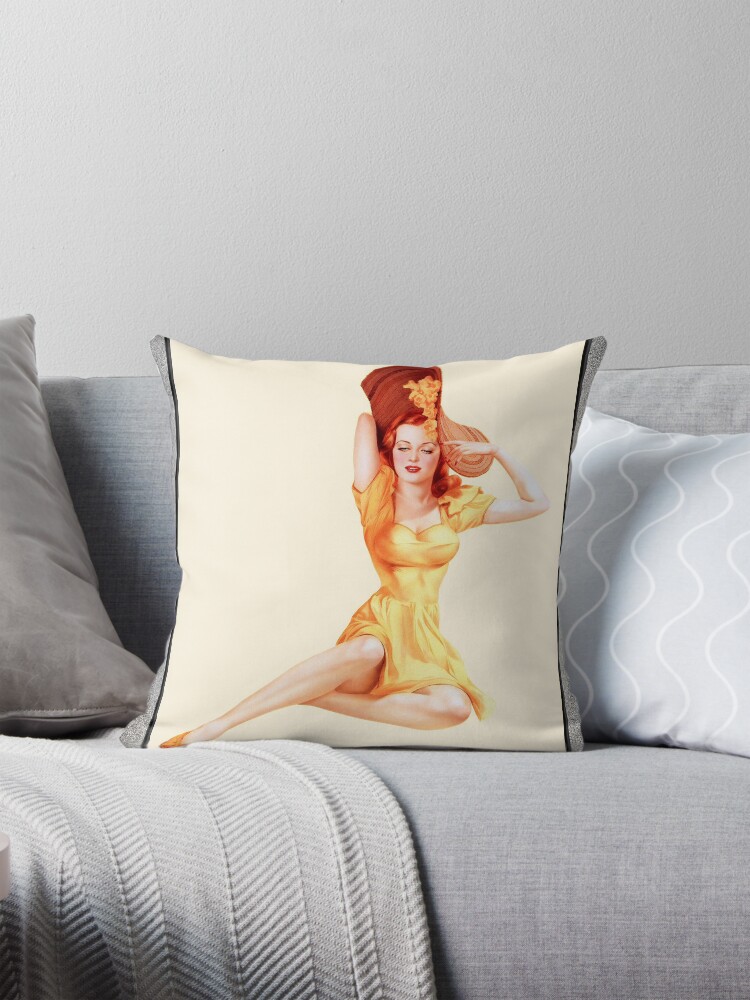
Is é pointe fócasach an tsaothair ealaíne bean atá cóirithe i gúna buí radanta, rud atá i gcodarsnacht ghéar lena gruaig rua fiery agus an cúlra balbh. Bhí sí poised, staidiúir galánta, le lámh amháin ardaithe go réidh chun hata iontach mór agus faiseanta a shealbhú, cruthaíonn sé mothú gluaiseachta agus éascaíochta. Tá léiriú gnúise na mná suaimhneach, a súile dúnta amhail is dá mba caillte i nóiméad de féin-mhachnamh nó sásamh íon. Tugann an mionsonra caolchúiseach seo cuireadh don bhreathnóir nóiméad príobháideach, í a ghabháil i staid ghrásta agus composure. Tá éadaí na mná fíochmhar, accentuating a curves leis an bog, uigeacht mhín na fabraice béimithe ag rindreáil cúramach Vargas ar an ngúna.
An hata, gné shuntasach sa chomhdhéanamh, déanta as ábhar donn te, decorated with a delicate flower motif that serves as a perfect complement to the golden hues of the dress. The hat’s wide brim appears to cascade with movement, contributing to the fluidity of the overall composition. Vargas’s characteristic attention to detail in capturing textures, from the softness of the dress to the flow of the hat, draws attention to the tactile nature of the subject. The subject’s long, graceful limbs are positioned in a relaxed manner, adding to the overall sense of ease and elegance.
The Background and Surrounding Elements
The background of the piece is minimal, with a soft cream-colored wash that serves to isolate the subject from the surrounding world, drawing the viewer’s focus entirely onto the woman in the yellow dress. This choice of an uncomplicated background contrasts with the vividness of the subject, enhancing the drama and allure of the woman. There are no competing objects, figiúirí, or complex settings; the absence of distractions invites the viewer to admire the woman’s beauty and the refined, feminine style Vargas so often sought to portray.
The simplicity of the background also underscores the focus on the woman herself, a theme Vargas frequently explored in his work. By stripping away unnecessary detail, the artist allows the subject’s elegance to dominate, celebrating her beauty and strength without external distractions.
An Stíl agus an Teicníc
Vargas was known for his unique style that blended realism with an almost dreamlike sensuality. A chuid oibre i “The Yellow Dress” embodies these qualities, with a perfect balance between realistic anatomical detail and the soft, glowing allure of an idealized feminine form. The technique Vargas employed was refined and precise; his brushwork is detailed and smooth, rendering the woman’s skin with such tenderness that it seems almost luminous. The play of light and shadow on her body reveals the form beneath the fabric, subtly hinting at the contours of her physique without overtly revealing too much.
Tá úsáid dathanna thar a bheith buailte sa phictiúr seo. The bright yellow dress serves as a focal point, its warmth contrasting against the soft cream background and the rich red of the woman’s hair. This juxtaposition of colors heightens the sense of vibrancy and life, emphasizing the subject’s presence and energy. The tones of her skin, delicately rendered, lend a softness and warmth to the composition, further enhancing the figure’s beauty.
Vargas’s ability to depict fabric texture is another aspect that stands out in “The Yellow Dress.” The dress seems to flow around the subject’s form, suggesting movement even in a moment of stillness. The brushwork on the folds and creases of the fabric displays a keen understanding of the interplay of light and texture, while the luxurious quality of the material is emphasized by the way the light subtly reflects off its surface. Ar an gcaoi chéanna, the intricate detailing of the hat and the slight movement suggested by its large brim brings a dynamic quality to the composition, contributing to the scene’s overall sense of vitality.
Téama agus giúmar
Baineann téama lárnach an tsaothair ealaíne le ceiliúradh na háilleachta baininscneach, grásta, agus elegance. Léiriú de mhná Vargas, go háirithe in oibreacha mar “The Yellow Dress,” leagann sé béim ar bhaininscneach idéalach atá mealltach agus díniteach. Tá bogas agus mionchoigeartú sa tslí a rindreáiltear an t-ábhar a thugann íonacht le tuiscint, sofaisticiúlacht, agus poise. Seasamh an ábhair, uasal agus suaimhneach, le fios go bhfuil an bhean compordach ina áilleacht, téama na feimineach muiníneach a threisiú tuilleadh.
Tá giúmar an phéintéireachta suaimhneach, machnamhach, agus pearsanta. An léiriú subtle ar aghaidh na mná, péireáilte le míne a staidiúir agus an chúlra balbhaithe, léiríonn sé braistint machnaimh chiúin. Spreagann an t-atmaisféar seo an breathnóir díriú ní hamháin ar áilleacht sheachtrach na mná ach freisin ar a staid inmheánach agus a compord.. Tá codarsnacht idir buí bríomhar a gúna agus suaimhneas a iompraíochta, mothú cothromaíochta a chruthú idir fuinneamh agus suaimhneas.
Rogha Vargas an bhean a léiriú i stíl chomh galánta, Tugann staidiúir nach bhfuil ró-mhilis cuireadh don bhreathnóir machnamh a dhéanamh ar an ngaol idir an chuma sheachtrach agus an bunúsach inmheánach, ag cur béime ar an gcothromaíocht íogair de ghrásta agus de neart a shainíonn a chuid figiúirí baininscneach. An meascán de shonraí luxurious, dathanna comhchuí, agus cruthaíonn an meon suaimhneach saothar ealaíne atá gan am agus spreagúil, ag tabhairt spléachadh ar an idéalach baininscneach a rinne Vargas iniúchadh chomh minic sin air.
Is éard atá sa Gúna Buí ná seanmháistrí ealaíne digiteacha atá á n-atáirgeadh ar íomhá fearainn phoiblí.
Beathaisnéis Ealaíontóir Ó Wikipedia.org
Rugadh in Arequipa é, Peiriú, ba mhac é leis an ngrianghrafadóir Peruvian suntasach Max T.. Vargas. Bhog Alberto Vargas go dtí na Stáit Aontaithe i 1916 tar éis staidéar a dhéanamh ar ealaín san Eoraip, Zurich, agus an Ghinéiv roimh an gCéad Chogadh Domhanda.
Le linn dó a bheith san Eoraip tháinig sé ar an iris Francach La Vie Parisienne, le clúdach le Raphael Kirchner, a dúirt sé a raibh tionchar mór aige ar a chuid oibre.
I measc a ghairmréime i Nua Eabhrac bhí obair mar ealaíontóir do na Ziegfeld Follies agus do go leor stiúideonna Hollywood. Crochadh Ziegfeld a phictiúr de Olive Thomas ag an amharclann, agus measadh go raibh sí ar cheann de na Cailíní Vargas is luaithe.
Vargas’ bhí an píosa oibre scannáin is cáiliúla le haghaidh póstaer an 1933 scannán The Sin of Nora Moran, a thaispeánann Zita Johann atá beagnach nocht i staid an éadóchais. Is minic a ainmnítear an póstaer ar cheann de na póstaeir scannáin is mó a rinneadh riamh.
Tugadh suntas dó sna 1940idí mar chruthaitheoir na mbiorán íocónach ón Dara Cogadh Domhanda don iris Esquire ar a dtugtar “Cailíní Vargas.” Idir 1940 agus 1946 Vargas a tháirgtear 180 pictiúir don iris.
Spreagadh agus oiriúnaíodh ealaín srón a lán aerárthaí Meiriceánacha agus Comhghuaillithe ón Dara Cogadh Domhanda ó na bioráin Esquire seo, chomh maith leo siúd George Petty, agus ealaíontóirí eile.