

The Yellow Dress by Peruvian
Created in the mid-20th century, “The Yellow Dress” is an exquisite piece by Peruvian-born artist アルベルトバルガスプレースホルダー画像, who was known for his celebrated pin-up art that captured the glamour and elegance of women in the post-war era. で生まれた 1896 そして亡くなります 1982, Vargas was a master of sensuality and grace, blending meticulous technique with a modern approach to portraiture. The painting stands as a tribute to the beauty and allure of the female form, encapsulating the elegance and style of the period it represents. に “The Yellow Dress,” Vargas uses a harmonious combination of vivid colors, delicate brushwork, and a soft focus on the female subject to create an image that exudes timeless sophistication.
目次
本題
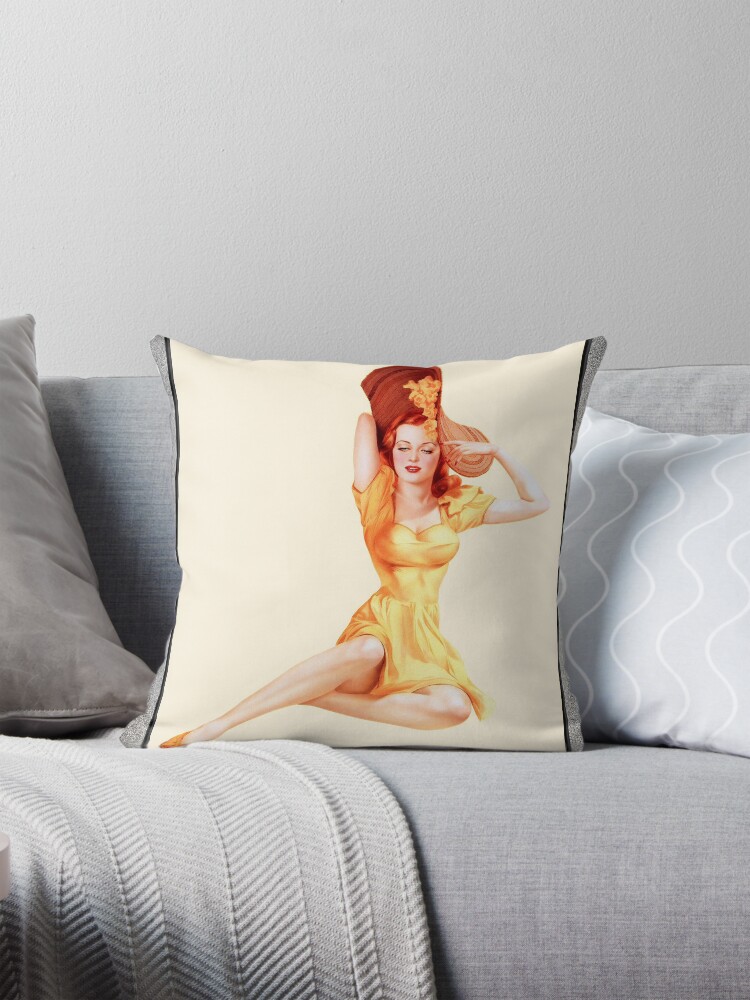
The focal point of the artwork is a woman dressed in a radiant yellow dress, which contrasts sharply with her fiery red hair and the muted background. 彼女は落ち着いた, elegant posture, with one arm gently raised to hold a strikingly large and fashionable hat, creates a sense of movement and ease. The woman’s facial expression is serene, her eyes closed as if lost in a moment of self-reflection or pure contentment. This subtle detail invites the viewer into a private moment, capturing her in a state of grace and composure. The woman’s clothing is figure-flattering, accentuating her curves with the soft, smooth texture of the fabric highlighted by Vargas’s careful rendering of the dress.
帽子, a significant element in the composition, is made of a warm brown material, decorated with a delicate flower motif that serves as a perfect complement to the golden hues of the dress. The hat’s wide brim appears to cascade with movement, contributing to the fluidity of the overall composition. Vargas’s characteristic attention to detail in capturing textures, from the softness of the dress to the flow of the hat, draws attention to the tactile nature of the subject. The subject’s long, graceful limbs are positioned in a relaxed manner, adding to the overall sense of ease and elegance.
The Background and Surrounding Elements
The background of the piece is minimal, with a soft cream-colored wash that serves to isolate the subject from the surrounding world, drawing the viewer’s focus entirely onto the woman in the yellow dress. This choice of an uncomplicated background contrasts with the vividness of the subject, enhancing the drama and allure of the woman. There are no competing objects, figures, or complex settings; the absence of distractions invites the viewer to admire the woman’s beauty and the refined, feminine style Vargas so often sought to portray.
The simplicity of the background also underscores the focus on the woman herself, a theme Vargas frequently explored in his work. By stripping away unnecessary detail, the artist allows the subject’s elegance to dominate, celebrating her beauty and strength without external distractions.
スタイルとテクニック
Vargas was known for his unique style that blended realism with an almost dreamlike sensuality. His work in “The Yellow Dress” embodies these qualities, with a perfect balance between realistic anatomical detail and the soft, glowing allure of an idealized feminine form. The technique Vargas employed was refined and precise; his brushwork is detailed and smooth, rendering the woman’s skin with such tenderness that it seems almost luminous. The play of light and shadow on her body reveals the form beneath the fabric, subtly hinting at the contours of her physique without overtly revealing too much.
この絵では、色の使用が特に印象的です. The bright yellow dress serves as a focal point, its warmth contrasting against the soft cream background and the rich red of the woman’s hair. This juxtaposition of colors heightens the sense of vibrancy and life, emphasizing the subject’s presence and energy. The tones of her skin, delicately rendered, lend a softness and warmth to the composition, further enhancing the figure’s beauty.
Vargas’s ability to depict fabric texture is another aspect that stands out in “The Yellow Dress.” The dress seems to flow around the subject’s form, suggesting movement even in a moment of stillness. The brushwork on the folds and creases of the fabric displays a keen understanding of the interplay of light and texture, while the luxurious quality of the material is emphasized by the way the light subtly reflects off its surface. 同じやり方で, the intricate detailing of the hat and the slight movement suggested by its large brim brings a dynamic quality to the composition, contributing to the scene’s overall sense of vitality.
テーマと雰囲気
The central theme of the artwork revolves around the celebration of feminine beauty, 恵み, and elegance. Vargas’s portrayal of women, particularly in works like “The Yellow Dress,” emphasizes an idealized femininity that is both alluring and dignified. There is a softness and refinement in the way the subject is rendered that suggests purity, 洗練, そして落ち着いて. 被写体のポーズ, gentle and relaxed, suggests that the woman is comfortable in her beauty, further reinforcing the theme of confident femininity.
絵の雰囲気も穏やかです, contemplative, and intimate. The subtle expression on the woman’s face, paired with the smoothness of her pose and the muted background, evokes a sense of quiet reflection. This atmosphere encourages the viewer to focus not just on the woman’s external beauty but also on her inner poise and composure. The vibrant yellow of her dress contrasts with the calmness of her demeanor, creating a feeling of balance between energy and tranquility.
Vargas’s choice to depict the woman in such an elegant, almost wistful pose invites the viewer to reflect on the relationship between outer appearance and inner essence, emphasizing the delicate balance of grace and strength that defines his feminine figures. The combination of luxurious details, harmonious colors, and the serene mood creates an artwork that is timeless and evocative, offering a glimpse into the feminine ideal that Vargas so often explored.
イエロードレスは、パブリックドメインの画像を複製したデジタルアートのオールドマスターのレタッチです。.
アーティストバイオから Wikipedia.org
アレキパ生まれ, ペルー, 彼は有名なペルーの写真家マックスTの息子でした. バルガス. アルベルトバルガスは、 1916 ヨーロッパで芸術を学んだ後, チューリッヒ, 第一次世界大戦前のジュネーブ.
彼がヨーロッパにいる間、彼はフランスの雑誌La VieParisienneに出くわしました, ラファエル・キルヒナーのカバー付き, 彼はそれが彼の仕事に大きな影響を与えたと言った.
ニューヨークでの彼の初期のキャリアには、ジーグフェルドフォリーズや多くのハリウッドスタジオのアーティストとしての仕事が含まれていました。. ジーグフェルドは劇場でオリーブトーマスの彼の絵を掛けました, 彼女は最も初期のバルガスガールの一人と考えられていました.
バルガス’ 最も有名な映画作品は、 1933 映画ノラモランの罪, 絶望的なポーズで裸に近いジータ・ジョハンを示しています. このポスターは、これまでに作成された中で最も優れた映画ポスターの1つと呼ばれることがよくあります。.
彼は1940年代に、エスクァイア誌の象徴的な第二次世界大戦時代のピンナップの作成者として広く知られるようになりました。 “バルガスガールズ。” 間 1940 そして 1946 バルガス生産 180 雑誌の絵.
多くのアメリカおよび連合国の第二次世界大戦の航空機のノーズアートは、これらのエスクァイアのピンナップから着想を得て改造されました, ジョージ・ペティーのものと同様に, および他のアーティスト.