

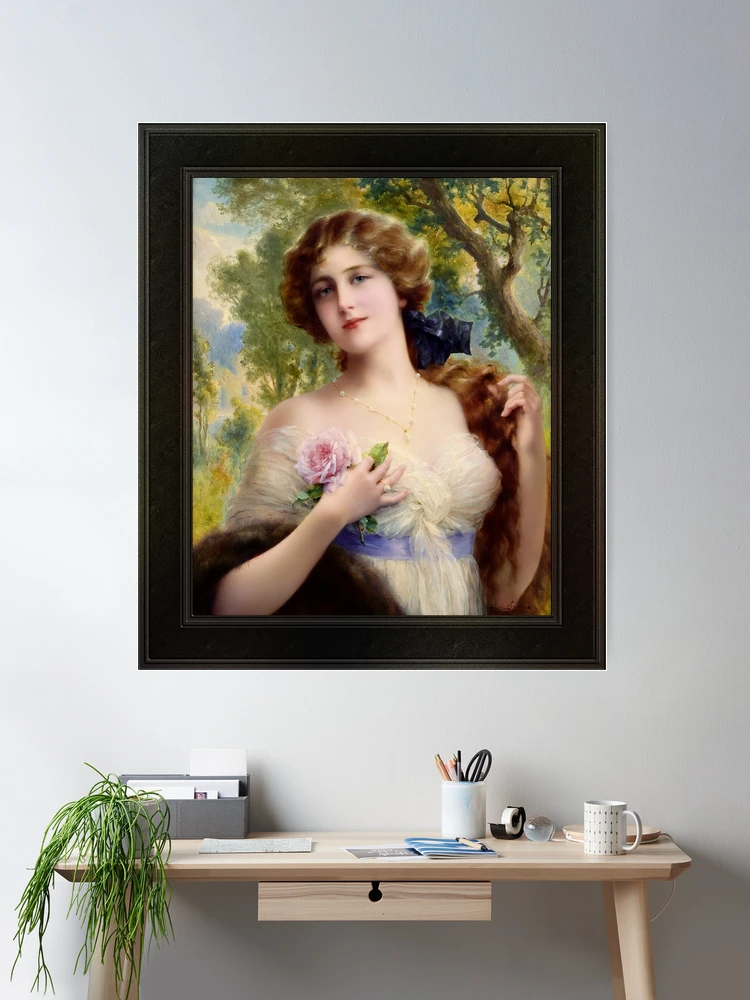
The Young Lady With A Rose c1916
“A jovem com uma rosa,” criado em 1916 by the French painter Emile Vernon (1872 – 1919), is a captivating portrayal of feminine beauty set within the context of early 20th-century French art. Vernon, known for his romantic and idealized depictions of women, brings forth a vision of grace and delicacy that stands as a prime example of his work. The painting radiates a sense of peaceful serenity, capturing the subject with a gentle, almost ethereal presence. This piece is a testament to Vernon’s mastery of light, textura, and the subtle nuances of emotional expression, drawing viewers into an intimate moment of timeless elegance.
Índice
Assunto principal e composição
A figura central da pintura é uma jovem, elegantly poised, holding a large, soft pink rose in her left hand. She gazes directly at the viewer with a slight, sorriso convidativo. Os olhos dela, tender and soft, convey an air of warmth and gentleness, and the soft folds of her golden-brown hair, casually arranged, complement her serene expression. The woman’s attire consists of a delicate off-white gown, partially draped over her shoulders, with a light lavender-blue sash that adds an element of color contrast and sophistication.
The rose she holds is a symbol of beauty, feminilidade, e refinamento. Its large, soft petals almost seem to vibrate with life, captured with an almost tactile precision. Vernon’s skillful rendering of the rose and its accompanying greenery provides a beautiful contrast to the woman’s pale complexion and light dress. The flower’s natural, soft pink color stands as a quiet declaration of youthful beauty, further emphasizing the subject’s purity and grace.
The Setting and Background
Atrás da jovem, the background reveals a serene and lush landscape. A gentle woodland scene with dappled sunlight filtering through the trees creates a soft, almost dreamlike atmosphere. The foliage is painted in rich hues of green, suggesting a peaceful rural or garden setting, possibly hinting at an idyllic country retreat. The warm tones of sunlight contrast subtly with the cool shadows, enhancing the three-dimensionality of the subject and imbuing the scene with an air of tranquility.
Vernon’s choice of such a natural, peaceful environment complements the youthful innocence of the subject. The setting does not dominate the composition but instead supports the overall mood of calm and contemplation. The soft brushwork used to depict the trees and distant landscape further deepens the sense of depth and space within the work.
Estilo e técnica
Émile Vernon was influenced by the Symbolist movement, and his works often carried elements of romanticism and realism. “A jovem com uma rosa” exemplifies his ability to blend these influences into a harmonious and elegant style. His painting technique is marked by a delicate handling of light and color, which, in this instance, creates an atmosphere of softness and subtle elegance. Vernon’s expert use of light, particularly the gentle illumination of the young woman’s face and figure, creates a glowing effect, drawing the viewer’s eye to the subject and enhancing the overall ethereal mood of the piece.
The brushwork in the painting is both smooth and detailed, with an emphasis on the textures of the skin, tecido, and flowers. Each fold in the woman’s gown is carefully modeled to suggest softness and movement, while her delicate features—especially her eyes and lips—are rendered with precise attention to form, yet with a subtlety that avoids overemphasis. The handling of the rose and its petals is particularly skillful, as Vernon has captured the flower’s delicate structure with a near-photographic quality, lending it an almost tangible presence in the scene.
Tema e humor
The theme of the painting is centered on youthful beauty and femininity, conveyed through the depiction of the young woman as both a subject of admiration and a symbol of grace. The flower she holds in her hand, with its soft colors, is often associated with themes of love, beleza, e pureza, aligning with the serene and delicate expression she carries.
The mood of the artwork is one of quiet contemplation and serenity. The young woman is not portrayed as an object of desire, but as a figure that embodies gentleness and a sense of inner peace. Her expression and posture suggest an intimate moment of grace, evoking a sense of tranquility and timelessness. O quente, luz dourada, paired with the natural beauty of the surroundings, contributes to an atmosphere that feels both nostalgic and enduring. The gentle, harmonious palette further enhances the overall calm and peaceful tone of the piece.
Materials and Surface
“A jovem com uma rosa” is painted using traditional oil on canvas. The surface is smooth yet textured in places, such as in the fabric of the woman’s gown and the detailed rendering of the rose. Vernon’s precise use of oils allows for the creation of soft gradients of color that are integral to the mood of the painting. The painting is rich in detail, yet retains a fluidity that makes the work feel effortless, emphasizing the natural beauty of the subject and her environment.
The overall presentation of the painting, from the subject’s soft skin to the details in the foliage, reflects the high level of skill and attention to detail that Vernon applied throughout his career. The materials, técnica, and color choices all work together to create a work of art that remains timeless and evocative.
Conclusão
Dentro “A jovem com uma rosa,” Émile Vernon has created an artwork that combines romance, elegância, and serenity in a single frame. The soft palette, the graceful depiction of the young woman, and the serene landscape combine to create a work that speaks of beauty and calm, making it a quintessential example of Vernon’s style. The rose, a central motif, serves as both a literal and symbolic reminder of the delicate nature of femininity, while the painting as a whole speaks to the enduring power of beauty, captured in a moment of peace.
Esta é uma reprodução retocada dos antigos mestres de arte digital de uma imagem de domínio público.
Biografia do artista
Informações abaixo de Galeria Ary Jan
Émile Vernon foi aluno da escola de Belas Artes de Tours, onde ganhou o primeiro prêmio de desenho em 1888; depois foi orientado por William Bouguereau e Auguste Truphème.
Então em 1898 participou na exposição Tours de Belas Artes e Artes Decorativas e mais tarde nesse ano, na Exposição de Artistas Franceses e lá expôs regularmente o seu trabalho desde 1898 para 1913; apresentando retratos, paisagens, cenas da Bretanha, buquês de natureza morta que ele pintou em aquarela, assim como as figuras femininas, que mais tarde se tornou especialidade.
Émile se destacou em suas pinturas de luz suave, figuras adoráveis de crianças e mulheres jovens elegantes, com quem ele frequentemente associava um animal de estimação, como um gato, cão ou pássaro, e adornava suas imagens com guirlandas ou buquês de flores, ao longo de sua carreira; mas ele também era um artista muito versátil que poderia pintar com rigor e poder como em suas obras o retrato de Madame Vernon e Sous la Lampe (sob a lâmpada).