

Tiara
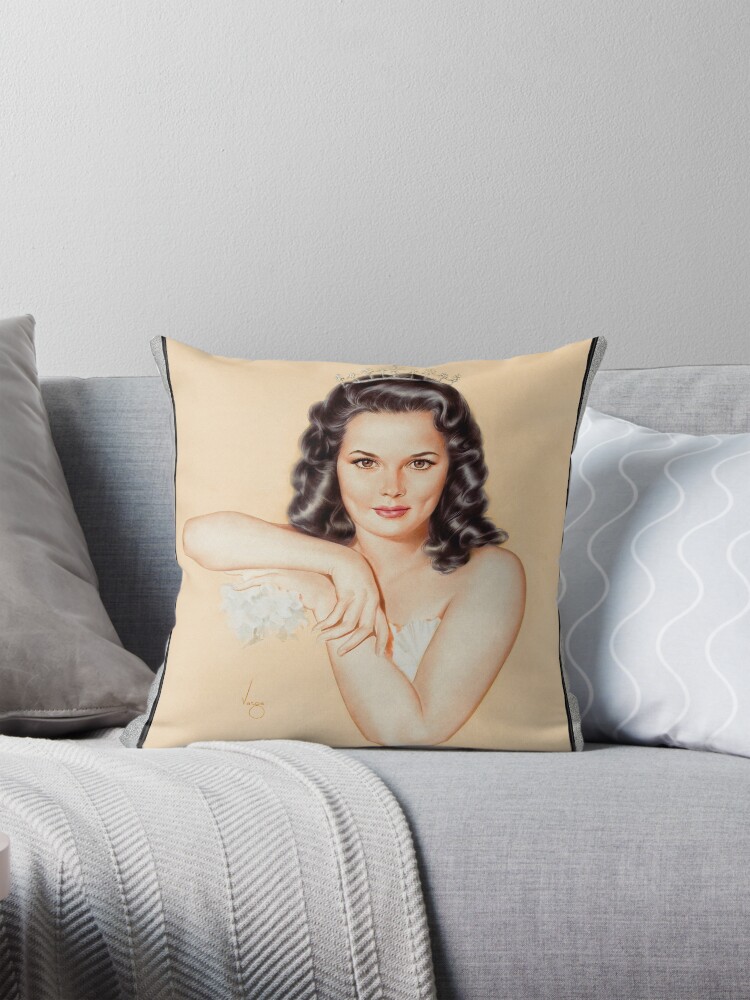
Alberto Vargas 자리 표시자 이미지, a Peruvian artist renowned for his depiction of female beauty and sensuality, 만들어진 “Tiara” 20세기 중반에. 출생 1896, Vargas became one of the most celebrated pin-up artists of his time, known for his elegant and alluring portrayals of women. His works embodied grace and sophistication, combining sensuality with a touch of class.
“Tiara”, one of his most iconic pieces, was painted during the 1940s or 1950s, when Vargas was at the height of his career. The work is a stunning representation of beauty, 여성, and elegance, rendered with the artist’s trademark attention to detail and refined aesthetic sensibility. This artwork exemplifies Vargas’ mastery in blending sensuality with sophistication, crafting a visual narrative that lingers in the viewer’s mind.
목차
주요 주제와 분위기
의 중심 인물 “Tiara” is a stunning woman who exudes grace, 아름다움, 그리고 침착함. She is depicted with delicate, 소프트 피처, framed by glossy, voluminous black hair that cascades in luxurious waves around her face. The soft curls create an aura of effortless beauty, drawing attention to the expressive gaze of the woman. Her gaze is direct yet subtly inviting, giving the viewer a glimpse into a mysterious, intimate world. The artist has captured a moment of repose, as if the subject is in the midst of a delicate reflection, poised between elegance and quiet allure.
The woman is wearing a tiara, a crown of delicate floral motifs that rests atop her head. This tiara symbolizes her regal beauty, as though she were a queen of a dreamlike, celestial realm. Her exposed shoulders and bare skin give the viewer a sense of vulnerability and purity, further emphasizing the delicate nature of her beauty. The mood of the painting is one of serene confidence, and the woman appears both distant and deeply present, adding layers of complexity to her portrayal.
객체와 세부 사항
구성 “Tiara” revolves around the woman, with minimal distraction from the surrounding environment. 전경에서, the woman’s bare arms are gently crossed, and her left arm rests gracefully against her chest, with one hand tenderly holding a small, delicate bouquet of white flowers. The flowers are rendered in soft, almost ethereal tones of white and pale blue, suggesting innocence and fragility. The flowers contrast against the richness of the woman’s dark hair and the subtle shimmer of the tiara, enhancing the idea of purity and nobility.
The background of the painting is a muted, soft peach or light orange hue, which further emphasizes the subject’s luminous skin and contrasts beautifully with her dark, glossy hair and tiara. The simplicity of the backdrop allows the viewer’s attention to be fully absorbed by the subject, directing all focus to the regal and delicate features of the woman.
The tiara itself, an important accessory in the painting, sparkles delicately in the light, its floral elements almost appearing as if they are woven from light itself. This intricate detail adds a sense of luxury and importance to the subject, heightening her status as both an elegant figure and a queen-like presence in the painting. The tiara is not only a beautiful object but a symbol of the elevated, ethereal nature of the woman.
스타일과 테크닉
바르가스’ style in “Tiara” can be categorized as a blend of realism and idealization, with influences from both classical portraiture and the emerging pin-up art culture of the time. His ability to create an idealized version of feminine beauty without resorting to exaggeration is one of the hallmarks of his work. 부드러운, almost porcelain-like quality of the woman’s skin contrasts against the more defined and textured elements of the background and her clothing, giving the figure an almost otherworldly, 천상의 모습.
Vargas uses light and shadow expertly to sculpt the figure, creating a sense of volume and texture in the woman’s face and body. 그녀의 얼굴 특징, especially her eyes, are painted with exquisite detail, giving them a lifelike quality that draws the viewer in. The light falling on her face and shoulders adds depth and dimension to the painting, while the soft gradients of shadow and light in the background help to keep the focus entirely on the subject. The subtle brushstrokes and the careful attention to detail in the tiara and flowers demonstrate Vargas’ technical mastery and commitment to capturing beauty in all its forms.
주제와 상징
핵심, “Tiara” explores themes of beauty, 여성, and elegance. The tiara itself is a potent symbol of nobility, a crown that elevates the subject from mere mortal to regal, suggesting that the woman portrayed is not only a symbol of beauty but also of power and grace. The delicate flowers she holds further symbolize femininity, 청정, and the fleeting nature of beauty. These symbols, combined with the serene expression on the woman’s face, evoke a sense of timelessness, as though the beauty of this figure transcends the constraints of time and place.
The mood is one of quiet contemplation, but also of self-assuredness. The subject’s confident posture and serene expression suggest a deep understanding of her own beauty and power. The symbolism of the tiara, coupled with the softness and grace of the woman’s pose, hints at a deeper narrative of a woman who knows her worth and carries herself with dignity and poise.
결론
“Tiara” by Alberto Vargas is an exquisite example of the artist’s ability to combine sensuality with elegance, creating a work that is both beautiful and thought-provoking. The portrayal of the woman is at once tender and regal, capturing the essence of femininity in its most refined form. Through Vargas’ meticulous attention to detail and use of light and shadow, “Tiara” stands as a testament to the timeless appeal of beauty, 우아함, and elegance. It is a piece that invites the viewer to not only admire the subject but to contemplate the symbolism of femininity and the idealization of beauty in art.
티아라(Tiara)는 공개 도메인 이미지를 수정한 디지털 아트 오래된 거장의 복제품입니다..
아티스트 바이오 Wikipedia.org
아레키파 출생, 페루, 그는 유명한 페루 사진 작가 Max T의 아들이었습니다.. 바르가스. 알베르토 바르가스(Alberto Vargas) 1916 유럽에서 미술을 공부한 후, 취리히, 제1차 세계 대전 이전의 제네바.
그는 유럽에 있는 동안 프랑스 잡지 La Vie Parisienne를 접했습니다., Raphael Kirchner의 표지와 함께, 그의 작품에 큰 영향을 끼쳤다고 합니다..
뉴욕에서의 그의 초기 경력에는 Ziegfeld Follies 및 많은 할리우드 스튜디오의 예술가로서의 작업이 포함되었습니다.. Ziegfeld는 극장에 올리브 토마스의 그림을 걸었습니다., 그리고 그녀는 초기 Vargas Girls 중 한 명으로 생각되었습니다..
바르가스’ 가장 유명한 영화 작품은 '포스터'였다. 1933 영화 노라 모란의 죄, 나체에 가까운 지타 요한이 절망적인 포즈를 취하고 있는 모습을 보여줍니다.. 포스터는 종종 역사상 가장 위대한 영화 포스터 중 하나로 선정됩니다..
그는 1940년대에 Esquire 매거진의 상징적인 제2차 세계 대전 시대 핀업의 창시자로 널리 알려졌습니다. “바르가스 걸스.” 사이 1940 과 1946 바르가스 생산 180 잡지를 위한 그림.
많은 미국 및 연합군 항공기의 노즈 아트는 이러한 Esquire 핀업에서 영감을 받아 적용되었습니다., 조지 페티(George Petty)와 마찬가지로, 그리고 다른 예술가들.