

Torquato Tasso and the Two Leonores
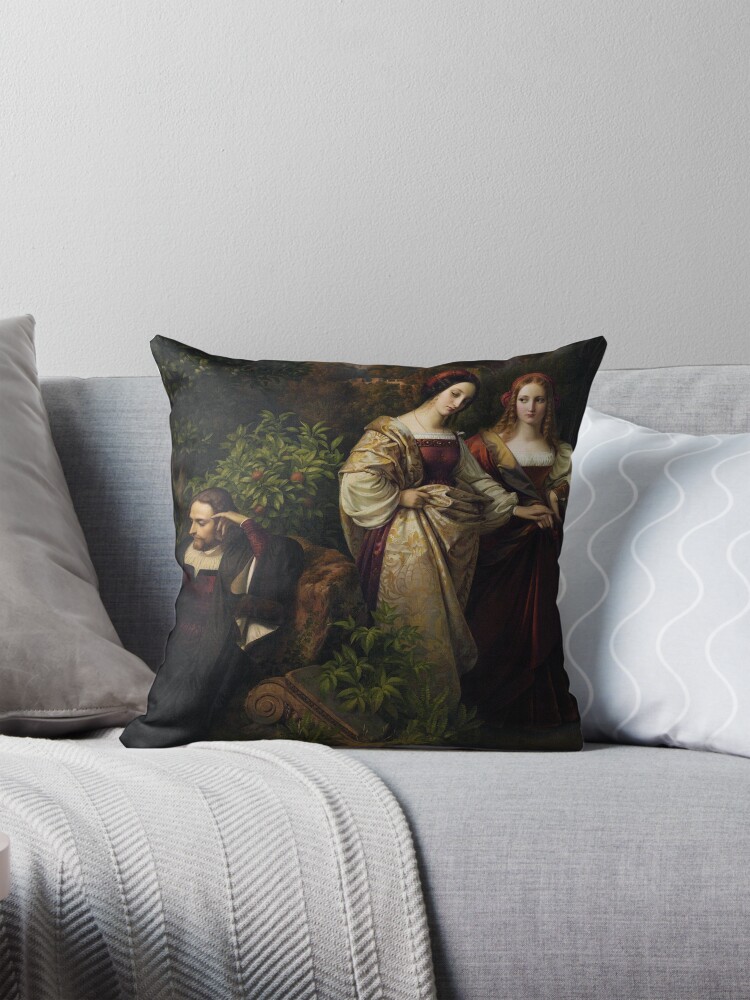
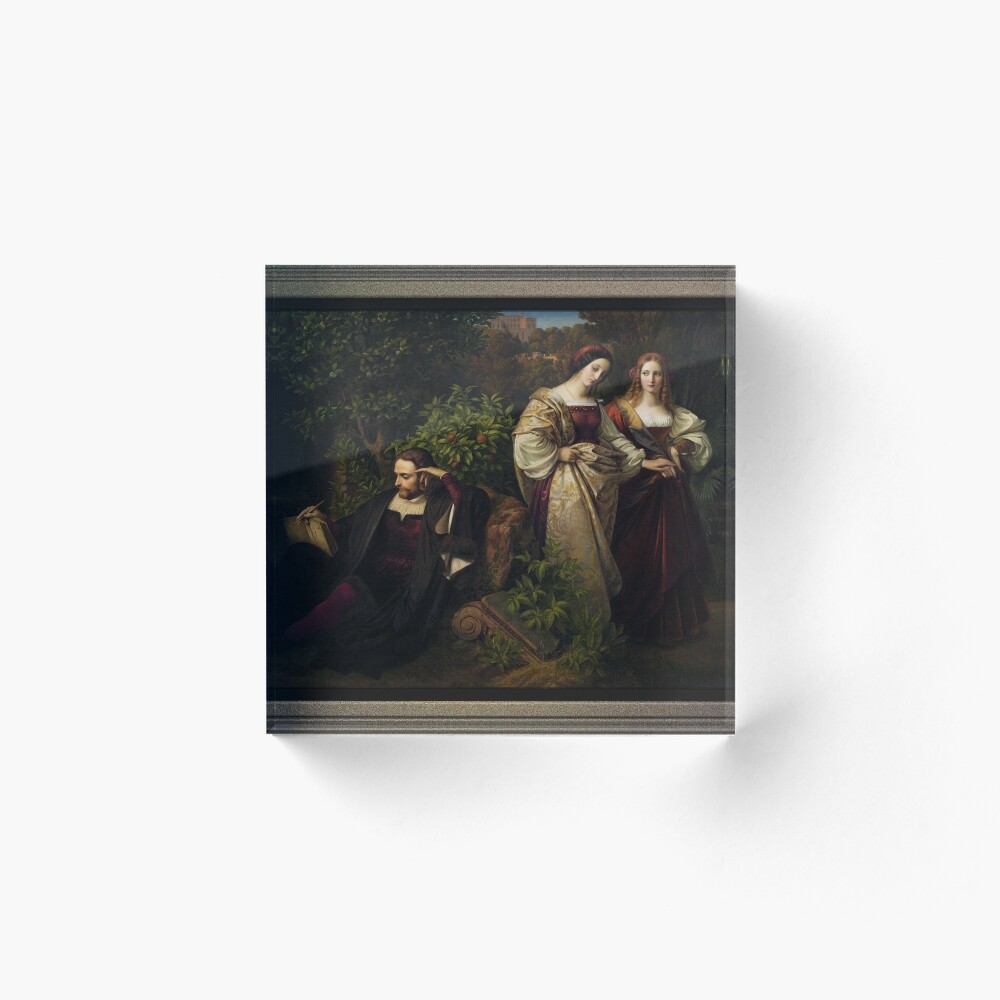
Torquato Tasso and the Two Leonores (Eleonora d’Este and Leonora Sanvitale) c1839 vum däitsche Moler Karl Ferdinand Sohn (1805 – 1867) vun der Düsseldorfer Molereischoul.
Aféierung:
“Torquato Tasso and the Two Leonores” is an exquisite romantic painting created by the German artist Karl Ferdinand Sohn in 1839. The work is steeped in historical and literary significance, blending the realms of mythology, literary history, and classical portraiture to deliver a refined narrative. An dësem Stéck, Sohn encapsulates both the elegance of the 16th-century Italian court and the inner emotional landscapes of the individuals depicted.
The central subjects, Torquato Tasso, the famed poet, and the two noblewomen, Eleonora d’Este (1515 – 1575), a Ferrarese noblewoman and Leonora Sanvitale, the brilliant Leonora Sanvitale (1558 – 1582) a noblewoman and singer at the Este court at Ferrara; come together in a powerful yet serene composition that showcases the thematic strength of romanticism, where literary history, Schéinheet, an d'Komplexitéite vu mënschleche Bezéiungen fusionéieren.
Inhaltsverzeechnes
Haaptthemium:
Am Kär vun der Zesummesetzung steet Torquato Tasso, de renomméierten italienesche Poet, sëtzt an enger nodenklecher Pose, seng lénks Hand liicht op engem Buch rascht, méiglecherweis eng Referenz op seng gefeiert literaresch Wierker. Seng somber Ausdrock an entspaant Haltung weisen op d' Iwwerleeung an emotional Déift, déi säi Liewen a Wierker charakteriséiert huet.
Dem Tasso säi Liewen war geprägt vun intensive Kämpf mat der mentaler Gesondheet, politesch Onrou, an eng déif Romantik, déi vill vu sengem Schreiwen formen. Seng Kleedung passt engem Dichter vun noble Stand, seng laang donkel Kleeder fléien elegant ronderëm hien wéi hien op déi zwou Fraen am Hannergrond kuckt.
The two women beside him—Eleonora d’Este and Leonora Sanvitale—are figures of importance in Tasso’s life. Eleonora d’Este, the Duchess of Ferrara, was the patroness of Tasso, while Leonora Sanvitale, a noblewoman of Ferrara, was both a friend and, at times, the object of Tasso’s affections.
Their presence in the painting speaks to the complex relationships between Tasso and these two women, blending admiration, Léift, and the intellectual companionship that marked their connection. The artist portrays the women in regal attire, their elaborate gowns and headdresses befitting their high social standing.
Objeten an Terrain:
The background of the painting reveals a lush and verdant landscape, evoking the classic ideals of natural beauty often present in romantic works. Dense foliage, Beem, and winding paths provide a setting that is both idyllic and somewhat mysterious.
The terrain’s soft green tones add to the peaceful and tranquil atmosphere, creating a sharp contrast to the inner turmoil that Tasso may have experienced in his personal life, particularly his troubled relationships with his benefactors.
Am Virdergrond, Tasso’s book remains a significant object, possibly representing his literary legacy. It sits near his feet, untouched, perhaps a symbol of his retreat into contemplation, away from the physical world around him. The light filtering through the trees casts a soft, ethereal glow on the figures, further contributing to the painting’s serene mood.
Styl an Technik:
Karl Ferdinand Sohn’s style is rooted in the Romantic tradition, characterized by its emotional intensity, räich Faarfpalette, and idealized depictions of historical and literary subjects. The artist’s meticulous attention to detail is evident in the clothing and facial expressions of the figures, capturing not only their physical likeness but their emotional essence. The elegant textures of the fabrics, d'Gläichtheet vun der Haut, and the nuanced expressions all show the artist’s technical prowess.
The Romantic style is also evident in the landscape, which plays a symbolic role. The setting is not just a backdrop, but a reflection of the inner worlds of the characters. The colors of the sky, the shades of green in the foliage, an dat mëllt Liicht dat d'Figuren béien suggeréiert eng Stëmmung vu Melancholie awer Schéinheet - reflektéiert d'Themen vum Verlaangen, intellekt, an emotional Komplexitéit déi dem Tasso säi Liewen an d'Aarbecht duerchdréien.
Thema a Stëmmung:
Dat iwwergräifend Thema vun dësem Konschtwierk zentréiert sech op d'Komplexitéite vu Bezéiungen, besonnesch tëscht dem intellektuellen Tasso an deenen zwou Adelfraen. D'Thema vun der intellektueller a romantescher Léift gëtt exploréiert, mam Dichter an engem Moment vun déiwer Reflexioun duergestallt, während d'Fraen graziéis am Hannergrond stinn. D'Positioune vun de Frae sinn net konfrontativ, awer sinn amplaz zaart a komponéiert, trotzdem schéngt hir Präsenz als roueg Kommentar iwwer déi romantesch an intellektuell Spannungen vum Tasso sengem Liewen ze déngen.
D'Stëmmung vum Bild ass roueg a melancholesch. D'Rou vum üppige Hannergrond kontrastéiert mam emotionalen Gewiicht, deen iwwer den Tasso hänke schéngt. Déi roueg a bal dreemlech Qualitéit vun der Szen mécht Plaz fir en ënnerierdesch Gefill vun Introspektioun an Trauregkeet, wéi wann de Kënschtler dem Dichter seng Kämpf mat senge Relatiounen a seng Ierfschaft iwwerdenkt. D'Figure si bereet awer wäit vuneneen, eng emotional Trennung suggeréiert, spigelt méiglecherweis dem Dichter säin banneschten Konflikt an déi onroueg Verbindungen, déi säi Liewen markéiert hunn.
Conclusioun:
“Torquato Tasso and the Two Leonores” ass e wonnerschéint Beispill vu romantescher Portrait, vermëschen historesch narrativ mat dem perséinlechen an emotionale Liewen vu senge Sujeten. De Karl Ferdinand Sohn erfaasst net nëmmen déi extern Schéinheet vun de Figuren an der natierlecher Welt, mee verdreift och an déi emotional an intellektuell Déiften, déi d'romantesch Bewegung definéieren. D'Molerei rifft e Gefill vu Nostalgie a Verlaangen op, an et resonéiert weider mat Zuschauer duerch seng Porträtéierung vun engem vun de gréisste Poeten vun Italien an de Fraen, déi seng Aarbecht beaflosst hunn.
Dëst ass eng retouchéiert digital Konscht al Meeschterreproduktioun vun engem ëffentleche Domain Bild.