

Torquato Tasso en de twee Leonores
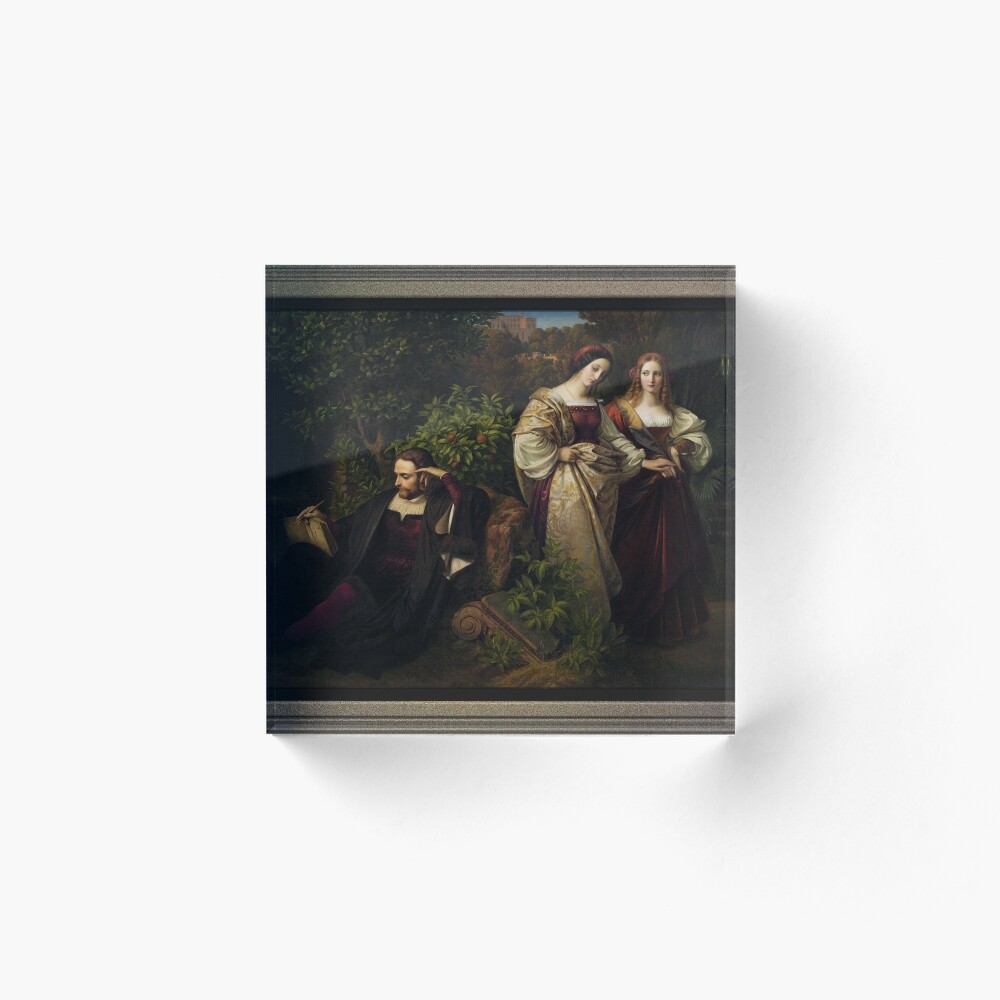
Torquato Tasso en de twee Leonores (Eleonora d'Este en Leonora Sanvitale) c1839 door de Duitse schilder Karl Ferdinand Sohn (1805 – 1867) van de schilderschool van Düsseldorf.
Invoering:
“Torquato Tasso en de twee Leonores” is een prachtig romantisch schilderij gemaakt door de Duitse kunstenaar Karl Ferdinand Sohn in 1839. Het werk is doordrenkt van historische en literaire betekenis, het vermengen van de rijken van de mythologie, literaire geschiedenis, en klassieke portretten om een verfijnd verhaal te leveren. In dit stuk, Sohn omvat zowel de elegantie van het 16e-eeuwse Italiaanse hof als de innerlijke emotionele landschappen van de afgebeelde individuen.
De centrale onderwerpen, Torquato Tasso, de beroemde dichter, en de twee edelvrouwen, Eleonora d'Este (1515 – 1575), in Ferrarese edelvrouw en Leonora Sanvitale, de briljante Leonora Sanvitale (1558 – 1582) een edelvrouw en zangeres aan het Este-hof in Ferrara; komen samen in een krachtige maar toch serene compositie die de thematische kracht van de romantiek laat zien, waar literatuurgeschiedenis, schoonheid, en de complexiteit van menselijke relaties smelt samen.
Inhoudsopgave
Hoofdonderwerp:
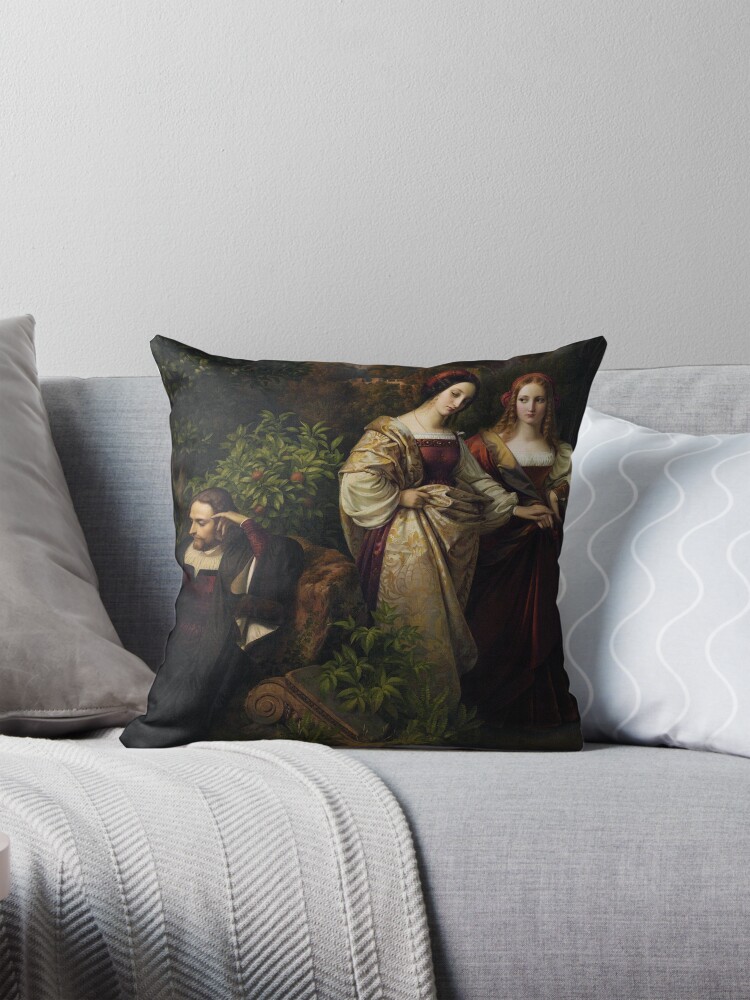
De kern van de compositie is Torquato Tasso, de beroemde Italiaanse dichter, zittend in een peinzende houding, zijn linkerhand rustte lichtjes op een boek, mogelijk een verwijzing naar zijn beroemde literaire werken. Zijn sombere uitdrukking en ontspannen houding duiden op de contemplatie en emotionele diepgang die zijn leven en werk kenmerkten.
Het leven van Tasso werd gekenmerkt door intense worstelingen met de geestelijke gezondheid, politieke onrust, en een diepe romantiek die een groot deel van zijn schrijven zou bepalen. Zijn kleding past bij een dichter van adel, zijn lange donkere gewaden vloeien elegant om hem heen terwijl hij naar de twee vrouwen op de achtergrond staart.
De twee vrouwen naast hem – Eleonora d’Este en Leonora Sanvitale – zijn belangrijke figuren in Tasso’s leven. Eleonora d'Este, de hertogin van Ferrara, was de patrones van Tasso, terwijl Leonora Sanvitale, een edelvrouw van Ferrara, was zowel een vriend als, soms, het voorwerp van Tasso's genegenheid.
Hun aanwezigheid op het schilderij spreekt over de complexe relaties tussen Tasso en deze twee vrouwen, gemengde bewondering, dol zijn op, en het intellectuele gezelschap dat hun verbinding markeerde. De kunstenaar portretteert de vrouwen in koninklijke kledij, hun uitgebreide jurken en hoofdtooien die passen bij hun hoge sociale status.
Objecten en terrein:
De achtergrond van het schilderij onthult een weelderig en groen landschap, het oproepen van de klassieke idealen van natuurlijke schoonheid die vaak aanwezig zijn in romantische werken. Dicht gebladerte, bomen, en kronkelende paden zorgen voor een omgeving die zowel idyllisch als enigszins mysterieus is.
De zachte groene tinten van het terrein dragen bij aan de vredige en rustige sfeer, waardoor een scherp contrast ontstond met de innerlijke onrust die Tasso mogelijk in zijn persoonlijke leven heeft ervaren, vooral zijn moeilijke relaties met zijn weldoeners.
Op de voorgrond, Het boek van Tasso blijft een belangrijk object, mogelijk vertegenwoordigt hij zijn literaire nalatenschap. Het zit vlak bij zijn voeten, onaangeroerd, misschien een symbool van zijn terugtrekking in contemplatie, weg van de fysieke wereld om hem heen. Het licht dat door de bomen filtert, straalt een zachte sfeer uit, etherische gloed op de figuren, draagt verder bij aan de serene sfeer van het schilderij.
Stijl en techniek:
Karl Ferdinand Sohn’s style is rooted in the Romantic tradition, characterized by its emotional intensity, rich color palettes, and idealized depictions of historical and literary subjects. The artist’s meticulous attention to detail is evident in the clothing and facial expressions of the figures, capturing not only their physical likeness but their emotional essence. The elegant textures of the fabrics, the smoothness of the skin, and the nuanced expressions all show the artist’s technical prowess.
The Romantic style is also evident in the landscape, which plays a symbolic role. The setting is not just a backdrop, but a reflection of the inner worlds of the characters. The colors of the sky, the shades of green in the foliage, and the soft light that bathes the figures suggest a mood of melancholy yet beauty—reflecting the themes of longing, intellect, and emotional complexity that pervade Tasso’s life and work.
Thema en stemming:
The overarching theme of this artwork centers on the complexities of relationships, particularly between the intellectual Tasso and the two noblewomen. The theme of intellectual and romantic love is explored, with the poet depicted in a moment of deep reflection, while the women stand gracefully in the background. The poses of the women are not confrontational but are instead tender and composed, yet their presence seems to serve as a quiet commentary on the romantic and intellectual tensions of Tasso’s life.
The mood of the painting is both serene and melancholic. The tranquility of the lush background contrasts with the emotional weight that seems to hang over Tasso. The calm and almost dreamlike quality of the scene gives way to an underlying sense of introspection and sadness, as if the artist is contemplating the poet’s struggles with his relationships and his legacy. The figures are poised yet distant from one another, suggesting an emotional separation, possibly reflecting the poet’s inner conflict and the troubled connections that marked his life.
Conclusie:
“Torquato Tasso en de twee Leonores” is a magnificent example of Romantic portraiture, blending historical narrative with the personal and emotional lives of its subjects. Karl Ferdinand Sohn captures not only the external beauty of the figures and the natural world but also delves into the emotional and intellectual depths that define the Romantic movement. The painting evokes a sense of nostalgia and longing, and it continues to resonate with viewers through its portrayal of one of Italy’s greatest poets and the women who influenced his work.
Dit is een retoucheerde digitale reproductie van kunst oude meesters van een openbaar domeinafbeelding.