

Twin Stars: Dannsa Celestial ann an Lèirsinn Falero
Twin Stars le Luis Ricardo Falero (1851-1896) na pheantair Spàinnteach a bha ainmeil airson a sheallaidhean alegorical agus miotas-eòlas air an toirt seachad le mion-fhiosrachadh mionaideach agus mothachadh romansach sònraichte. “Twin Stars,” air a chruthachadh timcheall 1881, mar eisimpleir de na feartan sin, a’ taisbeanadh sealladh tarraingeach de bhòidhchead ethereal agus gràs saoghalta eile. Tha an dealbh air a chomharrachadh le a cho-dhèanamh dràmadach, Paileas dath beairteach, agus taisbeanadh sgileil an neach-ealain de sholas is dubhar, uile a’ cur ri faireachdainn de dh’ iongnadh bruadar.
Clàr-innse
Eileamaidean gu lèirsinneach & Moladh Aithriseach
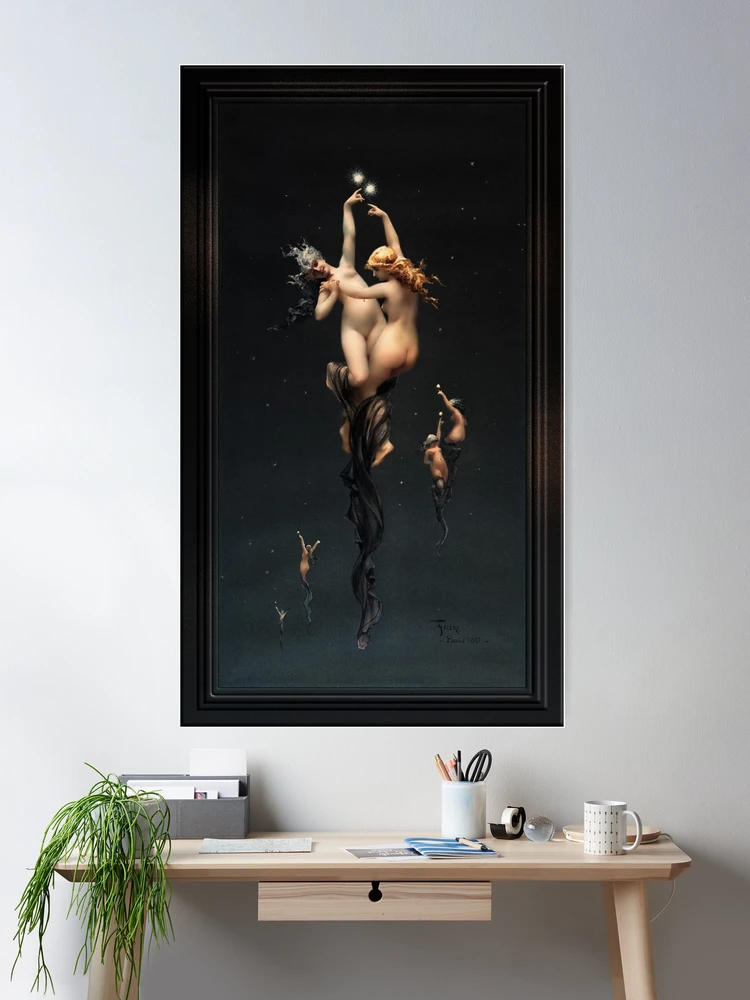
Tha prìomh fòcas an obair-ealain an urra ri figear boireann crochte ann am meadhan an adhair an aghaidh doimhneachd, cùl-raon dubh cha mhòr do-ruigsinneach. Bidh an eadar-dhealachadh mòr seo a’ tarraing aire an neach-amhairc sa bhad chun chuspair soillsichte. Tha an riochdachadh air a stiùireadh gu dìreach, a 'cur cuideam air gluasad suas agus àrdachadh an fhigear. Gu h-ìosal i, tha coltas gu bheil grunn fhigearan nas lugha a 'seòladh no a' gluasad suas, a rèir coltais air a tharraing a dh’ ionnsaigh an t-solais celestial gu h-àrd. Chan eil na foirmean aca cho mìneachaidh na am figear sa mheadhan, a’ cur ri mothachadh air dìomhaireachd agus a’ moladh aithris air cruth-atharrachadh no àrdachadh spioradail.
Chan eil an rèiteachadh gu tur co-chothromach; An àite sin, tha neo-chunbhalachd fiùghantach aige a chuireas ri faireachdainn gluasad agus fluidity. Tha an aodach swirling timcheall air a’ phrìomh fhigear a’ cur gu mòr ris a’ bhuaidh seo, cruthachadh slighean lèirsinneach airson an t-sùil a leantainn fhad ‘s a tha i a’ sgrùdadh an t-seallaidh. Tha cleachdadh Falero air àite àicheil - an raon farsaing de dhubh timcheall air na h-àireamhan - ag àrdachadh an soilleireachd agus gan dealachadh taobh a-staigh rìoghachd a tha a’ faireachdainn an dà chuid fad às agus dlùth..
Am prìomh fhigear: Sgrùdadh ann an Solas & Foirm
Tha am figear boireann air a dhealbhadh nude, ach chan eil mothachadh follaiseach sam bith air a nochdadh air a neonachd. An àite sin, bidh e a’ soilleireachadh purrachd agus so-leòntachd a cruth fhad ‘s a tha i ag eadar-obrachadh leis na h-eileamaidean celestial. Bidh a craiceann a’ deàrrsadh le solas a-staigh, eadar-dhealaichte gu mòr ris an dorchadas a tha mu'n cuairt oirre. Tha maighstireachd Falero air chiaroscuro - an eadar-chluich iongantach de sholas is dubhar - ri fhaicinn san dòigh sa bheil e a’ snaidheadh a corp., a’ cur cuideam air na lùban agus na cumaidhean aige agus aig an aon àm a’ falach earrannan taobh a-staigh faileas domhainn.
A falt, dubhar beothail de auburn, cascades timcheall a guailnean agus a’ measgachadh leis an aodach swirling a tha a’ cuairteachadh a leth ìosal. Chan e dìreach aodach a tha san aodach seo; tha e coltach gur e leudachadh air an àile mun cuairt a th’ ann, a’ dèanamh mì-chinnt air na crìochan eadar an dealbh agus an àrainneachd. Tha an sealladh aice air a stiùireadh suas gu dà rionnag shoilleir, a tha aig cridhe an sgrìobhaidh gu lèir. Tha a gàirdeanan air an leudachadh, a' ruigheachd mar gu'm biodh iad a' greimeachadh no a' gabhail ris na cuirp neamhaidh sin.
Cudromach nan Rionnagan & Figearan taic
Tha cuideam samhlachail aig na rionnagan càraid fhèin taobh a-staigh aithris an deilbh. Dh’ fhaodadh iad ideals a riochdachadh, rùintean, no 's dòcha ceangal ri cumhachd nas àirde. Tha an soilleireachd aca eadar-dhealaichte bhon dorchadas mun cuairt, a’ samhlachadh dòchas agus stiùireadh ann an saoghal nach eil cinnteach. Tha roghainn Falero airson an sealltainn mar chàraid a’ moladh dà-chànanas - cothromachadh, co-sheirm, no feachdan an aghaidh a tha mu dheireadh a’ tighinn còmhla.
Tha na h-àireamhan nas lugha a tha a’ seòladh gu h-ìosal a’ cur ri mothachadh iomlan an deilbh air dìomhaireachd. Tha coltas gu bheil iad a 'dol tro atharrachadh coltach ris a' mheadhan, a’ dìreadh a dh’ionnsaigh an t-solais agus na reultan. Tha na cruthan neo-shoilleir aca a’ nochdadh nach e daoine fa-leth a th’ annta gu h-iomlan ach riochdachadh anaman no spioradan ann an gluasad. An diofar shuidheachaidhean - cuid a' sìneadh suas, cuid eile a rèir coltais a’ gluasad gu fulangach – cuir doimhneachd agus iom-fhillteachd ris an aithris.
Innleachd ealanta & Buadhan
Tha innleachd Falero a’ nochdadh buaidh shoilleir bho dhualchas acadaimigeach na h-ùine aige, gu sònraichte an cuideam air cruinneas anatomical agus mion-fhiosrachadh mionaideach. Ach, tha e cuideachd a’ toirt a-steach eileamaidean de Romanticism, follaiseach ann an solas iongantach an dealbh, dian tòcail, agus fòcas air cuspairean eile san t-saoghal. Bidh measgachadh rèidh de dhhathan agus ìrean seòlta de thòn a’ cruthachadh faireachdainn de fhìor-eòlas agus aig an aon àm a’ toirt buaidh air an t-sealladh le càileachd ethereal.
Chan eil ach glè bheag de chleachdadh impasto – a’ cur peant gu tiugh air a’ chanabhas – ach air a chleachdadh gu ro-innleachdail gus raointean sònraichte a chomharrachadh, leithid na reultan agus pàirtean de chorp an fhigear sa mheadhan. Tha an dòigh seo a 'cur ri inneach agus ùidh lèirsinneach, ag àrdachadh buaidh iomlan an dealbh tuilleadh. Cùl-raon dorcha, air a choileanadh tro shreathan de dhath dubh air a chuir gu faiceallach, a 'cruthachadh mothachadh air doimhneachd agus còmhdach, tarraing an neach-coimhead a-steach don t-sealladh.
Mion-shealladh iomlan & Dìleab
“Twin Stars” na obair tarraingeach a tha a’ sireadh cnuasachadh air cuspairean miann, cruth-atharrachadh, agus an ceangal daonna ris a’ chosmos. Tha innleachd sgileil Falero agus ìomhaighean cuimhneachail a’ cruthachadh faireachdainn de dh’ iongnadh bruadar, a’ fàgail sealladh maireannach air an neach-coimhead. Tha an dealbh a’ seasamh mar theisteanas air a thàlant ealanta agus a chomas dòighean clasaigeach a choimeasgadh le mothachaidhean romansach gus obraichean de bhòidhchead is cudrom a thoirt gu buil.. Tha e fhathast na dheagh eisimpleir de ealain Spàinnteach bhon 19mh linn agus tha e fhathast a’ còrdadh ri luchd-èisteachd an-diugh.
Neach-ealain Bio Derived Wikipedia.org
Rugadh Falero ann an Granada agus an toiseach lean e dreuchd ann an Cabhlach na Spàinne, ach thug e briseadh dùil dha phàrantan; oir chuir e roimhe siubhal gu Paris, far an do rinn e sgrùdadh air ealain, ceimigeachd agus innleadaireachd meacanaigeach.
Rè tha sgrùdaidhean ann an ceimigeachd agus innleadaireachd meacanaigeach; bha e den bheachd gu robh na deuchainnean a dh ’fheumadh e a dhèanamh ro chunnartach, mar sin a ’toirt air aire a chuimseachadh air peantadh leis fhèin.
Mar thoradh air an sin thàinig e gu bhith na oileanach aig Peantair Portrait Frangach agus Orientalist Gabriel-Joseph-Marie-Augustin Ferrier (1847 – 1914). Às deidh Paris, ghluais e a Lunnainn, far an do lean e air le fhoghlam, agus mu dheireadh shocraich e.
Bha ùidh shònraichte aig Falero ann an speuradaireachd agus chuir e a-steach constella celestial ann am mòran de na h-obraichean aige, mar eisimpleir “Pòsadh Comet” agus “Twin Stars”. Mar thoradh air an ùidh agus an eòlas aige air reul-eòlas, sheall e cuideachd obair Camille Flammarion.
Ann an 1896, bliadhna a bhàis, Dhiùlt Maud Harvey Falero airson athair. Bha an deise ag agairt gun do mheall Falero Harvey nuair a bha i 17, an toiseach a ’frithealadh mar mhaighdeann-taighe aige, agus an uairsin a mhodail. Nuair a fhuair e a-mach gu robh i trom, chuir e às dhi.
Bhuannaich i a ’chùis agus fhuair i còig tasdain san t-seachdain mar thaic don leanabh aca. Bhàsaich Falero aig Ospadal Colaiste an Oilthigh, Lunnainn, aig aois 45
Tha Twin Stars na seann mhaighstirean ealain didseatach ath-dhealbhaichte de ìomhaigh raon poblach.