

Vase of Flowers c1645
“Vase of Flowers,” a cruthaíodh i 1645 by the renowned Dutch Artist Jan Davidsz de Heem (1606 – 1684), is an exquisite example of the flourishing genre of Dutch still life painting during the Golden Age. Known for his mastery of rendering floral arrangements, de Heem captures the complexity of nature with remarkable detail and technical skill. An phéintéireacht, which depicts an elaborate bouquet of flowers arranged in a fine vase, is a prime representation of the Baroque period, marked by its rich textures, mionsonraí casta, and vibrant use of color.
Clár na nÁbhar
Ábhar agus Comhdhéanamh
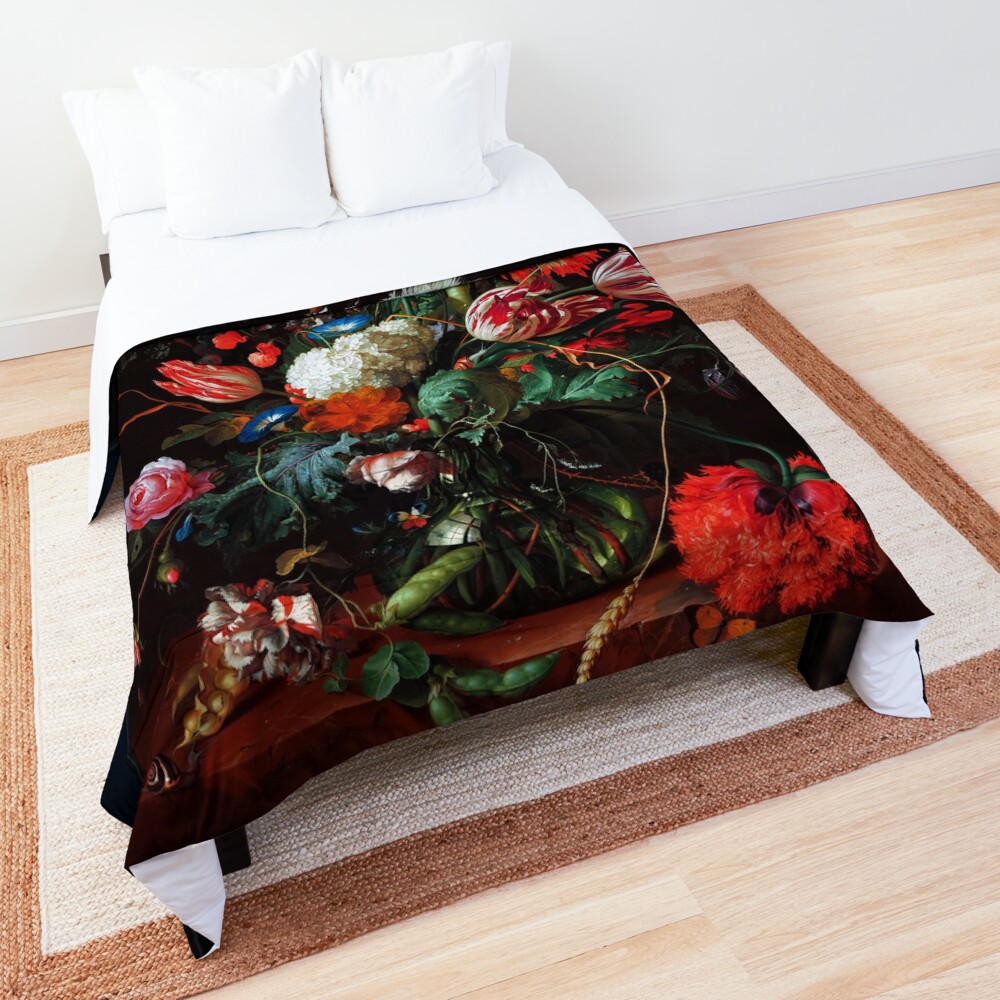
The focal point of this painting is the large, overflowing vase brimming with an assortment of flowers, which include tulips, roses, peonies, and lilies, among others. De Heem’s ability to present the organic forms of the flowers with such lifelike accuracy reflects his profound understanding of botanical subjects. The flowers in the vase are placed atop a dark, wooden table, and their vivid hues contrast sharply with the deep, almost velvety background. This contrast between the colorful foreground and the dark background draws the viewer’s attention to the flowers’ delicate textures and intricate forms.
To the left of the bouquet, a butterfly flutters above the arrangement, symbolizing the fleeting nature of life, a common theme in Dutch vanitas still life paintings. The butterfly, along with a few insects delicately perched on the petals, adds an element of life to the otherwise serene and static composition. At the lower section of the vase, an assortment of foliage and fruits can be seen spilling over the edge, further emphasizing the opulence and abundance of nature. The way de Heem captures the subtle translucency of the rose petals and the texture of the velvety leaves demonstrates his technical expertise.
Rudaí agus siombalachas
The flowers themselves carry layers of symbolic meaning, typical of the period. Tulips, mar shampla, were highly prized in the Netherlands during the 17th century, especially during the “Tulip Mania” period, when tulips were considered symbols of wealth and status. The roses and peonies in the bouquet also carry their own symbolism, often associated with love, áilleacht, and transience, reinforcing the vanitas theme. The inclusion of fruit and other organic elements serves as a reminder of the cycle of life, fás, lobhadh, and death. Cruthaíonn an meascán seo de bhláthanna luxurious agus torthaí lobhadh teannas idir áilleacht agus dosheachanta mortlaíochta, sainmharc de phéinteáil neamhbheo Bharócach.
Terrain and Environment
Tá na bláthanna sa vása socraithe i gcoinne dorcha, cúlra beagnach ethereal, a bhí ina theicníc tipiciúil ag ealaíontóirí Bharócach na hÍsiltíre. Cúlra dorcha seo, go minic dá ngairtear “chiaroscuro,” ligeann do na bláthanna seasamh amach i faoiseamh géar, ag cur béime ar a gcuid dathanna bríomhara agus uigeachtaí boga. Tá an tábla ar a bhfuil an vása rindreáilte go beacht thar cuimse, a gráin adhmaid le tuiscint ar chobhsaíocht, áilleacht na bláthanna a bhunú ar shlí eile ethereal.
Tá doimhneacht sa chomhdhéanamh, mar is cosúil go bhfuil na bláthanna sa tulra ag doirteadh amach as an vása agus isteach sa chuid íochtair den phéintéireacht, le roinnt peitil ina luí ar dhromchla an bhoird. Tá an cúlra fós ina fholús scáthach, cur le braistint na doimhneachta agus aird an lucht féachana a dhíriú go hiomlán ar an socrú bláthanna.
Ábhair agus Teicnící
Bhí cáil ar Jan Davidsz de Heem as an aird ghéar a thug sé ar mhionsonraí agus as a chumas uigeachtaí a thabhairt le réalachas dochreidte.. Déantar an phéintéireacht in ola, meán a thug deis dó an saibhir a bhaint amach, cáilíocht lonrúil na bláthanna agus gráduithe caolchúiseacha an tsolais agus an scátha. Chuir an úsáid a bhain an t-ealaíontóir as péinteanna ola ar a chumas sraitheanna íogaire datha a chruthú a thug tríthoiseachacht do na bláthanna., iad a dhéanamh le feiceáil beagnach inláimhsithe. Na grádáin bhog ar na peitil, mionsonraí míne na veins sna duilleoga, agus léiríonn an gliondar an tsolais ar na drúchtíní a thuiscint críochnúil ar an tsolais, uigeacht, agus ábharthacht.
An cúlra, which is painted in deep, almost black tones, creates a striking contrast against the flowers and enhances their brightness. This technique draws attention to the vase’s intricate floral display and emphasizes the symbolism of nature’s beauty amid the darkness of mortality. De Heem’s use of light, scáth, and color is masterful, resulting in a work that seems to glow with vitality, yet carries an underlying sense of impermanence.
Stíl, Téama, agus Mood
“Vase of Flowers” is quintessentially Baroque in style, with its emphasis on detail, rich textures, and the use of chiaroscuro to create dramatic contrast. The opulence of the flowers and the meticulous care with which they are painted speak to the wealth and sophistication of the period, while the symbolic elements suggest deeper reflections on the fleeting nature of life. Tá giúmar an phéintéireachta ceiliúrtha agus machnamhach araon, ag mealladh áilleacht an dúlra agus ag meabhrú don bhreathnóir neamhbhuan an tsaoil.
An stíl Bharócach, lena déine mhothúchánach agus aird ar mhionsonraí, oiriúnach go háirithe don seánra neamhbheo, ag ligean d’ealaíontóirí ar nós de Heem idirghníomhú na beatha agus an bháis a iniúchadh, áilleacht agus lobhadh. I “Vase of Flowers,” D’éirigh le de Heem léiriú nádúraíoch a chomhcheangal le tráchtaireacht fhealsúnach thorthúil, sainmharc ar an spéis a bhí sa ré Bharócach in splendour agus leochaileacht an tsaoil.
Conclúid
Mar fhocal scoir, “Vase of Flowers” le Jan Davidsz de Heem sampla iontach de phéinteáil neamhbheo Bharócach na hÍsiltíre. Trína theicníc masterful agus roghnú cúramach na bláthanna, torthaí, agus eilimintí siombalacha, de Heem captures not only the exquisite beauty of nature but also the deeper philosophical reflections on life and death. The painting is both a feast for the eyes and a meditation on the passage of time, inviting the viewer to marvel at the fleeting beauty of life while contemplating its inevitable end.
Seo atáirgeadh seanmháistrí ealaíne digiteach athmháistrithe d’íomhá fearainn phoiblí atá ar fáil mar a priontáil chanbhás ar líne.
Beathaisnéis Ealaíontóir
Thíos Díorthaithe Ó Wikipedia.org
Jan was born to David de Heem the Elder (1570 – 1631), and first studied with his father before studying under Dutch Golden Age Still Life Painter Balthasar van der Ast (1593-94 – 1657); ansin isteach 1629 ag aois 23 studied under Dutch Golden Age Painter David Bailly (1584 – 1657).
Nuair a bhí sé 29 he moved to the Southern Netherlands and joined the Guild of Saint Luke burgher (upper middle class individual) of that city in 1637.
Often considered to be one of the greatest painters of his time, he was always in great demand and was well paid for the artwork which he produced during the Dutch Golden Age.