

Blómavasi c1645
“Vasi af blómum,” búið til í 1645 eftir hinn virta hollenska listamann Jan Davidsz heimilið (1606 – 1684), er stórkostlegt dæmi um blómlega tegund hollenskrar kyrralífsmálverks á gullöldinni. Þekktur fyrir leikni sína í að gera blómaskreytingar, de Heem fangar margbreytileika náttúrunnar með ótrúlegum smáatriðum og tæknikunnáttu. Málverkið, sem sýnir vandaðan blómvönd sem raðað er í fínan vasa, er helsta framsetning barokktímans, merkt af ríkulegri áferð þess, flókin smáatriði, og lifandi litanotkun.
Efnisyfirlit
Viðfangsefni og samsetning
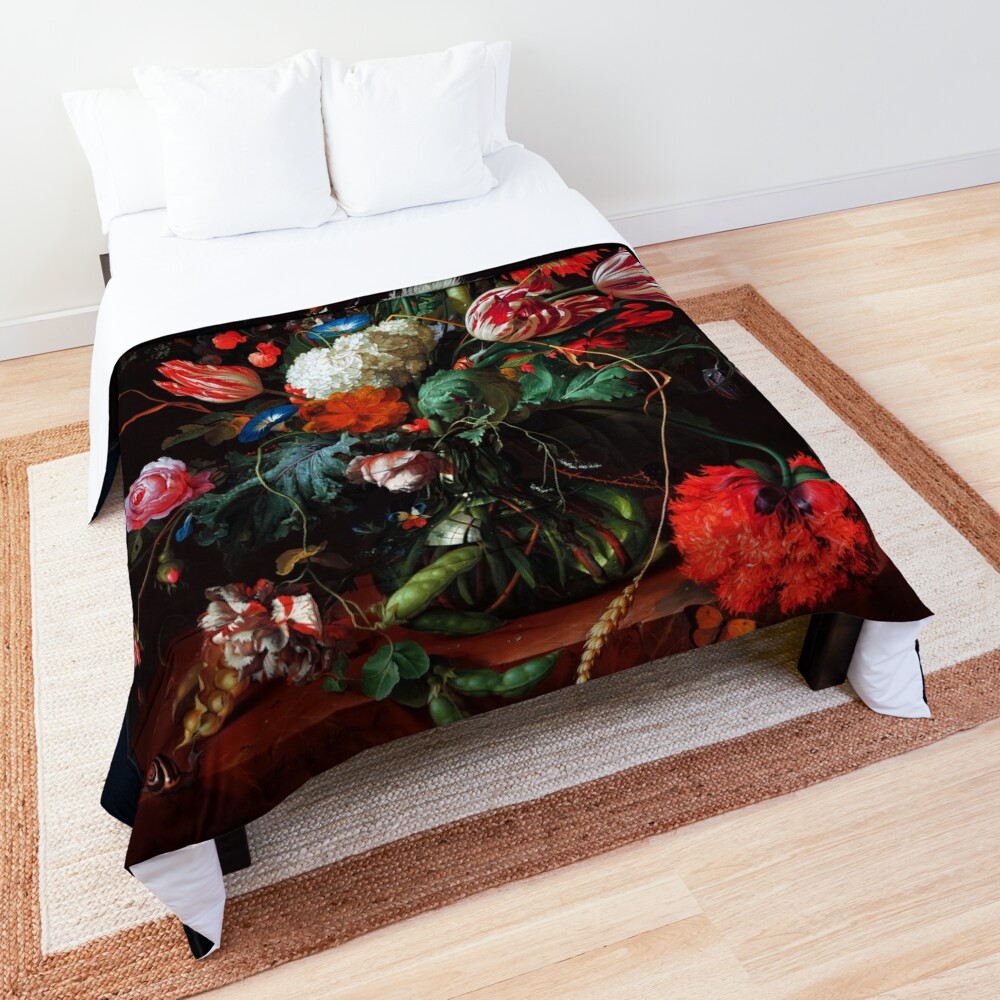
Þungamiðja þessa málverks er hið stóra, yfirfullur vasi fullur af úrvali af blómum, sem innihalda túlípana, rósir, bóndaróna, og liljur, meðal annarra. Hæfni De Heem til að kynna lífræn form blómanna með slíkri nákvæmni endurspeglar djúpstæðan skilning hans á grasafræði.. Blómin í vasanum eru sett ofan á myrkri, tré borð, og skær litbrigði þeirra andstæða djúpinu, næstum flauelsmjúkur bakgrunnur. Þessi andstæða milli litríka forgrunnsins og dökka bakgrunnsins dregur athygli áhorfandans að blómunum’ viðkvæm áferð og flókin form.
Vinstra megin við vöndinn, fiðrildi blaktir fyrir ofan fyrirkomulagið, táknar hverfult eðli lífsins, algengt þema í hollenskum vanitas kyrralífsmyndum. Fiðrildið, ásamt nokkrum skordýrum sem sitja fínlega á krónublöðunum, bætir lífsþætti við annars kyrrláta og kyrrstæða samsetningu. Á neðri hluta vasans, an assortment of foliage and fruits can be seen spilling over the edge, further emphasizing the opulence and abundance of nature. The way de Heem captures the subtle translucency of the rose petals and the texture of the velvety leaves demonstrates his technical expertise.
Hluti og táknfræði
The flowers themselves carry layers of symbolic meaning, typical of the period. Tulips, for example, were highly prized in the Netherlands during the 17th century, especially during the “Tulip Mania” period, when tulips were considered symbols of wealth and status. The roses and peonies in the bouquet also carry their own symbolism, often associated with love, fegurð, and transience, reinforcing the vanitas theme. The inclusion of fruit and other organic elements serves as a reminder of the cycle of life, vöxtur, decay, and death. Þessi blanda af lúxusblómum og rotnandi ávöxtum skapar togstreitu milli fegurðar og óumflýjanleika dauðleikans., aðalsmerki barokks kyrralífsmálverks.
Landslag og umhverfi
Blómin í vasanum eru stillt á móti myrkri, næstum náttúrulegur bakgrunnur, sem var dæmigerð tækni hollenskra barokklistamanna. Þessi dökki bakgrunnur, oft nefnt “chiaroscuro,” gerir blómunum kleift að skera sig úr í skörpum létti, undirstrika líflega liti þeirra og mjúka áferð. Borðið sem vasinn situr á er myndað af ótrúlegri nákvæmni, viðarkorn þess gefur til kynna tilfinningu fyrir stöðugleika, stöðva annars náttúrulega fegurð blómanna.
Það er tilfinning um dýpt í tónsmíðinni, þar sem blómin í forgrunni virðast hellast út úr vasanum og inn í neðri hluta málverksins, with some petals resting on the table’s surface. The background remains a shadowy void, further enhancing the sense of depth and focusing the viewer’s attention entirely on the floral arrangement.
Efni og tækni
Jan Davidsz de Heem was known for his meticulous attention to detail and his ability to render textures with incredible realism. The painting is executed in oil, a medium that allowed him to achieve the rich, luminous quality of the flowers and the subtle gradations of light and shadow. The artist’s use of oil paints enabled him to create delicate layers of color that brought a three-dimensionality to the flowers, making them appear almost tangible. The soft gradients on the petals, the fine details of the veins in the leaves, and the shimmer of light on the dewdrops reflect his thorough understanding of light, áferð, and materiality.
Bakgrunnurinn, which is painted in deep, næstum svartir tónar, creates a striking contrast against the flowers and enhances their brightness. This technique draws attention to the vase’s intricate floral display and emphasizes the symbolism of nature’s beauty amid the darkness of mortality. De Heem’s use of light, skuggi, and color is masterful, resulting in a work that seems to glow with vitality, yet carries an underlying sense of impermanence.
Stíll, Þema, og skap
“Vasi af blómum” is quintessentially Baroque in style, with its emphasis on detail, rich textures, and the use of chiaroscuro to create dramatic contrast. The opulence of the flowers and the meticulous care with which they are painted speak to the wealth and sophistication of the period, while the symbolic elements suggest deeper reflections on the fleeting nature of life. The mood of the painting is both celebratory and contemplative, evoking awe at the beauty of nature while reminding the viewer of the transience of life.
The Baroque style, with its emotional intensity and attention to minute details, was particularly well-suited to the still life genre, allowing artists like de Heem to explore the interplay of life and death, beauty and decay. Í “Vasi af blómum,” de Heem successfully combines naturalistic representation with a poignant philosophical commentary, a hallmark of the Baroque era’s fascination with both the splendor and fragility of existence.
Niðurstaða
Að lokum, “Vasi af blómum” by Jan Davidsz de Heem is a stunning example of Dutch Baroque still life painting. Through his masterful technique and careful selection of flowers, ávextir, and symbolic elements, de Heem captures not only the exquisite beauty of nature but also the deeper philosophical reflections on life and death. The painting is both a feast for the eyes and a meditation on the passage of time, inviting the viewer to marvel at the fleeting beauty of life while contemplating its inevitable end.
Þetta er endurgerð stafræn list af gömlum meistara eftirgerð af mynd sem er í almenningseign sem er fáanleg sem strigaprentun á netinu.
Listamaður Bio
Below Derived From Wikipedia.org
Jan was born to David de Heem the Elder (1570 – 1631), and first studied with his father before studying under Dutch Golden Age Still Life Painter Balthasar van der Ast (1593-94 – 1657); þá inn 1629 á aldrinum 23 studied under Dutch Golden Age Painter David Bailly (1584 – 1657).
Þegar hann var 29 he moved to the Southern Netherlands and joined the Guild of Saint Luke burgher (upper middle class individual) of that city in 1637.
Often considered to be one of the greatest painters of his time, hann var alltaf eftirsóttur og fékk vel borgað fyrir listaverkin sem hann framleiddi á hollensku gullöldinni.