

Veronica Veronese c1872
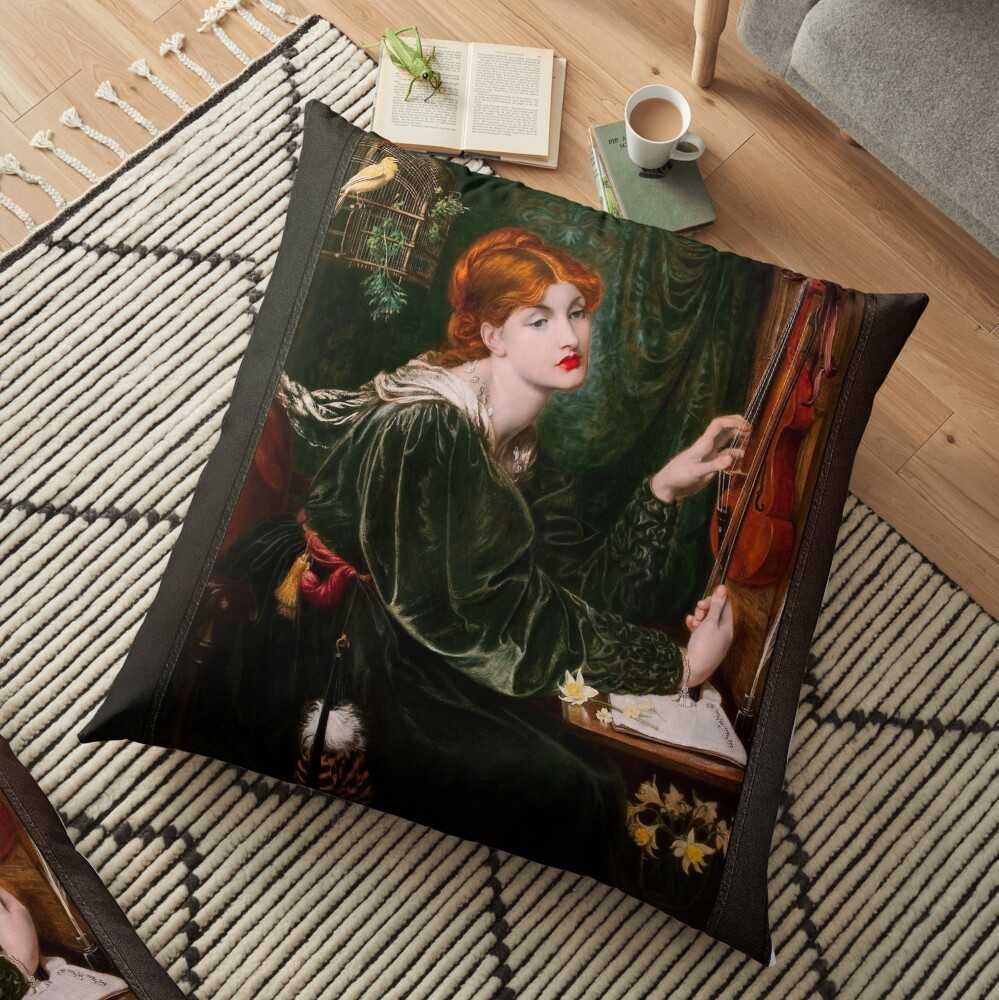
“Veronica Veronese,” erstallt an 1872 vum italienesche-britesche Moler Dante Gabriel Rossetti, ass e markant Beispill vu viktorianescher Konscht, déi dem Rossetti säin Markenzeechen Stil weist, eng Approche déi Pre-Raphaelite Prinzipien mat de perséinlechen Elementer vu Symbolismus a Romantik fusionéiert huet. D'Bild weist eng jonk Fra, Veronica, mat intensiv duergestallt, bal ätheresch Schéinheet, illustréiert d'Meeschterschaft vum Kënschtler fir souwuel kierperlech wéi emotional Déift a senge Sujeten ze portraitéieren. Dem Rossetti seng Fäegkeet fir Liewen an narrativ an d'Thema ze infuséieren ass evident am subtile Interplay vum Liicht, Texture, a Symbolik bannent der Zesummesetzung.
Inhaltsverzeechnes
Thema vum Konschtwierk: Veronica Veronese
Am Zentrum vun dësem Konschtwierk ass d'Figur vum Veronica Veronese, eng Fra vun aristokrateschen Droen, verkleed an luxuriéise, donkel gréng Samt. De Stil vun hirem Kleed, zesumme mat de Schwieregkeete vun de Falten vum Stoff, verréid dem Rossetti seng Fäegkeet fir räich ze portraitéieren, luxuriéise Texturen. Déi déifgréng vun hirem Kleed steet am Géigesaz zu hirer porzellanähnlecher Haut, déi, kombinéiert mat hire delikate Gesiichtsmerkmale, gëtt hir eng Statue, awer graziéis Qualitéit. Déi mëll Krullen vun hiren auburn Hoer cadre hir Gesiicht, an hiren expressiver Bléck füügt d'Stëmmung vun der Wissheet an der Iwwerleeung bäi, déi d'Szen duerchdréit.
D'Haltung vu Veronica proposéiert souwuel d'Eleganz an d'Behënnerung, wéi si sëtzt mat enger Hand liicht op enger Gei riicht. D'Gei, wéi vill aner Objeten am Stéck, déngt als Symbol vu Kultur a Verfeinerung, den Zuschauer mat der intellektueller an emotionaler Welt vum Thema verbannen. The inclusion of a small yellow bird in a cage—resting on the left side of the painting—introduces an additional layer of symbolic meaning. Birds, often depicted in Rossetti’s works, can represent themes of freedom, Zerbriechlechkeet, or a connection to the natural world. An dësem Kontext, it likely emphasizes the tension between the subject’s quiet, controlled presence and the potential for release or escape.
Objeten a Materialien
Am Virdergrond, several subtle elements complement the figure of Veronica and contribute to the overall mood of the piece. Near the bottom of the frame, a small pot of daffodils rests delicately on a wooden surface, their bright yellow petals stark against the darker background. Daffodils are often associated with themes of rebirth and the fleeting nature of life, further reinforcing the melancholic yet optimistic undercurrent of the painting. These flowers are painted with meticulous detail, highlighting Rossetti’s commitment to the depiction of natural beauty and his characteristic attention to the symbolic language of flowers.
A few other objects populate the space, such as a violin stand and musical sheets, which are placed on a nearby table. The sheet music is an important symbol of Veronica’s cultivated nature and her connection to the arts. The act of playing music or creating art was often imbued with notions of intellectual and emotional refinement during the Victorian era, and Rossetti emphasizes these traits through the objects that surround his subject.
Landschaft a Kader
Den Hannergrond vun “Veronica Veronese” consists of lush, dark green drapery, which frames the figure in an intimate yet enclosed space. This dark, rich backdrop contrasts with the vividness of the subject’s skin and the colorful elements of the still life in the foreground. The dense, velvety fabric of the curtains wraps around the figure, lending the setting a sense of privacy and introspection, as though the viewer is peering into a quiet, personal moment in time. The dark green of the curtains also reinforces the feeling of a hidden or secretive space, amplifying the tone of isolation and quiet contemplation.
The lushness of the drapery, with its deep folds and detailed textures, also highlights Rossetti’s skill in capturing the opulent aspects of the Victorian world. The use of this fabric echoes the richness of the subject’s attire, déi zwee verbannen an d'Iddi vun engem Adel ënnersträichen, raffinéiert Liewensstil. D'Szen ass sou komponéiert datt et e kloren Ënnerscheed tëscht dem perséinleche Raum vum Sujet an den Objeten ass, déi als Symboler vun hirem Charakter a Status déngen..
Kënschtleresch Stil an Techniken
“Veronica Veronese” ass e prime Beispill vum Rossetti sengem raffinéierte Pre-Raphaelitesche Stil, charakteriséiert duerch liewege Faarwen, Opmierksamkeet op Detailer, an eng bal dreamlike Qualitéit. Seng Notzung vu Faarf - besonnesch déi räich Gréng, déif rout, a delikat Hauttéin - schaaft en äthereschen Effekt deen d'Figur vu Veronica e Gefill vun anere Weltlechkeet gëtt. D'Glattheet vun hirer Haut kontrastéiert mam feinen Detail vum Stoff an den Ëmgéigend Objeten, déi idealiséiert an e bëssen onerreechbar Schéinheet vum Thema ënnersträichen.
Dem Rossetti säi Pinselwierk an dësem Bild ass präzis a bewosst, yet it retains a softness that allows the subject to appear almost life-like. The textures in the fabric of the gown, the natural elements such as the flowers, and the delicate rendering of the violin show Rossetti’s mastery in blending realism with the symbolic and emotional undercurrents of the work.
The mood of the painting can be described as one of quiet introspection, with Veronica caught in a moment of solitude. The melancholic atmosphere is heightened by her slightly averted gaze, which gives the impression of someone lost in thought, perhaps contemplating the complexities of love, Konscht, or life itself. Her pale face, framed by the richness of the fabric and the soft lighting, gives her an almost ethereal presence. The bird in the cage can be seen as a metaphor for the artist’s own ideas of female captivity, both in terms of societal expectations and emotional restraint.
Themen a Stëmmung
The predominant theme of the painting revolves around the notion of femininity and the inner life of the woman depicted. Rossetti’s works often explored the intersection of beauty, Tender, and sorrow, an an “Veronica Veronese,” these elements are intertwined with the theme of solitude and quiet contemplation. The subject is isolated from the external world, yet her poised, delicate nature evokes a sense of grace and dignity that suggests she is in control of her own fate.
There is also an undercurrent of longing in the mood of the piece, mat der subtiler Symbolik vum Vugel a Blummen, déi souwuel e Gefill vu Fräiheetsverlaangen an e Bewosstsinn vun der Vergänglechkeet vum Liewen suggeréieren. Dem Rossetti seng Behandlung vu sengem Thema an dësem Bild illustréiert säin Interesse fir Fraen ze duerstellen déi gläichzäiteg idealiséiert an déif mënschlech sinn, souwuel Kraaft a Schwachstelle opzeweisen.
Conclusioun
Dante Gabriel Rossetti “Veronica Veronese” erfaasst d'Essenz vun der viktorianescher Eleganz, während och an déi psychologesch a symbolesch Schichten, déi vill vu senger Aarbecht charakteriséieren. D'Bild ass eng räich Tapisserie vu Faarf, Texture, a Bedeitung, verroden net nëmmen dem Kënschtler seng technesch Meeschterleeschtung, mee och säin déiwe Verständnis vum komplexe banneschten Liewen vun de Fraen. Duerch dem Veronica seng roueg Schéinheet, d'Bild invitéiert den Zuschauer an eng Welt vu Verfeinerung an Introspektioun, where the external grace of the subject contrasts with the quiet emotional depth that lies beneath.
Artwork Backsory
Veronica Veronese c1872 by Italian-British Painter Dante Gabriel Rossetti (1828 – 1882); poet, Illustrator, Iwwersetzer a Matgrënner vun der Pre-Raphaelite Brudderschaft.
This is a companion painting to Lady Lilith that features one of Rossetti’s favorite model Alexa Wilding as Veronica Veronese that was sold to the shipping magnate Frederick Richards Leyland.
According to Wikipedia, the painting is suppose to represent the artistic soul in the act of creation”. This theme is expounded by the fictitious quote inscribed on the frame of the painting. Though the quote is attributed on the frame to “The Letters of Girolamo Ridolfi,” critics believe that Algernon Charles Swinburne (1837 – 1909) or Rossetti actually wrote it.
Suddenly leaning forward, the Lady Veronica rapidly wrote the first notes on the virgin page. Then she took the bow of her violin to make her dream reality; but before commencing to play the instrument hanging from her hand, she remained quiet a few moments, listening to the inspiring bird, while her left hand strayed over the strings searching for the supreme melody, still elusive. It was the marriage of the voices of nature and the soul – the dawn of a mystic creation.
Translation from the French by Rowland Elzea.
The symbolism in the painting includes the un-caged bird, which may represent “the marriage of the voices of nature and the soul” and overt flower symbolism. The camomile in the bird cage may represent “energy in adversity”, the primroses youth, and the daffodils reflection.
Jane Morris (1839 – 1914) lent the green dress in the picture. The violin was part of Rossetti’s collection of musical instruments, and the fan also appeared in Monna Vanna. The few bars of musical composition on the manuscript may have been borrowed from George Boyce (1826 – 1897).
Dëst ass eng remastered digital Konscht al Master Reproduktioun vun engem Public Domain Bild dat als Canvas Print online verfügbar ass.
Info below derived from Wikipedia.org
Dante was born Gabriel Charles Dante Rossetti and was the son of émigré Italian scholar Gabriele Pasquale Giuseppe Rossetti and Frances Mary Lavinia Polidori.
Dante had three siblings who were poet Christina Rossetti, critic William Michael Rossetti, and author Maria Francesca Rossetti.
As a child Dante was home schooled and when he became old enough he then attended King’s College School near the Strand in London.
Though during his college years he aspired to be a poet; he also wanted to be a painter, beweist groussen Interessi fir mëttelalterlech italienesch Konscht.
Vun 1841 an 1845 hien huet op der Henry Sass Drawing Academy studéiert; hie war och an der Antik Schoul vun der Royal Academy ageschriwwen bis 1848.
Nodeem hien d'Royal Academy verlooss huet huet hien ënner dem britesche Moler Ford Madox Brown studéiert (1821 – 1893).
E puer Tie méi spéit géif hien de William Holman Hunt treffen (1827 – 1910), no senger Ausstellung vum Bild The Eve of St.Agnes, dat e Gedicht vum briteschen Dichter John Keats illustréiert huet (1795 – 1821).
Vill d'selwecht wéi dem Rossetti seng Molerei The Blessed Damozel war eng Imitatioun vu Keats; ze gleewen datt den Hunt e puer vu senge kënschtlereschen a literareschen Idealer deele kéint.
Zesumme géifen de Rossetti an den Hunt d'Philosophie vun der Pre-Raphaelite Brudderschaft entwéckelen, déi se zesumme mam John Everett Millais gegrënnt hunn.