

Radharc ar Chanáil Mhór sa Veinéis c1860
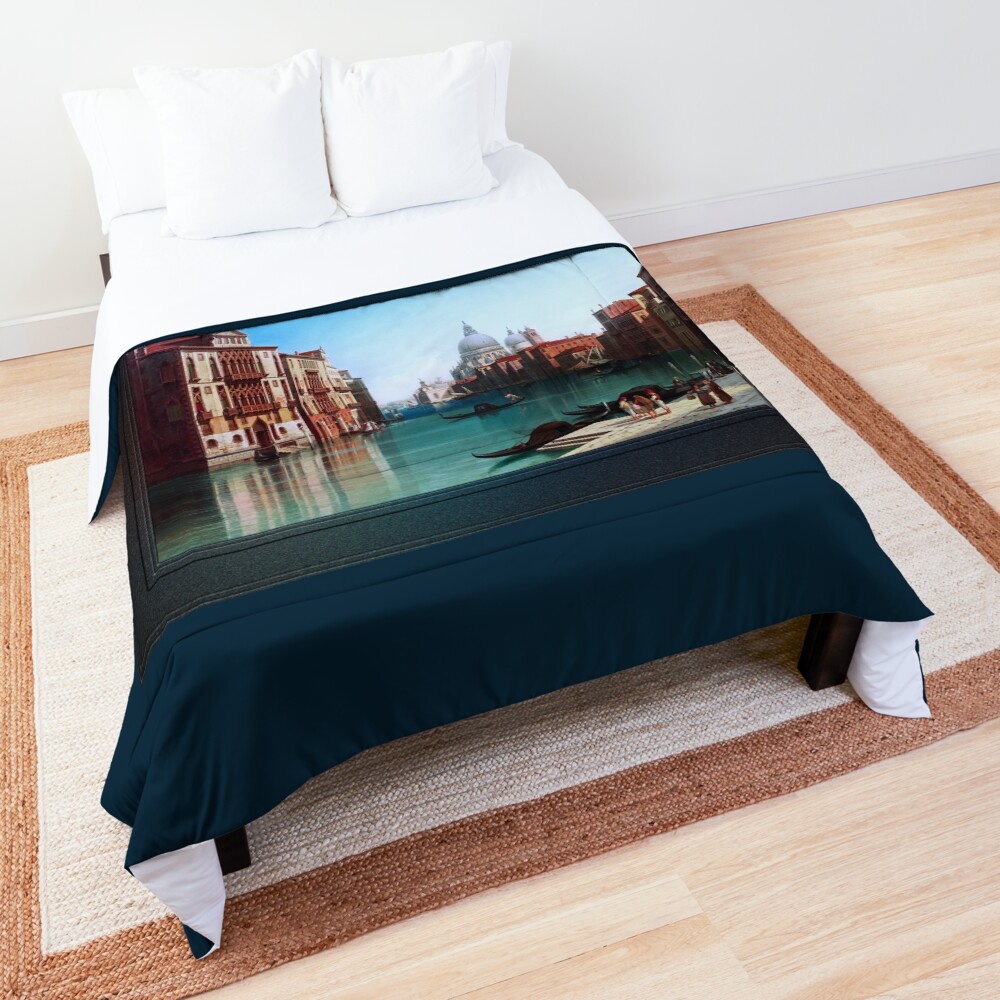
Tá an saothar ealaíne mara dar teideal Radharc ar Chanáil Mhór sa Veinéis c1860 leis an bpéintéir Sualannach Gustaf Wilhelm Palm (1810 – 1890) cuireann sé léiriú iontach ar cheann de na sainchomharthaí tíre is íocónacha sa Veinéis. Péinteáilte i lár an 19ú haois, Léiríonn an sárshaothar seo draíocht na gcanálacha Veinéiseach, atá ina siombail le fada d’áilleacht gan ré agus d’oidhreacht ailtireachta uathúil na cathrach. Gustaf Wilhelm Palm, ealaíontóir a bhfuil cur chuige mionsonraithe réalaíoch i leith tírdhreacha mar shaintréith ag a shaothar, cuireann an Veinéis i láthair ní hamháin mar mhol fuadar cultúir agus tráchtála ach mar ionad suaimhneach, beagnach ethereal, áit reoite in am.
Clár na nÁbhar
Stíl agus teicníc
Gustaf Wilhelm Palm’s style is rooted in realism, where meticulous attention to detail and accurate depictions of light and shadow are paramount. An phéintéireacht seo, like many of his works, is painted with precision, showcasing the tranquil mood of the scene. The technique used is one of fine brushwork, capturing the gleaming surfaces of the water and the intricate details of the architecture with remarkable clarity.
His ability to create depth in the painting is evident in the way he blends light and shade, providing a three-dimensional quality to the buildings and the canal. The shimmering water, reflecting the warm tones of the buildings, cruthaíonn sé atmaisféar síochánta, inviting the viewer into the Venetian world. Palm’s work is an invitation to immerse oneself in the beauty of this unique setting, grásta ailtireachta na Veinéise agus a cuid uiscebhealaí a ghabháil le cruinneas fíormhaith.
An príomh -ábhar: An Chanáil Mhór
Is é an Canal Grande príomhfhócas an tsaothair ealaíne seo, An t-uiscebhealach is cáiliúla sa Veinéis, a ghearrann trí chroílár na cathrach. Tá foirgnimh maorga ar gach taobh den chanáil, cuid acu a théann siar go dtí an Renaissance, agus tá cuid eile i bhfad níos sine, ag cuimsiú stair shaibhir na Veinéise. Tá luaineacht na canála faighte ag Palm, a shreabhann go réidh tríd an gcathair, le gondolas agus báid bheaga ag trasnú a uiscí.
Na báid seo, cuid acu ualaithe le paisinéirí agus earraí, sleamhnaigh tríd an radharc, ag léiriú an tsaoil laethúil atá fós ag dul tríd na canálacha inniu. Tá na foirgnimh ar an dá thaobh den chanáil rindreáilte chomh mion sin ionas gur féidir leis an lucht féachana beagnach fuaimeanna na cathrach a chloisteáil agus uigeacht na mballaí cloiche síonchaite a mhothú..
Cuireann an t-ealaíontóir béim ar nádúr síochánta na cathrach trí na huiscí ciúine a léiriú, atá cosúil le scáthán beagnach, ag léiriú gormacha boga agus buí na spéire, chomh maith le dathanna bríomhara terracotta na bhfoirgneamh. Tá codarsnacht idir an socracht seo agus an fuadar, atmasféar bríomhar a bhfuil aithne air go minic sa Veinéis. Mar gheall ar rogha Palm an chathair a ghabháil i láthair na háilleachta ciúine seo mothaíonn an radharc gan am agus síoraí.
Ailtireacht agus Cuspóirí
Tá na foirgnimh ar gach taobh den chanáil mionsonraithe go maith, ag léiriú na hailtireachta casta Veinéiseach a chumasc Gotach, Byzantine, agus tionchair na hAthbheochana. Palm’s portrayal of these structures, some with elaborate windows and others with ornate balconies, speaks to the unique blending of styles that has defined Venice for centuries. The light filtering from the bright sky creates a luminous glow on the buildings, highlighting their weathered textures and the intricate stonework.
Among the objects visible in the painting are the gondolas and small boats, which are an essential part of Venetian life. These boats are rendered with exceptional precision, their forms detailed against the smooth surface of the water. The gondoliers, dressed in traditional attire, can be seen expertly navigating the canal, their figures adding life and movement to an otherwise serene scene.
The artist also includes small groups of figures along the canal’s edge, offering a sense of human scale to the vast and expansive city. Na figiúirí seo, although small in comparison to the grand architecture, help to ground the scene in reality and provide a sense of Venice’s vibrant culture, which is still alive in the quiet moments captured by Palm.
An Tír-raon agus an Atmaisféar
The landscape in View of Canal Grande in Venice is dominated by the water, but the terrain is not solely defined by the canal. The lush, verdant patches of greenery that can be seen along the banks serve to balance the concrete and stone structures. Na foirgnimh, with their warm, toin earthy, are reflected in the still waters, which contribute to the harmonious composition of the piece. The background of the painting, with its soft, distant hills and light blue sky, creates a serene, almost dreamlike quality to the scene.
The mood of the painting is one of peacefulness and calm. The artist does not seek to convey the bustling energy of the city, but rather its quiet beauty. There is a sense of timelessness, as though the viewer is looking at Venice as it has always been, an idyllic place of respite. The soft lighting suggests an early morning or late afternoon, where the city has not yet, or already, begun its hectic daily rhythm. The cool blues of the water and sky contrast with the warm tones of the buildings, creating a gentle balance between serenity and warmth.
The Materials and Presentation
Palm’s use of oil paints, applied with careful precision, gives the painting its rich, textured appearance. The materials chosen for the artwork allow the artist to build layers of light and shadow, rendering the surface of the water with incredible finesse.
An spéir, painted in clear, vivid blues, seems almost tangible, drawing the viewer’s eye upward, while the reflective surfaces of the water invite the viewer to pause and take in the scene. The fine details in the textures of the buildings and boats show Palm’s deep understanding of his subjects and his ability to recreate the nuances of light and shadow.
The painting is presented within a refined, dark frame, which complements the depth and richness of the colors within the painting itself. The frame serves to enclose the scene, drawing the viewer’s attention inward and creating a visual boundary between the outside world and the Venetian scene that Palm has captured.
Seo atáirgeadh seanmháistrí ealaíne digiteach athmháistrithe d’íomhá fearainn phoiblí atá ar fáil mar a priontáil chanbhás ar líne.
Ealaíontóir Bith Díorthaithe Ó Wikipedia.org
Gustaf began his main studies in art with Swedish Painter Anders Arvid Arvidsson (1786 – 1831) who lived in Lund, an tSualainn; who taught him drawing.
On Arvidsson recommendation was able to do some work for the Swedish botanist Carl Adolph Agardh (1785 – 1859); producing illustration for a book on European Algae.
After completion of this work he attended the Royal Swedish Academy of Fine Arts, located in Stockholm, an tSualainn; and supported himself by creating illustrations; especially for the Swedish zoologist and archaeologist Sven Nilsson (1787 – 1883)
His early landscape paintings were in the romantic style and showed an influence of Swedish Painter Carl Johan Fahlcrantz (1774 – 1861); but after a trip to Norway in 1833 with Swedish Count, Soldier and Politician Michael Gustaf Anckarsvärd (1742 – 1838); he came under the influence of Danish-Norwegian Painter Johan Christian Dahl (1788 – 1857); a mheastar a bheith ar an gcéad péintéir rómánsúil iontach san Iorua; thosaigh sé ag péinteáil tírdhreacha ar bhealach níos réadúla.