

Utsikt over Canal Grande i Venezia c1860
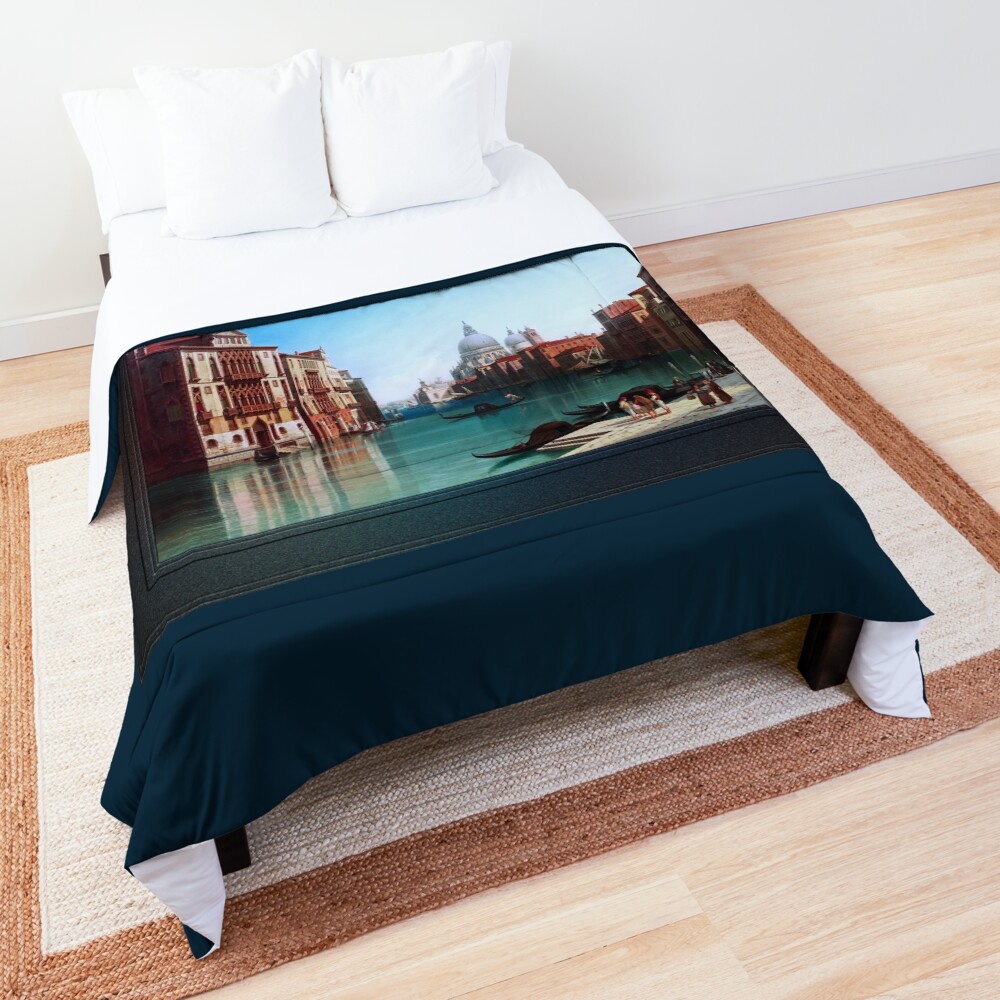
De marine kunstverk tittelen Utsikt over Canal Grande i Venezia c1860 av den svenske maleren Gustaf Wilhelm Palm (1810 – 1890) tilbyr en fantastisk skildring av et av Venezias mest ikoniske landemerker. Malt på midten av 1800-tallet, dette mesterverket fanger sjarmen til de venetianske kanalene, som lenge har vært et symbol på byens tidløse skjønnhet og unike arkitektoniske arv. Gustaf Wilhelm Palm, en kunstner hvis arbeid er preget av en detaljert og realistisk tilnærming til landskap, presenterer Venezia ikke bare som et yrende knutepunkt for kultur og handel, men som et rolig, nesten eterisk, sted frosset i tid.
Innholdsfortegnelse
Stil og teknikk
Gustaf Wilhelm Palm’s style is rooted in realism, where meticulous attention to detail and accurate depictions of light and shadow are paramount. Dette maleriet, like many of his works, is painted with precision, showcasing the tranquil mood of the scene. The technique used is one of fine brushwork, capturing the gleaming surfaces of the water and the intricate details of the architecture with remarkable clarity.
His ability to create depth in the painting is evident in the way he blends light and shade, providing a three-dimensional quality to the buildings and the canal. The shimmering water, reflecting the warm tones of the buildings, creates a peaceful atmosphere, inviting the viewer into the Venetian world. Palm’s work is an invitation to immerse oneself in the beauty of this unique setting, capturing Venice’s architectural grace and its waterways with lifelike accuracy.
Hovedemnet: Canal Grande
The main focus of this artwork is the Canal Grande, Venice’s most famous waterway, which cuts through the heart of the city. The canal is flanked by majestic buildings, some of which date back to the Renaissance, and others are much older, embodying Venice’s rich history. Palm has captured the fluidity of the canal, which flows gently through the city, with gondolas and small boats traversing its waters.
These boats, some laden with passengers and goods, glide through the scene, evoking the daily life that still pulses through the canals today. Bygningene på begge sider av kanalen er gjengitt med slike detaljer at betrakteren nesten kan høre lydene fra byen og føle teksturen til de forvitrede steinmurene.
Kunstneren understreker byens fredelige natur gjennom skildringen av det rolige vannet, som virker nesten speilaktige, reflekterer de myke blå og gule fargene på himmelen, samt de livlige terrakottafargene til bygningene. Denne stillheten står i kontrast til det travle, pulserende atmosfære som Venezia ofte er kjent for. Palms valg om å fange byen i dette øyeblikket av stille skjønnhet får scenen til å føles tidløs og evig.
Arkitektur og objekter
Bygningene på hver side av kanalen er rikt detaljerte, viser frem den intrikate venetianske arkitekturen som blander gotisk, bysantinsk, og renessansepåvirkninger. Palm’s portrayal of these structures, some with elaborate windows and others with ornate balconies, speaks to the unique blending of styles that has defined Venice for centuries. The light filtering from the bright sky creates a luminous glow on the buildings, highlighting their weathered textures and the intricate stonework.
Among the objects visible in the painting are the gondolas and small boats, which are an essential part of Venetian life. These boats are rendered with exceptional precision, their forms detailed against the smooth surface of the water. The gondoliers, dressed in traditional attire, can be seen expertly navigating the canal, their figures adding life and movement to an otherwise serene scene.
The artist also includes small groups of figures along the canal’s edge, tilbyr en følelse av menneskelig skala til den enorme og vidstrakte byen. Disse tallene, selv om det er lite i forhold til den storslåtte arkitekturen, bidra til å jorde scenen i virkeligheten og gi en følelse av Venezias pulserende kultur, som fortsatt er i live i de stille øyeblikkene Palm fanget.
The Terrain and Atmosphere
Landskapet i Utsikt over Canal Grande i Venezia er dominert av vannet, men terrenget er ikke bare definert av kanalen. Den frodige, grønne flekker med grøntområder som kan sees langs bredden, tjener til å balansere betong- og steinkonstruksjonene. Bygningene, med sine varme, jordfarger, reflekteres i det stille vannet, som bidrar til den harmoniske komposisjonen til stykket. Bakgrunnen til maleriet, med sin myke, fjerne åser og lyseblå himmel, skaper en rolig, nesten drømmeaktig kvalitet på scenen.
The mood of the painting is one of peacefulness and calm. The artist does not seek to convey the bustling energy of the city, but rather its quiet beauty. There is a sense of timelessness, as though the viewer is looking at Venice as it has always been, an idyllic place of respite. The soft lighting suggests an early morning or late afternoon, where the city has not yet, or already, begun its hectic daily rhythm. The cool blues of the water and sky contrast with the warm tones of the buildings, creating a gentle balance between serenity and warmth.
The Materials and Presentation
Palm’s use of oil paints, applied with careful precision, gives the painting its rich, textured appearance. The materials chosen for the artwork allow the artist to build layers of light and shadow, rendering the surface of the water with incredible finesse.
The sky, painted in clear, vivid blues, seems almost tangible, drawing the viewer’s eye upward, while the reflective surfaces of the water invite the viewer to pause and take in the scene. The fine details in the textures of the buildings and boats show Palm’s deep understanding of his subjects and his ability to recreate the nuances of light and shadow.
The painting is presented within a refined, dark frame, which complements the depth and richness of the colors within the painting itself. The frame serves to enclose the scene, drawing the viewer’s attention inward and creating a visual boundary between the outside world and the Venetian scene that Palm has captured.
Dette er en remastret digital kunst-gamle mesterreproduksjon av et offentlig domenebilde som er tilgjengelig som en lerretstrykk online.
Artistbio avledet fra Wikipedia.org
Gustaf began his main studies in art with Swedish Painter Anders Arvid Arvidsson (1786 – 1831) who lived in Lund, Sverige; who taught him drawing.
On Arvidsson recommendation was able to do some work for the Swedish botanist Carl Adolph Agardh (1785 – 1859); producing illustration for a book on European Algae.
After completion of this work he attended the Royal Swedish Academy of Fine Arts, located in Stockholm, Sverige; and supported himself by creating illustrations; especially for the Swedish zoologist and archaeologist Sven Nilsson (1787 – 1883)
His early landscape paintings were in the romantic style and showed an influence of Swedish Painter Carl Johan Fahlcrantz (1774 – 1861); but after a trip to Norway in 1833 with Swedish Count, Soldier and Politician Michael Gustaf Anckarsvärd (1742 – 1838); he came under the influence of Danish-Norwegian Painter Johan Christian Dahl (1788 – 1857); som regnes for å være den første store romantiske maleren i Norge; han begynte å male landskap på en mer realistisk måte.