

Water Nymph
Water Nymph by Austrian Painter Joseph Bernard (Hans Zatzka 1866 – 1931); also known as P. Ronsard, Pierre de Ronsard, or H. Zabateri and he signed many of his works as Joseph Bernard, J.. Bernard, or Bernard Zatzka to avoid the penalties of braking contracts that limited how many works he could sell.

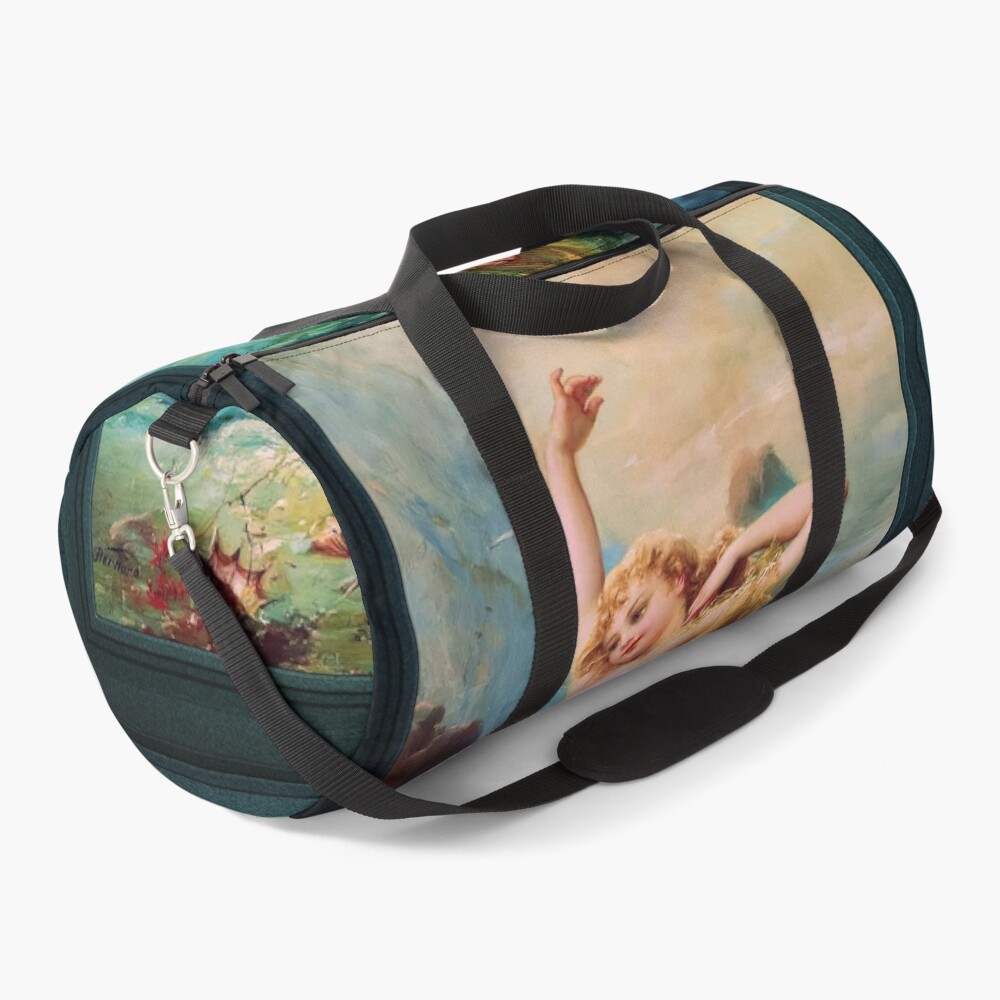
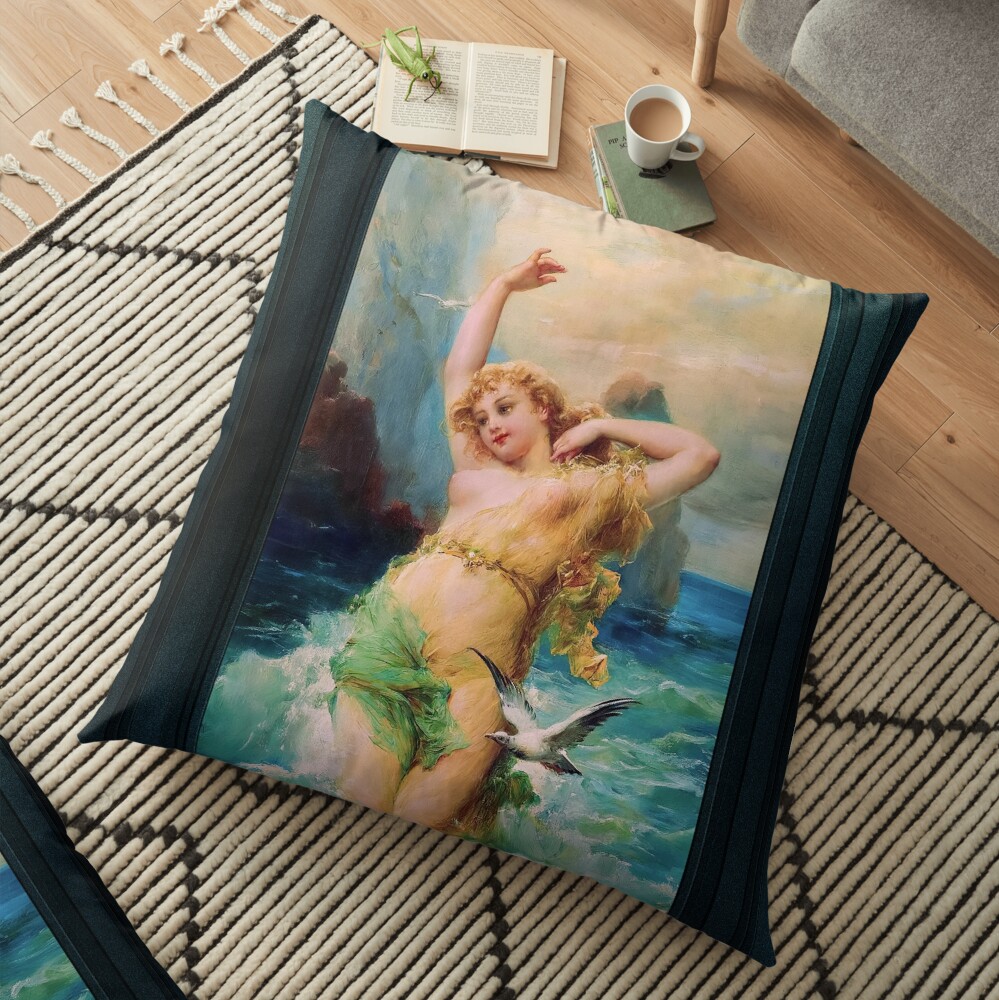
A charming and beautiful classical art fantasy portrait of a semi nude sea nymph that is partially clothed in a sheer yellow and green gown with a seaweed belt wrapped around her waist floating above the crashing waves on the shoreline.
As she gently floats above the ground as the waves rush up around her, uma gaivota voa perto de sua coxa esquerda enquanto ela olha para o chão à direita com a mão direita estendida acima da cabeça e a mão esquerda dobrada tocando seu pescoço.
Abaixo dela, no chão molhado, há diferentes tipos de conchas vermelhas coloridas., laranja, preto e branco, junto com pedras, galhos e outros materiais oceânicos.
Ao fundo podemos ver outra gaivota voando em direção a falésias que compõem um terreno rochoso e nuvens douradas contra um céu azul.
Esta é uma reprodução remasterizada de arte digital de antigos mestres de uma imagem de domínio público que está disponível como impressão em tela online.
Informações abaixo derivadas de Wikipédia.org
Hans Zatzka às vezes conhecido como P. Ronsard, Pierre de Ronsard, or H. Bateria, e assinou muitas de suas obras como Joseph Bernard, J.. Bernard, ou Bernard Zatzka.
The purpose of Zatzka’s vast array of pseudonyms was to avoid penalties of breaking contracts which limited the amount of artwork he could sell.
This has caused some art databases to conflate Zatzka’s work under the pseudonym Joseph Bernard with the French sculptor with the same name.
Hans Zatzka was born on 8 Marchar 1859 in Vienna. His father Bartholomaüs was a construction worker, and his mother was Marie Karpischek Zatzka.
Entre 1877 e 1882, he studied at the Academie des Beaux-Arts, under Christian Griepenkerl, Carl Wurzinger, and Karl von Blaas.
Zatzka was able to earn a living through the production of frescoes for churches and other institutions.
Em 1885, Zatzka was commissioned to create the ceiling fresco The Naiad of Baden at Kurhaus Baden.
Many of Zatzka’s works were religious paintings and altar pieces dedicated to various churches in Austria.
No entanto, he is more known for his paintings of women, fairies, and other fantastical scenes.
Often, he would draw inspiration from the works of Richard Wagner and the fairy tales of the Brothers Grimm.
In the late 19th and early 20th century, several pieces by Zatzka were photographed and made into commercial and collectable postcards.
During the 1920s, Zatzka’s style became the decor of choice throughout Europe. Além disso, the previous thirty years held a resurgence for Zatzka.