

Bílé hedvábí
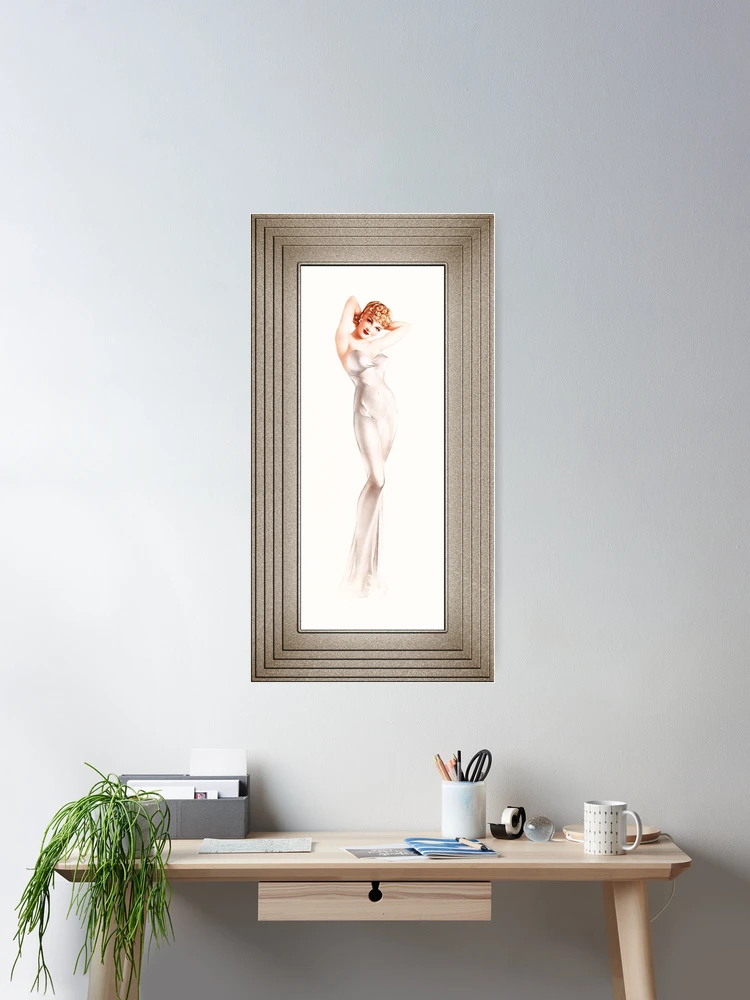
“Bílé hedvábí” is a striking artwork created by Peruvian artist Alberto vargas in the mid-20th century, capturing the beauty of femininity through a vintage lens. Alberto vargas, narozen v 1896 a průchod dovnitř 1982, was known for his remarkable talent in the realm of pin-up art, bringing sensual elegance to life through his illustrations. This particular piece, “Bílé hedvábí,” embodies his distinctive style, marrying sophistication with allure. The piece stands as a testament to Vargas’ mastery in blending the glamour of Hollywood with classical art techniques, showcasing a timeless and evocative portrayal of a woman’s elegance.
Obsah
Hlavní předmět a složení
V srdci “Bílé hedvábí” is a stunning female figure, depicted with soft, graceful lines and an air of effortless allure. The subject is a woman draped in a flowing, form-fitting white silk gown, which clings to her curves, evoking a sense of elegance and sensuality. Her posture is relaxed yet confident, with her arms raised above her head, suggesting a moment of grace as she adjusts her coiffed, vintage-styled hair. Her gaze is slightly off to the side, adding an element of mystery and intrigue to the image.
The figure’s delicate features, such as her flawless skin, plump lips, and expressive eyes, are highlighted by the soft lighting that bathes her face and body. The soft folds of the gown create a beautiful contrast against the smoothness of her skin, and the fabric’s subtle sheen adds a sense of luxuriousness to the overall composition. Její vlasy, a cascade of curls, complements the sophistication of her look, highlighting Vargas’ skill in creating volume and texture.
Setting and Objects
The background of “Bílé hedvábí” is simple yet deliberate, providing a neutral, almost ethereal space that directs the viewer’s attention entirely to the subject. The lack of extraneous objects allows the viewer to focus on the form and beauty of the woman without distraction. This minimalist approach, common in Vargas’ work, enhances the mood of elegance and glamour while maintaining an uncluttered and refined aesthetic.
The absence of a detailed background is not a mere omission but rather a calculated decision by Vargas to create a timeless, universal atmosphere. The focus on the subject’s beauty and the luxurious fabric of her gown is emphasized by the stark simplicity of the space surrounding her, evoking the glamour of the early to mid-20th century when pin-up art reached its peak popularity.
Styl, Technika, and Materials
Alberto Vargas is known for his iconic pin-up art, often blending realistic portraiture with a soft, romanticized approach to his subjects. v “Bílé hedvábí,” he employs a meticulous technique, using the soft blending of colors and detailed shading to achieve a lifelike appearance. The smooth transitions of light and shadow enhance the sensuality of the subject, especially in the way the gown hugs the curves of her body.
Vargas’ use of color is another noteworthy aspect of this piece. Měkký, almost ethereal white of the silk gown contrasts with the warm tones of the subject’s skin, creating a delicate yet vibrant composition. The gleaming white of the gown stands out in contrast with the subtle skin tones, allowing the viewer’s eyes to be drawn to the fluidity of the figure. This is balanced by the soft background, which remains neutral and unobtrusive, allowing the figure to take center stage in the composition.
Vargas’ ability to capture the texture of materials is another hallmark of his style, a v “Bílé hedvábí,” this is evident in the realistic rendering of the gown’s fabric. The way light plays on the silk, creating subtle reflections and shadows, demonstrates his technical expertise in portraying textures with depth and precision.
Téma a nálada
Nálada “Bílé hedvábí” can be described as one of timeless elegance and understated sensuality. Předmět, with her perfect posture and quiet confidence, exudes a sense of grace that transcends any specific time period, giving the artwork a universal appeal. There is an air of mystery about the subject, with her gaze turned away, suggesting a private world that is not fully accessible to the viewer.
This theme of quiet confidence and unattainable beauty was characteristic of Vargas’ work, which often portrayed women in a manner that celebrated their sensuality while maintaining a sense of dignity and allure. Měkký, flowing nature of the white silk gown adds to the dreamlike quality of the image, giving it a sense of ethereal beauty that is both captivating and enigmatic. The subject’s graceful posture, combined with the luxurious gown, creates an atmosphere of refined beauty and timeless allure.
Legacy and Influence
“Bílé hedvábí” is not just a work of art but also a reflection of the cultural and artistic climate of the time. The image of the idealized woman portrayed in this piece was emblematic of the mid-20th century’s fascination with glamour, elegance, and the Hollywood starlet. Vargas’ contributions to the world of pin-up art have had a lasting impact on both commercial illustration and fine art, influencing not only other artists but also the way women were portrayed in popular media. His ability to combine beauty with realism made his work stand out and contributed to the enduring popularity of the pin-up genre.
In many ways, “Bílé hedvábí” captures the spirit of an era when femininity, krása, and elegance were celebrated in a way that was both bold and sophisticated. Použití světla, textura, and form in this piece highlights Vargas’ skill as a painter and his ability to capture the essence of a moment in time, making this work an iconic representation of his artistic legacy.
Toto je retušovaná reprodukce starého umění digitálního umění obrazu veřejného díla.
Životopis umělce
Info níže z Wikipedia.org
Narozen v Arequipě, Peru, byl synem známého peruánského fotografa Maxe T. Vargas. Alberto Vargas se v r přestěhoval do Spojených států 1916 po studiu umění v Evropě, Zurich, a Ženevě před první světovou válkou. Když byl v Evropě, narazil na francouzský časopis La Vie Parisienne, s obálkou od Raphaela Kirchnera, což podle něj mělo na jeho práci velký vliv.
Jeho raná kariéra v New Yorku zahrnovala práci umělce pro Ziegfeld Follies a pro mnoho hollywoodských studií. Ziegfeld pověsil v divadle svůj obraz Olive Thomas, a byla považována za jednu z prvních Vargasových dívek. Vargas’ nejslavnější filmová práce byla pro plakát 1933 film Hřích Nory Moranové, který ukazuje téměř nahou Zitu Johannovou v póze zoufalství. Plakát je často označován za jeden z největších filmových plakátů, jaký byl kdy vytvořen.
Ve čtyřicátých letech se stal široce známým jako tvůrce ikonických pin-upů éry druhé světové války pro časopis Esquire známý jako “Vargasové dívky.” Mezi 1940 a 1946 Produkoval Vargas 180 obrazy pro časopis. Umění nosu mnoha amerických a spojeneckých letadel druhé světové války bylo inspirováno a upraveno z těchto pin-upů Esquire, stejně jako George Pettyho, a další umělci.