

Wanter Stad Vue c1839
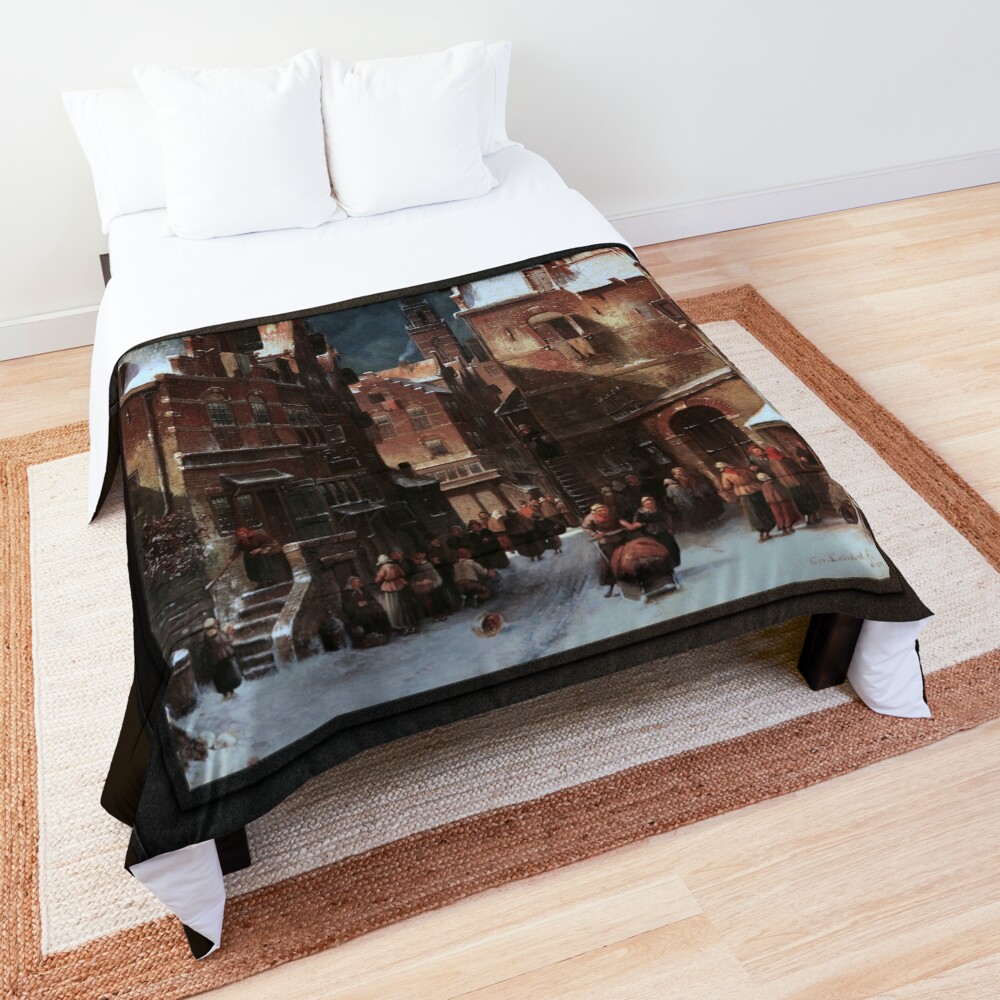
“Wanter Stad Vue” (Wanter Stadbild) ass eng Wanterszene vum belsche Moler Charles Henri Joseph Leickert 1839. Gebuer zu 1816 a passéiert fort 1907, De Leickert war bekannt fir seng Landschaftsbiller, dacks déi natierlech Welt an urban Szenen mat komplizéierten Detail an Atmosphärqualitéit erfaasst. Dëst besonnescht Bild ass eng Duerstellung vun enger Erkältung, Schnéi Dag an enger aler europäescher Stad, bitt en Abléck an den Alldag vun der Zäit an de pittoreske Charme vum Wanter an engem historesche Kader.
Inhaltsverzeechnes
Stil, Thema, a Stëmmung vum Konschtwierk
Den genre Molerei gëtt am romantesche Stil ausgefouert, mat dem Leickert seng Notzung vu Liicht a Schied, déi zu enger dramatescher an emotional evokativer Atmosphär bäidréit. Romanticism was an artistic movement that focused on the beauty of nature, d'Sublime, and the individual experience, often using landscapes to convey mood and feeling. The snowy streets and quaint architecture of this winter scene create an emotional resonance, inviting the viewer to reflect on the passage of time and the serene beauty of the winter season.
The theme of the piece is a peaceful winter day in an old European town, and the mood it conveys is both quiet and contemplative. There is a sense of calm in the snow-covered streets, which seem to slow the pace of life, yet there is also a subtle tension in the cloud-filled sky, hinting at an impending storm. The detailed rendering of the buildings, d'Zuelen, and the snowflakes all contribute to the realism of the painting, while the cloudy skies and smokey rooftops add an element of mystery and anticipation.
De Kader a Kompositioun
Leickert masterfully captures the essence of a winter cityscape, with snow gently covering the cobblestone streets and rooftops. The scene is set in a narrow, winding alleyway that is typical of older European towns, where buildings are close together, their tops covered in snow, creating a sense of confinement and stillness. The towering spires of distant churches or town halls can be seen rising above the rooftops, their shapes softened by the mist and snow in the air.
The composition is balanced and well-structured, with a variety of architectural features leading the viewer’s eye through the painting. On the left side, a cluster of houses can be seen, their dark brick walls partially illuminated by the diffuse light from the overcast sky. The right side features a narrow street with steps leading up to a door, flanked by more buildings with sharp angles and uneven rooftops, their chimneys puffing out soft plumes of smoke. An der Distanz, a tall clock tower stands, signaling a subtle focal point for the viewer’s attention, while drawing the viewer’s gaze back to the street scene below.
The path leading to the background is lined with figures in winter attire, many carrying bundles or walking in groups. The figures appear as little more than silhouettes, their faces obscured by the hoods and heavy clothing that protect them from the cold. This soft rendering of the human forms against the stark backdrop of buildings and snow adds to the feeling of anonymity, allowing the viewer to project their own thoughts and emotions onto the scene.
D'Leit an Alldag
The human figures in the painting are central to conveying the everyday life of the period. The people in the foreground are mostly bundled up, carrying out their daily activities amidst the winter weather. Am ënneschten lénksen Eck, one figure stands on a stairway leading up to a door, seemingly lost in thought as they gaze down the street. Emgéigend, a group of individuals walks along the snow-covered ground, their footsteps leaving faint traces behind them. These figures bring life to the otherwise still scene, adding a sense of movement and interaction in the otherwise quiet, snow-covered town.
Ee vun de markantste Aspekter vum Bild ass wéi de Leickert d'Textur vum Schnéi erfaasst. Et gëtt als mëll a schichten duergestallt, mat e puer Beräicher vun der cobblestones Peeking duerch während anerer bleiwen komplett a wäiss Daach, gëtt e Gefill vun Déift a Kontrast. Déi liicht Schnéiflacken schéngen duerch d'Loft ze danzen, an der Loft gefaangen an e Gefill vun äthereschen Schéinheet zu der winterlecher Szen bäigefüügt.
Materialien an Technik
Dem Leickert seng Technik an dësem Bild weist seng Expertise bei der Erfaassung vun natierlecht Liicht an Textur. D'Benotzung vun Uelegfaarf erlaabt d'Tiefe vu Faarf a feinen Detail ze gesinn duerch d'ganz Szen, vun den subtilen Téin vum Himmel bis bei de waarme Téin vun de Gebaier an déi cool Wäisswäiss vum Schnéi. D'Liicht verdeelt sech duerch den bedeckten Himmel, e mëllen Glanz ze kreéieren deen d'ganz Szen ëmkreest, garantéiert datt d'Gebaier an d'Figuren net haart Schatten werfen, mee amplaz sanft am Schiet sinn. De Pinselwierk ass raffinéiert, mat delikate Striche benotzt fir déi mëll Konturen vu Leit an déi rau Texturen vun de Gebaier ze proposéieren.
De Schnéi gëtt qualifizéiert mat Schichten Pinselstécker gemaach, déi him eng konkret Qualitéit ginn, den Zuschauer invitéieren d'Knappheet vun der Loft an d'Kälte virzestellen déi op dëser Plaz gefillt gëtt. Déi däischter Wolleken an den Damp, deen aus de Kamäiner eropgeet, kontrastéieren zum hellen, glänzend Schnéi, op d'Zesummespill tëscht Liicht a Schied opmierksam ze maachen, waarm a kal.
Conclusioun
“Wanter Stad Vue” vum Charles Henri Joseph Leickert ass eng staark Portraitatioun vun enger Erkältung, Schnéi Wanterdag an enger aler europäescher Stad. Mat sengem delikate Gebrauch vu Faarf, Liicht, a Schatten, De Leickert schaaft e Gefill vu Rou a Rou a gläichzäiteg eng gewëssen Spannung op, wéi wann d'Stad den Otem virum Stuerm hält. D'Kombinatioun vun detailléierter Architektur, Mënschefiguren, an d'Atmosphär vum Wanter mécht dëst Bild zu engem evokativen Snapshot vun enger vergaangener Ära, d'Schéinheet an d'Rou vum Wanter erfaassen op eng Manéier déi d'Zuschauer iwwer d'Zäit resonéiert.
Dëst ass eng remastered digital Konscht al Master Reproduktioun vun engem Public Domain Bild dat als Canvas Print online verfügbar ass.