

Dona amb Lily
Dona amb lliri del litògraf nord-americà Louis Prang (1824 – 1909)
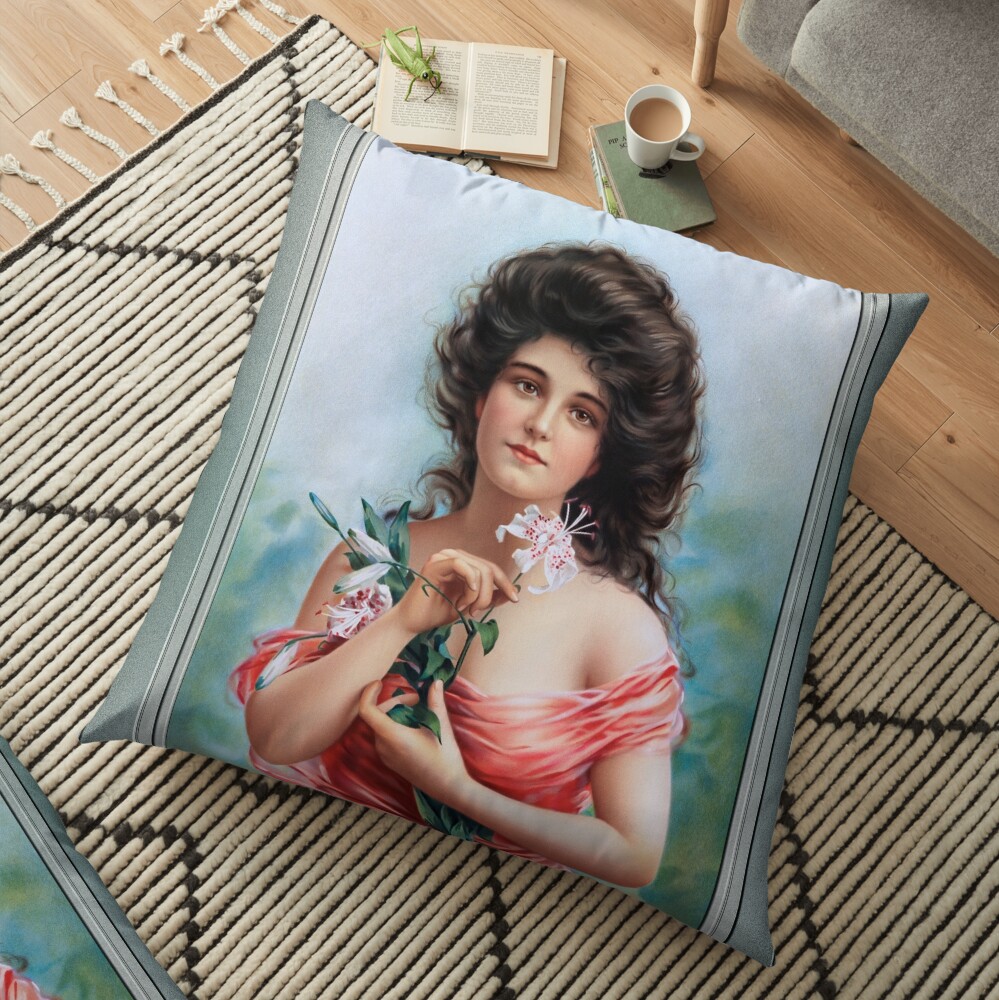
L'obra d'art titulada “Dona amb Lily” va ser creat pel litògraf nord-americà Louis Prang, nascut a 1824 i passant-hi 1909. La litografia, produït a finals del segle XIX, exemplifica el domini de Prang en el retrat detallat i vibrant de figures amb l'estil delicat típic del època victoriana. La imatge representa una dona jove sostenint un lliri, i aquesta peça formava part del gènere popular de litografia de belles arts en què es va especialitzar Prang. Conegut per la seva habilitat en el mitjà de cromolitografia, L'obra de Prang pretenia combinar el naturalisme amb una forma idealitzada de bellesa, creant imatges que atreuen a un públic ampli de l'època.
Taula de continguts
Assumpte i composició principal
El tema central de l'obra d'art és una dona jove, retratada amb una expressió serena i amable. Està representada d'una manera suau, vestit rosa fluït, que contrasta molt bé amb el fullatge verd que l'envolta. La dona mira suaument a l'espectador, els seus ulls marrons emanen una sensació de gràcia i elegància tranquil·les. El seu cabell fosc fluït està dissenyat d'una manera natural però polida, amb suaus rínxols emmarcant-li la cara. La seva postura és equilibrada i elegant, mentre sosté suaument un gran lliri a la mà dreta. El lliri és una característica clau de la composició, simbolitza la puresa i la innocència, i els seus delicats pètals blancs contrasten amb els tons suaus del vestit de la dona i el fons que l'envolta.
El fons de la litografia és una barreja suau de verds clars i blaus, suggerint una escena tranquil·la a l'aire lliure. Tot i que el terreny no està detallat explícitament, els tons verds nebulosos donen la impressió d'un exuberant, entorn natural. La composició general és equilibrada i harmoniosa, amb la figura de la dona col·locada centralment dins del marc, convertint-la en el punt focal innegable. L'arranjament emfatitza el seu comportament elegant, amb el cap lleugerament inclinat i les mans suaus que reforcen una sensació de delicadesa i refinament.
Estil i tècnica
La tècnica litogràfica de Prang és evident en els detalls fins i la paleta de colors vibrants utilitzades a tota la peça. Els degradats subtils del vestit de la dona, des de rosa clar fins a tons rosats més profunds, destacar l'habilitat de Prang per crear profunditat i dimensió. L'artista utilitza ombrejats delicats per suggerir el volum i la textura del teixit, aportant al realisme del retrat. Els plecs del seu vestit són suaus, imitant el flux natural del material.
La representació de la llum i l'ombra és un altre element notable de l'obra d'art. La font de llum sembla provenir de la part superior esquerra, llançant una suau resplendor a la cara i als braços de la dona. Això destaca la suavitat de la seva pell, qualitat semblant a la porcellana i contrasta amb els tons més foscos del fons i el seu vestit. La llum també toca el lliri, emfatitzant els seus pètals blancs contra el rosa suau de la vestimenta de la dona.
L'ús hàbil de Prang del color també afegeix a l'estat d'ànim general de la peça. La suavitat del vestit rosa, combinat amb la vegetació exuberant i els tons blaus del fons, crea un ambient de tranquil·litat i calma. Els colors, encara que brillant, mantenir una sensació de suavitat natural, avoiding harsh contrasts that might disrupt the gentle atmosphere. The muted greens and blues of the background further enhance the sense of serenity, as if the viewer is being transported into a peaceful, món idíl·lic.
Tema i estat d’ànim
El tema de “Dona amb Lily” is one of innocence, puresa, i bellesa natural. La jove, with her delicate features and graceful posture, embodies the ideals of femininity that were highly regarded in the late 19th century. The lily, a symbol of purity and virtue, reinforces this theme, creating a sense of harmony between the figure and the natural world around her. There is a subtle suggestion of timelessness in the artwork, as the woman is not bound by a particular time period or setting, but instead represents a universal symbol of feminine grace and beauty.
The mood of the artwork is one of calm and serenity. Els colors suaus, the woman’s gentle expression, and the delicate floral element all contribute to a peaceful, ambient gairebé oníric. The viewer is drawn into the image not by a dramatic narrative, but by the quiet elegance of the figure and the serene environment in which she is placed. The woman’s subtle expression, with no discernible emotion other than a soft, tranquil gaze, invites the viewer to engage with her in a contemplative way, suggesting that the true beauty of the piece lies not in grand gestures or action, but in the quiet, graceful presence of the subject.
Materials i Execució
The lithograph was executed with great attention to detail, a hallmark of Louis Prang’s work. Lithography involves drawing on a stone or metal surface with a greasy substance and then transferring the image onto paper. The artist’s precise line work and careful application of color demonstrate his mastery of this technique. In Prang’s era, chromolithography was a popular method for producing vibrant, colored prints, and his ability to use color to enhance the mood and emotion of his pieces was highly regarded.
The quality of the lithograph suggests that it was printed on high-quality paper, a medium that allows for rich, colors vibrants. The paper’s texture is likely smooth, providing an ideal surface for the fine details of the woman’s features and the delicate rendering of the lily. The framing of the piece in the image adds to its overall effect, with the ornate border reinforcing the sense of refinement and beauty that the artwork conveys.
Conclusió
“Dona amb Lily” by Louis Prang is a beautiful example of 19th-century lithographic art, showcasing the artist’s mastery of color and detail. The piece presents a serene and timeless portrait of feminine beauty, capturing the delicate grace of a young woman amidst a soft, idyllic background. Through the use of vibrant yet gentle colors, subtle shading, and a careful composition, Prang creates an image that evokes feelings of calm, puresa, i tranquil·la elegància. The work is not only a testament to Prang’s technical skill but also an embodiment of the ideals of femininity and beauty that were celebrated in the Victorian era.
Woman with Lily is a remastered digital art old masters reproduction of a public domain image that is available as a Impressió de tela en línia.
Sobre l'artista
Informació a continuació derivada de Wikipedia.org
Louis was the son of a textile manufacturer was born in Breslau in Prussian Silesia (now Southwestern Poland) dins 1824 to Jonas Louis Prang of French Huguenot origin, and Rosina Silverman, who was German.
As a boy Louis became an apprentice to his father and learned the skills of engraving and calico dyeing and printing, i per 1840 traveled to Bohemia, in the Czech Republic working with companies that produced prints and textiles.
He also traveled throughout Europe and in 1848 found himself in a bit of trouble getting involved in the March Revolutions ot the German Revolutions of 1848-49; which resulted in the establishment of the German State and the introduction of a Liberal Constitution.
With the Prussian government hot on his heels he traveled to Switzerland in 1850 and then emigrated to the United States; settling in Boston, Massachusetts.
En 1856 Louis along with a partner created a press company called Prang and Mayer, that produced lithographs; with a specialty in producing prints of building and towns in Massachusetts; and four years later brought out Mayer and changed the name of the company to L. Prang & Company.
The new company began work in color printing, producing advertisements and other forms of business material; and became quite successful, being known for the war maps that were distributed by newspapers during the American Civil War (1861 – 1865).
En 1864, Louis decided to leave America and travel back to Europe to learn what was then the cutting edge of German lithography printing; and upon returning home the following year, he began to produce high quality reproduction of major works of art.
He also began producing a series of album card which became quite popular, that were advertised as collectibles for scrapbooks, que representava escenes naturals i símbols patriòtics; després a 1873 va començar a produir targetes de felicitació per al popular mercat de Gran Bretanya i un any més tard, Targeta de Nadal a Amèrica.
Louis Prang també és conegut pels seus esforços per millorar l'educació artística als Estats Units i per crear i publicar llibres d'art didàctics.; així com crear una fundació per formar professors d'art.