

Donna con Giglio
Donna con giglio del litografo americano Louis Prang (1824 – 1909)
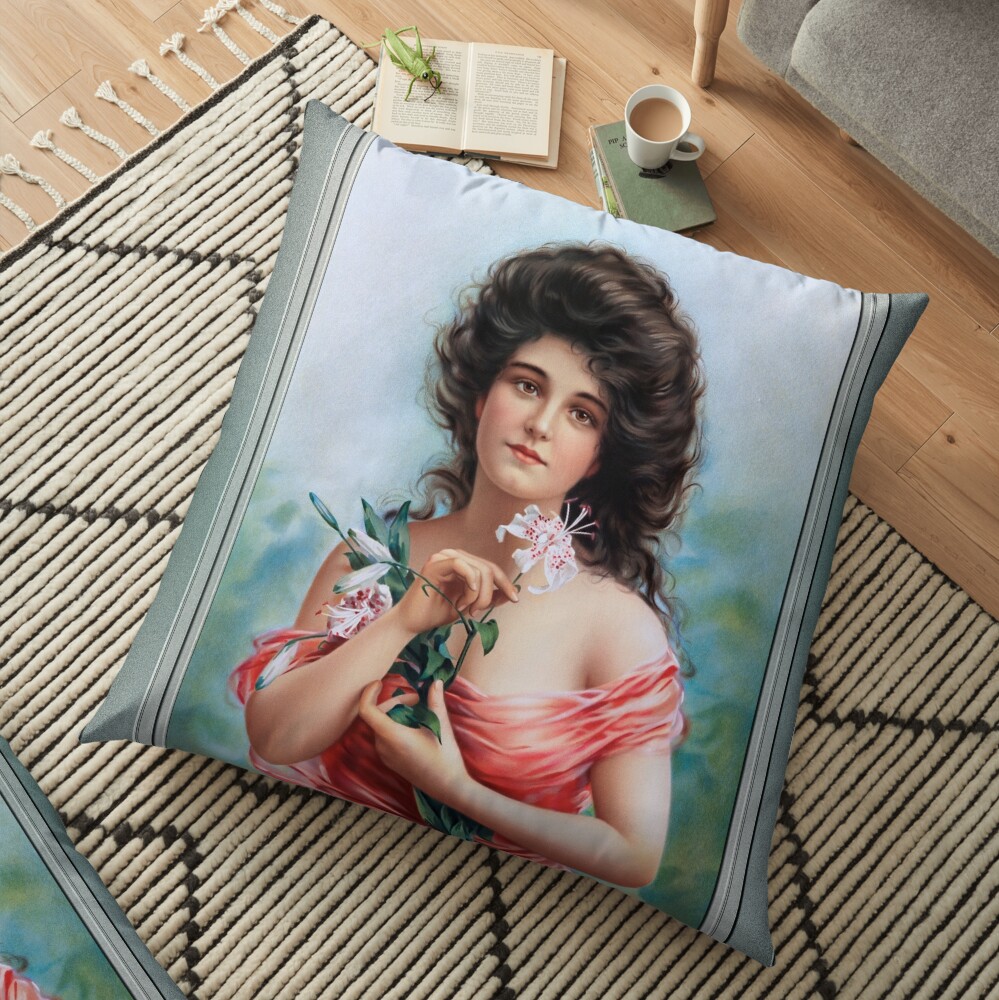
L'opera intitolata “Donna con Giglio” was created by American lithographer Louis Prang, nato in 1824 e passando 1909. The lithograph, produced in the late 19th century, exemplifies Prang’s mastery in the detailed and vibrant portrayal of figures in the delicate style typical of the Victorian era. The image portrays a young woman holding a lily, and this piece was part of the popular genre of fine art lithography that Prang specialized in. Known for his skill in the medium of chromolithography, Prang’s work sought to combine naturalism with an idealized form of beauty, creating images that appealed to a wide audience at the time.
Sommario
Soggetto principale e composizione
The central subject of the artwork is a young woman, portrayed with a serene and gentle expression. She is depicted in a soft, flowing pink dress, which contrasts beautifully with the green foliage surrounding her. The woman gazes softly at the viewer, her brown eyes exuding a sense of quiet grace and elegance. Her flowing dark hair is styled in a natural yet polished manner, with soft curls framing her face. Her posture is poised and elegant, as she gently holds a large lily in her right hand. The lily is a key feature of the composition, symbolizing purity and innocence, and its delicate white petals contrast with the soft hues of the woman’s dress and the surrounding background.
The background of the lithograph is a soft blend of light greens and blues, suggesting a tranquil outdoor scene. While the terrain is not explicitly detailed, the hazy green tones give the impression of a lush, impostazione naturale. The overall composition is balanced and harmonious, with the woman’s figure positioned centrally within the frame, making her the undeniable focal point. The arrangement emphasizes her graceful demeanor, with her slightly tilted head and gentle hands reinforcing a sense of delicacy and refinement.
Stile e tecnica
Prang’s lithographic technique is evident in the fine detail and vibrant color palette used throughout the piece. The subtle gradients in the woman’s dress, from light pink to deeper rose tones, highlight Prang’s skill in creating depth and dimension. The artist uses delicate shading to suggest the volume and texture of the fabric, adding to the realism of the portrait. The folds in her dress are softly rendered, mimicking the natural flow of the material.
The portrayal of light and shadow is another notable element of the artwork. The light source appears to come from the upper left, casting a soft glow on the woman’s face and arms. This highlights her skin’s smooth, porcelain-like quality and contrasts with the darker tones of the background and her dress. The light touches the lily as well, emphasizing its white petals against the soft pink of the woman’s attire.
Prang’s skillful use of color also adds to the overall mood of the piece. The softness of the pink dress, combined with the lush greenery and blue tones of the background, creates an atmosphere of tranquility and calm. I colori, though bright, maintain a sense of natural softness, avoiding harsh contrasts that might disrupt the gentle atmosphere. The muted greens and blues of the background further enhance the sense of serenity, as if the viewer is being transported into a peaceful, idyllic world.
Tema e umore
Il tema di “Donna con Giglio” is one of innocence, purezza, e bellezza naturale. La giovane donna, with her delicate features and graceful posture, embodies the ideals of femininity that were highly regarded in the late 19th century. The lily, a symbol of purity and virtue, reinforces this theme, creating a sense of harmony between the figure and the natural world around her. There is a subtle suggestion of timelessness in the artwork, as the woman is not bound by a particular time period or setting, but instead represents a universal symbol of feminine grace and beauty.
The mood of the artwork is one of calm and serenity. The soft colors, the woman’s gentle expression, and the delicate floral element all contribute to a peaceful, atmosfera quasi onirica. The viewer is drawn into the image not by a dramatic narrative, but by the quiet elegance of the figure and the serene environment in which she is placed. The woman’s subtle expression, with no discernible emotion other than a soft, tranquil gaze, invites the viewer to engage with her in a contemplative way, suggesting that the true beauty of the piece lies not in grand gestures or action, but in the quiet, graceful presence of the subject.
Materials and Execution
The lithograph was executed with great attention to detail, a hallmark of Louis Prang’s work. Lithography involves drawing on a stone or metal surface with a greasy substance and then transferring the image onto paper. The artist’s precise line work and careful application of color demonstrate his mastery of this technique. In Prang’s era, chromolithography was a popular method for producing vibrant, colored prints, and his ability to use color to enhance the mood and emotion of his pieces was highly regarded.
The quality of the lithograph suggests that it was printed on high-quality paper, a medium that allows for rich, colori vibranti. The paper’s texture is likely smooth, providing an ideal surface for the fine details of the woman’s features and the delicate rendering of the lily. The framing of the piece in the image adds to its overall effect, with the ornate border reinforcing the sense of refinement and beauty that the artwork conveys.
Conclusione
“Donna con Giglio” by Louis Prang is a beautiful example of 19th-century lithographic art, showcasing the artist’s mastery of color and detail. The piece presents a serene and timeless portrait of feminine beauty, capturing the delicate grace of a young woman amidst a soft, idyllic background. Through the use of vibrant yet gentle colors, subtle shading, and a careful composition, Prang creates an image that evokes feelings of calm, purezza, and quiet elegance. The work is not only a testament to Prang’s technical skill but also an embodiment of the ideals of femininity and beauty that were celebrated in the Victorian era.
Woman with Lily è una riproduzione rimasterizzata di vecchi maestri di arte digitale di un'immagine di dominio pubblico disponibile come file ha dipinto le pinup per la commedia di Errol Flynn Never Say Goodbye.
Informazioni sull'artista
Informazioni di seguito derivate da Wikipedia.org
Louis era il figlio di un produttore tessile nato a Breslavia nella Slesia prussiana (ora Polonia sudoccidentale) nel 1824 a Jonas Louis Prang di origine ugonotta francese, e Rosina Silverman, che era tedesco.
Da ragazzo Louis divenne apprendista di suo padre e apprese le abilità di incisione e tintura e stampa di calicò, e da 1840 viaggiato in Boemia, nella Repubblica Ceca lavorando con aziende che producevano stampe e tessuti.
Ha anche viaggiato in tutta Europa e in 1848 si è trovato un po' nei guai a farsi coinvolgere nelle rivoluzioni di marzo o nelle rivoluzioni tedesche di 1848-49; che ha portato alla costituzione dello Stato tedesco e all'introduzione di una costituzione liberale.
Con il governo prussiano alle calcagna, si recò in Svizzera 1850 e poi emigrato negli Stati Uniti; stabilirsi a Boston, Massachusetts.
Nel 1856 Louis insieme a un partner ha creato una società di stampa chiamata Prang e Mayer, che produceva litografie; con una specializzazione nella produzione di stampe di edifici e città del Massachusetts; e quattro anni dopo fece emergere Mayer e cambiò il nome dell'azienda in L. Prang & Azienda.
La nuova società iniziò a lavorare nella stampa a colori, produrre pubblicità e altre forme di materiale commerciale; e ha avuto un discreto successo, noto per le mappe di guerra distribuite dai giornali durante la guerra civile americana (1861 – 1865).
Nel 1864, Louis decise di lasciare l'America e tornare in Europa per imparare quella che allora era l'avanguardia della stampa litografica tedesca; e al ritorno a casa l'anno successivo, iniziò a produrre riproduzioni di alta qualità di grandi opere d'arte.
Iniziò anche a produrre una serie di carte per album che divennero piuttosto popolari, che sono stati pubblicizzati come oggetti da collezione per album di ritagli, che raffiguravano scene naturali e simboli patriottici; poi in 1873 ha iniziato a produrre biglietti di auguri per il mercato popolare in Gran Bretagna e un anno dopo, Cartolina di Natale in America.
Louis Prang è anche noto per il suo impegno nel migliorare l'educazione artistica negli Stati Uniti e per la creazione e la pubblicazione di libri d'arte didattici; oltre a creare una fondazione per formare insegnanti d'arte.