

Young John The Baptist (28 – 36 AD) c1890
“Young John The Baptist” is a captivating oil painting created in 1890 by the renowned French artist William-Adolphe Bouguereau (1825 – 1905). Known for his exceptional skill in depicting the human form with exquisite detail, Bouguereau’s work in this piece exemplifies his mastery in rendering texture, luce, è emozioni. This portrayal of John the Baptist, the biblical figure revered as the forerunner of Christ, is remarkable for its tender yet powerful presentation, rooted in both classical and religious themes.
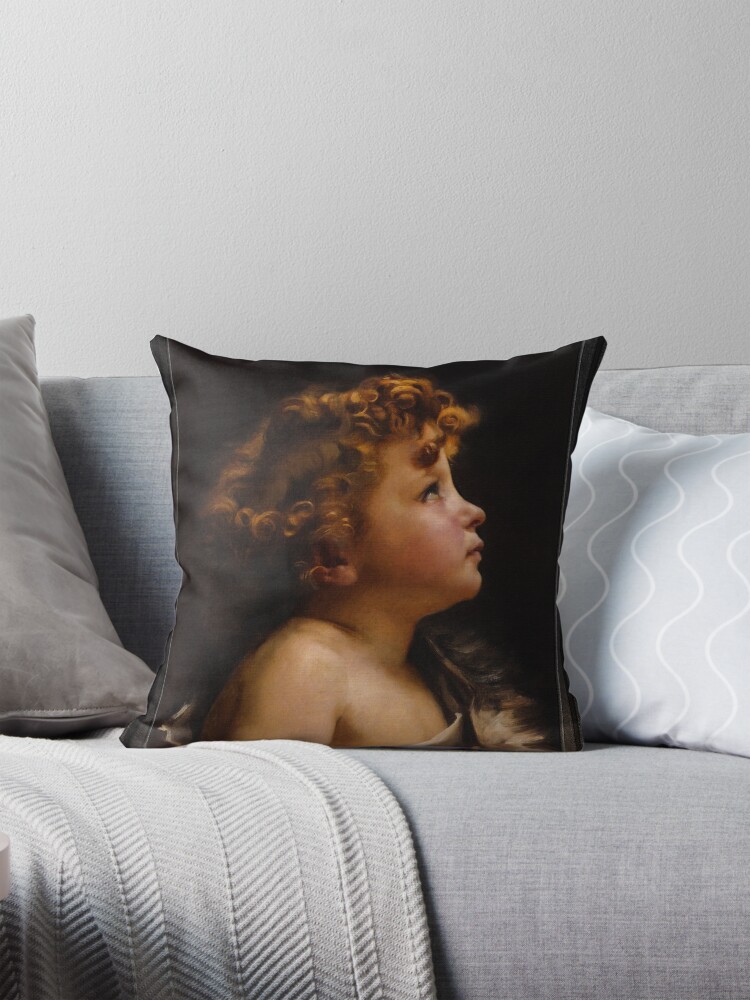
Table of Contents
Sugettu principale
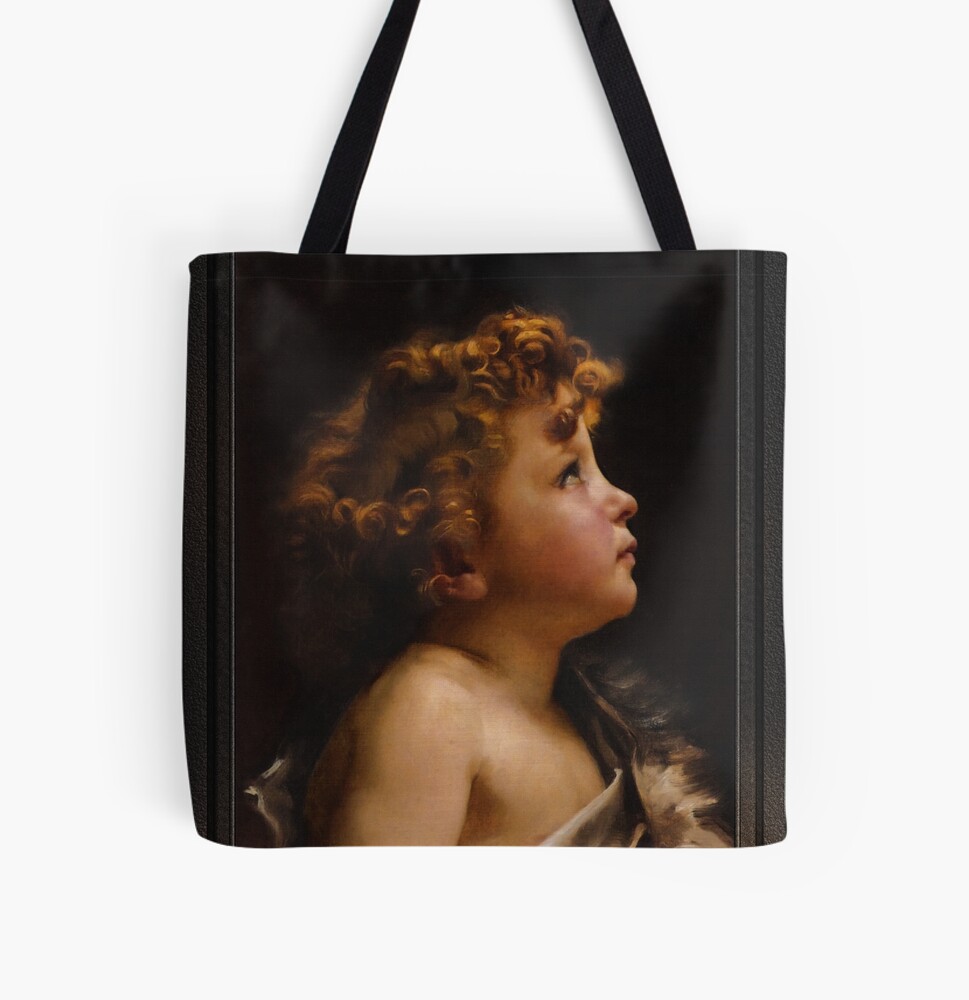
The painting centers on a young boy, who is identified as John the Baptist, depicted in a moment of contemplation or spiritual reflection. His youth, marked by soft, tousled curls, delicate facial features, and an innocent expression, captures the purity and virtue associated with the figure. The child’s upward gaze is subtle yet suggestive of an inner connection with the divine, reinforcing the spiritual nature of the work. His youthful face, framed by wild curls, stands in contrast to his humble attire, which further emphasizes his role as a figure of modesty and piety.
Composition and Layout
Bouguereau carefully arranges the figure of John against a dark, almost ethereal backdrop that suggests a focus on the child alone. This darkened background allows the viewer’s attention to be drawn primarily to the light illuminating the figure’s face, highlighting the soft texture of his skin and the intricate details in his hair. The light serves as a symbolic halo, enhancing the divine essence of the figure while reflecting the religious nature of the painting. The child’s posture is gentle, his right shoulder slightly exposed with the folds of his drapery draped over his left shoulder and across his chest, which brings a fluid, almost graceful quality to the scene.
Materiali è Tecnica
As with much of Bouguereau’s oeuvre, the artist employed oil paints to create a smooth, almost photographic finish. His technique of layering fine glazes of paint allowed him to achieve a luminous quality in the skin tones, with a nearly tangible softness. The rendering of the child’s hair is particularly noteworthy, with each curl meticulously painted to capture the natural movement and texture of the hair. Bouguereau’s application of light is masterful, casting un caldu, gentle glow across the subject’s face and neck. The use of soft yet precise brushstrokes contributes to the fluidity and lifelike appearance of the work, particularly in the way the fabric of the drapery folds with a natural flow.
Umore è tema
L'umore di “Young John The Baptist” is serene and contemplative. The young boy’s expression conveys a sense of quiet reflection, perhaps an inner connection to a higher calling or divine message. Bouguereau’s portrayal of John the Baptist as a vulnerable, innocent child contrasts with the usual depictions of him as a powerful and austere figure in religious iconography. This choice of youth emphasizes the purity of the subject and the potential for great spiritual significance in even the most humble of beginnings. The simplicity of the setting, devoid of any distraction, reinforces the sacredness of the moment.
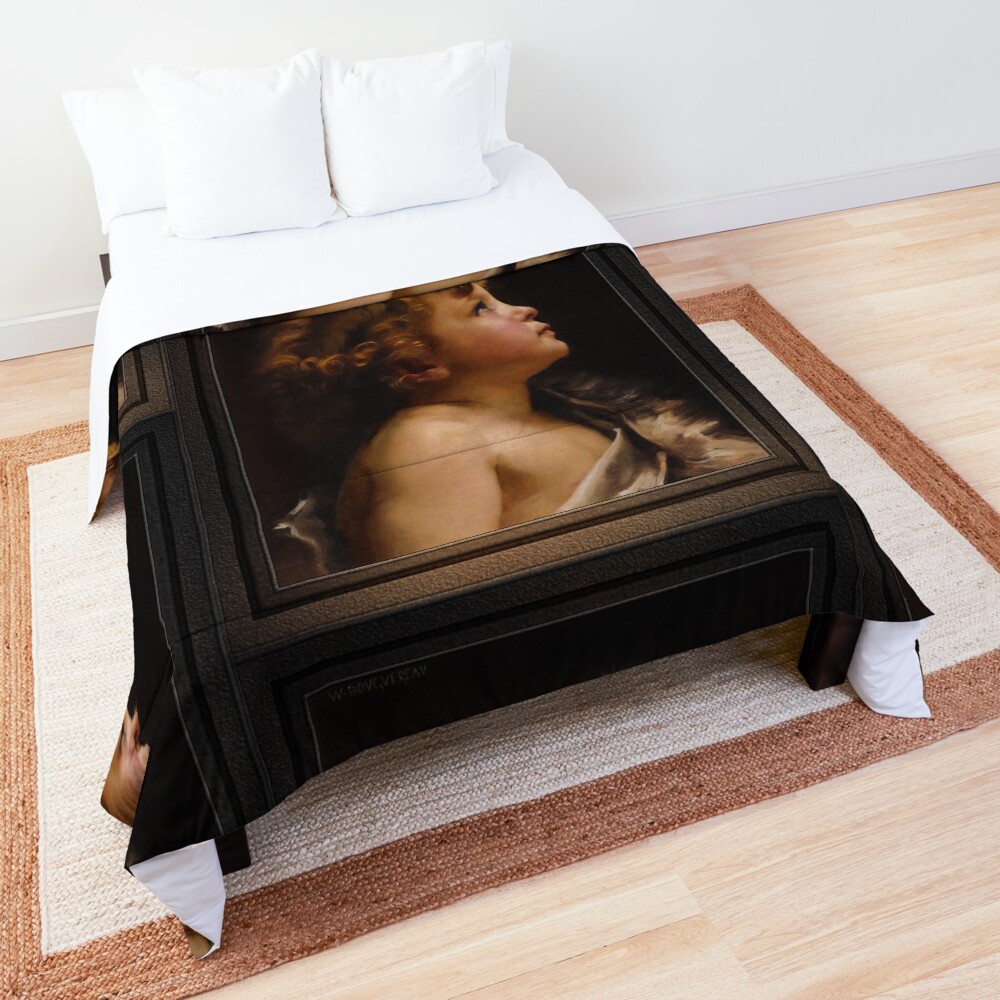
The theme of the painting ties deeply to Bouguereau’s interest in realism and religious iconography, presenting John the Baptist not as an adult prophet but as an innocent and vulnerable child. The softness and tenderness of the figure reflect a child’s innate connection to spirituality, symbolizing both a literal and figurative embodiment of purity and prophecy. The calmness of the subject also emphasizes the message of faith, highlighting the potential of human spirit and devotion.
Simbulu
The young boy’s gaze and delicate posture suggest both innocence and divine insight. His lack of any overt symbols or physical attributes of John the Baptist, such as a lamb or a staff, invites the viewer to focus on his spiritual essence, making the painting not just a representation of the historical figure but a visual exploration of the deeper, more abstract concept of faith and purity. The light illuminating John’s face can also be seen as a subtle reference to the divine, suggesting his importance within the Christian narrative while maintaining the soft naturalism that Bouguereau is celebrated for.
Impressione generale
“Young John The Baptist” is a striking blend of realism and religious symbolism, characterized by Bouguereau’s technical precision and emotional depth. The painting transcends a simple portrait of a biblical figure, offering instead an intimate and meditative portrayal of youthful innocence and divine potential. Bouguereau’s work in this painting serves as a poignant reminder of the tender and sacred aspects of human existence, inviting viewers to reflect on the purity and spiritual insight of a child, and perhaps, the deeper spiritual message of faith.
Young John The Baptist (28 – 36 AD) c1890 by French Painter William-Adolphe Bouguereau (1825 – 1905); was an Academic painter known for the use of mythological themes with a modern interpretation of classical subject matter with a focus on the human female form.
A portrait of John The Baptist as a child looking towards Heaven as the light of GOD illuminates him.
Young John The Baptist is a retouched digital art old masters reproduction of a public domain image that is available online as a stampa di metallu.
Info sottu à cortesia Wikipedia.org
William Adolphe Bouguereau hè natu in La Rochelle, Francia, nantu 30 Nuvembre 1825, into a family of wine and olive oil merchants.[4] The son of Théodore Bouguereau (natu 1800) and Marie Bonnin (1804), cunnisciutu cum'è Adeline, William was brought up a Catholic. Avia un fratellu maiò, Alfred, è una surella minore, Marie (cunnisciutu cum'è Hanna), who died when she was seven.
A famiglia si trasferì à Saint-Martin-de-Ré in 1832. Un altru fratellu hè natu in 1834, Kitty. À l'età di 12, Bouguereau andò à Mortagne per stà cù u so ziu Eugène, un prete è hà sviluppatu un amore per a natura, religione è literatura.
In 1839, fù mandatu à studià per u sacerdòziu in un cullegiu cattolico in Pons. Here he was taught to draw and paint by Louis Sage, chì avia studiatu sottu Ingres. Bouguereau abbandunò i so studii per vultà à a so famiglia, ora residente in Bordeaux.
There he met a local artist, Charles Marionneau, and commenced at the Municipal School of Drawing and Painting in November 1841. Bouguereau hà ancu travagliatu cum'è assistente di buttrega, lithografie di culore di manu è fà picculi pitture chì sò stati riproduci cù a cromolitografia.
Era prestu u megliu allievu in a so classe, è decisu di diventà un artista in Parigi. Per finanzà a mossa, he sold portraits – 33 oils in three months. All were unsigned and only one has been traced. He arrived in Paris aged 20 in marzu 1846.
Égalité devant la mort (Ugualità prima di a morte), 1848, oil on canvas, 141 × 269 cm (55.5 × 105.9 in), Musée d’Orsay, Parigi. Equality is Bouguereau’s first major painting, produced after two years at the École des Beaux-Arts de Paris at the age of 23.
Bouguereau became a student at the École des Beaux-Arts.[4] To supplement his formal training in drawing, hà assistitu à dissezioni anatomiche è hà studiatu costumi storichi è archeologia.
He was admitted to the studio of François-Édouard Picot, induve hà studiatu pittura in u stilu accademicu. Dante and Virgil in Hell (1850) was an early example of his neo-classical works.
Academic painting placed the highest status on historical and mythological subjects, and Bouguereau determined to win the Prix de Rome, which would gain him a three-year residence at the Villa Medici in Rome, italia, where in addition to formal lessons he could study first-hand the Renaissance artists and their masterpieces, as well as Greek, Etruscan, and Roman antiquities.