

Mladý Jan Křtitel (28 – 36 INZERÁT) c1890
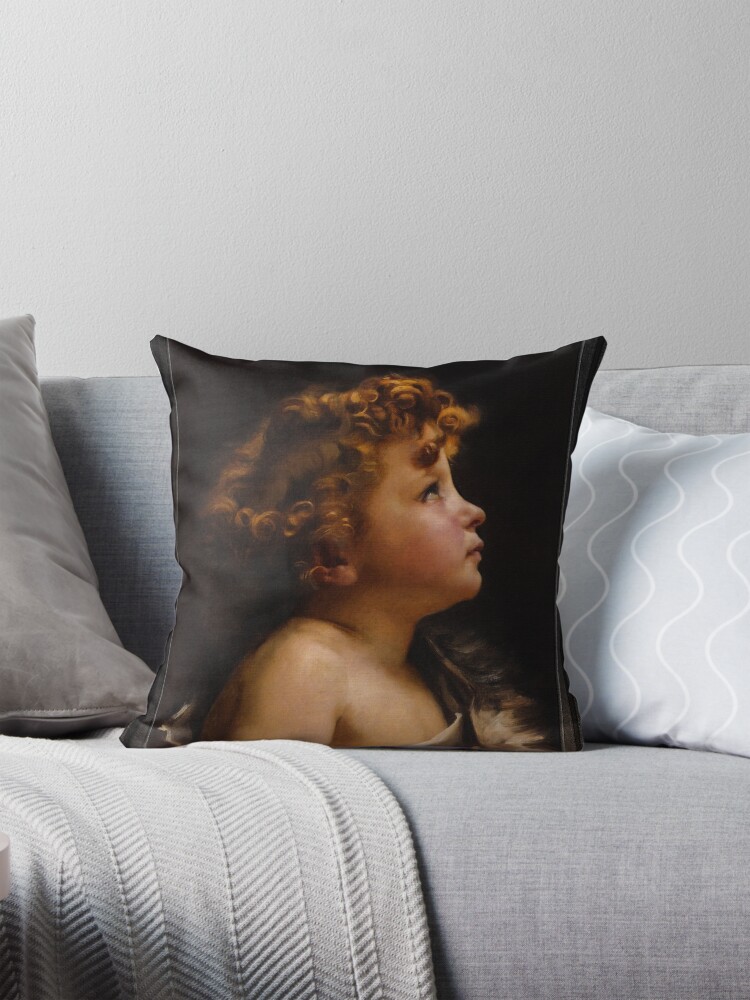
“Mladý Jan Křtitel” is a captivating oil painting created in 1890 by the renowned French artist William-Adolphe Bouguereau (1825 – 1905). Known for his exceptional skill in depicting the human form with exquisite detail, Bouguereau’s work in this piece exemplifies his mastery in rendering texture, světlo, a emoce. This portrayal of John the Baptist, the biblical figure revered as the forerunner of Christ, is remarkable for its tender yet powerful presentation, rooted in both classical and religious themes.
Obsah
Hlavní předmět
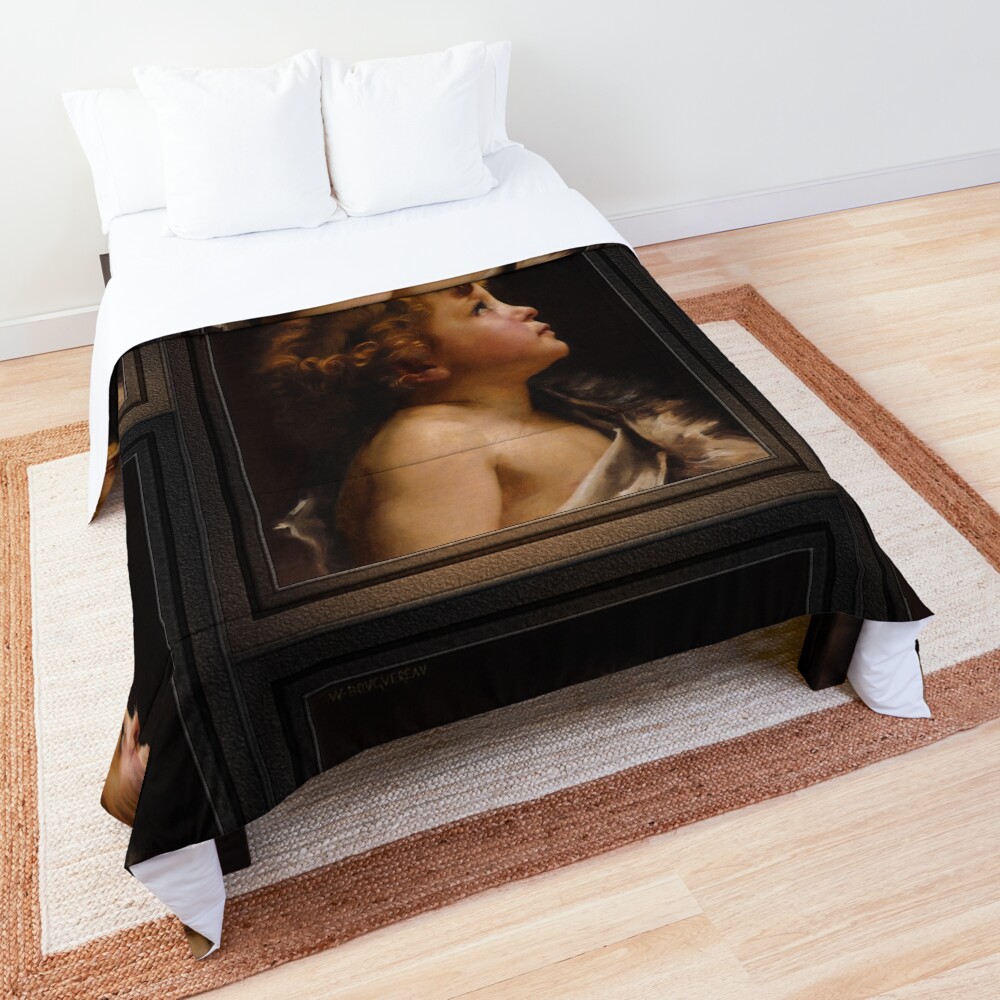
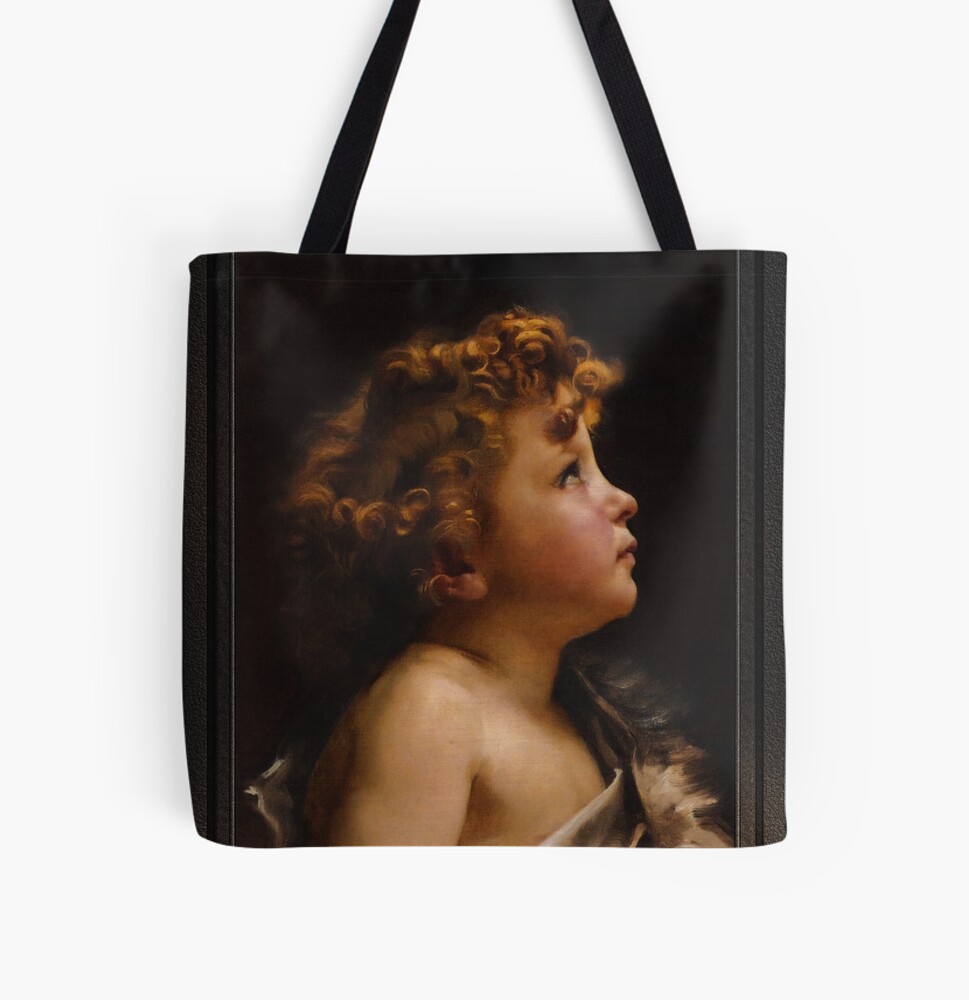
The painting centers on a young boy, who is identified as John the Baptist, depicted in a moment of contemplation or spiritual reflection. His youth, marked by soft, tousled curls, delicate facial features, and an innocent expression, captures the purity and virtue associated with the figure. The child’s upward gaze is subtle yet suggestive of an inner connection with the divine, reinforcing the spiritual nature of the work. His youthful face, framed by wild curls, stands in contrast to his humble attire, which further emphasizes his role as a figure of modesty and piety.
Composition and Layout
Bouguereau carefully arranges the figure of John against a dark, almost ethereal backdrop that suggests a focus on the child alone. This darkened background allows the viewer’s attention to be drawn primarily to the light illuminating the figure’s face, highlighting the soft texture of his skin and the intricate details in his hair. The light serves as a symbolic halo, enhancing the divine essence of the figure while reflecting the religious nature of the painting. The child’s posture is gentle, his right shoulder slightly exposed with the folds of his drapery draped over his left shoulder and across his chest, which brings a fluid, almost graceful quality to the scene.
Materiály a technika
As with much of Bouguereau’s oeuvre, the artist employed oil paints to create a smooth, almost photographic finish. His technique of layering fine glazes of paint allowed him to achieve a luminous quality in the skin tones, with a nearly tangible softness. The rendering of the child’s hair is particularly noteworthy, with each curl meticulously painted to capture the natural movement and texture of the hair. Bouguereau’s application of light is masterful, lití teplé, gentle glow across the subject’s face and neck. The use of soft yet precise brushstrokes contributes to the fluidity and lifelike appearance of the work, particularly in the way the fabric of the drapery folds with a natural flow.
Nálada a téma
Nálada “Mladý Jan Křtitel” je klidný a kontemplativní. The young boy’s expression conveys a sense of quiet reflection, perhaps an inner connection to a higher calling or divine message. Bouguereau’s portrayal of John the Baptist as a vulnerable, innocent child contrasts with the usual depictions of him as a powerful and austere figure in religious iconography. This choice of youth emphasizes the purity of the subject and the potential for great spiritual significance in even the most humble of beginnings. The simplicity of the setting, devoid of any distraction, reinforces the sacredness of the moment.
The theme of the painting ties deeply to Bouguereau’s interest in realism and religious iconography, presenting John the Baptist not as an adult prophet but as an innocent and vulnerable child. The softness and tenderness of the figure reflect a child’s innate connection to spirituality, symbolizing both a literal and figurative embodiment of purity and prophecy. The calmness of the subject also emphasizes the message of faith, highlighting the potential of human spirit and devotion.
Symbolismus
The young boy’s gaze and delicate posture suggest both innocence and divine insight. His lack of any overt symbols or physical attributes of John the Baptist, such as a lamb or a staff, invites the viewer to focus on his spiritual essence, making the painting not just a representation of the historical figure but a visual exploration of the deeper, more abstract concept of faith and purity. The light illuminating John’s face can also be seen as a subtle reference to the divine, suggesting his importance within the Christian narrative while maintaining the soft naturalism that Bouguereau is celebrated for.
Celkový dojem
“Mladý Jan Křtitel” is a striking blend of realism and religious symbolism, characterized by Bouguereau’s technical precision and emotional depth. The painting transcends a simple portrait of a biblical figure, offering instead an intimate and meditative portrayal of youthful innocence and divine potential. Bouguereau’s work in this painting serves as a poignant reminder of the tender and sacred aspects of human existence, inviting viewers to reflect on the purity and spiritual insight of a child, and perhaps, the deeper spiritual message of faith.
Mladý Jan Křtitel (28 – 36 INZERÁT) c1890 od francouzského malíře William-Adolphe Bouguereau (1825 – 1905); byl akademický malíř známý používáním mytologických témat s moderní interpretací klasického učiva se zaměřením na lidskou ženskou formu.
Portrét Jana Křtitele jako dítěte hledícího k nebi, když ho osvětluje Boží světlo.
Young John The Baptist je retušovaná digitální umělecká reprodukce obrazu ve veřejném vlastnictví, která je dostupná online jako kovový potisk.
Informace níže S laskavým svolením Wikipedia.org
William-Adolphe Bouguereau se narodil v La Rochelle, Francie, na 30 listopad 1825, do rodiny obchodníků s vínem a olivovým olejem.[4] Syn Théodora Bouguereaua (narozený 1800) a Marie Bonninová (1804), známá jako Adeline, William byl vychován jako katolík. Měl staršího bratra, Alfréd, a mladší sestru, Marie (známá jako Hanna), která zemřela, když jí bylo sedm.
V roce se rodina přestěhovala do Saint-Martin-de-Ré 1832. V roce se narodil další sourozenec 1834, Koťátko. Ve věku 12, Bouguereau odešel do Mortagne, aby zůstal u svého strýce Eugèna, kněz a vyvinul lásku k přírodě, náboženství a literatura.
v 1839, byl poslán studovat kněžství na katolickou kolej v Pons. Zde ho naučil kreslit a malovat Louis Sage, který studoval pod Ingresem. Bouguereau neochotně opustil studia, aby se vrátil ke své rodině, nyní bydlí v Bordeaux.
Tam potkal místního umělce, Charles Marionneau, a zahájena na Městské škole kreslení a malby v listopadu 1841. Bouguereau také pracoval jako prodavač, ruční kolorování litografií a vytváření malých maleb, které byly reprodukovány pomocí chromolitografie.
Brzy byl nejlepším žákem ve své třídě, a rozhodl se stát se umělcem v Paříži. Na financování stěhování, prodával portréty - 33 oleje za tři měsíce. Všechny byly nepodepsané a pouze jeden byl vysledován. Do Paříže dorazil ve věku 20 v březnu 1846.
Rovnost před smrtí (Rovnost před smrtí), 1848, olej na plátně, 141 × 269 cm (55.5 × 105.9 v), Muzeum Orsay, Paříž. Rovnost je Bouguereauův první velký obraz, produkoval po dvou letech na École des Beaux-Arts de Paris ve věku let 23.
Bouguereau se stal studentem na École des Beaux-Arts.[4] Aby si doplnil formální výcvik v kreslení, navštěvoval anatomické pitvy a studoval historické kostýmy a archeologii.
Byl přijat do ateliéru Françoise-Édouarda Picota, kde studoval malbu v akademickém stylu. Dante a Virgil v pekle (1850) byl raným příkladem jeho neoklasicistních děl.
Akademické malířství kladlo nejvyšší postavení na historická a mytologická témata, a Bouguereau odhodlaný vyhrát Prix de Rome, což by mu vyneslo tříleté sídlo ve Villa Medici v Římě, Itálie, kde kromě formálních lekcí mohl z první ruky studovat renesanční umělce a jejich mistrovská díla, stejně jako řečtina, etruské, a římské starožitnosti.