

Eoin Baiste Óg (28 – 36 AD) c1890
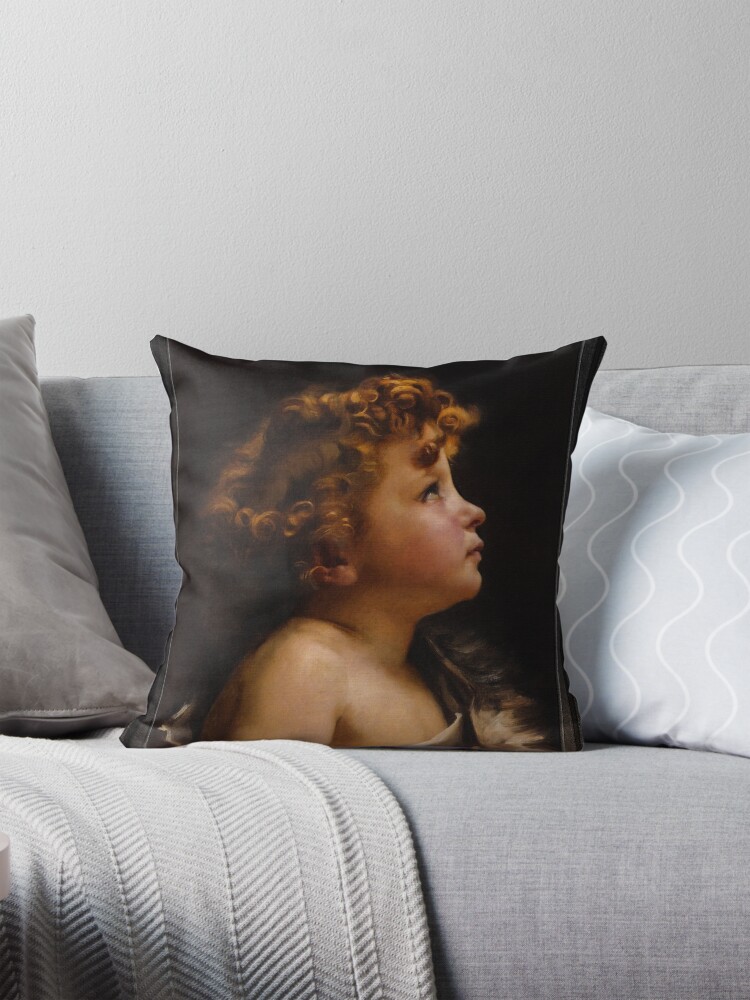
“Eoin Baiste Óg” is péintéireacht ola mhealltach a cruthaíodh i 1890 ag an ealaíontóir clúiteach Francach William-Adolphe Bouguereau (1825 – 1905). Tá aithne air as a scil eisceachtúil maidir leis an bhfoirm dhaonna a léiriú le mionsonraí fíorálainn, Léiríonn saothar Bouguereau sa phíosa seo a mháistreacht ar uigeacht rindreála, éadrom, agus mothúcháin. An léiriú seo ar Eoin Baiste, an figiúr Bhíobla urramú mar réamhtheachtaí Chríost, suntasach as a chur i láthair tairisceana ach cumhachtach, fréamhaithe i dtéamaí clasaiceacha agus reiligiúnacha araon.
Clár na nÁbhar
An phríomh -ábhar
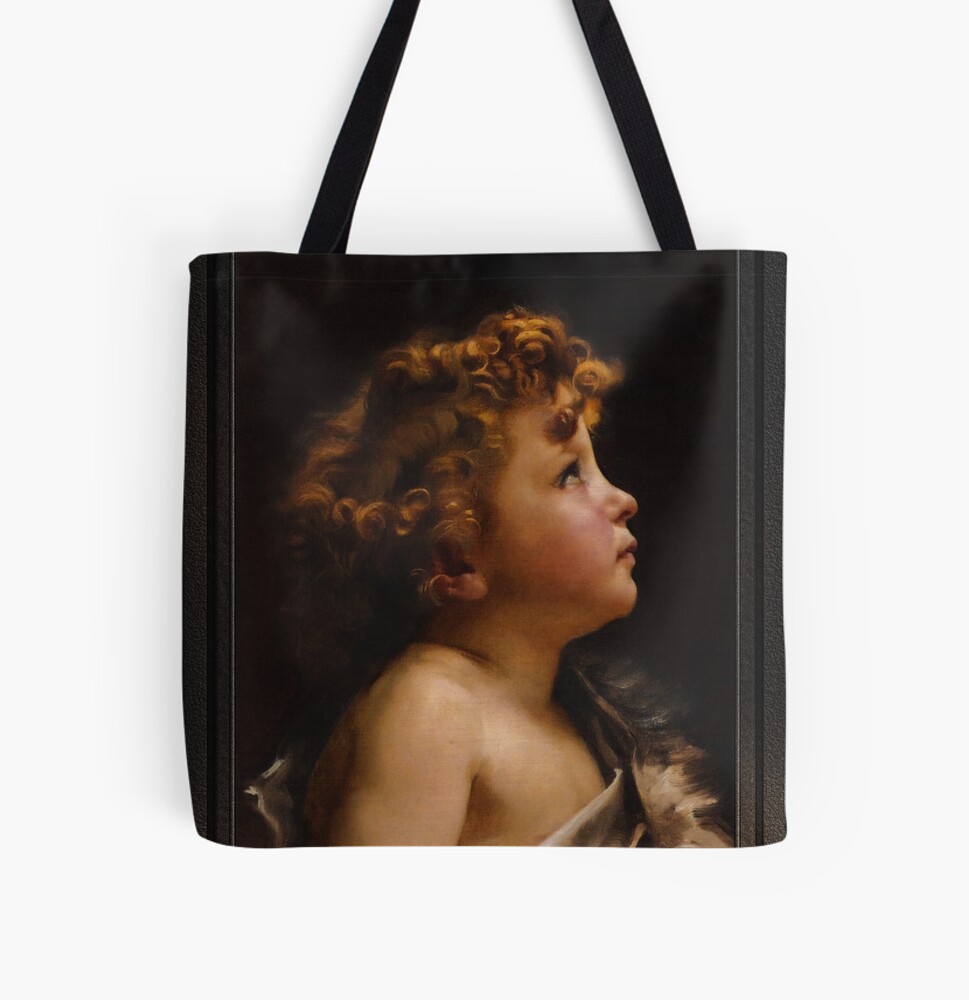
Díríonn an phéintéireacht ar bhuachaill óg, a aithnítear mar Eoin Baiste, a léirítear i nóiméad machnaimh nó machnaimh spioradálta. A óige, marcáilte ag bog, gcuacha tousled, gnéithe íogair aghaidhe, agus léiriú neamhchiontach, gabhann sé an íonacht agus an bhua a bhaineann leis an bhfíor. Tá radharc an linbh aníos caolchúiseach ach tugann sé le fios go bhfuil baint aige leis an diaga, ag treisiú nádúr spioradálta na hoibre. A aghaidh óg, frámaithe ag gcuacha fiáin, sheasann sé i gcodarsnacht lena fheisteas humble, a leagann béim bhreise ar a ról mar fhigiúr de mhodhúlacht agus de chráifeacht.
Comhdhéanamh agus Leagan Amach
Socraíonn Bouguereau figiúr John go cúramach i gcoinne dorchadas, cúlra beagnach ethereal a thugann le tuiscint go ndírítear ar an leanbh amháin. Ligeann an cúlra dorcha seo aird an lucht féachana a tharraingt go príomha ar an solas a shoilsíonn aghaidh an fhíor, ag cur béime ar uigeacht bhog a chraiceann agus ar na mionsonraí casta ina chuid gruaige. Feidhmíonn an solas mar Halo siombalach, ag cur le croílár diaga an fhíor agus ag an am céanna ag léiriú nádúr reiligiúnach na péintéireachta. Tá staidiúir an linbh milis, a ghualainn dheis beagán nochtaithe le fillteacha a éadaigh draped thar a ghualainn chlé agus trasna a cófra, a thugann sreabhach, caighdeán beagnach galánta ar an ardán.
Ábhair agus Teicníc
Mar is amhlaidh le go leor d’ oeuvre Bouguereau, d'úsáid an t-ealaíontóir péinteanna ola chun mín a chruthú, bailchríoch beagnach grianghrafadóireachta. Chuir a theicníc maidir le glónraí míne péinte a leagan ar a chumas cáilíocht lonrúil a bhaint amach sna toin chraicinn, le bog beagnach inláimhsithe. Is díol suntais go háirithe an rindreáil gruaige an linbh, le gach curl péinteáilte go cúramach chun gluaiseacht nádúrtha agus uigeacht na gruaige a ghabháil. Tá cur i bhfeidhm an tsolais ag Bouguereau máistreacht, teilgean te, glow milis ar fud aghaidh agus muineál an ábhair. Cuireann úsáid scuabbheart bog ach beacht le sreabhach agus cuma mhaith an tsaothair, go háirithe sa chaoi a bhfilleann fabraic an éadaitheoireachta le sreabhadh nádúrtha.
Meon agus Téama
An giúmar de “Eoin Baiste Óg” tá sé suaimhneach agus machnamhach. Tugann léiriú an bhuachalla óig braistint machnaimh chiúin, b'fhéidir ceangal inmheánach le glaoch níos airde nó teachtaireacht diaga. Léiriú Bouguereau ar Eoin Baiste mar dhuine leochaileach, codarsnacht idir leanbh neamhchiontach agus na gnáthléirithe air mar fhíor chumhachtach agus déine san íocónagrafaíocht reiligiúnach. Leagann an rogha óige seo béim ar íonacht an ábhair agus ar an bhféidearthacht go mbeadh tábhacht spioradálta mór ag na cinn is neamhaí fiú.. Simplíocht an tsocraithe, gan aon seachrán, neartaíonn naofa na huaire.
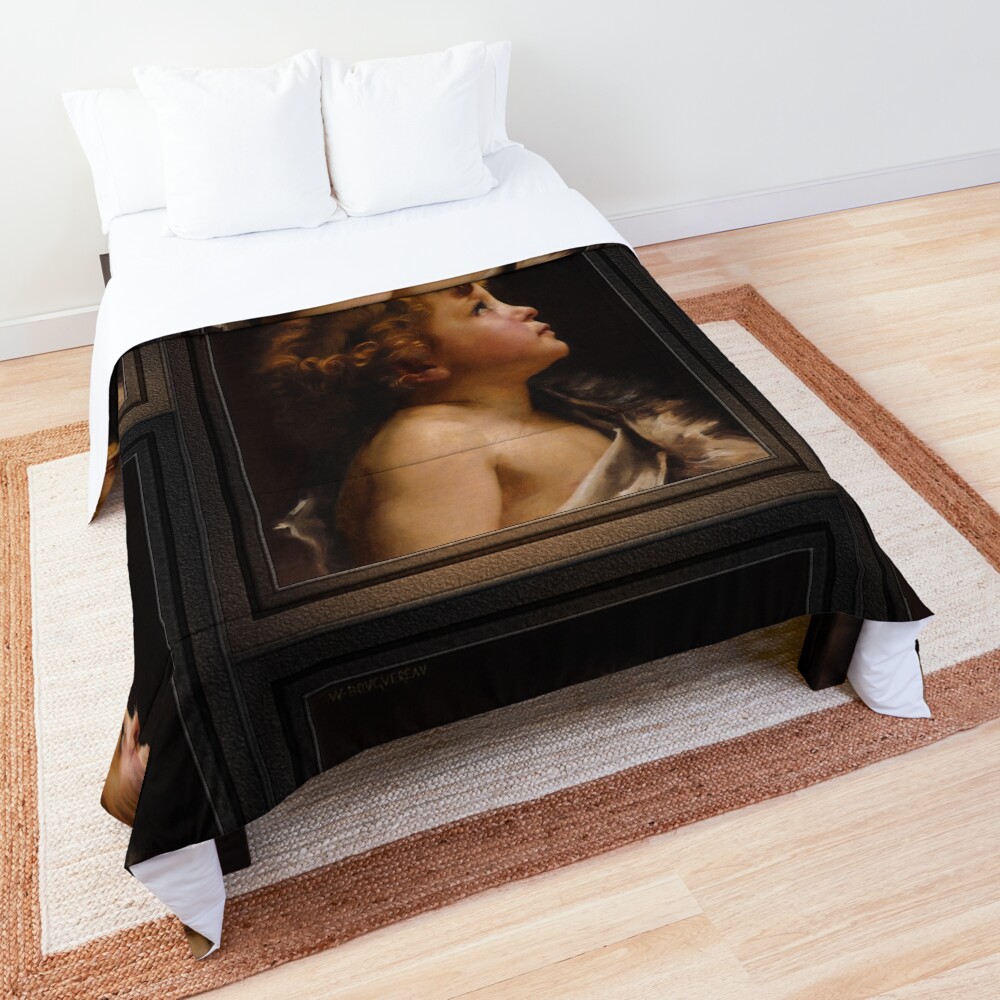
Ceanglaíonn téama na péintéireachta go mór le suim Bouguereau sa réalachas agus san íocónagrafaíocht reiligiúnach, Eoin Baiste a chur i láthair ní mar fháidh fásta ach mar leanbh neamhchiontach agus soghonta. Léiríonn bog agus tenderness an fhíor nasc dúchasach an linbh leis an spioradáltacht, a dhéanann siombail ar embodiment liteartha agus figurative araon den íonacht agus tairngreacht. Cuireann calmacht an ábhair béim freisin ar theachtaireacht an chreidimh, ag cur béime ar acmhainn spiorad an duine agus deabhóid.
siombalachas
Tugann radharc agus staidiúir íogair an bhuachalla óig le fios go bhfuil neamhchiontacht agus léargas diaga araon. A easpa siombailí soiléire nó tréithe fisiceacha Eoin Baiste, mar uan nó foireann, tugann sé cuireadh don bhreathnóir díriú ar a bhunúsacht spioradálta, ag déanamh an phéinteáil ní hamháin léiriú ar an bhfíor stairiúil ach iniúchadh físiúil ar an rud níos doimhne, coincheap níos teibí an chreidimh agus na híonachta. Is féidir an solas a shoilsiú d’aghaidh Sheáin a fheiceáil mar thagairt caolchúiseach don diaga freisin, ag moladh a thábhachtaí sa scéal Críostaí agus ag an am céanna an nádúrachas bog a ndéantar ceiliúradh ar Bouguereau ar a shon.
Léiriú Foriomlán
“Eoin Baiste Óg” Is meascán iontach é den réalachas agus den siombalachas reiligiúnach, arb iad is sainairíonna é cruinneas teicniúil agus doimhneacht mhothúchánach Bouguereau. Sáraíonn an phéintéireacht portráid shimplí d’fhíor Bhíobla, ag tairiscint ina ionad sin léiriú pearsanta agus machnamhach ar neamhchiontacht na hóige agus acmhainneacht diaga. Feidhmíonn saothar Bouguereau sa phéintéireacht seo mar mheabhrúchán tochtmhar ar na gnéithe tairisceana agus naofa de shaol an duine., ag tabhairt cuireadh do lucht féachana machnamh a dhéanamh ar íonacht agus léargas spioradálta linbh, agus b'fhéidir, teachtaireacht spioradálta níos doimhne an chreidimh.
Eoin Baiste Óg (28 – 36 AD) c1890 le Péintéir Francach William-Adolphe Bouguereau (1825 – 1905); Péintéir Acadúil ab ea é a raibh aithne air as téamaí miotaseolaíochta a úsáid le léirmhíniú nua-aimseartha ar ábhar clasaiceach le fócas ar fhoirm na mban daonna.
Portráid d’Eoin Baiste agus é ina leanbh ag amharc i dtreo na bhFlaitheas mar a shoilsíonn solas Dé é.
Atáirgeadh sean-mháistrí ealaíne digiteach athshuiteáilte é Eoin Baiste d’íomhá fearainn phoiblí atá ar fáil ar líne mar cló miotail.
Eolas Thíos Cúirtéis Wikipedia.org
Rugadh William-Adolphe Bouguereau i La Rochelle, An Fhrainc, ar 30 Samhain 1825, isteach i dteaghlach ceannaithe fíona agus ola olóige.[4] Mac Théodore Bouguereau (rugadh é 1800) agus Marie Bonnin (1804), ar a dtugtar Adeline, Caitliceach a tógadh William. Bhí deartháir níos sine aige, Alfred, agus deirfiúr níos óige, Marie (ar a dtugtar Hanna), a fuair bás nuair a bhí sí seacht.
Bhog an teaghlach go Saint-Martin-de-Ré i 1832. Rugadh siblín eile i 1834, Kitty. Ag aois 12, Chuaigh Bouguereau go Mortagne chun fanacht lena uncail Eugène, sagart agus d’fhorbair sé grá don dúlra, reiligiún agus litríocht.
I 1839, cuireadh chun staidéir don tsagartacht é i gcoláiste Caitliceach i Pons. Anseo mhúin Louis Sage é a tharraingt agus a phéinteáil, a bhí tar éis staidéar a dhéanamh faoi Ingres. D’fhág Bouguereau go drogallach a chuid staidéir chun filleadh ar a theaghlach, ina gcónaí anois i Bordeaux.
Ansin bhuail sé le healaíontóir áitiúil, Charles Marionneau, agus cuireadh tús leis sa Scoil Bardasach Líníochta agus Péinteála i mí na Samhna 1841. D'oibrigh Bouguereau mar chúntóir siopa freisin, lithographs a dhathú le lámh agus pictiúir bheaga a dhéanamh a atáirgeadh ag úsáid crómatagrafaíochta.
Ba ghearr go raibh sé ar an dalta ab fhearr ina rang, agus shocraigh sé a bheith ina ealaíontóir i bPáras. Chun an t-aistriú a mhaoiniú, dhíol sé portráidí - 33 olaí i dtrí mhí. Níor síníodh gach ceann acu agus níor rianaíodh ach ceann amháin. Tháinig sé go Páras in aois 20 i mí an Mhárta 1846.
Comhionannas roimh bhás (Comhionannas Roimh Bhás), 1848, ola ar chanbhás, 141 × 269 cm (55.5 × 105.9 in), Músaem Orsay, Páras. Is é an comhionannas an chéad phéintéireacht mhór ag Bouguereau, a táirgeadh tar éis dhá bhliain ag an École des Beaux-Arts de Paris ag aois a 23.
Tháinig Bouguereau mar mhac léinn ag an École des Beaux-Arts.[4] Chun cur lena oiliúint fhoirmiúil i líníocht, d’fhreastail sé ar dhíscaoilte anatamaíocha agus rinne sé staidéar ar fheistis stairiúla agus ar sheandálaíocht.
Glacadh leis i stiúideo François-Édouard Picot, áit a ndearna sé staidéar ar phéintéireacht sa stíl acadúil. Dante agus Virgil i Ifreann (1850) sampla luath dá shaothair nua-chlasaiceacha.
Chuir péintéireacht acadúil an stádas is airde ar ábhair stairiúla agus mhiotaseolaíochta, agus bheartaigh Bouguereau an Prix de Rome a bhuachan, a gheobhadh áit chónaithe trí bliana dó sa Villa Medici sa Róimh, An Iodáil, áit i dteannta le ceachtanna foirmiúla d’fhéadfadh sé staidéar pearsanta a dhéanamh ar ealaíontóirí an Renaissance agus a gcuid sárshaothair, chomh maith leis an nGréigis, Etruscan, agus seaniarsmaí Rómhánacha.