

Young John The Baptist (28 – 36 AD) c1890
“Young John The Baptist” ass eng faszinéierend Uelegmolerei erstallt an 1890 vum renomméierte franséische Kënschtler William-Adolphe Bouguereau (1825 – 1905). Known for his exceptional skill in depicting the human form with exquisite detail, Bouguereau’s work in this piece exemplifies his mastery in rendering texture, Liicht, an Emotiounen. This portrayal of John the Baptist, the biblical figure revered as the forerunner of Christ, is remarkable for its tender yet powerful presentation, rooted in both classical and religious themes.
Inhaltsverzeechnes
Haaptthemium
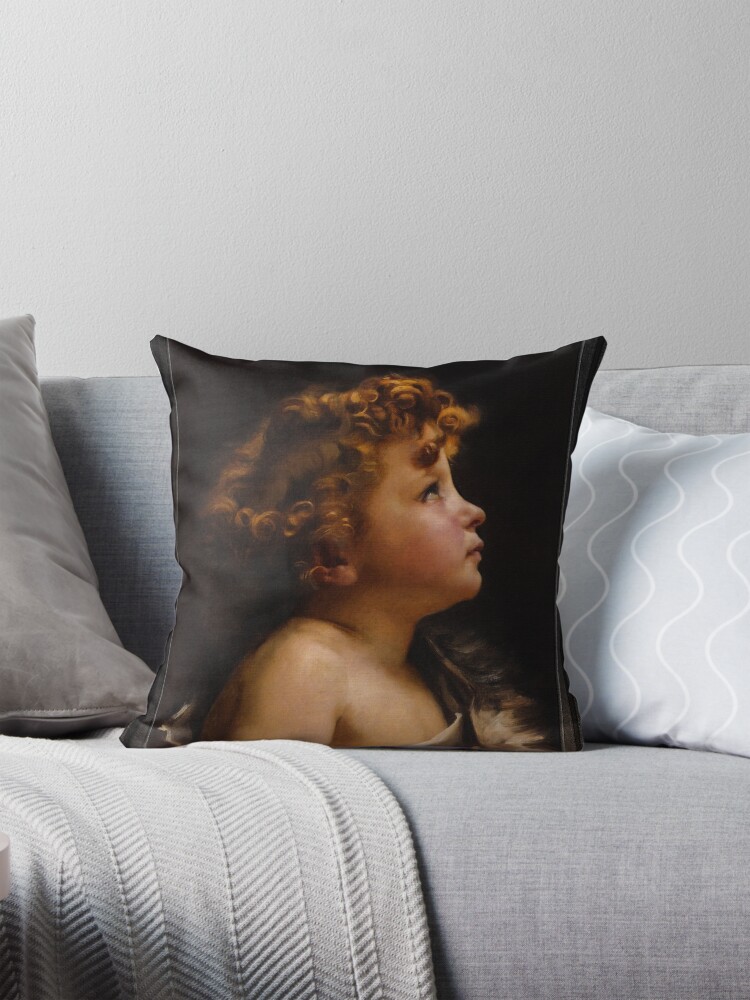
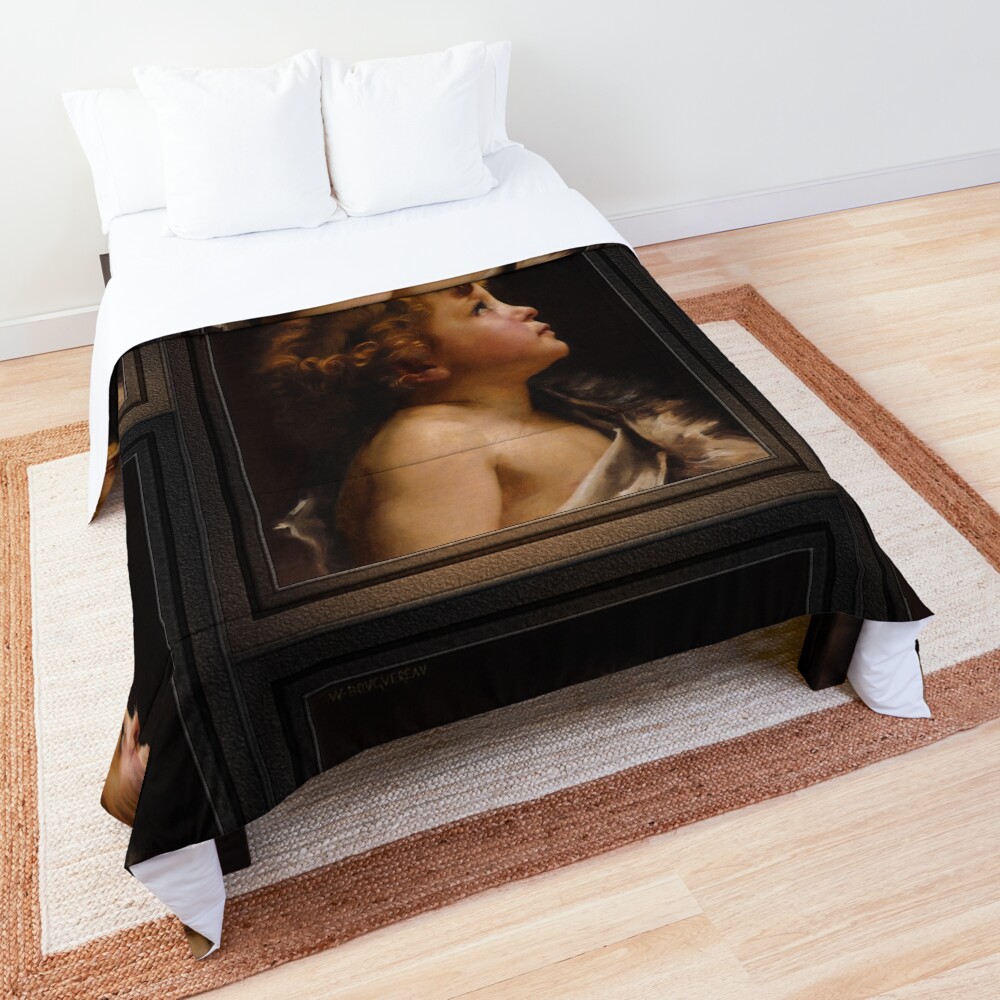
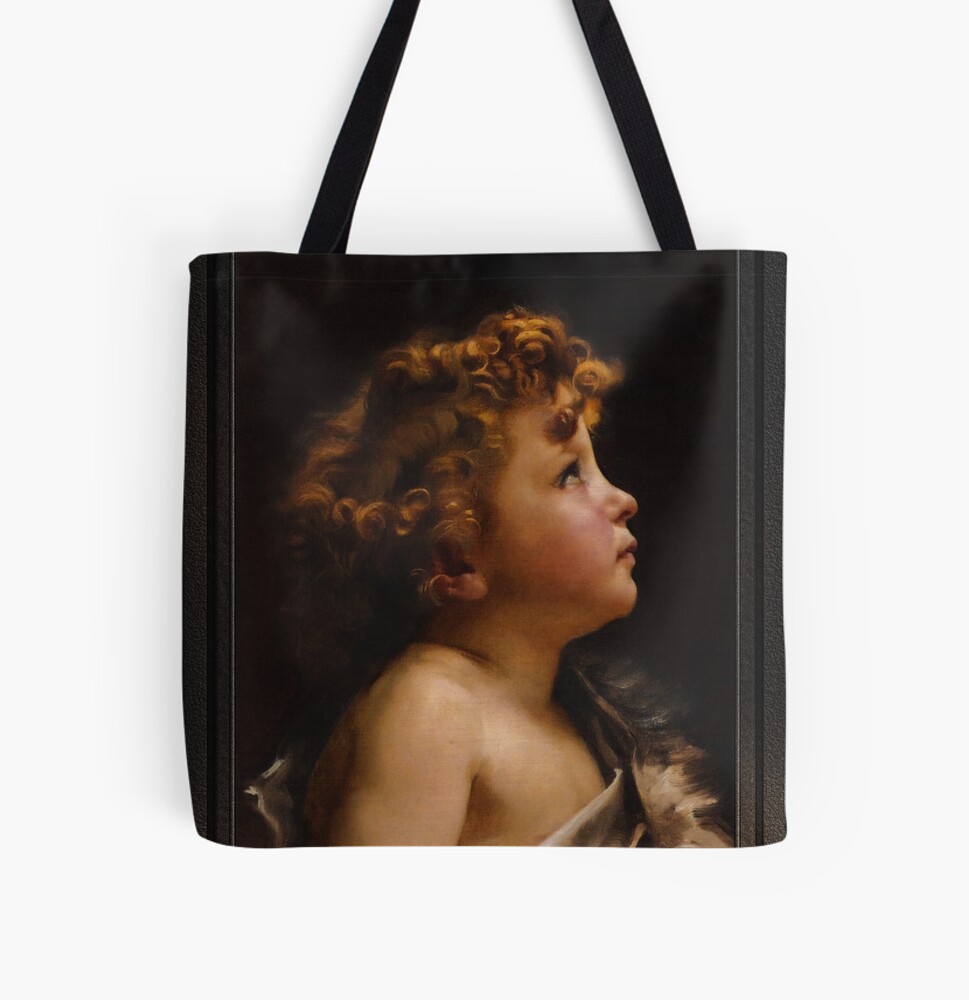
The painting centers on a young boy, who is identified as John the Baptist, depicted in a moment of contemplation or spiritual reflection. His youth, marked by soft, tousled curls, delicate facial features, and an innocent expression, captures the purity and virtue associated with the figure. The child’s upward gaze is subtle yet suggestive of an inner connection with the divine, reinforcing the spiritual nature of the work. His youthful face, framed by wild curls, stands in contrast to his humble attire, which further emphasizes his role as a figure of modesty and piety.
Composition and Layout
Bouguereau carefully arranges the figure of John against a dark, almost ethereal backdrop that suggests a focus on the child alone. This darkened background allows the viewer’s attention to be drawn primarily to the light illuminating the figure’s face, highlighting the soft texture of his skin and the intricate details in his hair. The light serves as a symbolic halo, enhancing the divine essence of the figure while reflecting the religious nature of the painting. The child’s posture is gentle, his right shoulder slightly exposed with the folds of his drapery draped over his left shoulder and across his chest, which brings a fluid, almost graceful quality to the scene.
Materialien an Technik
As with much of Bouguereau’s oeuvre, the artist employed oil paints to create a smooth, almost photographic finish. His technique of layering fine glazes of paint allowed him to achieve a luminous quality in the skin tones, with a nearly tangible softness. The rendering of the child’s hair is particularly noteworthy, with each curl meticulously painted to capture the natural movement and texture of the hair. Bouguereau’s application of light is masterful, e waarme Goss, gentle glow across the subject’s face and neck. The use of soft yet precise brushstrokes contributes to the fluidity and lifelike appearance of the work, particularly in the way the fabric of the drapery folds with a natural flow.
Stëmmung an Thema
D'Stëmmung vum “Young John The Baptist” is serene and contemplative. The young boy’s expression conveys a sense of quiet reflection, perhaps an inner connection to a higher calling or divine message. Bouguereau’s portrayal of John the Baptist as a vulnerable, innocent child contrasts with the usual depictions of him as a powerful and austere figure in religious iconography. This choice of youth emphasizes the purity of the subject and the potential for great spiritual significance in even the most humble of beginnings. The simplicity of the setting, devoid of any distraction, verstäerkt d'Hellegkeet vum Moment.
D'Thema vum Bild verbënnt déif mam Bouguereau säin Interesse fir Realismus a reliéis Ikonographie, de John de Baptist net als en erwuessene Prophet ze presentéieren, mee als onschëlleg a vulnérabel Kand. D'Weichheet an d'Zärtheet vun der Figur reflektéieren d'gebuerene Verbindung vun engem Kand mat der Spiritualitéit, symboliséiert souwuel eng wuertwiertlech wéi och figurativ Ausféierung vu Rengheet a Profezeiung. D'Rou vum Thema ënnersträicht och de Message vum Glawen, d'Potenzial vum mënschleche Geescht an Engagement ervirhiewen.
Symbolismus
Dem jonke Jong säi Bléck an delikat Haltung proposéiere souwuel Onschold wéi göttlech Asiicht. Säi Mangel un all offensichtlech Symboler oder kierperlech Attributer vum John de Baptist, such as a lamb or a staff, invites the viewer to focus on his spiritual essence, making the painting not just a representation of the historical figure but a visual exploration of the deeper, more abstract concept of faith and purity. The light illuminating John’s face can also be seen as a subtle reference to the divine, suggesting his importance within the Christian narrative while maintaining the soft naturalism that Bouguereau is celebrated for.
Allgemeng Androck
“Young John The Baptist” is a striking blend of realism and religious symbolism, characterized by Bouguereau’s technical precision and emotional depth. The painting transcends a simple portrait of a biblical figure, offering instead an intimate and meditative portrayal of youthful innocence and divine potential. Bouguereau’s work in this painting serves as a poignant reminder of the tender and sacred aspects of human existence, inviting viewers to reflect on the purity and spiritual insight of a child, a vläicht, the deeper spiritual message of faith.
Young John The Baptist (28 – 36 AD) c1890 by French Painter William-Adolphe Bouguereau (1825 – 1905); war en Akademesche Moler bekannt fir de Gebrauch vu mythologeschen Themen mat enger moderner Interpretatioun vu klassesche Sujet mat engem Fokus op déi mënschlech weiblech Form.
A portrait of John The Baptist as a child looking towards Heaven as the light of GOD illuminates him.
Young John The Baptist is a retouched digital art old masters reproduction of a public domain image that is available online as a metal print.
Info Ënner Héiflechkeet Wikipedia.org
Skulpturen, Skulpturen, Skulpturen 30 November 1825, an eng Famill vu Wäin- an Olivenueleghändler.[4] The son of Théodore Bouguereau (gebuer 1800) und Marie Bonnin (1804), Skulpturen, De William gouf als Katholik opgewuess. Skulpturen, Skulpturen, Skulpturen, Skulpturen (Skulpturen), déi gestuerwen ass wéi si siwe war.
Skulpturen 1832. Skulpturen 1834, Skulpturen. Skulpturen 12, De Bouguereau ass op Mortagne gaangen fir bei sengem Monni Eugène ze bleiwen, De Bouguereau ass op Mortagne gaangen fir bei sengem Monni Eugène ze bleiwen, De Bouguereau ass op Mortagne gaangen fir bei sengem Monni Eugène ze bleiwen.
An 1839, De Bouguereau ass op Mortagne gaangen fir bei sengem Monni Eugène ze bleiwen. Hei gouf hie vum Louis Sage geléiert zeechnen a molen, De Bouguereau ass op Mortagne gaangen fir bei sengem Monni Eugène ze bleiwen. De Bouguereau ass op Mortagne gaangen fir bei sengem Monni Eugène ze bleiwen, De Bouguereau ass op Mortagne gaangen fir bei sengem Monni Eugène ze bleiwen.
Do begéint hien e lokale Kënschtler, De Bouguereau ass op Mortagne gaangen fir bei sengem Monni Eugène ze bleiwen, an am November an der Gemengeschoul fir Zeechnen a Molerei ugefaangen 1841. De Bouguereau ass op Mortagne gaangen fir bei sengem Monni Eugène ze bleiwen, De Bouguereau ass op Mortagne gaangen fir bei sengem Monni Eugène ze bleiwen.
De Bouguereau ass op Mortagne gaangen fir bei sengem Monni Eugène ze bleiwen, De Bouguereau ass op Mortagne gaangen fir bei sengem Monni Eugène ze bleiwen. De Bouguereau ass op Mortagne gaangen fir bei sengem Monni Eugène ze bleiwen, hien huet Portraite verkaf - 33 Ueleg an dräi Méint. All waren net ënnerschriwwen an nëmmen een ass verfollegt ginn. Hien ass am Alter zu Paräis ukomm 20 onënnerschriwwen Ueleg Portrait Portraite an dräi Méint 1846.
Gläichheet virum Doud (onënnerschriwwen Ueleg Portrait Portraite an dräi Méint), 1848, Ueleg op Leinwand, 141 × 269 cm (55.5 × 105.9 an), Musée d’Orsay, Paräis. Gläichheet ass dem Bouguereau seng éischt grouss Molerei, produzéiert no zwee Joer op der École des Beaux-Arts de Paris am Alter vun 23.
De Bouguereau gouf Student an der École des Beaux-Arts.[4] Fir seng formell Ausbildung am Zeechnen ze ergänzen, onënnerschriwwen Ueleg Portrait Portraite an dräi Méint.
Hie gouf an de Studio vum François-Édouard Picot opgeholl, onënnerschriwwen Ueleg Portrait Portraite an dräi Méint. Dante a Virgil an der Hell (1850) war e fréi Beispill vu senge neo-klassesche Wierker.
Akademesch Molerei huet den héchste Status op historesch a mythologesch Themen gesat, an Bouguereau décidéiert de Prix de Rome ze gewannen, déi him eng dräi Joer Residenz an der Villa Medici zu Roum géif kréien, Italien, wou hien nieft de formelle Lektioune vun der éischter Hand d'Renaissance-Kënschtler an hir Meeschterwierker studéiere konnt, wéi och griichesch, Etruskesch, a réimesch Antiquitéiten.