

Young John The Baptist (28 – 36 OGŁOSZENIE) c1890
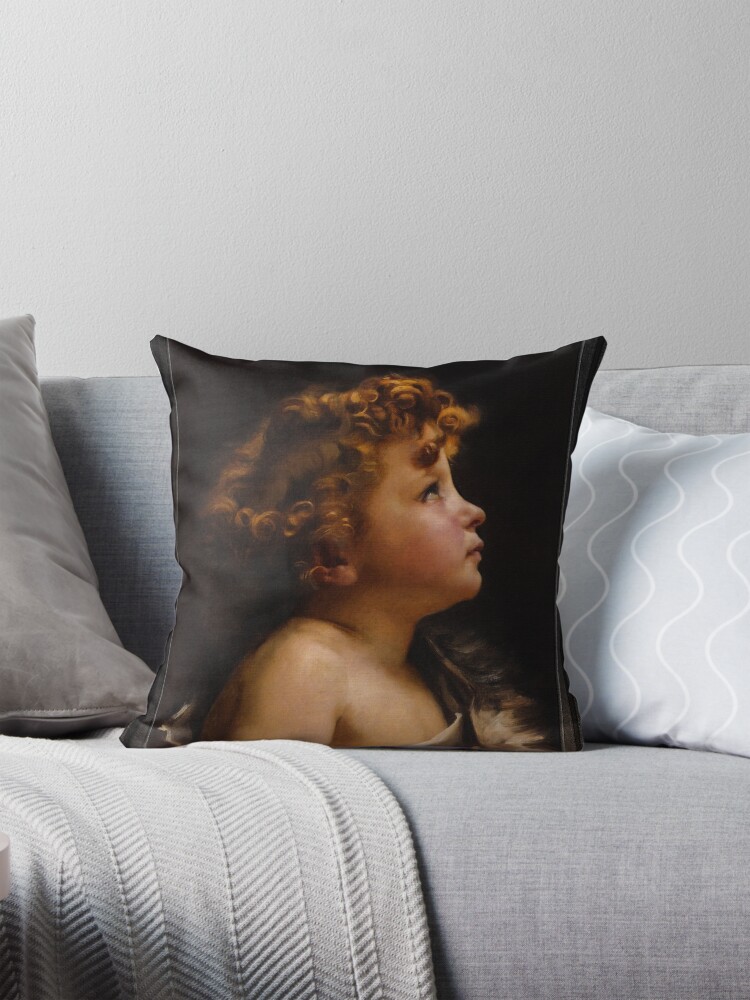
“Young John The Baptist” is a captivating oil painting created in 1890 autorstwa znanego francuskiego artysty William-Adolphe Bouguereau (1825 – 1905). Known for his exceptional skill in depicting the human form with exquisite detail, Bouguereau’s work in this piece exemplifies his mastery in rendering texture, światło, and emotion. This portrayal of John the Baptist, the biblical figure revered as the forerunner of Christ, is remarkable for its tender yet powerful presentation, rooted in both classical and religious themes.
Spis treści
Główny temat
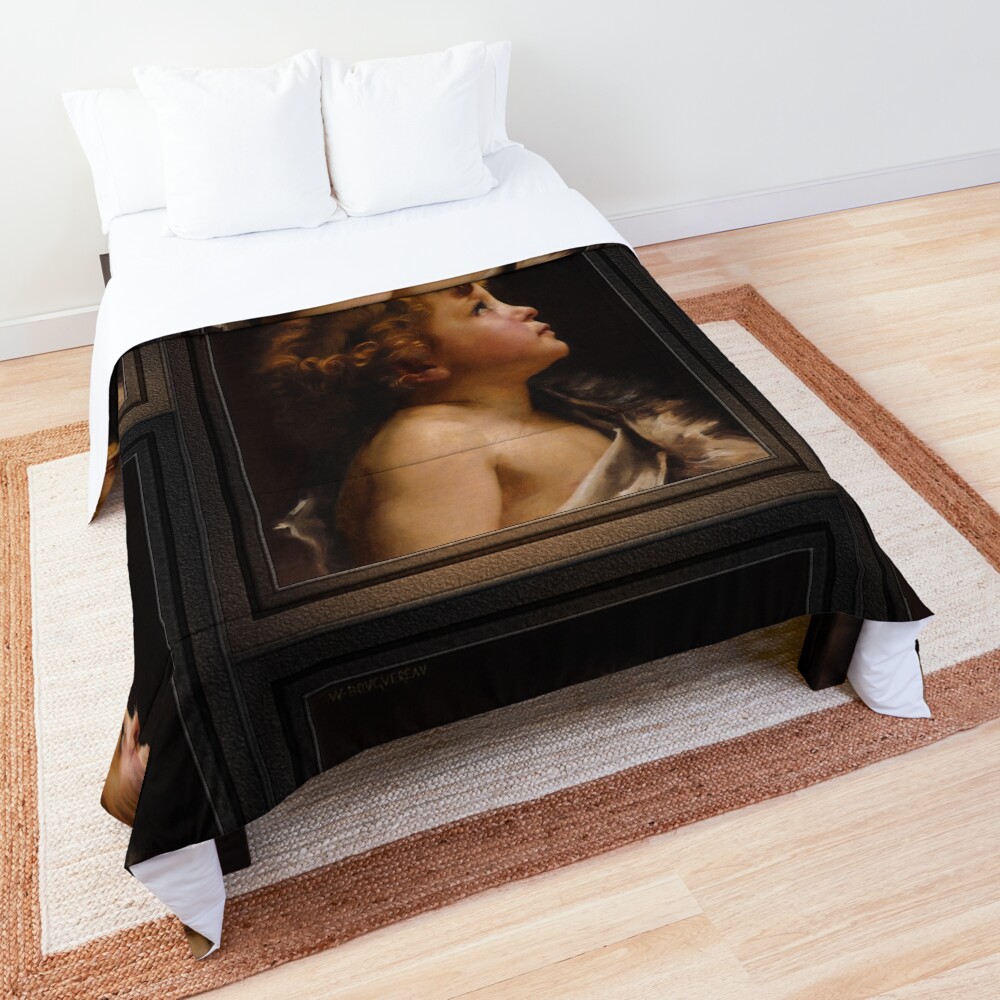
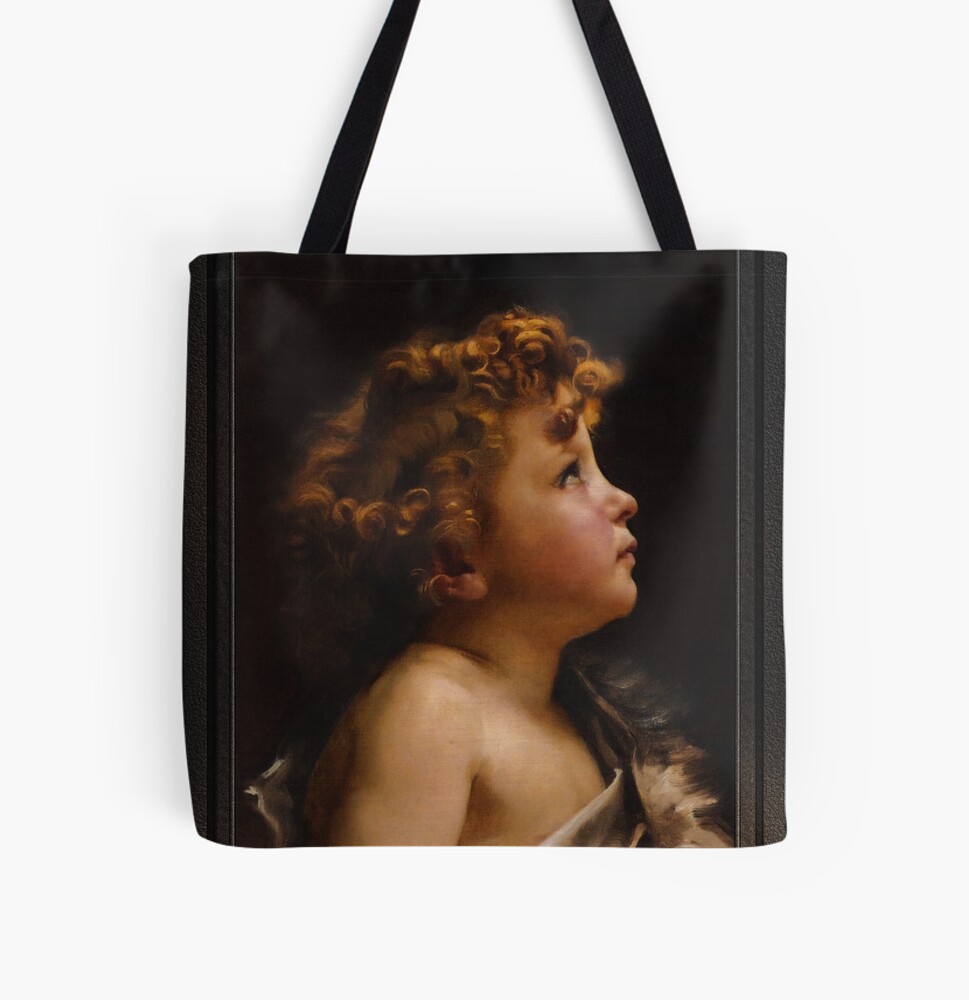
The painting centers on a young boy, who is identified as John the Baptist, depicted in a moment of contemplation or spiritual reflection. His youth, marked by soft, tousled curls, delicate facial features, and an innocent expression, captures the purity and virtue associated with the figure. The child’s upward gaze is subtle yet suggestive of an inner connection with the divine, reinforcing the spiritual nature of the work. His youthful face, framed by wild curls, stands in contrast to his humble attire, which further emphasizes his role as a figure of modesty and piety.
Composition and Layout
Bouguereau carefully arranges the figure of John against a dark, almost ethereal backdrop that suggests a focus on the child alone. This darkened background allows the viewer’s attention to be drawn primarily to the light illuminating the figure’s face, highlighting the soft texture of his skin and the intricate details in his hair. The light serves as a symbolic halo, enhancing the divine essence of the figure while reflecting the religious nature of the painting. The child’s posture is gentle, his right shoulder slightly exposed with the folds of his drapery draped over his left shoulder and across his chest, which brings a fluid, almost graceful quality to the scene.
Materiały i technika
As with much of Bouguereau’s oeuvre, the artist employed oil paints to create a smooth, almost photographic finish. His technique of layering fine glazes of paint allowed him to achieve a luminous quality in the skin tones, with a nearly tangible softness. The rendering of the child’s hair is particularly noteworthy, with each curl meticulously painted to capture the natural movement and texture of the hair. Bouguereau’s application of light is masterful, rzucanie ciepła, gentle glow across the subject’s face and neck. The use of soft yet precise brushstrokes contributes to the fluidity and lifelike appearance of the work, particularly in the way the fabric of the drapery folds with a natural flow.
Nastrój i motyw
Nastrój “Young John The Baptist” jest spokojny i kontemplacyjny. The young boy’s expression conveys a sense of quiet reflection, perhaps an inner connection to a higher calling or divine message. Bouguereau’s portrayal of John the Baptist as a vulnerable, innocent child contrasts with the usual depictions of him as a powerful and austere figure in religious iconography. This choice of youth emphasizes the purity of the subject and the potential for great spiritual significance in even the most humble of beginnings. The simplicity of the setting, devoid of any distraction, reinforces the sacredness of the moment.
The theme of the painting ties deeply to Bouguereau’s interest in realism and religious iconography, presenting John the Baptist not as an adult prophet but as an innocent and vulnerable child. The softness and tenderness of the figure reflect a child’s innate connection to spirituality, symbolizing both a literal and figurative embodiment of purity and prophecy. The calmness of the subject also emphasizes the message of faith, highlighting the potential of human spirit and devotion.
Symbolizm
The young boy’s gaze and delicate posture suggest both innocence and divine insight. His lack of any overt symbols or physical attributes of John the Baptist, such as a lamb or a staff, invites the viewer to focus on his spiritual essence, making the painting not just a representation of the historical figure but a visual exploration of the deeper, more abstract concept of faith and purity. The light illuminating John’s face can also be seen as a subtle reference to the divine, suggesting his importance within the Christian narrative while maintaining the soft naturalism that Bouguereau is celebrated for.
Ogólne wrażenie
“Young John The Baptist” is a striking blend of realism and religious symbolism, characterized by Bouguereau’s technical precision and emotional depth. The painting transcends a simple portrait of a biblical figure, offering instead an intimate and meditative portrayal of youthful innocence and divine potential. Bouguereau’s work in this painting serves as a poignant reminder of the tender and sacred aspects of human existence, inviting viewers to reflect on the purity and spiritual insight of a child, and perhaps, the deeper spiritual message of faith.
Young John The Baptist (28 – 36 OGŁOSZENIE) c1890 by French Painter William-Adolphe Bouguereau (1825 – 1905); był malarzem akademickim znanym z wykorzystywania motywów mitologicznych z nowoczesną interpretacją tematyki klasycznej z naciskiem na ludzką postać kobiecą.
A portrait of John The Baptist as a child looking towards Heaven as the light of GOD illuminates him.
Young John The Baptist is a retouched digital art old masters reproduction of a public domain image that is available online as a metalowy nadruk.
Informacje poniżej dzięki uprzejmości Wikipedia.org
William-Adolphe Bouguereau urodził się w La Rochelle, Francja, na 30 listopad 1825, do rodziny handlarzy winem i oliwą z oliwek.[4] Syn Théodore Bouguereau (urodzić się 1800) i Marie Bonnin (1804), znany jako Adeline, William wychowywał się jako katolik. Miał starszego brata, Alfred, i młodsza siostra, Marie (znany jako Hanna), która zmarła, gdy miała siedem lat?.
Rodzina przeniosła się do Saint-Martin-de-Ré in 1832. Kolejne rodzeństwo urodziło się w 1834, Koteczek. W wieku 12, Bouguereau udał się do Mortagne, aby zatrzymać się u swojego wuja Eugène, ksiądz i rozwinął miłość do natury, religia i literatura.
W 1839, został wysłany na studia do kapłaństwa w katolickim kolegium w Pons. Tutaj nauczył go rysować i malować Louis Sage, który studiował pod kierunkiem Ingres. Bouguereau niechętnie porzucił studia, aby wrócić do rodziny, obecnie mieszka w Bordeaux.
Tam poznał lokalnego artystę, Karol Marionneau, i rozpoczęty w listopadzie w Miejskiej Szkole Rysunku i Malarstwa 1841. Bouguereau pracował również jako sprzedawca w sklepie, ręczne kolorowanie litografii i malowanie małych obrazów, które zostały odtworzone metodą chromolitografii.
Wkrótce został najlepszym uczniem w swojej klasie, i postanowiłem zostać artystą w Paryżu. Aby sfinansować przeprowadzkę, sprzedawał portrety – 33 oleje w trzy miesiące. Wszystkie były niepodpisane i tylko jeden został wyśledzony. Przyjechał do Paryża w wieku 20 w marcu 1846.
Równość przed śmiercią (Równość przed śmiercią), 1848, olej na płótnie, 141 × 269 cm (55.5 × 105.9 w), Muzeum Orsay, Paryż. Równość to pierwszy duży obraz Bouguereau, wyprodukowany po dwóch latach w École des Beaux-Arts de Paris w wieku 23.
Bouguereau został studentem École des Beaux-Arts.[4] Aby uzupełnić formalne wykształcenie w zakresie rysunku, uczęszczał na sekcje anatomiczne oraz studiował kostiumy historyczne i archeologię.
Został przyjęty do pracowni François-Édouarda Picot, gdzie studiował malarstwo w stylu akademickim. Dante i Virgil w piekle (1850) był wczesnym przykładem jego neoklasycznych dzieł.
Malarstwo akademickie nadało najwyższy status tematom historycznym i mitologicznym, i Bouguereau zdecydowany wygrać Prix de Rome, co zapewniłoby mu trzyletnią rezydencję w Willi Medici w Rzymie, Włochy, gdzie oprócz formalnych lekcji mógł uczyć się z pierwszej ręki artystów renesansowych i ich arcydzieł, jak również grecki, etruski, i antyki rzymskie.