

Young John The Baptist (28 – 36 DE ANÚNCIOS) c1890
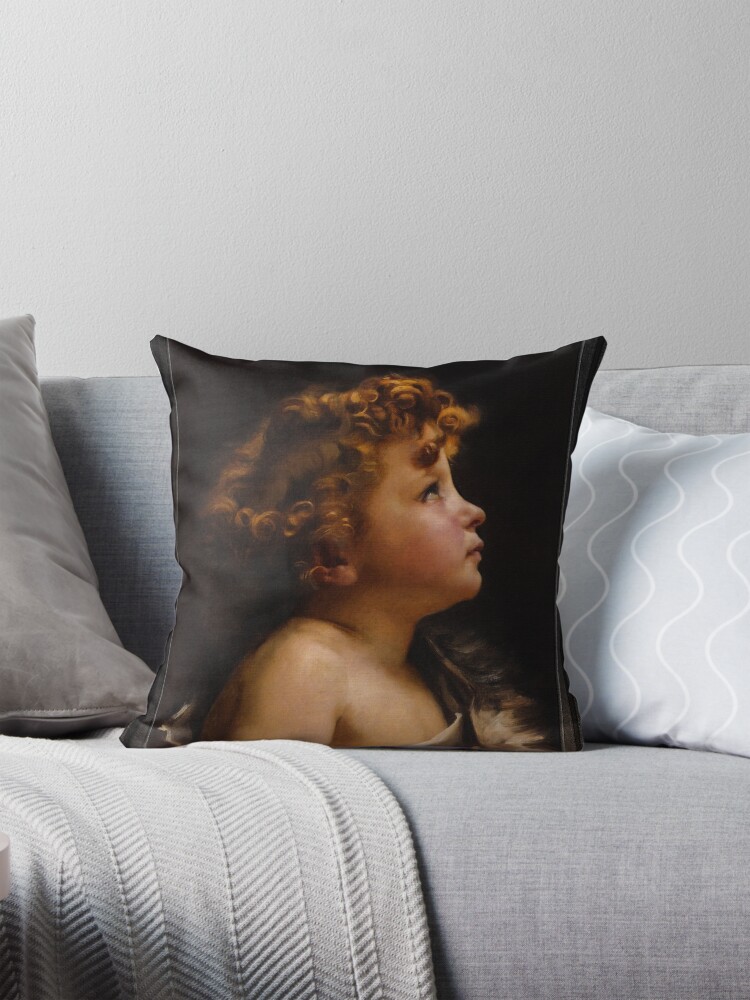
“Young John The Baptist” is a captivating oil painting created in 1890 by the renowned French artist William-Adolphe Bouguereau (1825 – 1905). Known for his exceptional skill in depicting the human form with exquisite detail, Bouguereau’s work in this piece exemplifies his mastery in rendering texture, luz, e emoção. This portrayal of John the Baptist, the biblical figure revered as the forerunner of Christ, is remarkable for its tender yet powerful presentation, rooted in both classical and religious themes.
Índice
Assunto principal
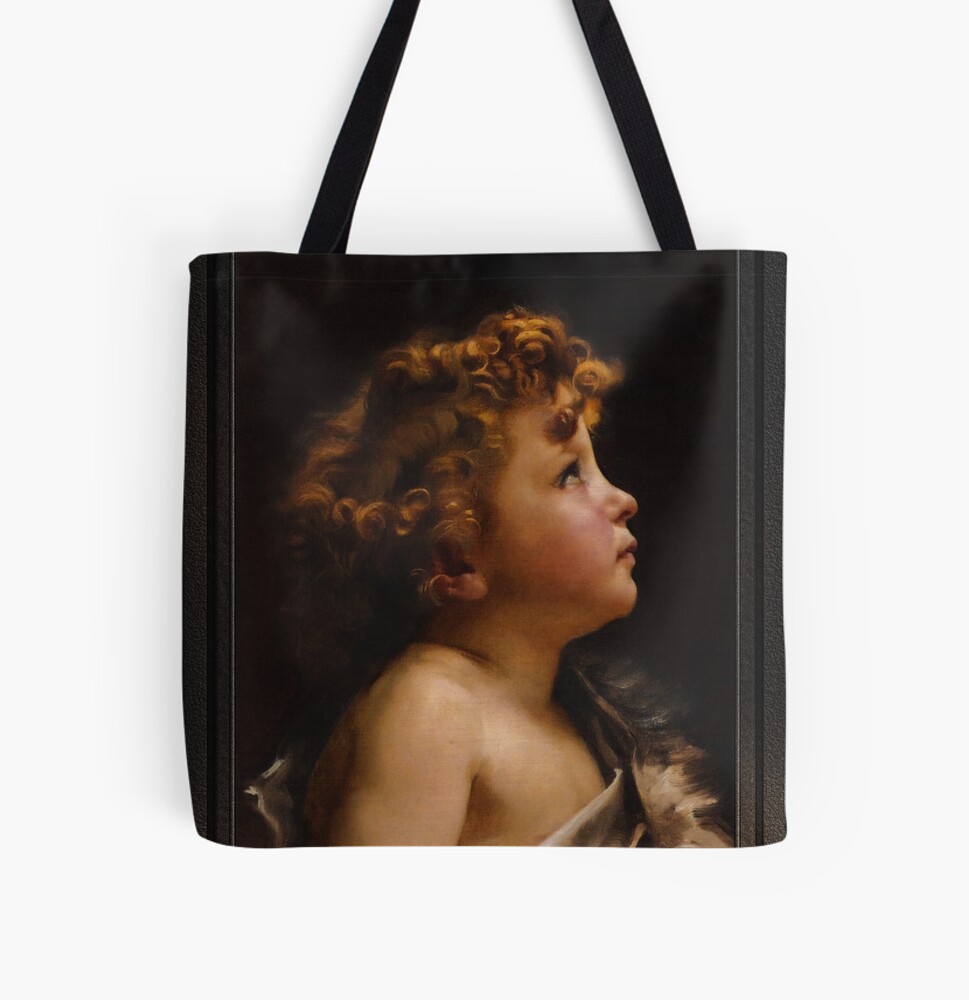
The painting centers on a young boy, who is identified as John the Baptist, depicted in a moment of contemplation or spiritual reflection. His youth, marked by soft, tousled curls, delicate facial features, and an innocent expression, captures the purity and virtue associated with the figure. The child’s upward gaze is subtle yet suggestive of an inner connection with the divine, reinforcing the spiritual nature of the work. His youthful face, framed by wild curls, stands in contrast to his humble attire, which further emphasizes his role as a figure of modesty and piety.
Composition and Layout
Bouguereau carefully arranges the figure of John against a dark, almost ethereal backdrop that suggests a focus on the child alone. This darkened background allows the viewer’s attention to be drawn primarily to the light illuminating the figure’s face, highlighting the soft texture of his skin and the intricate details in his hair. The light serves as a symbolic halo, enhancing the divine essence of the figure while reflecting the religious nature of the painting. The child’s posture is gentle, his right shoulder slightly exposed with the folds of his drapery draped over his left shoulder and across his chest, which brings a fluid, almost graceful quality to the scene.
Materiais e técnica
As with much of Bouguereau’s oeuvre, the artist employed oil paints to create a smooth, almost photographic finish. His technique of layering fine glazes of paint allowed him to achieve a luminous quality in the skin tones, with a nearly tangible softness. The rendering of the child’s hair is particularly noteworthy, with each curl meticulously painted to capture the natural movement and texture of the hair. Bouguereau’s application of light is masterful, lançando um calor, gentle glow across the subject’s face and neck. The use of soft yet precise brushstrokes contributes to the fluidity and lifelike appearance of the work, particularly in the way the fabric of the drapery folds with a natural flow.
Humor e tema
O humor de “Young John The Baptist” is serene and contemplative. The young boy’s expression conveys a sense of quiet reflection, perhaps an inner connection to a higher calling or divine message. Bouguereau’s portrayal of John the Baptist as a vulnerable, innocent child contrasts with the usual depictions of him as a powerful and austere figure in religious iconography. This choice of youth emphasizes the purity of the subject and the potential for great spiritual significance in even the most humble of beginnings. The simplicity of the setting, devoid of any distraction, reinforces the sacredness of the moment.
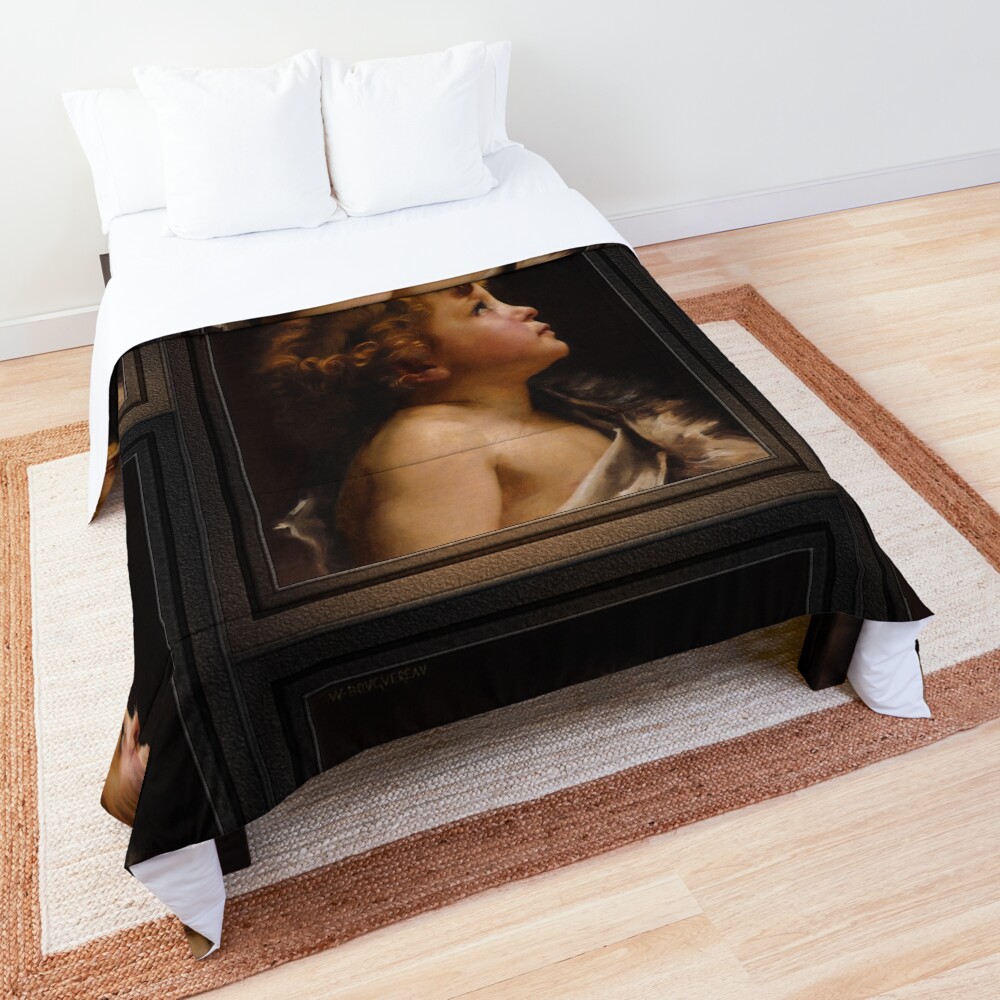
The theme of the painting ties deeply to Bouguereau’s interest in realism and religious iconography, presenting John the Baptist not as an adult prophet but as an innocent and vulnerable child. The softness and tenderness of the figure reflect a child’s innate connection to spirituality, symbolizing both a literal and figurative embodiment of purity and prophecy. The calmness of the subject also emphasizes the message of faith, highlighting the potential of human spirit and devotion.
Simbolismo
The young boy’s gaze and delicate posture suggest both innocence and divine insight. His lack of any overt symbols or physical attributes of John the Baptist, such as a lamb or a staff, invites the viewer to focus on his spiritual essence, making the painting not just a representation of the historical figure but a visual exploration of the deeper, more abstract concept of faith and purity. The light illuminating John’s face can also be seen as a subtle reference to the divine, suggesting his importance within the Christian narrative while maintaining the soft naturalism that Bouguereau is celebrated for.
Impressão geral
“Young John The Baptist” is a striking blend of realism and religious symbolism, characterized by Bouguereau’s technical precision and emotional depth. The painting transcends a simple portrait of a biblical figure, offering instead an intimate and meditative portrayal of youthful innocence and divine potential. Bouguereau’s work in this painting serves as a poignant reminder of the tender and sacred aspects of human existence, inviting viewers to reflect on the purity and spiritual insight of a child, and perhaps, the deeper spiritual message of faith.
Young John The Baptist (28 – 36 DE ANÚNCIOS) c1890 by French Painter William-Adolphe Bouguereau (1825 – 1905); foi um pintor acadêmico conhecido pelo uso de temas mitológicos com uma interpretação moderna de temas clássicos com foco na forma feminina humana.
A portrait of John The Baptist as a child looking towards Heaven as the light of GOD illuminates him.
Young John The Baptist is a retouched digital art old masters reproduction of a public domain image that is available online as a metal print.
Informações abaixo cortesia Wikipedia.org
William-Adolphe Bouguereau nasceu em La Rochelle, França, sobre 30 novembro 1825, em uma família de comerciantes de vinho e azeite.[4] O filho de Théodore Bouguereau (nascido 1800) e Marie Bonnin (1804), conhecido como Adeline, William foi criado como católico. Ele tinha um irmão mais velho, Alfred, e uma irmã mais nova, Marie (conhecido como Hanna), que morreu quando ela tinha sete.
A família mudou-se para Saint-Martin-de-Ré em 1832. Outro irmão nasceu em 1834, gatinha. Na idade de 12, Bouguereau foi para Mortagne para ficar com seu tio Eugène, um padre e desenvolveu um amor pela natureza, religião e literatura.
Dentro 1839, ele foi enviado para estudar para o sacerdócio em um colégio católico em Pons. Aqui, ele foi ensinado a desenhar e pintar por Louis Sage, que estudou com Ingres. Bouguereau relutantemente deixou seus estudos para voltar para sua família, agora residindo em Bordeaux.
Lá ele conheceu um artista local, Charles Marionneau, e começou na Escola Municipal de Desenho e Pintura em novembro 1841. Bouguereau também trabalhou como assistente de loja, litografias para colorir à mão e fazer pequenas pinturas que foram reproduzidas usando cromolitografia.
Ele logo se tornou o melhor aluno de sua classe, e decidiu se tornar um artista em Paris. Para financiar a mudança, ele vendeu retratos - 33 óleos em três meses. Todos não tinham assinatura e apenas um foi rastreado. Ele chegou em Paris com idade 20 em março 1846.
Igualdade antes da morte (Igualdade antes da morte), 1848, óleo sobre tela, 141 × 269 cm (55.5 × 105.9 no), Museu Orsay, Paris. Igualdade é a primeira grande pintura de Bouguereau, produzido após dois anos na École des Beaux-Arts de Paris com a idade de 23.
Bouguereau tornou-se estudante na École des Beaux-Arts.[4] Para complementar seu treinamento formal em desenho, ele participou de dissecações anatômicas e estudou trajes históricos e arqueologia.
Foi admitido no estúdio de François-Édouard Picot, onde estudou pintura no estilo acadêmico. Dante e Virgil no Inferno (1850) foi um dos primeiros exemplos de suas obras neoclássicas.
A pintura acadêmica colocou o mais alto status em assuntos históricos e mitológicos, e Bouguereau determinado a ganhar o Prix de Rome, que lhe daria uma residência de três anos na Villa Medici em Roma, Itália, onde, além das aulas formais, ele poderia estudar em primeira mão os artistas da Renascença e suas obras-primas, bem como grego, Etrusca, e antiguidades romanas.