

Young John The Baptist (28 – 36 AD) c1890
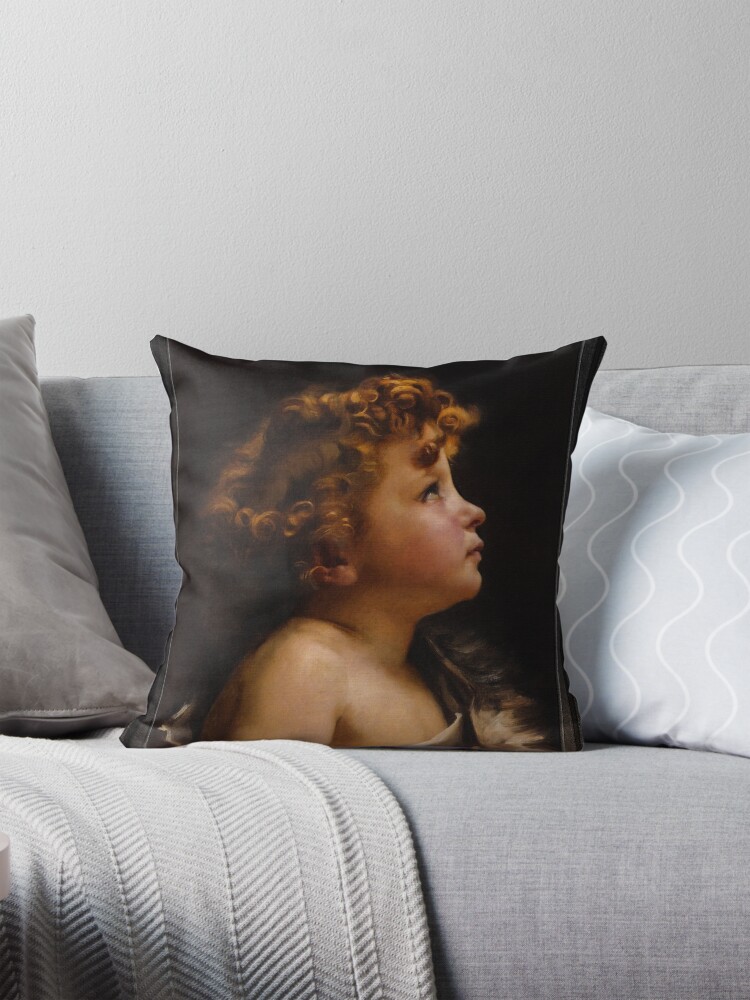
“Young John The Baptist” is a captivating oil painting created in 1890 by the renowned French artist William-Adolphe Bouguereau (1825 – 1905). Known for his exceptional skill in depicting the human form with exquisite detail, Bouguereau’s work in this piece exemplifies his mastery in rendering texture, ljus, och känslor. This portrayal of John the Baptist, the biblical figure revered as the forerunner of Christ, is remarkable for its tender yet powerful presentation, rooted in both classical and religious themes.
Innehållsförteckning
Huvudämne
The painting centers on a young boy, who is identified as John the Baptist, depicted in a moment of contemplation or spiritual reflection. His youth, marked by soft, tousled curls, delicate facial features, and an innocent expression, fångar den renhet och dygd som är förknippad med figuren. Barnets blick uppåt är subtil men tyder ändå på en inre koppling till det gudomliga, förstärker arbetets andliga natur. Hans ungdomliga ansikte, inramad av vilda lockar, står i kontrast till hans ödmjuka klädsel, vilket ytterligare understryker hans roll som blygsamhets- och fromhetsgestalt.
Composition and Layout
Bouguereau arrangerar omsorgsfullt Johns gestalt mot ett mörker, nästan eterisk bakgrund som antyder fokus på enbart barnet. Denna mörka bakgrund gör att betraktarens uppmärksamhet främst kan dras till ljuset som lyser upp figurens ansikte, framhäver den mjuka strukturen på hans hud och de intrikata detaljerna i håret. Ljuset fungerar som en symbolisk gloria, enhancing the divine essence of the figure while reflecting the religious nature of the painting. The child’s posture is gentle, his right shoulder slightly exposed with the folds of his drapery draped over his left shoulder and across his chest, which brings a fluid, almost graceful quality to the scene.
Material och teknik
As with much of Bouguereau’s oeuvre, the artist employed oil paints to create a smooth, almost photographic finish. His technique of layering fine glazes of paint allowed him to achieve a luminous quality in the skin tones, with a nearly tangible softness. The rendering of the child’s hair is particularly noteworthy, with each curl meticulously painted to capture the natural movement and texture of the hair. Bouguereau’s application of light is masterful, gjuter en varm, gentle glow across the subject’s face and neck. The use of soft yet precise brushstrokes contributes to the fluidity and lifelike appearance of the work, particularly in the way the fabric of the drapery folds with a natural flow.
Humör och tema
Stämningen av “Young John The Baptist” is serene and contemplative. The young boy’s expression conveys a sense of quiet reflection, perhaps an inner connection to a higher calling or divine message. Bouguereau’s portrayal of John the Baptist as a vulnerable, innocent child contrasts with the usual depictions of him as a powerful and austere figure in religious iconography. This choice of youth emphasizes the purity of the subject and the potential for great spiritual significance in even the most humble of beginnings. The simplicity of the setting, devoid of any distraction, reinforces the sacredness of the moment.
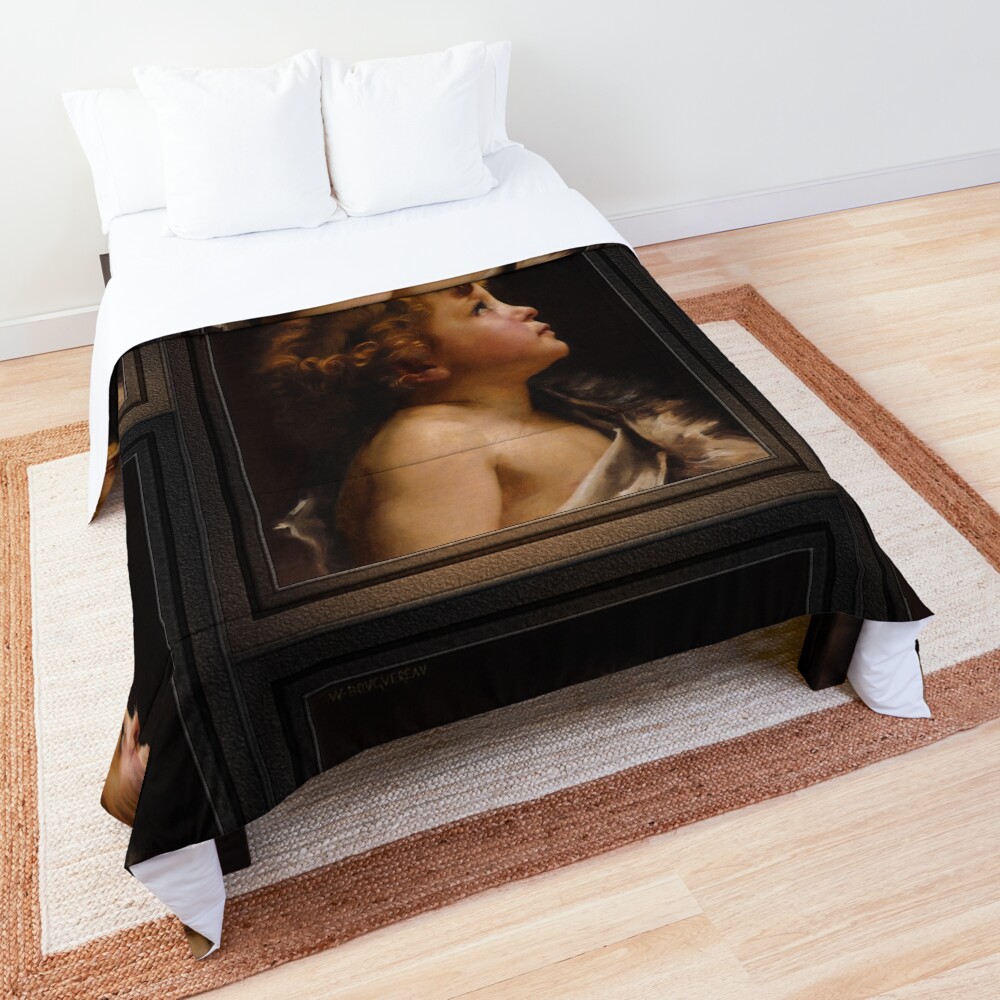
The theme of the painting ties deeply to Bouguereau’s interest in realism and religious iconography, presenting John the Baptist not as an adult prophet but as an innocent and vulnerable child. The softness and tenderness of the figure reflect a child’s innate connection to spirituality, symbolizing both a literal and figurative embodiment of purity and prophecy. The calmness of the subject also emphasizes the message of faith, highlighting the potential of human spirit and devotion.
Symbolism
The young boy’s gaze and delicate posture suggest both innocence and divine insight. His lack of any overt symbols or physical attributes of John the Baptist, such as a lamb or a staff, invites the viewer to focus on his spiritual essence, making the painting not just a representation of the historical figure but a visual exploration of the deeper, more abstract concept of faith and purity. The light illuminating John’s face can also be seen as a subtle reference to the divine, suggesting his importance within the Christian narrative while maintaining the soft naturalism that Bouguereau is celebrated for.
Övergripande intryck
“Young John The Baptist” is a striking blend of realism and religious symbolism, characterized by Bouguereau’s technical precision and emotional depth. The painting transcends a simple portrait of a biblical figure, offering instead an intimate and meditative portrayal of youthful innocence and divine potential. Bouguereau’s work in this painting serves as a poignant reminder of the tender and sacred aspects of human existence, inviting viewers to reflect on the purity and spiritual insight of a child, and perhaps, the deeper spiritual message of faith.
Young John The Baptist (28 – 36 AD) c1890 av French Painter William-Adolphe Bouguereau (1825 – 1905); var en akademisk målare känd för användningen av mytologiska teman med en modern tolkning av klassiskt ämne med fokus på mänsklig kvinnlig form.
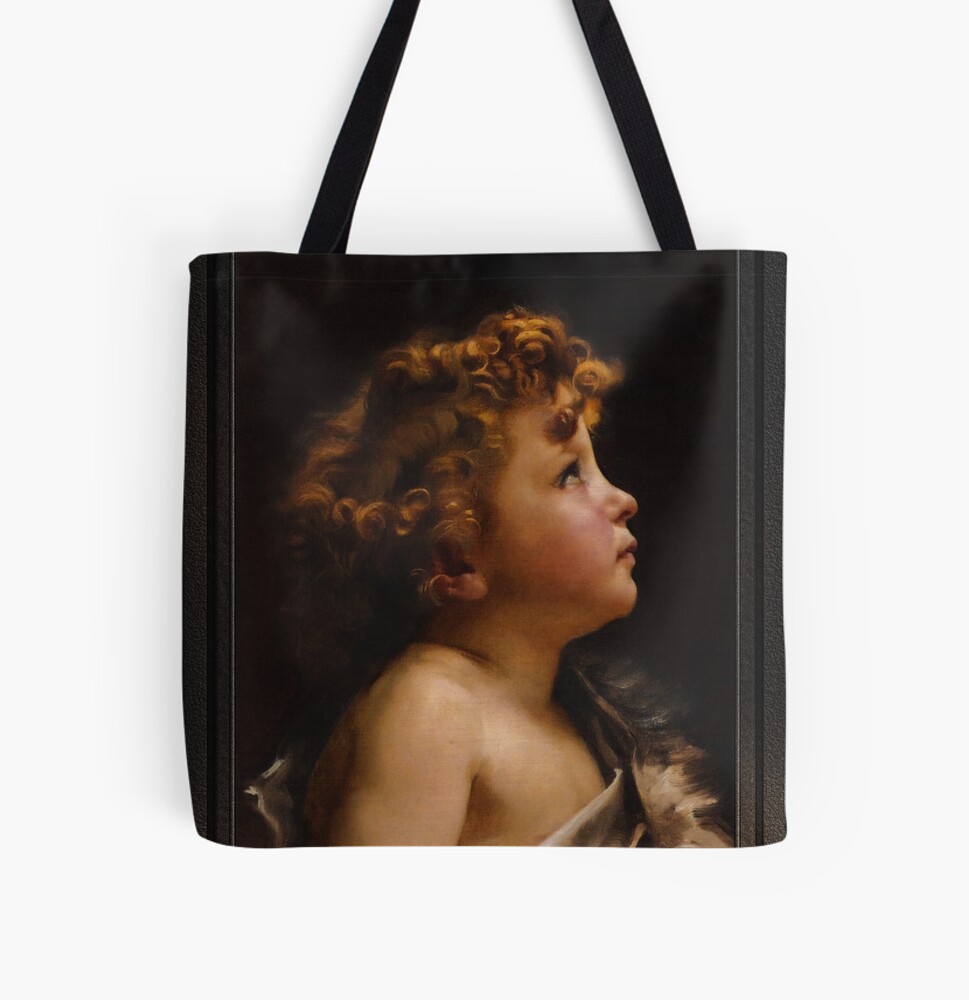
Ett porträtt av Johannes Döparen som barn som tittar mot himlen när GUDS ljus lyser upp honom.
Young John The Baptist is a retouched digital art old masters reproduction of a public domain image that is available online as a metalltryck.
Info nedan med tillstånd Wikipedia.org
William-Adolphe Bouguereau föddes i La Rochelle, Frankrike, på 30 November 1825, in i en familj av vin- och olivoljahandlare.[4] Théodore Bouguereaus son (född 1800) och Marie Bonnin (1804), känd som Adeline, William växte upp som katolik. Han hade en äldre bror, Alfred, och en yngre syster, Marie (känd som Hanna), som dog när hon var sju.
Familjen flyttade till Saint-Martin-de-Ré i 1832. Ett annat syskon föddes i 1834, Pott. Vid en ålder av 12, Bouguereau åkte till Mortagne för att stanna hos sin farbror Eugène, en präst och utvecklade en kärlek till naturen, religion och litteratur.
I 1839, han skickades för att studera för prästadömet vid en katolsk högskola i Pons. Här lärde han sig att rita och måla av Louis Sage, som hade studerat under Ingres. Bouguereau lämnade motvilligt sina studier för att återvända till sin familj, nu bosatt i Bordeaux.
Där träffade han en lokal konstnär, Charles Marionneau, och började på den kommunala skolan för teckning och måleri i november 1841. Bouguereau arbetade också som butiksassistent, handfärga litografier och göra små målningar som har reproducerats med hjälp av krolitografi.
Han blev snart den bästa eleven i sin klass, och bestämde sig för att bli konstnär i Paris. För att finansiera flytten, han sålde porträtt - 33 oljor på tre månader. Alla var osignerade och endast en har spårats. Han anlände till Paris i åldern 20 i mars 1846.
Jämställdhet före döden (Jämställdhet före döden), 1848, olja på duk, 141 × 269 centimeter (55.5 × 105.9 i), Orsay Museum, Paris. Jämställdhet är Bouguereaus första stora målning, producerad efter två år på École des Beaux-Arts de Paris vid en ålder av 23.
Bouguereau blev student vid École des Beaux-Arts.[4] För att komplettera sin formella utbildning i teckning, han deltog i anatomiska dissektioner och studerade historiska dräkter och arkeologi.
Han antogs till studion av François-Édouard Picot, där han studerade måleri i akademisk stil. Dante och Virgil i helvetet (1850) var ett tidigt exempel på hans neoklassiska verk.
Akademisk målning placerade högsta status på historiska och mytologiska ämnen, och Bouguereau bestämde sig för att vinna Prix de Rome, vilket skulle ge honom en treårig bostad vid Villa Medici i Rom, Italien, där han förutom formella lektioner kunde studera renässanskonstnärer och deras mästerverk från första hand, liksom grekiska, Etruskiska, och romerska antikviteter.