

Nuori nainen hydrangeassa
Nuori nainen hydrangeassa (Nuori nainen hydrangeassa) ranskalainen taidemaalari Élisabeth Sonrel (1874 – 1953); ja jugendtyylin kuvittaja; kuka työskentelee, sisälsi allegorisia aiheita, mystiikka ja symboliikka, muotokuvia ja maisemia.
Maalaus Nuori nainen hortensioilla (c. 1900) ranskalaisen taiteilijan Elisabeth Sonrelin esittämä kohtaus on herkkä ja mietiskelevä, joka säteilee 1800-luvun lopun eurooppalaisen herkkyyden ja esteettisen viehätyksen olemusta. Hänen harkitusti käyttää pehmeää, luonnollisia sävyjä, lempeä valaistus, ja klassisia teemoja, Sonrel tarjoaa kauneuden esityksen, joka vangitsee Belle Époque -ajan hengen, aika, jolle se arvostaa luontoa, naisellisuus, ja herkkää eleganssia.
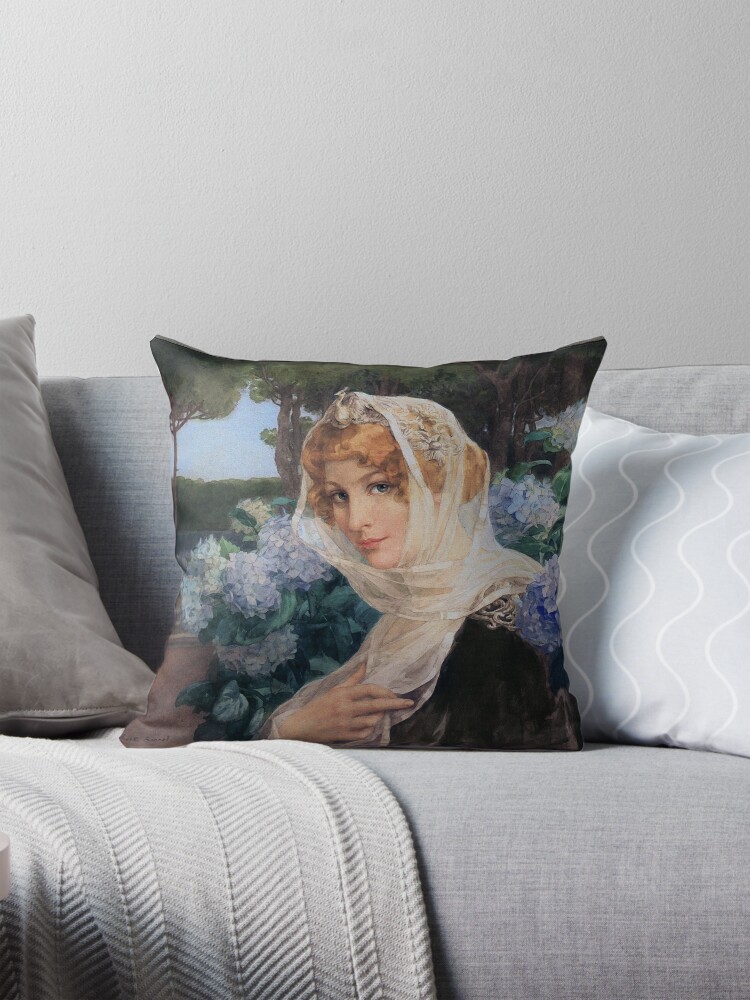
Tämän taiteen ytimessä on a nuori nainen, valmiina armon ja tyyneyden kanssa. Hän on sävellyksen etualalla, katsojan katse veti välittömästi häneen keskeisenä hahmona. Naisen kasvoja kehystää pehmeä, aaltoilevat hiukset, jotka valuvat hellästi hänen harteilleen, jossa on hienovaraisia vivahteita lämpöä vaaleanruskeissa ja kastanjanruskeissa sävyissä.
Hänen katseensa, vaikka ei ole suunnattu ulospäin, sisältää itsetutkiskelun ilmaa, ikään kuin hän olisi eksyksissä yksityisessä, rauhallinen haaveilu. Hänen silmänsä ovat pehmeät ja ilme tyyni, välittää syvän rauhallisuuden tunteen. Tätä rauhallisuuden tunnetta lisää hänen asentonsa; hän istuu toisella kädellä hellästi pitelemässä hortensiajoukkoa, niiden monimutkainen, monisävyiset terälehdet maalattu tarkasti ja suloisesti.
Hortensiat, kauneuden symboli, armo, ja runsautta, eivät ole vain koristeellisia tässä teoksessa, vaan ne heijastavat kohteen luonnetta ja sävellyksen tunnelmaa. Ne on renderöity hienoilla yksityiskohdilla, jokainen kukka näyttää kukkivan alla pehmeä, ympäristön valo.
Värit vaihtelevat rikkaista, syvä violetista pehmeään pinkkiin ja sinisiin, luo elävän kontrastin nuoren naisen pukeutuneempien sävyjen kanssa. Nämä kukat näyttävät puhaltavan elämää muotokuvaan, tekevät niistä olennaisen osan luonnon kauneuden ja ohikiitävän yleisteeman välittämisessä, nuoruuden ja naiseuden lyhytaikainen luonne.
Naisen vaatetus on myös keskeisessä roolissa maalauksen kerronnassa. Hänen pukunsa, koristeltu hienovaraisilla pitsillä ja kukkakuvioilla, herättää 1800-luvun lopulle tyypillistä hillittyä eleganssia. Hänen mekkonsa pehmeät sävyt – vaaleat kermanväriset ja valkoiset – täydentävät hortensioiden värejä, luo harmonisen suhteen hahmon ja kukkaympäristön välille. Hänen pukunsa kangas on kuvattu merkittävällä tekstuurilla, välittää sen herkkyyttä ja hienoa laatua.
Verhot putoavat pehmeinä poimuina hänen vartalonsa ympärille, vahvistaa entisestään armon tunnetta, joka vallitsee koko sävellyksen. Hänen mekkonsa, hienostuneella leikkauksella ja korkealla kauluksella, viittaa vaatimattomuuteen, ajan arvojen mukaisesti, kuitenkin pehmeät yksityiskohdat mahdollistavat aistillisuuden ja pehmeyden pohjavirran.
Aiheen takana, tausta tarjoaa seesteisyyttä, luonnonmaisema, joka lisää intiimiä, maalauksen rauhallinen tunnelma. Taiteilija on valinnut ympäröivän lehvistön hieman sumean ja eteerisen renderöinnin, pehmeä valo suodattuu puiden läpi ja antaa lämmintä, hajanainen hehku hahmon yli.
Tausta ei ole ylivoimainen, vaan kehystää nuoren naisen lempeään luonnon syleilyyn, viittaa syvään yhteyteen kohteen ja hänen ympäristönsä välillä. The interplay of light and shadow on the leaves and flowers subtly echoes the light touch and serenity that pervades the figure, creating a seamless balance between subject and surroundings.
The artist’s choice to depict the woman against this natural backdrop also suggests a celebration of the harmony between human life and nature. The quietude of the landscape complements the figure’s pensive demeanor, evoking themes of renewal, kasvu, and cyclical beauty. Pehmeä, muted greens of the foliage, together with the delicate tones of the hydrangeas, contribute to the painting’s overall sense of stillness and calm.
The palette used in Young Woman with Hydrangeas is another important feature of the artwork. Sonrel’s use of light, pastel tones—pale blues, pinkit, vihreät, ja pehmeät keltaiset – luovat eteerisen eleganssin tunnelman, antavat kohtaukselle unenomaisen laadun. Koostumus kylpee pehmeässä, melkein kultainen valo, antavat paikalle ajattomuuden tunteen.
Värit eivät ole rohkeita tai räikeitä, vaan hellävaraisia ja rauhoittavia, edistää rauhan ja hienostuneisuuden tunnetta. Nämä pehmeät sävyt yhdistetään hillitympiin, luonnolliset värit, luo täydellisen tasapainon lämmön ja viileyden välillä, valo ja varjo.
Tyylin suhteen, Sonrelin maalaus heijastaa erittäin hienostunutta akateemista perinnettä, joka oli suosittu Ranskassa 1800-luvun lopulla.. Hänen työnsä osoittaa teknistä taitoa, varsinkin hortensioiden ja naisten puvun taitteiden yksityiskohdissa. Pehmeä, lähes valoisa työn laatu, saavutetaan taiteilijan vivahteikkaalla maalisovelluksella, osoittaa intiimin tietämyksen valon ja tekstuurin vangitsemisesta.
Siinä korostetaan hienoja yksityiskohtia, erityisesti kukkien ja naisten mekon kankaan käsittelyssä, joka kutsuu katsojan arvostamaan huolellista käsityötä kulissien takana. Samaan aikaan, pehmeä värien sekoitus ja valon lempeä mallinnus luovat lähes impressionistisen tunnelman, jossa korostetaan mielialaa tiukan realismin sijaan.
Maalauksen teemana on luonnon kauneus, viattomuus, ja itsetutkiskelua. Hortensiat, symboloi sekä yltäkylläisyyttä että elämän lyhytaikaisuutta, yhdistetään nuoren naisen hahmon kanssa, joka näyttää ilmentävän nuoruuden ja kauneuden ohikiitävää luonnetta. Pehmeä, hehkuva valo ja lempeät värit korostavat haurauden teemaa, muistuttaa katsojaa ajan lyhytaikaisesta luonteesta ja sen tarjoamasta kauneudesta. Maalauksen tunnelma on rauhallinen ja mietiskelevä, ehdottaa hiljaista hetkeä, jolloin kohde on ajatuksissaan tai arvostaa hiljaa ympäristönsä kauneutta.
Lopuksi, Elisabeth Sonrelin Nuori nainen hortensioilla on teos, joka vangitsee kauneuden herkän vuorovaikutuksen, luonto, ja ajan kuluminen. Hänen huolellisen huomionsa yksityiskohtiin, taiteilija on luonut teoksen, joka puhuttelee katsojaa sekä tunne- että esteettisellä tasolla, herättää seesteisyyden ja ajattomuuden tunteen, joka ylittää kankaan rajat.
Nuori nainen hortensioilla on retusoitu digitaalisen taiteen vanhojen mestareiden kopio julkisessa käytössä olevasta kuvasta.
Tiedot alla Wikipedia.org
Elisabeth Sonrel (1874 Retket - 1953 Tiivisteet) oli ranskalainen taidemaalari ja kuvittaja jugendtyyliin. Hänen teoksiinsa sisältyi allegorisia aiheita, mystiikka ja symboliikka, muotokuvia ja maisemia.
Hän oli Nicolas Stéphane Sonrelin tytär, Toursin taidemaalari, ja hän sai varhaisen koulutuksen häneltä. Jatko-opintoja varten hän jatkoi Pariisiin Jules Lefebvren opiskelijana Ecole des Beaux-Artsissa.
Sisään 1892 hän maalasi diplomityönsä, "Pax et Labor", teos Musée des Beaux-Arts de Toursissa. Siitä lähtien hän esitteli näyttelyitä Salon des Artistes Françaisissa 1893 ja 1941, hänen allekirjoituksensa ovat suuria vesivärejä prerafaeliitti-tavalla, jonka hän hyväksyi Firenzeen ja Roomaan tehdyn matkan jälkeen, löytää renessanssin maalarit – Joissakin hänen töissään on selkeä Botticellin sävy. Hänen maalauksensa ovat usein innoittaneet arthurilaista romantiikkaa, Dante Alighierin jumalallinen komedia’ ja "Uusi elämä", raamatullisia teemoja, ja keskiaikaisia legendoja. Hänen mystisiin teoksiinsa kuuluu Ames errantes’ (Salonki 1894) ja ”Kuilun henget’ (Salonki 1899) ja "Nuori nainen kuvakudoksella".
Näyttely Universelle of 1900, jonka pääteema oli jugend, hänen 1895 maalaus 'Neitsyt uni’ (Neitsyt uni), sai pronssia, ja Henri Lehmann -palkinnon 3000 frangia, Kuvataideakatemia.[3] Alkaen 1900 siitä lähtien hän rajoitti maalauksensa muotokuviin, luonnonkauniita Bretagnen maisemia, ja satunnainen kukkatutkimus.
Hän teki säännöllisiä maalausmatkoja Bretagneen, Brocélianden metsän innoittamana, ja alkaen 1910 eri paikkoihin rannikolla, kuten Concarneau, Plougastel, Pont-l'Abbé ja Loctudy, usein majoittuessaan yhden tai kahden opiskelijan seurassa. Hän maalasi useita teoksia Le Faouët'ssa ennen kuin rakensi huvilan La Bauleen 1930 -luvulla. Työskentelee pääasiassa vesiväreillä ja guasilla, hän löysi mallivalikoiman alueen nuorten tyttöjen joukosta, ja piti Bretonit yleensä ystävällisinä, rehellinen ja itsevarma.
Hänen viimeinen näyttely Salonissa oli 1941 iässä 67. Hänellä on myös kirjaa näyttelystä Liverpoolissa. Varhaisina vuosina Sonrel tuotti julisteita, postikortteja ja kuvituksia, jugendtyyliin.