

אישה צעירה עם הידראנגאה
אישה צעירה עם הידראנגאה (אישה צעירה עם הידראנגאה) מאת הציירת הצרפתייה אליזבת סונרל (1874 – 1953); ומאייר בסגנון הארט נובו; מי עבודותיו כללו נושאים אלגוריים, מיסטיקה וסמליות, דיוקנאות ונופים.
The painting Young Woman with Hydrangeas (ג. 1900) by the French artist Elisabeth Sonrel presents a delicate and contemplative scene, one that radiates the essence of late 19th-century European sensibilities and aesthetic charm. Through her thoughtful use of soft, natural tones, תאורה עדינה, and classical themes, Sonrel offers a portrayal of beauty that captures the spirit of the Belle Époque era, a period marked by its appreciation for nature, נָשִׁיוּת, and delicate elegance.
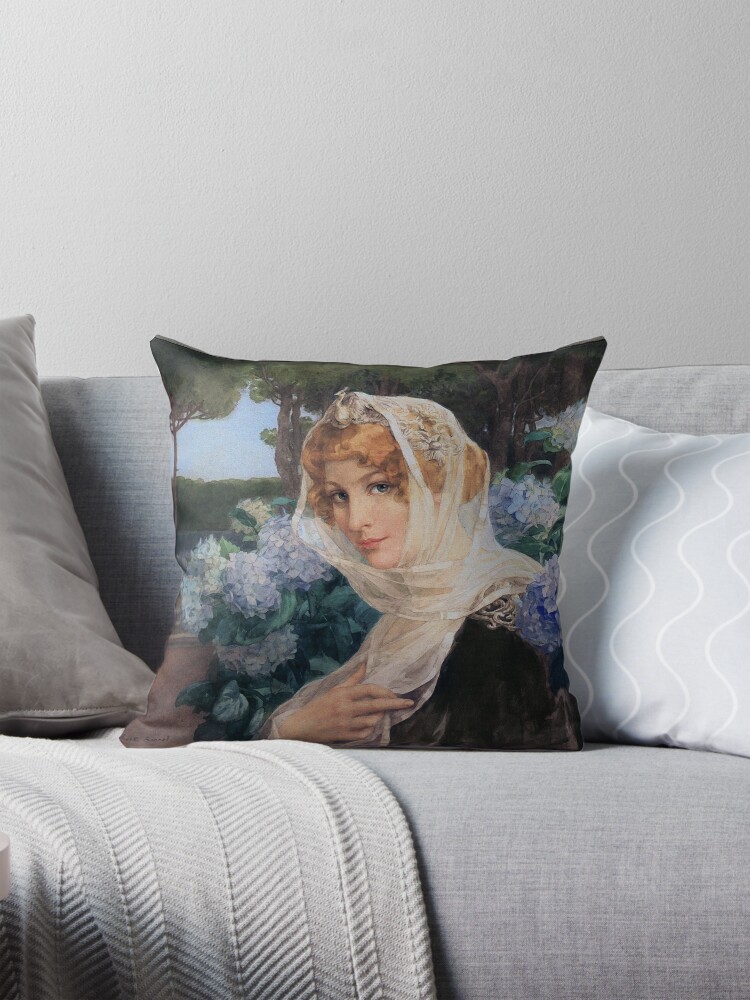
At the heart of this artwork is a אישה צעירה, poised with grace and serenity. She occupies the foreground of the composition, the viewer’s gaze immediately drawn to her as the central figure. The woman’s face is framed by soft, wavy hair that spills gently down her shoulders, with subtle hints of warmth in the light brown and auburn hues.
המבט שלה, though not directed outward, carries an air of introspection, as if she is lost in a private, peaceful reverie. Her eyes are soft and her expression serene, conveying a deep sense of tranquility. This sense of calm is enhanced by her posture; she is seated with one hand delicately holding a cluster of hydrangeas, their intricate, multi-toned petals painted with precision and grace.
The hydrangeas, סמל ליופי, חן, and abundance, are not merely decorative in this piece but rather serve as a reflection of the subject’s character and the mood of the composition. They are rendered with exquisite detail, each flower appearing to bloom under a soft, ambient light.
The colors range from rich, deep purples to soft pinks and blues, creating a vivid contrast with the more muted tones of the young woman’s attire. These flowers seem to breathe life into the portrait, making them an essential component in conveying the overall theme of natural beauty and the fleeting, ephemeral nature of youth and femininity.
The woman’s clothing also plays a key role in the narrative of the painting. השמלה שלה, adorned with subtle lace and floral patterns, evokes the restrained elegance typical of the late 19th century. The soft hues of her dress—pale creams and whites—complement the colors of the hydrangeas, creating a harmonious relationship between the figure and her floral surroundings. The fabric of her gown is portrayed with remarkable texture, conveying its delicacy and fine quality.
The drapery falls in soft folds around her body, further enhancing the sense of grace that pervades the entire composition. השמלה שלה, with its refined cut and high collar, suggests a degree of modesty, in keeping with the values of the time, yet the soft detailing allows for an undercurrent of sensuality and softness to emerge.
מאחורי הנושא, the background provides a serene, natural landscape that enhances the intimate, peaceful mood of the painting. The artist has opted for a slightly blurred and ethereal rendering of the surrounding foliage, with the soft light filtering through the trees and casting a warm, diffused glow over the figure.
The background is not overpowering but serves to frame the young woman in a gentle embrace of nature, suggesting a deep connection between the subject and her environment. The interplay of light and shadow on the leaves and flowers subtly echoes the light touch and serenity that pervades the figure, creating a seamless balance between subject and surroundings.
The artist’s choice to depict the woman against this natural backdrop also suggests a celebration of the harmony between human life and nature. The quietude of the landscape complements the figure’s pensive demeanor, evoking themes of renewal, צְמִיחָה, and cyclical beauty. הרך, muted greens of the foliage, together with the delicate tones of the hydrangeas, contribute to the painting’s overall sense of stillness and calm.
The palette used in Young Woman with Hydrangeas is another important feature of the artwork. Sonrel’s use of light, pastel tones—pale blues, ורודים, יְרָקוֹת, and soft yellows—creates an atmosphere of ethereal elegance, lending the scene a dreamlike quality. The composition is bathed in a soft, almost golden light, lending a sense of timelessness to the scene.
The colors are not bold or jarring but rather gentle and soothing, contributing to a sense of peace and refinement. These soft hues are paired with more subdued, natural colors, creating a perfect balance between warmth and coolness, אור וצל.
מבחינת הסגנון, Sonrel’s painting reflects the highly refined academic tradition that was popular in France during the late 19th century. Her work demonstrates technical mastery, especially in the detailed rendering of the hydrangeas and the folds of the woman’s gown. הרך, almost luminous quality of the work, achieved through the artist’s nuanced application of paint, demonstrates an intimate knowledge of how to capture light and texture.
There is an emphasis on fine detail, particularly in the treatment of the flowers and the fabric of the woman’s dress, which invites the viewer to appreciate the careful craftsmanship behind the scene. במקביל, the soft blending of colors and the gentle modeling of light create an almost impressionistic atmosphere, with an emphasis on mood rather than strict realism.
The theme of the painting is one of natural beauty, תְמִימוּת, והתבוננות פנימית. The hydrangeas, symbolizing both abundance and the transience of life, are paired with the figure of the young woman, who seems to embody the fleeting nature of youth and beauty. הרך, glowing light and gentle colors emphasize the theme of fragility, reminding the viewer of the ephemeral nature of time and the beauty it bestows. The mood of the painting is calm and contemplative, suggesting a moment of stillness in which the subject is lost in thought or quietly appreciating the beauty of her surroundings.
לסיכום, Young Woman with Hydrangeas by Elisabeth Sonrel is a work that captures the delicate interplay between beauty, טֶבַע, וחלוף הזמן. Through her meticulous attention to detail, the artist has created a piece that speaks to the viewer on both an emotional and aesthetic level, evoking a sense of serenity and timelessness that transcends the boundaries of the canvas.
אישה צעירה עם הידראנגאה היא רפרודוקציה של אמנות דיגיטלית עתיקת יומין של תמונה ברשות הרבים.
מידע למטה מ Wikipedia.org
אליזבת סונרל (1874 סיורים - 1953 כלבי ים) היה צייר ומאייר צרפתי בסגנון אר -נובו. עבודותיה כללו נושאים אלגוריים, מיסטיקה וסמליות, דיוקנאות ונופים.
היא הייתה בתו של ניקולא סטפן סונרל, צייר מטורס, וקיבלה ממנו את ההכשרה המוקדמת שלה. להמשך לימודיה המשיכה לפריז כסטודנטית של ז'ול לפבר בבית הספר לאמנויות.
ב 1892 היא ציירה את עבודות הדיפלומה שלה, 'Pax et Labor', יצירה שניתן לראות במוזיאון לאמנויות דה טורס. מכאן ואילך הציגה בסלון דה ארטס פרנסאי בין 1893 ו 1941, יצירות החתימה שלה הן צבעי מים גדולים באופן טרום רפאלי, אותו אימצה לאחר טיול בפירנצה ורומא, לגלות את ציירי הרנסנס – חלק מעבודותיה בעלות צללים ברורים של בוטיצ'לי. הציורים שלה היו לעתים קרובות בהשראת רומנטיקה ארתורית, הקומדיה האלוהית של דנטה אליגיירי’ ו"החיים החדשים ", נושאים מקראיים, ואגדות מימי הביניים. עבודותיה המיסטיות כוללות את 'איימס errantes'’ (סלון של 1894) ו'רוחות התהום '’ (סלון של 1899) ו"צעירה עם השטיח ".
ב- Universelle התערוכה של 1900, הנושא העיקרי שלו היה ארט נובו, שֶׁלָה 1895 ציור "שנת הבתולה"’ (שינה של הבתולה), זכתה במדליית ארד, ופרס אנרי להמן של 3000 פרנק על ידי האקדמיה לאמנויות יפות.[3] מ 1900 ואילך הגבילה את ציוריה לדיוקנאות, נופי בריטני מרהיבים, ומחקר פרחים מדי פעם.
היא ערכה טיולי ציור קבועים לבריטני, בהשראת היער ברוסליאנדה, ומ 1910 למקומות שונים בחוף כגון קונקרנו, פלוגסטל, Pont-l'Abbé ו- Loctudy, מתארחים לעתים קרובות בפונדקים ומלווים על ידי סטודנט אחד או שניים. היא ציירה מספר עבודות בלה פאואה לפני שבנתה וילה בלה באולה בשנות השלושים. עובד בעיקר בצבעי מים וגואש, היא גילתה היצע מוכן של דוגמניות בקרב נערות צעירות באזור, ומצאו שברטונים בדרך כלל ידידותיים, כנה ובטוחה בעצמה.
התערוכה האחרונה שלה בסלון הייתה ב 1941 בגיל 67. יש גם תיעוד שהיא הציגה בליברפול. בשנותיה הראשונות ייצרה סונר כרזות, גלויות ואיורים, בסגנון ארט נובו.