

Młoda kobieta z hortensjami
Młoda kobieta z hortensjami (Młoda kobieta z hortensjami) francuskiego malarza Élisabeth Sonrel (1874 – 1953); i ilustrator stylu Art Nouveau; czyje prace zawierały tematy alegoryczne?, mistycyzm i symbolika, portrety i pejzaże.
The painting Young Woman with Hydrangeas (C. 1900) by the French artist Elisabeth Sonrel presents a delicate and contemplative scene, one that radiates the essence of late 19th-century European sensibilities and aesthetic charm. Through her thoughtful use of soft, natural tones, gentle lighting, and classical themes, Sonrel offers a portrayal of beauty that captures the spirit of the Belle Époque era, a period marked by its appreciation for nature, kobiecość, and delicate elegance.
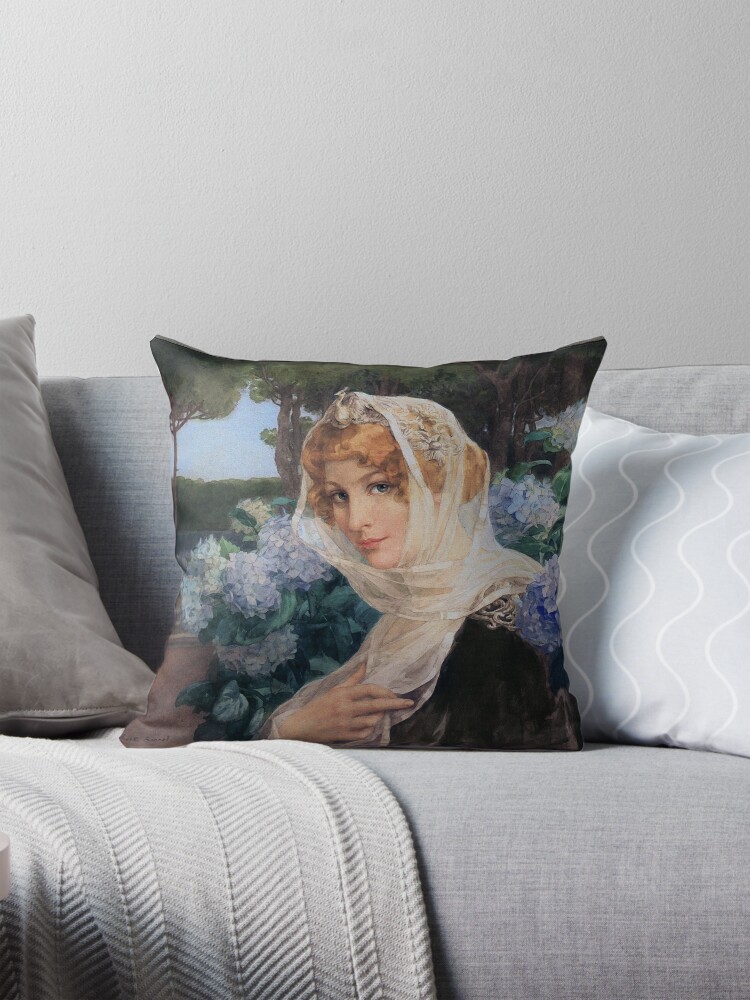
At the heart of this artwork is a młoda kobieta, poised with grace and serenity. She occupies the foreground of the composition, the viewer’s gaze immediately drawn to her as the central figure. The woman’s face is framed by soft, wavy hair that spills gently down her shoulders, with subtle hints of warmth in the light brown and auburn hues.
Jej spojrzenie, though not directed outward, carries an air of introspection, as if she is lost in a private, peaceful reverie. Her eyes are soft and her expression serene, conveying a deep sense of tranquility. This sense of calm is enhanced by her posture; she is seated with one hand delicately holding a cluster of hydrangeas, their intricate, multi-toned petals painted with precision and grace.
The hydrangeas, symbol piękna, łaska, and abundance, are not merely decorative in this piece but rather serve as a reflection of the subject’s character and the mood of the composition. They are rendered with exquisite detail, each flower appearing to bloom under a soft, światło otoczenia.
The colors range from rich, deep purples to soft pinks and blues, creating a vivid contrast with the more muted tones of the young woman’s attire. These flowers seem to breathe life into the portrait, making them an essential component in conveying the overall theme of natural beauty and the fleeting, ephemeral nature of youth and femininity.
The woman’s clothing also plays a key role in the narrative of the painting. Jej suknia, adorned with subtle lace and floral patterns, evokes the restrained elegance typical of the late 19th century. The soft hues of her dress—pale creams and whites—complement the colors of the hydrangeas, creating a harmonious relationship between the figure and her floral surroundings. The fabric of her gown is portrayed with remarkable texture, conveying its delicacy and fine quality.
The drapery falls in soft folds around her body, further enhancing the sense of grace that pervades the entire composition. Her dress, with its refined cut and high collar, suggests a degree of modesty, in keeping with the values of the time, yet the soft detailing allows for an undercurrent of sensuality and softness to emerge.
Za tematem, the background provides a serene, natural landscape that enhances the intimate, peaceful mood of the painting. The artist has opted for a slightly blurred and ethereal rendering of the surrounding foliage, with the soft light filtering through the trees and casting a warm, diffused glow over the figure.
The background is not overpowering but serves to frame the young woman in a gentle embrace of nature, suggesting a deep connection between the subject and her environment. The interplay of light and shadow on the leaves and flowers subtly echoes the light touch and serenity that pervades the figure, creating a seamless balance between subject and surroundings.
The artist’s choice to depict the woman against this natural backdrop also suggests a celebration of the harmony between human life and nature. The quietude of the landscape complements the figure’s pensive demeanor, evoking themes of renewal, wzrost, and cyclical beauty. Miękkie, muted greens of the foliage, together with the delicate tones of the hydrangeas, contribute to the painting’s overall sense of stillness and calm.
The palette used in Young Woman with Hydrangeas is another important feature of the artwork. Sonrel’s use of light, pastel tones—pale blues, róże, warzywa, and soft yellows—creates an atmosphere of ethereal elegance, lending the scene a dreamlike quality. The composition is bathed in a soft, almost golden light, lending a sense of timelessness to the scene.
The colors are not bold or jarring but rather gentle and soothing, contributing to a sense of peace and refinement. These soft hues are paired with more subdued, natural colors, creating a perfect balance between warmth and coolness, light and shadow.
Pod względem stylu, Sonrel’s painting reflects the highly refined academic tradition that was popular in France during the late 19th century. Her work demonstrates technical mastery, especially in the detailed rendering of the hydrangeas and the folds of the woman’s gown. Miękkie, almost luminous quality of the work, achieved through the artist’s nuanced application of paint, demonstrates an intimate knowledge of how to capture light and texture.
There is an emphasis on fine detail, particularly in the treatment of the flowers and the fabric of the woman’s dress, which invites the viewer to appreciate the careful craftsmanship behind the scene. Naraz, the soft blending of colors and the gentle modeling of light create an almost impressionistic atmosphere, with an emphasis on mood rather than strict realism.
The theme of the painting is one of natural beauty, niewinność, i introspekcja. The hydrangeas, symbolizing both abundance and the transience of life, are paired with the figure of the young woman, who seems to embody the fleeting nature of youth and beauty. Miękkie, glowing light and gentle colors emphasize the theme of fragility, reminding the viewer of the ephemeral nature of time and the beauty it bestows. The mood of the painting is calm and contemplative, suggesting a moment of stillness in which the subject is lost in thought or quietly appreciating the beauty of her surroundings.
Podsumowując, Young Woman with Hydrangeas by Elisabeth Sonrel is a work that captures the delicate interplay between beauty, Natura, i upływ czasu. Through her meticulous attention to detail, the artist has created a piece that speaks to the viewer on both an emotional and aesthetic level, evoking a sense of serenity and timelessness that transcends the boundaries of the canvas.
Młoda kobieta z hortensjami to wyretuszowana cyfrowa reprodukcja starych mistrzów obrazu z domeny publicznej.
Informacje poniżej od Wikipedia.org
Elisabeth Sonrel (1874 Wycieczki – 1953 Uszczelki) był francuskim malarzem i ilustratorem w stylu Art Nouveau. Jej prace zawierały tematy alegoryczne, mistycyzm i symbolika, portrety i pejzaże.
Była córką Nicolasa Stéphane'a Sonrel, malarz z Tours, i otrzymała od niego wczesne szkolenie. Na dalsze studia wyjechała do Paryża jako uczennica Julesa Lefebvre'a w Ecole des Beaux-Arts.
W 1892 namalowała swoją pracę dyplomową, „Pax i praca”, dzieło do obejrzenia w Musée des Beaux-Arts de Tours. Od tego czasu wystawiała w Salon des Artistes Français między 1893 i 1941, jej charakterystyczne dzieła to duże akwarele w stylu prerafaelickim, którą adoptowała po podróży do Florencji i Rzymu, odkrywanie malarzy renesansowych – niektóre z jej prac mają wyraźny wydźwięk Botticellego. Jej obrazy były często inspirowane romansami arturiańskimi, Boska komedia Dantego Alighieri’ i „Nowe życie”, motywy biblijne, i średniowieczne legendy. Jej mistyczne prace to „Ames errantes”’ (Salon 1894) i „Duchy Otchłani”’ (Salon 1899) i „Młoda kobieta z gobelinem”.
Na Wystawie Universelle of 1900, której głównym tematem była secesja, ją 1895 obraz „Sen Dziewicy”’ (Sen Dziewicy), otrzymał brązowy medal, oraz nagrodę im. Henriego Lehmanna 3000 franków Akademii Sztuk Pięknych.[3] Od 1900 odtąd swoje malarstwo ograniczyła do portretów, malownicze krajobrazy Bretanii, i okazjonalne badanie kwiatów.
Regularnie odbywała malarskie wycieczki do Bretanii, inspirowany lasem Brocéliande, i od 1910 do różnych miejsc na wybrzeżu, takich jak Concarneau, Plougastel, Pont-l'Abbé i Loctudy, często przebywają w karczmach w towarzystwie jednego lub dwóch uczniów. Namalowała kilka prac w Le Faouet przed wybudowaniem willi w La Baule w latach 30. XX wieku. Pracuje głównie w akwareli i gwaszu, odkryła gotową dostawę modeli wśród młodych dziewcząt w okolicy, i ogólnie Bretonowie byli przyjaźni, szczery i pewny siebie.
Jej ostatnia wystawa w Salonie była in 1941 w wieku 67. Istnieje również zapis jej wystawiania w Liverpoolu. W młodości Sonrel produkowała plakaty, pocztówki i ilustracje, w stylu Art Nouveau.