

Dwa złe sumienia (Dwa winne sumienia) ok. 1918 r
Utworzono w 1918 austriackiego malarza Karla Reicherta, “Dwa złe sumienia” (przetłumaczone jako “Dwa winne sumienia”) to urzekające dzieło, które oddaje istotę portretu z końca XIX i początku XX wieku, demonstrując umiejętność Reicherta w portretowaniu niewinności i introspekcji moralnej.
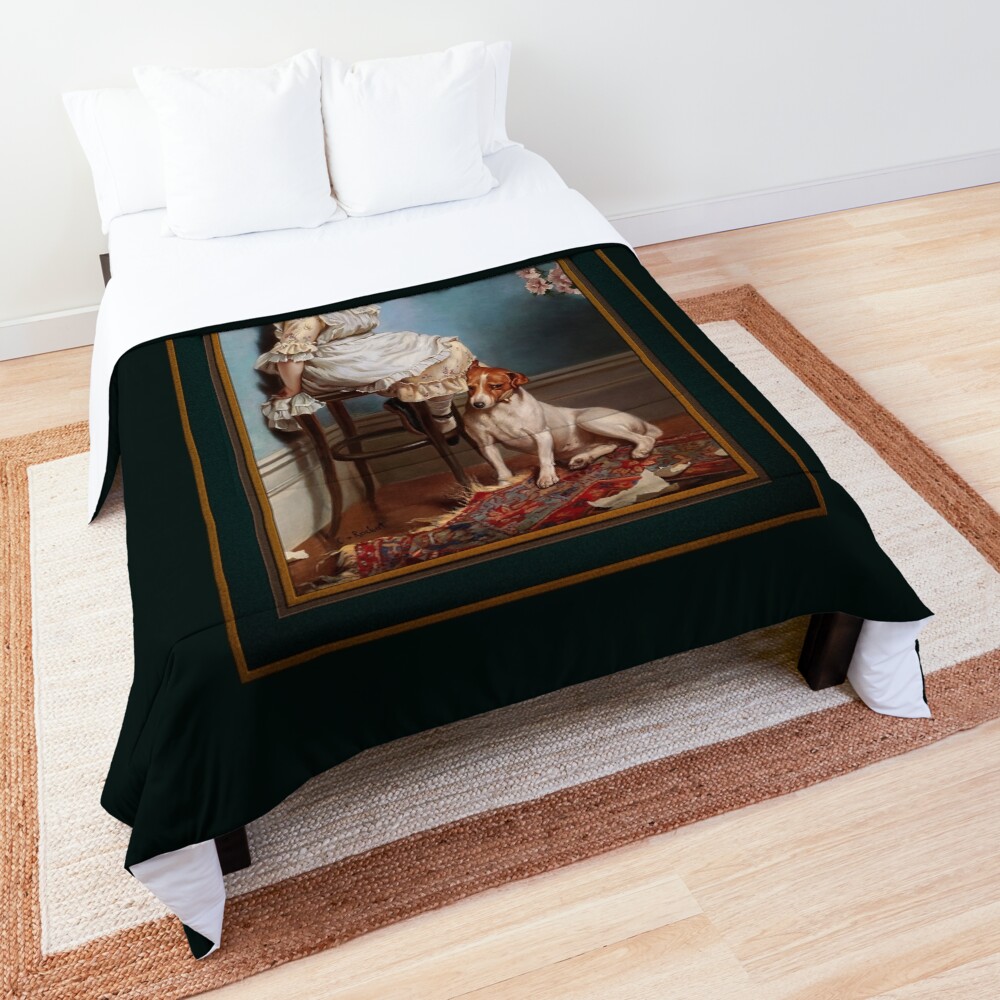
Urodzony w 1836 i przejście 1918, Reichert słynął ze skrupulatnego podejścia do realizmu, co widać w tym utworze. Obraz przedstawia młodą dziewczynę siedzącą na drewnianym stołku, w towarzystwie psa, w kameralnym gronie, cicha scena domowa, która wywołuje poczucie niewinności i winy, sugeruje tytuł.
Spis treści
Główny temat: Młoda dziewczyna i jej pies
Głównym bohaterem tego obrazu jest młoda dziewczyna, wyglądających na nie starszych niż sześć lub siedem lat, ubrana w prostą, ale delikatną białą sukienkę. Sukienka ozdobiona jest miękkimi, haftowanymi wzorami kwiatowymi wzdłuż rękawów, podkreślając ówczesne rzemiosło. Włosy dziewczyny są kasztanowo-brązowe, delikatnie owinięty wokół jej twarzy, i siedzi z lekkim pochyleniem, jej postawa sugeruje chwilę spokojnej kontemplacji.
Jej wyraz twarzy jest odległy, jej wzrok odwrócił się nieco od widza, jakby zamyślony. Ten subtelny wyraz introspekcji zachęca widza do zakwestionowania swoich myśli. Delikatne marszczenia sukni i miękkie fałdy materiału zostały szczegółowo odwzorowane, ukazując dużą dbałość Reicherta o szczegóły w fakturze tkanin, a hallmark of his realist style.
Sitting at her feet, a dog lies calmly beside her. The dog is painted with remarkable lifelike precision, its fur soft and almost tangible, contributing to the painting’s realistic portrayal of the domestic scene. The dog’s posture and its gaze directed at the girl enhance the sense of companionship and trust between the two, underlining the girl’s youthful innocence. jednak, the dog’s subtle positioning, resting at her feet while she sits in apparent guilt, also hints at a shared experience or secret between them.
Obiekty i szczegóły: Symbolika winy i niewinności
The background of the painting is minimalist but evocative. A soft blue wall frames the scene, imbuing the piece with a calm and serene atmosphere. jednak, the colors are not entirely tranquil; the soft pastel tones of the background contrast with the unsettling mood suggested by the girl’s body language and the title of the piece.
The light falls gently on the girl’s face and body, accentuating the innocence conveyed through her youthful form and delicate features, while the shadows along the edges suggest an underlying tension in the scene.
A small rug is partially visible beneath the dog, lying in a slightly disheveled state. The rug is richly patterned, with intricate designs that hint at opulence, but it appears slightly crumpled, as though it had been disturbed, adding a layer of disorder to an otherwise neat and orderly setting.
This detail adds to the narrative of the painting, suggesting that something has happened, perhaps the child has been involved in some mischief or mistake, and the disordered rug symbolizes a disruption of the peace. In the lower right corner of the image, one can also notice a small piece of torn paper, further hinting at the possibility of the girl’s involvement in an act that has caused distress.
dodatkowo, there is a faint trace of pink flowers at the top right of the composition. These delicate flowers bring a touch of nature into the room, their soft, ephemeral quality accentuating the innocence of the scene. jednak, like the other elements in the composition, they appear muted, almost as though they are fading or wilting, mirroring the possible loss of innocence or the burden of guilt the girl may be experiencing.
Teren i materiały: Ustawienie domowe
The setting of the painting is undoubtedly domestic, with a simple interior that provides an intimate glimpse into the private world of the subject. The floor is made of hardwood, polished to a soft shine, and the visible portion of the room, though not overwhelming in detail, speaks to the middle-class environment in which the girl lives. The simplicity of the room’s design, paired with the soft, muted palette of the background, evokes a quiet, unassuming space where the domestic life of the girl unfolds.
The materials used in the painting, olej na płótnie, are traditionally employed by Reichert in his portraits and genre scenes. The oil medium allows for the blending of light and shadow with exceptional precision, creating a three-dimensional effect that brings the figures and textures to life.
This technique is particularly effective in the rendering of the girl’s skin, the softness of her face, and the realistic quality of the dog’s fur. The way Reichert has captured these textures, along with the luminous glow of the lighting, suggests the artist’s deep understanding of both human and animal forms, as well as his ability to imbue each with emotional depth.
Motyw: Niewinność i wina
The title of the painting, “Dwa złe sumienia,” which translates to “Dwa winne sumienia,” serves as the key to unlocking the deeper meaning behind the scene. At first glance, the girl appears innocent, lost in her thoughts, but the inclusion of the torn rug, the disturbed space, and the melancholic expression on her face all suggest a sense of guilt.
The girl may be reflecting on an action she has taken or a consequence of a decision she made, possibly in connection with the dog or the disruption of the tidy space. The juxtaposition of the dog, calm yet at her feet, further hints at a shared awareness between the two characters, strengthening the idea of an unspoken bond and mutual understanding of the mistake or wrongdoing.
The emotional complexity of the piece is heightened by the subtle, almost imperceptible nature of the guilt the girl feels. Reichert does not make her guilt obvious or overt. Zamiast , it is suggested through the quiet posture, the disordered room, and the pensive expression. This emotional undercurrent of the piece draws the viewer into a moment of silent reflection, where guilt and innocence exist in a fragile balance.
Wniosek: Portret refleksji moralnej
“Dwa złe sumienia” is a striking portrayal of innocence intertwined with guilt, captured in a quiet, domestic moment. Through his mastery of detail and light, Karl Reichert invites the viewer to explore themes of moral introspection and the quiet complexities of childhood. The girl’s contemplative posture, her relationship with the dog, and the slight disturbance in her environment all serve to emphasize the emotional depth of the scene. W tej pracy, Reichert exemplifies the power of portraiture to capture not only the physical likeness of a subject but also the emotional and psychological weight they carry.
Jest to zremasterowana cyfrowa reprodukcja starych mistrzów obrazu z domeny publicznej, która jest dostępna jako zrolowany obraz na płótnie online.