

A Capriccio of the Roman Forum c1741
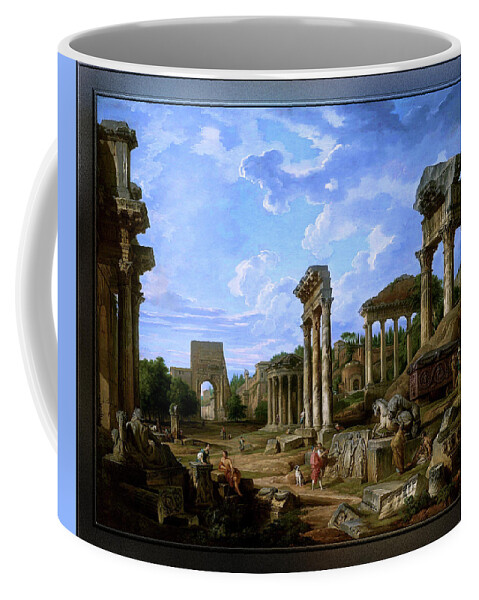
“フォロ・ロマーノのカプリッチョ” is a remarkable painting created in 1741 by the esteemed Italian artist ジョバンニ・パオロ・パンニーニ (1691 – 1765). Known for his mastery in architectural and landscape painting, Pannini’s work encapsulates both the grandeur and the melancholy of the past, blending historical elements with a vibrant imaginative approach. この特定の作品, a “capriccio,” serves as an artistic interpretation of the Roman Forum, evoking a sense of classical antiquity while also showcasing Pannini’s characteristic style of combining real and imaginary elements in a cohesive yet fantastical composition.
目次
Theme and Style
のテーマ “フォロ・ロマーノのカプリッチョ” revolves around the notion of historical ruin and nostalgia for a bygone civilization. It evokes the spirit of the Grand Tour, a traditional journey undertaken by young European aristocrats to explore the cultural and architectural heritage of ancient Rome. Pannini, well-versed in the visual language of Rome’s architectural splendor, captures the Roman Forum in a dramatic, almost theatrical manner. His painting fuses the past and present, incorporating elements of historical accuracy alongside a certain level of artistic license. This capriccio, which was popular during the 18th century, often included anachronisms and artistic embellishments, creating a romanticized version of architectural ruins.
The style of the painting aligns with the Rococo period, marked by a lighter, more decorative approach compared to the baroque. Although Pannini’s work possesses the detailed realism typical of the baroque, there is an underlying grace and fluidity to his composition, indicative of the Rococo influence. The grandiose ruins of the Roman Forum are presented with a sense of elegance and poetic beauty, underlined by the calmness of the sky and the serenity of the figures within the scene.
主な主題と構成
At the center of this work is the Roman Forum itself, the once vibrant heart of ancient Roman life, now reduced to crumbling ruins. Pannini captures the architectural elements in extraordinary detail, showcasing a variety of columns, arches, and statues that were iconic to the Roman Empire. These structures are depicted with a sense of scale and perspective that invites the viewer to explore the scene from multiple angles, enhancing the immersive quality of the painting.
The foreground is rich with artifacts, such as broken columns and stone blocks, as well as classical sculptures. These elements, although fragmented and damaged, convey the idea of a civilization that has left behind a lasting cultural legacy. Several figures, dressed in 18th-century clothing, populate the scene, contrasting the ruins with contemporary life. これらの数字, likely tourists or scholars, are portrayed in various poses, some deep in conversation, while others gaze at the ruins in awe. This interaction between modern people and ancient architecture serves to emphasize the idea of continuity and the passage of time.
左の方です, a majestic arch stands in partial ruin, with fragments scattered around its base, suggesting the ravages of time and the erosion of history. The arch is likely a representation of one of the famous Roman triumphal arches, evoking the grandeur of the Roman Empire’s military victories. On the right side, more ruins emerge from the landscape, with large stone blocks and the remnants of statuary. The figures that inhabit the space are placed thoughtfully, leading the viewer’s eye across the scene, guiding them from one architectural fragment to the next.
地形と材質
The terrain depicted in the painting is characteristic of the Roman Forum, with its uneven surfaces, rocky ground, and broken columns. Pannini’s treatment of the earth beneath the ruins is both realistic and detailed, with patches of grass and trees emerging from between the stone fragments. The sky above is expansive and luminous, ソフトで塗装した, diffused light that contrasts with the darker, shadowed areas of the ruins below. This treatment of light and shadow enhances the dramatic effect of the scene, creating a sense of timelessness that envelops the viewer.
Pannini’s use of oil paints allows for a nuanced rendering of textures and surfaces. The stone appears solid and tangible, with the varying tones of grey, beige, and ochre capturing the natural decay of time. The sky is rendered with delicate brushstrokes, with soft clouds drifting above, providing a serene contrast to the monumental structures below. The figures are painted with an acute attention to detail, their clothing rendered in a way that suggests the materiality of the fabrics, further drawing the viewer into the scene. The overall composition conveys a sense of both grandeur and desolation, creating an emotional connection with the viewer that transcends mere architectural representation.
気分と雰囲気
の気分 “フォロ・ロマーノのカプリッチョ” is one of reflection and nostalgia. There is a sense of awe that permeates the work, evoked both by the monumental scale of the ruins and by the presence of the figures, who seem to be lost in thought as they engage with the past. The ancient ruins speak of lost civilizations, their grandeur now reduced to fragments and memories. まだ, there is also a quiet reverence in the scene, a celebration of the enduring legacy of the Roman Empire.
空, with its soft hues of blue and white, adds to the overall tranquility of the scene, enhancing the feeling of peace that accompanies the ruins. Despite the crumbling nature of the structures, there is a beauty in their decay, as if they have reached a timeless equilibrium with nature. This interplay between the enduring strength of the Roman Empire and the inevitable passage of time imbues the painting with a melancholic yet serene atmosphere.
結論
Giovanni Paolo Pannini’s “フォロ・ロマーノのカプリッチョ” is a masterful work that captures the beauty and fragility of ancient Rome. Through his meticulous rendering of architectural details, the juxtaposition of modern figures and ancient ruins, and the evocative atmosphere, Pannini creates a scene that is both a tribute to the past and a reflection on the passage of time. The painting serves as a visual meditation on the relationship between history, メモリ, and the physical remnants of a once-great civilization.
これは、多くのサイトでオンラインで入手できるパブリック ドメイン画像をレタッチしたデジタル アートの複製です。 家の装飾製品.
アーティスト略歴の由来 Wikipedia.org
ジョバンニパオロパニーニまたはジョバンニパオロパニーニは、ローマで働いていた画家兼建築家であり、主にヴェドゥータの1人として知られています (“画家を見る”).
画家として, パニーニはローマの彼の景色で最もよく知られています, 彼は街の古代遺跡に特に興味を持っていました.
彼の最も有名な作品の中には、パンテオンの内部の彼の見方があります (フランチェスコ・アルガロッティに代わって 1712 – 1764 – ベネチアン博学者), ローマの景色を含む写真ギャラリーの彼のヴェドゥータ絵画.
彼の作品のほとんど, 特に廃墟のもの, カプリッチョのテーマに特徴的な空想的で非現実的な装飾があります. この点で、彼らはイタリアの画家で印刷メーカーのマルコ・リッチのカプリッチに似ています (1676 – 1730).
パニーニも肖像画を描いた, 教皇ベネディクトゥス14世の1人を含む (生まれたプロスペロロレンツォランベルティーニ 1675 – 1758 – からカトリック教会の頭 1740 – 1758).
ローマで, パニーニは宮殿の装飾者として名を馳せました. 彼の作品のいくつかには、Villa Patrizi c1719/25が含まれていました, パラッツォデカロリスc1720, とローマ神学校c1721/22).
に 1719, パニーニはVirtuosialPantheonの会衆に入院しました. 彼はローマのアカデミアディサンルカとアカデミアデフランスで教えました, 彼がジャン・オノレ・フラゴナールに影響を与えたと言われている場所. に 1754, 彼は王子を務めました (監督) アカデミアディサンルカ.