

A Fisherman’s Delight
A Fisherman’s Delight, CARCAを作成しました 1900 by Austrian painter ハンス・ザツカ (1859 – 1945), is a splendid example of the artist’s romanticism, blending the mysticism of mythological figures with a serene and timeless portrayal of love and nature. Zatzka, known for his prolific works of allegorical and figurative subjects, often explored themes of mythology, 美しさ, and the idealization of nature, and this artwork encapsulates these qualities perfectly. The work is particularly notable for its depiction of a serene, yet emotionally charged, scene that blurs the boundaries between the human world and the mythical realm.
目次
Main Subject and Characters
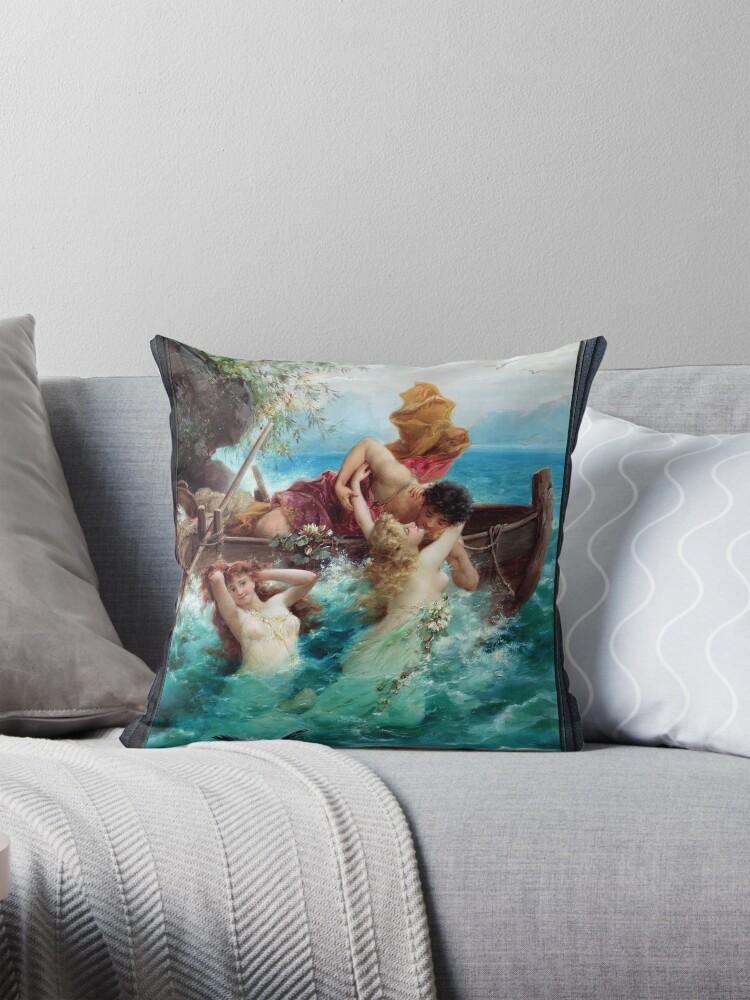
The main focus of the painting is a romantic, mythological encounter between a group of ethereal women, typically associated with sirens or water nymphs, and a man who appears to be a fisherman. The scene is filled with sensuality and tenderness, conveyed through the interaction between the figures and the water. The central female figure, dressed in a flowing green gown, is locked in a passionate kiss with the man who leans over the edge of a boat.
彼女の金色の髪, tousled by the winds, seems to merge with the water as it cascades around her, adding an element of fluidity and mystery to her appearance. Another woman, 部分的に水に浸かっている, looks up with an inviting expression, her arms extended towards the viewer. She shares the same ethereal beauty, her skin soft and luminous, her gown adorned with delicate flowers that float upon the surface of the water. 一緒に, the women evoke the mythological creatures who tempt sailors with their beauty, まだここに, the mood is one of joyous intimacy rather than peril.
The fisherman, caught between the figures of these enchanting women, is a symbol of the mortal realm. He appears engaged in an innocent, albeit passionate, moment with the women, unaware of their magical nature. 彼の服装, a simple, somewhat rugged tunic, contrasts with the luxurious, flowing gowns of the women, enhancing the mythical quality of the scene. The figures’ expressions, while intimate, convey a sense of serene bliss rather than tension or urgency, allowing the viewer to feel a part of this tranquil, almost dreamlike encounter.
地形と背景
The painting’s landscape is equally enchanting and contributes to the scene’s mythical quality. A gentle coastline frames the painting’s horizon, with lush green trees growing on rugged, rocky cliffs. The contrast between the land and the ocean is stark, yet harmonious. The vast, shimmering sea extends into the distance, with hints of a distant shoreline.
The sea itself is turbulent, yet beautiful, with waves crashing against the rocks near the boat. The water has been expertly rendered, with vibrant shades of teal and aquamarine capturing the fluidity of the waves and the natural motion of the water. This movement contrasts beautifully with the stillness of the figures in the foreground, enhancing the mood of peaceful calm amidst the surrounding chaos of nature.
遠くに, 柔らかい, almost imperceptible cloud cover hints at the time of day, giving the impression of either the early morning or the late afternoon. 空, painted in soft blues and whites, contributes to the gentle and peaceful atmosphere, while the occasional flying seagull reinforces the sense of openness and freedom of the scene.
材料とテクニック
Hans Zatzka’s masterful use of oil paints in this artwork brings the entire scene to life with incredible realism. His technique emphasizes light and shadow, creating depth and dimensionality in both the figures and the landscape. The subtle gradations of light across the water’s surface, especially where the light meets the dark depths, reflect Zatzka’s attention to detail and his ability to convey the texture of the water.
The figures are painted with an almost divine softness, their skin glowing with the pale light, while the clothing and hair of the women are intricately detailed with flowing folds and curls that seem to move in harmony with the water. Zatzka’s meticulous attention to texture is also evident in the depiction of the foliage and rocks on the shoreline, adding a sense of tangibility to the scene. The varying brushwork creates an engaging contrast between the sharp clarity of the figures and the soft, almost translucent quality of the natural surroundings.
スタイル, テーマ, と気分
The artwork exhibits a clear influence of late 19th and early 20th-century European romanticism, blending soft realism with a fantastic narrative. The sensuality of the women, the mystical nature of their interaction with the fisherman, and the ethereal quality of the scene align with Zatzka’s consistent exploration of themes of beauty, 神話, と自然. His focus on natural elements and mythological creatures reflects a deep fascination with the idealization of human form and the intersection of the earthly and the divine.
The mood of the painting is one of serene intimacy and mythological allure. Rather than presenting a narrative filled with tension or danger, the figures in this painting are at ease, engaged in a quiet yet profound connection with one another. The colors of the sea, the lush greenery, and the soft sky all combine to create a peaceful, almost otherworldly setting. The interaction between the human and the mythological here is less about conflict and more about a harmonious blend of the two worlds. It is a timeless moment, evoking feelings of peaceful affection, ethereal beauty, and the magical qualities of nature.
結論
Hans Zatzka’s A Fisherman’s Delight (NS. 1900) is a stunning example of the artist’s skill in blending mythological themes with human emotion, set against a breathtaking natural landscape. His ability to render both figures and nature with such delicacy and precision elevates the painting to an almost dreamlike quality. The interaction between the fisherman and the water nymphs is a perfect fusion of beauty, 官能性, と自然, inviting the viewer into a world where love and myth coexist in perfect harmony.
これは、パブリックドメインの画像のレタッチされたデジタルアートオールドマスターの複製であり、 キャンバスプリントオンライン.
アーティスト略歴の由来 Wikipedia.org
ハンス・ザツカは時々Pとして知られています. ロンサール, ピエール・ド・ロンサール, またはH. バッテリー, ジョセフ・バーナードとして彼の作品の多くに署名しました, J. バーナード, またはBernardZatzka.
Zatzkaの膨大な数の仮名の目的は、販売できるアートワークの量を制限する契約違反のペナルティを回避することでした。.
これにより、一部のアートデータベースでは、仮名ジョセフバーナードの下でのザツカの作品と同じ名前のフランスの彫刻家が混同されています。.
ハンス・ザツカは 8 行進 1859 ウィーンで. 彼の父バルトロマウスは建設労働者でした, 彼の母親はマリー・カルピシェク・ザツカでした.
間 1877 そして 1882, 彼は芸術アカデミーで学びました, クリスチャン・グリーペンケルの下で, カール・ウルツィンガー, とカールフォンブラース.
Zatzkaは、教会やその他の機関向けのフレスコ画を制作することで生計を立てることができました。.
に 1885, Zatzkaは、KurhausBadenで天井フレスコ画TheNaiadofBadenの作成を依頼されました.
Zatzkaの作品の多くは、オーストリアのさまざまな教会に捧げられた宗教画や祭壇画でした。.
しかしながら, 彼は女性の絵でもっと知られています, 妖精, と他の幻想的なシーン.
頻繁, 彼はリヒャルト・ワーグナーの作品とグリム兄弟のおとぎ話からインスピレーションを得ました.
19世紀後半から20世紀初頭に, Zatzkaによるいくつかの作品が写真に撮られ、商業的で収集可能なポストカードになりました.
1920年代, Zatzkaのスタイルは、ヨーロッパ全体で選ばれる装飾になりました. 加えて, 過去30年間はZatzkaの復活を開催しました.