

어부의 기쁨
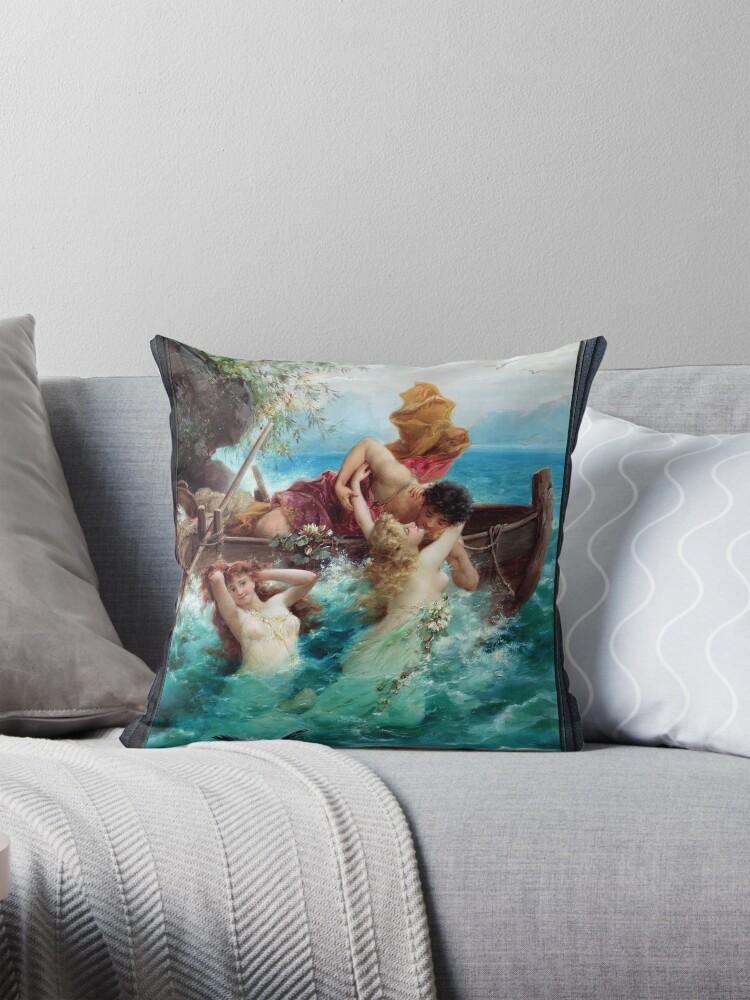
어부의 기쁨, 쯤에 생성됨 1900 by Austrian painter 프랑스 화가에 의해 (1859 – 1945), is a splendid example of the artist’s romanticism, blending the mysticism of mythological figures with a serene and timeless portrayal of love and nature. Zatzka, known for his prolific works of allegorical and figurative subjects, often explored themes of mythology, 아름다움, and the idealization of nature, and this artwork encapsulates these qualities perfectly. The work is particularly notable for its depiction of a serene, yet emotionally charged, scene that blurs the boundaries between the human world and the mythical realm.
목차
Main Subject and Characters
The main focus of the painting is a romantic, mythological encounter between a group of ethereal women, typically associated with sirens or water nymphs, and a man who appears to be a fisherman. The scene is filled with sensuality and tenderness, conveyed through the interaction between the figures and the water. The central female figure, dressed in a flowing green gown, is locked in a passionate kiss with the man who leans over the edge of a boat.
그녀의 황금빛 머리카락, tousled by the winds, seems to merge with the water as it cascades around her, adding an element of fluidity and mystery to her appearance. Another woman, partially submerged in the water, looks up with an inviting expression, her arms extended towards the viewer. She shares the same ethereal beauty, her skin soft and luminous, her gown adorned with delicate flowers that float upon the surface of the water. 함께, the women evoke the mythological creatures who tempt sailors with their beauty, 아직 여기, the mood is one of joyous intimacy rather than peril.
The fisherman, caught between the figures of these enchanting women, is a symbol of the mortal realm. He appears engaged in an innocent, albeit passionate, moment with the women, unaware of their magical nature. 그의 옷차림, 간단한, somewhat rugged tunic, contrasts with the luxurious, flowing gowns of the women, enhancing the mythical quality of the scene. The figures’ expressions, while intimate, convey a sense of serene bliss rather than tension or urgency, allowing the viewer to feel a part of this tranquil, almost dreamlike encounter.
지형과 배경
The painting’s landscape is equally enchanting and contributes to the scene’s mythical quality. A gentle coastline frames the painting’s horizon, with lush green trees growing on rugged, rocky cliffs. The contrast between the land and the ocean is stark, yet harmonious. The vast, shimmering sea extends into the distance, with hints of a distant shoreline.
The sea itself is turbulent, yet beautiful, with waves crashing against the rocks near the boat. The water has been expertly rendered, with vibrant shades of teal and aquamarine capturing the fluidity of the waves and the natural motion of the water. This movement contrasts beautifully with the stillness of the figures in the foreground, enhancing the mood of peaceful calm amidst the surrounding chaos of nature.
멀리서, a soft, almost imperceptible cloud cover hints at the time of day, giving the impression of either the early morning or the late afternoon. 하늘, painted in soft blues and whites, contributes to the gentle and peaceful atmosphere, while the occasional flying seagull reinforces the sense of openness and freedom of the scene.
재료 및 기술
Hans Zatzka’s masterful use of oil paints in this artwork brings the entire scene to life with incredible realism. His technique emphasizes light and shadow, creating depth and dimensionality in both the figures and the landscape. The subtle gradations of light across the water’s surface, especially where the light meets the dark depths, reflect Zatzka’s attention to detail and his ability to convey the texture of the water.
The figures are painted with an almost divine softness, their skin glowing with the pale light, while the clothing and hair of the women are intricately detailed with flowing folds and curls that seem to move in harmony with the water. Zatzka’s meticulous attention to texture is also evident in the depiction of the foliage and rocks on the shoreline, adding a sense of tangibility to the scene. The varying brushwork creates an engaging contrast between the sharp clarity of the figures and the soft, almost translucent quality of the natural surroundings.
스타일, 주제, 그리고 기분
The artwork exhibits a clear influence of late 19th and early 20th-century European romanticism, blending soft realism with a fantastic narrative. The sensuality of the women, the mystical nature of their interaction with the fisherman, and the ethereal quality of the scene align with Zatzka’s consistent exploration of themes of beauty, 신화, 그리고 자연. His focus on natural elements and mythological creatures reflects a deep fascination with the idealization of human form and the intersection of the earthly and the divine.
The mood of the painting is one of serene intimacy and mythological allure. Rather than presenting a narrative filled with tension or danger, the figures in this painting are at ease, engaged in a quiet yet profound connection with one another. The colors of the sea, the lush greenery, and the soft sky all combine to create a peaceful, almost otherworldly setting. The interaction between the human and the mythological here is less about conflict and more about a harmonious blend of the two worlds. It is a timeless moment, evoking feelings of peaceful affection, 천상의 아름다움, and the magical qualities of nature.
결론
한스 자츠카 어부의 기쁨 (씨. 1900) is a stunning example of the artist’s skill in blending mythological themes with human emotion, set against a breathtaking natural landscape. His ability to render both figures and nature with such delicacy and precision elevates the painting to an almost dreamlike quality. The interaction between the fisherman and the water nymphs is a perfect fusion of beauty, 호색, 그리고 자연, inviting the viewer into a world where love and myth coexist in perfect harmony.
이것은 리터칭된 디지털 아트로 사용할 수 있는 공개 도메인 이미지의 오래된 마스터 복제입니다. Boucher는 Guay의 작품으로 일련의 그림을 그리고 Madame de Pompadour가 조각하여 호의를 받는 궁정에게 잘 묶인 책으로 배포했습니다..
유래 된 아티스트 바이오 Wikipedia.org
Hans Zatzka는 때때로 P로 알려져 있습니다.. 론사드, 피에르 드 론사르, 또는 H. 배터리, Joseph Bernard로 그의 많은 작품에 서명했습니다., 제이. 남자 이름, 또는 베르나르 자츠카.
Zatzka의 방대한 가명 배열의 목적은 그가 판매할 수 있는 예술품의 양을 제한하는 계약 위반에 대한 처벌을 피하는 것이었습니다..
이로 인해 일부 예술 데이터베이스에서 Joseph Bernard라는 가명으로 Zatzka의 작품을 같은 이름을 가진 프랑스 조각가와 혼동하게 되었습니다..
한스 자츠카 출생 8 3 월 1859 비엔나에서. 그의 아버지 Bartholomaüs는 건설 노동자였습니다., 그의 어머니는 Marie Karpischek Zatzka였습니다..
사이 1877 과 1882, 그는 Academie des Beaux-Arts에서 공부했습니다., 크리스티안 그리펜케를 밑에서, 칼 워징거, 그리고 칼 폰 블라스.
Zatzka는 교회 및 기타 기관의 프레스코화 제작을 통해 생계를 꾸릴 수 있었습니다..
에 1885, Zatzka는 Kurhaus Baden의 The Naiad of Baden 천장 프레스코를 만들기 위해 의뢰되었습니다..
Zatzka의 많은 작품은 오스트리아의 여러 교회에 바쳐진 종교화 및 제단 조각이었습니다..
하지만, 그는 여성의 그림으로 더 유명합니다., 요정들, 그리고 다른 환상적인 장면들.
자주, 그는 Richard Wagner의 작품과 Grimm 형제의 동화에서 영감을 얻었습니다..
19세기 말과 20세기 초에, Zatzka의 여러 작품이 사진으로 찍혀 상업적이고 수집 가능한 엽서로 만들어졌습니다..
1920년대, Zatzka의 스타일은 유럽 전역에서 선택의 장식이 되었습니다.. 게다가, 지난 30년 동안 Zatzka는 부활했습니다..