

Rozkosz rybaka
Rozkosz rybaka, powstał ok 1900 przez austriackiego malarza Hans Zatzka (1859 – 1945), jest wspaniałym przykładem romantyzmu artysty, łącząc mistycyzm postaci mitologicznych ze spokojnym i ponadczasowym portretem miłości i natury. Zatzka, znany ze swoich płodnych dzieł o tematyce alegorycznej i figuratywnej, często poruszane tematy mitologiczne, piękno, i idealizacja natury, a ta grafika doskonale oddaje te cechy. Praca jest szczególnie godna uwagi ze względu na przedstawienie spokoju, a jednocześnie naładowany emocjami, scena zacierająca granice pomiędzy światem ludzi i sferą mityczną.
Spis treści
Główny temat i bohaterowie
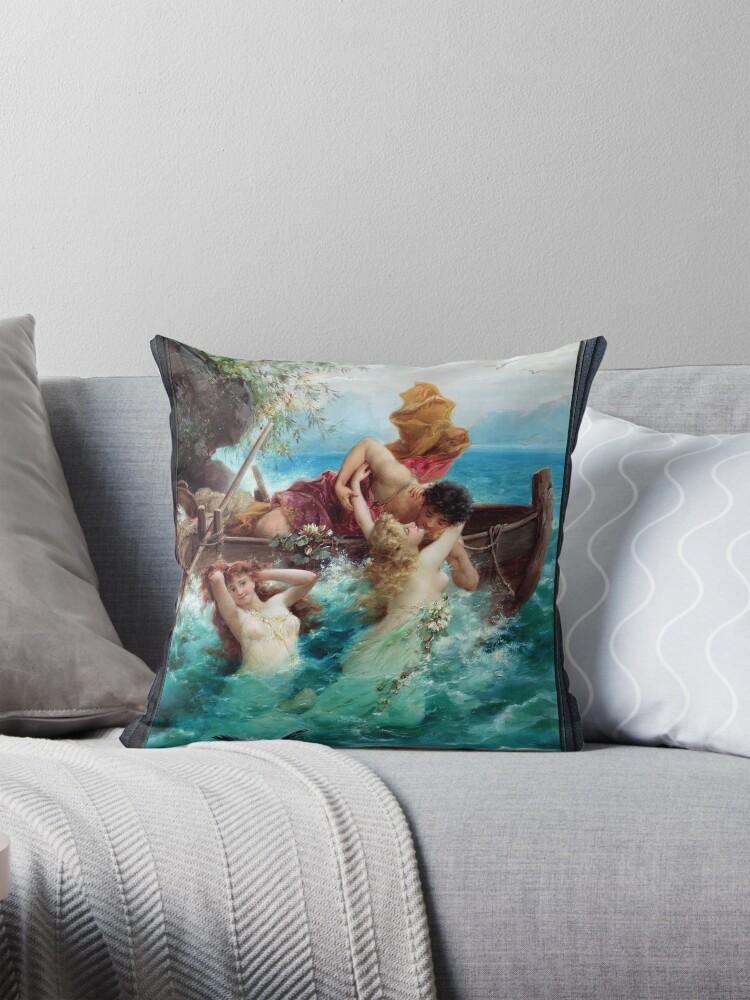
Głównym tematem obrazu jest romantyk, mitologiczne spotkanie grupy eterycznych kobiet, zwykle kojarzony z syrenami lub nimfami wodnymi, i mężczyzna wyglądający na rybaka. Scena przepełniona jest zmysłowością i delikatnością, przekazywana poprzez interakcję pomiędzy postaciami a wodą. Centralna postać kobieca, ubrana w zwiewną zieloną suknię, jest zamknięta w namiętnym pocałunku z mężczyzną pochylonym przez krawędź łodzi.
Jej złote włosy, targane wiatrami, zdaje się łączyć z wodą spływającą kaskadą wokół niej, dodając swojemu wyglądowi elementu płynności i tajemniczości. Kolejna kobieta, częściowo zanurzony w wodzie, spogląda w górę z zachęcającym wyrazem twarzy, jej ramiona wyciągnęły się w stronę widza. Ma to samo eteryczne piękno, jej skóra jest miękka i promienna, jej suknia ozdobiona była delikatnymi kwiatami unoszącymi się na powierzchni wody. Razem, kobiety przywołują na myśl mitologiczne stworzenia, które kuszą żeglarzy swoją urodą, jeszcze tutaj, nastrój jest raczej radosną intymnością niż niebezpieczeństwem.
Rybak, uchwycony pomiędzy postaciami tych czarujących kobiet, jest symbolem królestwa śmiertelników. Wygląda na zaangażowanego w sprawę niewinnej osoby, choć pełen pasji, chwilę z kobietami, nieświadomi swojej magicznej natury. Jego strój, proste, nieco wytrzymała tunika, kontrastuje z luksusem, zwiewne suknie kobiet, podnosząc mityczny charakter sceny. Wyrażenia postaci, jednocześnie intymnie, przekazują poczucie spokojnej błogości, a nie napięcia lub pilności, pozwalając widzowi poczuć się częścią tego spokoju, spotkanie niemal jak ze snu.
Teren i tło
Krajobraz obrazu jest równie urzekający i nadaje scenie mityczny charakter. Łagodna linia brzegowa otacza horyzont obrazu, z bujnymi zielonymi drzewami rosnącymi na nierównym terenie, skaliste klify. Kontrast między lądem a oceanem jest wyraźny, a jednocześnie harmonijny. Ogromny, połyskujące morze rozciąga się w oddali, z nutami odległego brzegu.
Samo morze jest wzburzone, ale piękne, z falami rozbijającymi się o skały w pobliżu łodzi. Woda została fachowo oddana, z żywymi odcieniami turkusu i seledynu, oddającymi płynność fal i naturalny ruch wody. Ruch ten pięknie kontrastuje z bezruchem postaci na pierwszym planie, wzmacniające nastrój spokojnego spokoju pośród otaczającego chaosu natury.
W oddali, miękki, prawie niezauważalne oznaki zachmurzenia o porze dnia, sprawiając wrażenie wczesnego poranka lub późnego popołudnia. The sky, painted in soft blues and whites, contributes to the gentle and peaceful atmosphere, while the occasional flying seagull reinforces the sense of openness and freedom of the scene.
Materiały i techniki
Hans Zatzka’s masterful use of oil paints in this artwork brings the entire scene to life with incredible realism. His technique emphasizes light and shadow, creating depth and dimensionality in both the figures and the landscape. The subtle gradations of light across the water’s surface, especially where the light meets the dark depths, reflect Zatzka’s attention to detail and his ability to convey the texture of the water.
The figures are painted with an almost divine softness, their skin glowing with the pale light, podczas gdy ubrania i włosy kobiet są misternie zdobione, z płynnymi fałdami i lokami, które wydają się poruszać w harmonii z wodą. Skrupulatna dbałość Zatzki o fakturę jest również widoczna w przedstawieniu liści i skał na linii brzegowej, dodając scenie namacalności. Zróżnicowane prace pędzla tworzą ujmujący kontrast pomiędzy ostrą wyrazistością figur i miękkością, niemal przezroczysta jakość naturalnego otoczenia.
Styl, Temat, i Nastrój
W dziele sztuki widoczne są wyraźne wpływy europejskiego romantyzmu końca XIX i początku XX wieku, łącząc miękki realizm z fantastyczną narracją. Zmysłowość kobiet, mistyczny charakter ich interakcji z rybakiem, a eteryczny charakter tej sceny wpisuje się w konsekwentne eksplorowanie przez Zatzkę tematów piękna, mit, i przyroda. Jego skupienie się na elementach naturalnych i stworzeniach mitologicznych odzwierciedla głęboką fascynację idealizacją ludzkiej postaci i skrzyżowaniem tego, co ziemskie i boskie..
Nastrój obrazu charakteryzuje się spokojną intymnością i mitologicznym urokiem. Zamiast przedstawiać narrację pełną napięcia i niebezpieczeństwa, postacie na tym obrazie są spokojne, zaangażowani w cichą, ale głęboką więź ze sobą. Kolory morza, bujną zieleń, i miękkie niebo łączą się, tworząc spokojną atmosferę, niemal nieziemska sceneria. Interakcja między tym, co ludzkie, a tym, co mitologiczne, w mniejszym stopniu opiera się na konflikcie, a bardziej na harmonijnym połączeniu obu światów. To ponadczasowa chwila, wywołując uczucie spokojnego uczucia, eteryczne piękno, i magiczne właściwości natury.
Wniosek
Hansa Zatzki Rozkosz rybaka (C. 1900) to wspaniały przykład umiejętności artysty w łączeniu wątków mitologicznych z ludzkimi emocjami, na tle zapierającego dech w piersiach naturalnego krajobrazu. Jego umiejętność oddania zarówno postaci, jak i natury z taką delikatnością i precyzją podnosi obraz do niemal onirycznej jakości. Interakcja rybaka i nimfy wodnej to idealne połączenie piękna, zmysłowość, i przyroda, zapraszając widza do świata, w którym miłość i mit współistnieją w doskonałej harmonii.
Jest to retuszowana cyfrowa reprodukcja starych mistrzów obrazu z domeny publicznej, która jest dostępna jako druk na płótnie online.
Bio artysty pochodzące z Wikipedia.org
Hans Zatzka był czasami znany jako P. Ronsard, Pierre de Ronsard, lub H. Baterie, i podpisywał wiele swoich dzieł jako Joseph Bernard, J. Bernarda, lub Bernard Zatzka.
Celem szerokiego wachlarza pseudonimów Zatzki było uniknięcie kar za zerwanie umów, które ograniczały ilość dzieł sztuki, które mógł sprzedać.
To spowodowało, że w niektórych bazach danych sztuki skojarzono prace Zatzki pod pseudonimem Joseph Bernard z francuskim rzeźbiarzem o tym samym nazwisku.
Hans Zatzka urodził się dnia 8 Marsz 1859 w Wiedniu. Jego ojciec Bartholomaüs był robotnikiem budowlanym, a jego matką była Marie Karpischek Zatzka.
Między 1877 i 1882, studiował w Academie des Beaux-Arts, pod Christianem Griepenkerlem, Carl Wurzinger, i Karl von Blaas.
Zatzka utrzymywała się z produkcji fresków dla kościołów i innych instytucji.
W 1885, Zatzka otrzymała zlecenie wykonania fresku sufitowego Najada z Baden w Kurhaus Baden.
Wiele dzieł Zatzki to obrazy religijne i ołtarze poświęcone różnym kościołom w Austrii.
jednak, bardziej znany jest z obrazów przedstawiających kobiety, wróżki, i inne fantastyczne sceny.
Często, czerpał inspirację z twórczości Ryszarda Wagnera i baśni braci Grimm.
Na przełomie XIX i XX wieku, kilka prac Zatzki zostało sfotografowanych i przerobionych na pocztówki komercyjne i kolekcjonerskie.
W latach dwudziestych, Styl Zatzki stał się dekoracją wybieraną w całej Europie. Ponadto, poprzednie trzydzieści lat przyniosło odrodzenie Zatzka.